Attractions and Places To See around Courpignac - Top 20
Best attractions and places to see around Courpignac include a diverse range of historical, cultural, and natural sites within the Charente-Maritime department. While Courpignac itself is a small village, its strategic location provides access to numerous points of interest. The surrounding region features impressive historical monuments, ancient churches, and significant natural areas. Visitors can explore a variety of landmarks and cultural sites easily accessible from Courpignac.
Best attractions and places to see around Courpignac
- The most popular attractions is Saint-Séverin Church, Nieul-lès-Saintes, a religious building with elements dating from the 11th and 12th centuries. Its bell tower features a unique "pine cone" spire, making it the oldest part of the church.
- Another must-see spot is Saint Martin Church of Fontaine-d'Ozillac, a religious building with a curious 16th-century facade classified as a historical monument. Visitors can observe a composition of Romanesque flowers and a representation of the fight of the Virtues and Vices on its large coving.
- Visitors also love Saint-Sébastien Church of Mirambeau, a religious building that dates back to the 11th century. This church was rebuilt as a chapel in 1856 and features a slender quadrangular bell tower.
- Courpignac is known for its historical sites, religious buildings, and cycling paths. The area offers a variety of attractions to see and explore, from ancient churches to renovated cycle routes.
- The attractions around Courpignac are appreciated by the komoot community, with 9 upvotes and 16 photos shared by visitors.
Last updated: June 23, 2026
Saint-Séverin Church, Nieul-lès-Saintes
Highlight • Religious Site
The main portal of the church, as well as the two false doors, are crowned by ogival arcades with a few rare ornaments borrowed from the Romanesque period, such as saw teeth, diamond points, etc. These gantries have been the subject of a subconstruction.
The nave is made up of three recently vaulted bays in brick and plaster, without ribs; each span is separated by groups of four small columns, only two meters and fifty high, and appearing to date from the 14th century. The apse has two bays in the 15th century ogival style.
The Saint-Joseph chapel, to the north, has kept its original Romanesque style; it is dominated by a semi-circular vault, and offers the example of an apsidion of which no advantage is currently being taken. It is adorned with a small apse which housed the baptismal font. The chapel of the Virgin, to the south, was remodeled in the 17th century; it has the character of a 15th century restorer; it was then lengthened, and consists of three spans. There is, it is said, an ossuary under the choir.
The bell tower with a cone or "pine cone" spire, placed above the transept, and about 24 meters high (54 steps lead to its summit), is worthy of attention. This is the oldest part of the church. It is covered with a stone dome carved in tortoiseshell called the pine cone bell tower, similar examples of which can be found in Saintonge (Abbaye aux Dames de Saintes, Notre-Dame-de-l'Assomption church in Fenioux)3 but which recalls above all the domes of Byzantine inspiration observed in Poitou, Angoumois and Périgord (church of N.-D.-la-Grande in Poitiers, cathedral of Saint-Pierre in Angoulême, cathedral of Saint-Front in Périgueux). The foreground includes five Romanesque windows on each side, oriented as usual, on the upper level there are only two; the tower ends in a cut of stone, formed of small somewhat deformed cubes and forming a slightly rounded cone, but deformed by time. Inside, this bell tower offers a quadrangular vault, with cut sides, of very good taste. The bell, weighing 430 kilograms, was cast by Guillaume Besson, from Angers, and blessed in 1859, under the name of Marie. The godfather was Mr. Blanc Fontenille, former lawyer and notary, mayor of Nieul, and the godmother Mrs. Marie Belloteau, born Babin; parish priest M.Antoine Lanson.
Translated by Google •
Tip by

Blaye-Etauliers - Cycle path 🚴
Highlight (Segment) • Other
Tip by

Sign up now to discover places like this
Get recommendations on the best single tracks, peaks, & plenty of other exciting outdoor places.
Sign up for free
Church of the Abbey of Sainte-Marie-Madeleine of Pleine-Selve
Highlight • Religious Site
12th century church, made up at the time of a single nave, a transept and a flat apse. In the 13th century, addition of chapels to the arms of the transept. The convent buildings were completely destroyed by French troops in 1407 during the Hundred Years War and then during the Wars of Religion. The church itself had its nave amputated. Of the 13th century building, the crossing, the north arm of the transept, the north chapel, the flat apse remain. During the 19th century, construction of a sacristy on the south facade of the chevet.
The Romanesque church is only the choir of the old church, only the apse presents the architecture of the 12th century. Today it has the status of a parish church. The building was classified as a historical monument in 1908.
Translated by Google •
Tip by
Saint Martin Church of Fontaine-d'Ozillac
Highlight • Religious Site
On the north side, a simple bell tower of the original church at its base, rebuilt in the last century in its upper parts, balances the whole. It is square, without style, covered with a slate pyramid, and has retained a few loophole openings. 3 of its arched windows each house a bell.
A semi-circular arched gate with three covings and 2 blind bays with only one, furnish the ground floor.
Above, without separation, runs a gallery of 5 arches supported on double columns. Bulky capitals, cords, bands very worked and in strong relief, indicate a novel of the end of time.
On the large coving develops a representation, with 6 "knights", of the fight of the Virtues and the Vices. On the intermediate arch, birds, monsters and human beings are tangled in vegetal arabesques. The sculptures of the capitals, abacus included, extend over the eardrums of the false doors and form a wide band.
In the Renaissance part on the right, the artist has arranged above a low door and around a large scallop shell, a very beautiful crowning with scrolls, garlands and fleurons.
Next to it a corner buttress shows another shell in a pediment.
The North wall, which has been modified many times, has however retained a large pointed arch towards its middle and a second one a little more towards the East. Old buildings, Benedictine ones say, existed there.
Remains of arches and Romanesque openings stand side by side with ogival windows. The eastern wall of the chevet, largely rebuilt, still shows 2 semicircular arches with ringed columns, nail-head cords and remains of an arcade similar to that which once adorned the north side of this same chevet. Although Romanesque, it therefore seems to have been rectangular from its origin.
To the left opens a large window whose central arch is polylobed. This provision is quite rare in Saintonge. The south wall, supported by numerous buttresses, one of which, the first to the west, is decorated with an escutcheon carried by two angels, is pierced with large third-point windows.
The square bell tower, without style, covered with a slate pyramid, has retained a few loopholes. 3 of its arched windows each house a bell.
The interior, refurbished two centuries ago, comprises 2 naves separated by square pillars. The one on the left, the old one, which has 5 bays, has its ogival vaulted apse on multiple ribs which are lost on the columns after having drawn diamonds adorned with hanging keys.
In these lozenges, letters forming a difficult to read inscription, a real rebus with a grid, indicate that this work was made in 1538.
Despite its name based on the idea of "fountain" this town which was formerly called Saint-Martin-de-Fontaine, has no fountains, but wells. The shallow one, very close to the church, was perhaps even less deep in the past and was undoubtedly the fountain which gave its name to the parish.
The church of Fontaine-d'Ozillac is patronized by Saint Martin.
Translated by Google •
Tip by
Saint-Sébastien Church of Mirambeau
Highlight • Religious Site
From the 11th century, Mirambeau had a church dedicated to St Sebastian, from Narbonne, martyred in Rome, under Diocletian, in the year 288 of the Christian era, as mentioned in the charter of the abbey of St Savinien, near Lyon, dated from the year 1062. In the 11th, 15th, 16th and 17th centuries, the priory of St-Sébastien de Mirambeau was still at the presentation of the abbot of St-Savinien de Lyon. One sees opposite the gate of the castle, while going up to the district called the City, a stone cross which indicates, one says, the site or was the church of St-Sebastien. In addition, there is between Civrac and the town, on the edge of the chemin d'Allas, the site of a chapel which formerly belonged to a commandery (this is still the name of the neighboring hamlet). - to be the so-called chapel of the Way, in the parish of St-Sébastien, according to the pouillé of 1746, and which was at the presentation of the diocesan bishop.
Assisted by the generosity of the Countess Duchâtel, Mirambeau undertook the construction of a chapel, which was completed at the end of 1856. This building, too cramped, with modern forms, and without religious character, consists of a nave of 33 m long, 9 wide, with semi-circular apse and side chapels. They are dedicated to the Blessed Virgin and to the Sacred Heart.
The chapel on the left was later rebuilt, with painting in the Byzantine style and ossuary, by the Duchâtel family, whose particular burial place it is.
A basket-handle ceiling conceals an elegant framework in the nave. A porch of six steps leads to the main door of the chapel, which is surmounted by a slender quadrangular bell tower, and whose spire is covered with slates. This chapel occupies the very site of the former house of the Récollets de Mirambeau,
We see in the church of Mirambeau, a crucifixion of Our Lady, a recent gift from the government, and an Immaculate Conception of Our Lady, a copy, it is said, of a painting by the famous Spanish painter Murillo. Plus a stone baptismal font, sculpted with art, and coming from the old chapel of the Récollets.
While the title of canton cure was conferred on Mirambeau, Petit-Niort became a desserte, or third class cure, although this small population group does not even today have the title of commune.
Translated by Google •
Tip by
Sign up for free to discover even more attractions around Courpignac.
Sign up for free
Already have an account?
Start today with a free account
Your next adventure awaits.
Login or Signup


Tips from the Community

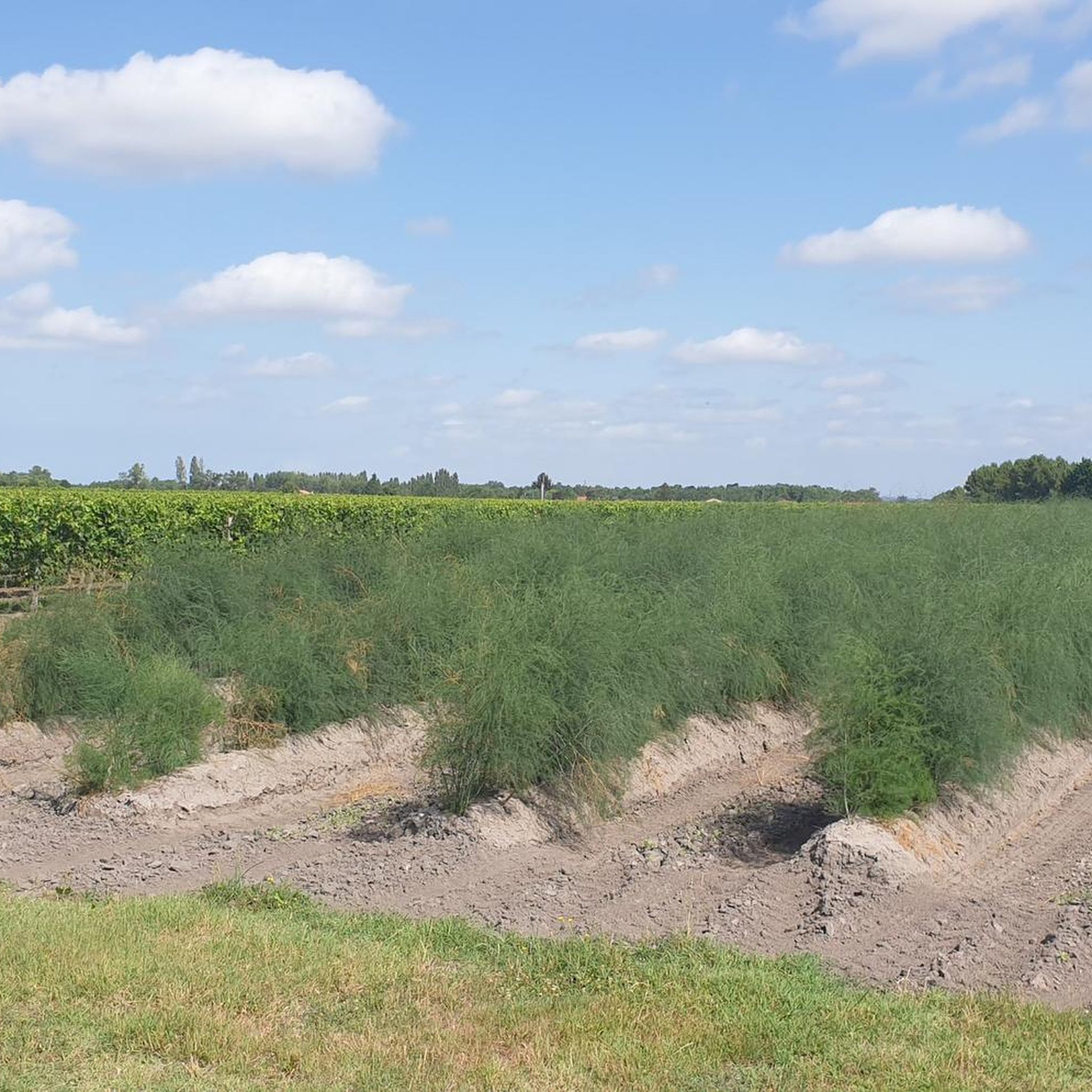
Beautiful railway track cycle path between Blaye and Etauliers.
2
1

This cycle path was completely renovated in 2019. The old railway line leads to the entrance to the citadel of Blaye.
1
1

The only downside not a single bench or picnic table
1
0

The Abbey of Sainte-Marie-Madeleine goes down in history for having been founded by Geoffroi du Loroux, Archbishop of Bordeaux, around 1145-1150. The only vestige of the imposing Premonstratensian monastery, the church of the Abbey of Sainte-Marie-Madeleine, founded in the 12th century, is the jewel of the village of Pleine-Selve. 12th century church, made up at the time of a single nave, a transept and a flat apse. In the 13th century, addition of chapels to the arms of the transept. The convent buildings were completely destroyed by French troops in 1407 during the Hundred Years War and then during the Wars of Religion. The church itself had its nave amputated. Of the 13th century building, the crossing, the north arm of the transept, the north chapel, the flat apse remain. During the 19th century, construction of a sacristy on the south facade of the chevet. The Romanesque church is only the choir of the old church, only the apse presents the architecture of the 12th century. Today it has the status of a parish church. The building was classified as a historical monument in 1908.
0
0
The cycle path leaves from Blaye and crosses the vineyard of Blaye Côtes de Bordeaux to Etauliers (or the reverse) for about 13 km (26 km round trip). It is part of the V80 or the Canal des Deux Mers à Vélo route. An excellent way for adults and children to discover the heritage of our region in peace. A real greenway (with lots of shaded parts) it is suitable for learning to ride a bike with small children. .. the ideal family outing by definition! Note that pilgrims to Santiago de Compostela often take it before stopping at Blaye…. and enjoy a good glass of wine (from Blaye, of course) to recover from the fatigue of the day!!!
0
0
In the 15th century, this town was called Mirambel l'Artaud or Artault, a name borne by its lords from the 11th century to the 13th century. Froissart designates it under the name of Mirabel. An act of June 1645 designates this parish under the name of St Sébastien-les-Mirambeaux. This populous town, which had become the capital of the canton, presented the singular exception that, for the spiritual, it depended on Petit-Niort, whose church had become the parish center of the two localities. This state of affairs dates back to the beginning of the 17th century, when the church of St Martin was called upon to replace that of St Sebastian, which had just been completely destroyed; it has finally ceased in recent times. From the 11th century, Mirambeau had a church dedicated to St Sebastian, from Narbonne, martyred in Rome, under Diocletian, in the year 288 of the Christian era, as mentioned in the charter of the abbey of St Savinien, near Lyon, dated from the year 1062. In the 11th, 15th, 16th and 17th centuries, the priory of St-Sébastien de Mirambeau was still at the presentation of the abbot of St-Savinien de Lyon. One sees opposite the gate of the castle, while going up to the district called the City, a stone cross which indicates, one says, the site or was the church of St-Sebastien. In addition, there is between Civrac and the town, on the edge of the chemin d'Allas, the site of a chapel which formerly belonged to a commandery (this is still the name of the neighboring hamlet). - to be the so-called chapel of the Way, in the parish of St-Sébastien, according to the pouillé of 1746, and which was at the presentation of the diocesan bishop. Assisted by the generosity of the Countess Duchâtel, Mirambeau undertook the construction of a chapel, which was completed at the end of 1856. This building, too cramped, with modern forms, and without religious character, consists of a nave of 33 m long, 9 wide, with semi-circular apse and side chapels. They are dedicated to the Blessed Virgin and to the Sacred Heart. The chapel on the left was later rebuilt, with painting in the Byzantine style and ossuary, by the Duchâtel family, whose particular burial place it is. A basket-handle ceiling conceals an elegant framework in the nave. A porch of six steps leads to the main door of the chapel, which is surmounted by a slender quadrangular bell tower, and whose spire is covered with slates. This chapel occupies the very site of the former house of the Récollets de Mirambeau, We see in the church of Mirambeau, a crucifixion of Our Lady, a recent gift from the government, and an Immaculate Conception of Our Lady, a copy, it is said, of a painting by the famous Spanish painter Murillo. Plus a stone baptismal font, sculpted with art, and coming from the old chapel of the Récollets. While the title of canton cure was conferred on Mirambeau, Petit-Niort became a desserte, or third class cure, although this small population group does not even today have the title of commune.
0
0
The church, built in the shape of a Latin cross, the first construction elements of which date from the 11th and 12th centuries, with later additions and alterations (15th and 19th centuries to the beginning of the 13th century then modified in the 15th and 16th centuries, is dedicated to Saint Séverin, alias Seurin, bishop of Bordeaux in the 5th century, and whose feast day takes place on October 21. However, the solemn patronal feast is that of Saint Blaise, martyr bishop of the 4th century, fixed on February 3, and for which there is great veneration in the country. The main portal of the church, as well as the two false doors, are crowned by ogival arcades with a few rare ornaments borrowed from the Romanesque period, such as saw teeth, diamond points, etc. These gantries have been the subject of a subconstruction. The nave is made up of three recently vaulted bays in brick and plaster, without ribs; each span is separated by groups of four small columns, only two meters and fifty high, and appearing to date from the 14th century. The apse has two bays in the 15th century ogival style. The Saint-Joseph chapel, to the north, has kept its original Romanesque style; it is dominated by a semi-circular vault, and offers the example of an apsidion of which no advantage is currently being taken. It is adorned with a small apse which housed the baptismal font. The chapel of the Virgin, to the south, was remodeled in the 17th century; it has the character of a 15th century restorer; it was then lengthened, and consists of three spans. There is, it is said, an ossuary under the choir. The bell tower with a cone or "pine cone" spire, placed above the transept, and about 24 meters high (54 steps lead to its summit), is worthy of attention. This is the oldest part of the church. It is covered with a stone dome carved in tortoiseshell called the pine cone bell tower, similar examples of which can be found in Saintonge (Abbaye aux Dames de Saintes, Notre-Dame-de-l'Assomption church in Fenioux)3 but which recalls above all the domes of Byzantine inspiration observed in Poitou, Angoumois and Périgord (church of N.-D.-la-Grande in Poitiers, cathedral of Saint-Pierre in Angoulême, cathedral of Saint-Front in Périgueux). The foreground includes five Romanesque windows on each side, oriented as usual, on the upper level there are only two; the tower ends in a cut of stone, formed of small somewhat deformed cubes and forming a slightly rounded cone, but deformed by time. Inside, this bell tower offers a quadrangular vault, with cut sides, of very good taste. The bell, weighing 430 kilograms, was cast by Guillaume Besson, from Angers, and blessed in 1859, under the name of Marie. The godfather was Mr. Blanc Fontenille, former lawyer and notary, mayor of Nieul, and the godmother Mrs. Marie Belloteau, born Babin; parish priest M.Antoine Lanson.
1
0
Around a small church from the end of the 12th century, a larger construction was arranged in the 16th century and the curious facade (classified MH in 1911) presents today, under a single gable, a beautiful composition of Romanesque flowers and on the left, attached to it, an elegant Renaissance ensemble. On the north side, a simple bell tower of the original church at its base, rebuilt in the last century in its upper parts, balances the whole. It is square, without style, covered with a slate pyramid, and has retained a few loophole openings. 3 of its arched windows each house a bell. A semi-circular arched gate with three covings and 2 blind bays with only one, furnish the ground floor. Above, without separation, runs a gallery of 5 arches supported on double columns. Bulky capitals, cords, bands very worked and in strong relief, indicate a novel of the end of time. On the large coving develops a representation, with 6 "knights", of the fight of the Virtues and the Vices. On the intermediate arch, birds, monsters and human beings are tangled in vegetal arabesques. The sculptures of the capitals, abacus included, extend over the eardrums of the false doors and form a wide band. In the Renaissance part on the right, the artist has arranged above a low door and around a large scallop shell, a very beautiful crowning with scrolls, garlands and fleurons. Next to it a corner buttress shows another shell in a pediment. The North wall, which has been modified many times, has however retained a large pointed arch towards its middle and a second one a little more towards the East. Old buildings, Benedictine ones say, existed there. Remains of arches and Romanesque openings stand side by side with ogival windows. The eastern wall of the chevet, largely rebuilt, still shows 2 semicircular arches with ringed columns, nail-head cords and remains of an arcade similar to that which once adorned the north side of this same chevet. Although Romanesque, it therefore seems to have been rectangular from its origin. To the left opens a large window whose central arch is polylobed. This provision is quite rare in Saintonge. The south wall, supported by numerous buttresses, one of which, the first to the west, is decorated with an escutcheon carried by two angels, is pierced with large third-point windows. The square bell tower, without style, covered with a slate pyramid, has retained a few loopholes. 3 of its arched windows each house a bell. The interior, refurbished two centuries ago, comprises 2 naves separated by square pillars. The one on the left, the old one, which has 5 bays, has its ogival vaulted apse on multiple ribs which are lost on the columns after having drawn diamonds adorned with hanging keys. In these lozenges, letters forming a difficult to read inscription, a real rebus with a grid, indicate that this work was made in 1538. Despite its name based on the idea of "fountain" this town which was formerly called Saint-Martin-de-Fontaine, has no fountains, but wells. The shallow one, very close to the church, was perhaps even less deep in the past and was undoubtedly the fountain which gave its name to the parish. The church of Fontaine-d'Ozillac is patronized by Saint Martin.
0
0
Frequently Asked Questions
What historical and cultural sites are easily accessible from Courpignac?
The region around Courpignac is rich in history. You can explore the impressive Vauban fortifications of the Citadel of Blaye, a UNESCO World Heritage site. Other notable historical locations include Pons with its ancient pilgrims' hospital and castle tower, the Château de Jonzac, and the renowned town of Cognac, famous for its brandy and old town center. Additionally, consider visiting the Saint-Séverin Church, Nieul-lès-Saintes, the Saint Martin Church of Fontaine-d'Ozillac, and the Saint-Sébastien Church of Mirambeau, all featuring unique architectural and historical elements.
Are there any natural features or outdoor spaces to explore near Courpignac?
Yes, the area offers several natural attractions. You can discover the tranquil beauty of the Forêt de la Lande and the Forêt de Pons, both providing opportunities for outdoor activities. A significant natural site is the Bec d'Ambès, where the Dordogne and Garonne rivers converge to form the Gironde Estuary.
What kind of cycling routes are available around Courpignac?
The region around Courpignac is excellent for cycling. For road cycling, you can find routes like the "Loop of Montendre, Saint-Palais, and Mirambeau" or the longer "Jonzac and Barbezieux in a loop." Touring cyclists might enjoy the "Vitrezay Nature Centre – Port de Vitrezay loop from Saint-Palais" or the "Port of Plassac – Gironde Corniche loop." Mountain biking enthusiasts have options such as the "Château de Montendre – View of the Lac de la Blanche loop." You can find more details and routes on the Road Cycling Routes around Courpignac, Cycling around Courpignac, and MTB Trails around Courpignac guide pages.
Are there any family-friendly activities or attractions in the vicinity of Courpignac?
While Courpignac itself is a small village, the surrounding area offers attractions suitable for families. Les Antilles de Jonzac, located near the Château de Jonzac, is a popular leisure complex. Exploring the historical sites like the Citadel of Blaye can also be an engaging experience for older children. The various forests like Forêt de la Lande provide natural settings for walks and outdoor play.
What are some unique architectural features to look out for in the churches near Courpignac?
Many churches in the area boast distinctive architectural elements. The Saint-Séverin Church, Nieul-lès-Saintes, for instance, features a unique "pine cone" spire, making it the oldest part of the church. The Saint Martin Church of Fontaine-d'Ozillac has a curious 16th-century facade with Romanesque flowers and a representation of the fight of the Virtues and Vices. The Saint-Sébastien Church of Mirambeau, rebuilt as a chapel in 1856, features a slender quadrangular bell tower.
What do visitors particularly enjoy about the attractions around Courpignac?
Visitors appreciate the rich historical and architectural heritage of the region. The religious buildings, in particular, are often highlighted for their unique features and historical significance. For example, the Saint-Séverin Church, Nieul-lès-Saintes, is noted for its distinctive bell tower. The renovated cycle paths, such as the Blaye-Etauliers cycle path, are also highly rated for their scenic and car-free experience.
Are there any picturesque villages or towns worth visiting near Courpignac?
Absolutely. Talmont-sur-Gironde, recognized as one of France's most beautiful villages, is a must-visit. It's known for its imposing 12th-century Romanesque Church Sainte-Radegonde, perched dramatically on a cliff overlooking the estuary.
Can I find any notable gardens in the wider area around Courpignac?
Yes, the region boasts several remarkable gardens. These include the Parcs et jardins du château de Beaulon, Parc du château Lanessan, Jardin du Chaigne, and Jardin du Fond de l'or. These offer beautiful landscapes and a peaceful escape.
What is the best time of year to visit Courpignac and its surrounding attractions?
The spring and autumn months generally offer pleasant weather for exploring the historical sites and natural landscapes around Courpignac, with milder temperatures and fewer crowds. Summer can be warm, ideal for enjoying outdoor activities and the region's natural features, though popular sites might be busier.
Are there any hidden gems or lesser-known spots to discover near Courpignac?
Beyond the well-known sites, consider exploring Vertheuil Abbey, which features an abbey and the ruins of a historic site. The smaller, charming villages scattered throughout the Charente-Maritime department often hold their own unique character and local history, providing a glimpse into authentic regional life.
How long should I plan to spend visiting the attractions around Courpignac?
To fully appreciate the diverse range of historical, cultural, and natural sites, planning for at least 2-3 days is recommended. This allows enough time to visit key historical sites like the Citadel of Blaye, explore a few of the unique churches, and enjoy some of the cycling routes or natural areas without feeling rushed.

Get inspired with the komoot mobile app


Explore more
Still not found the Highlight you’re looking for? See guides of the top attractions in other regions:
