The best road cycling routes around Servon-Sur-Vilaine
4.5
(163)
4,357
riders
60
rides
Road cycling routes around Servon-Sur-Vilaine traverse a landscape characterized by rural charm, extensive agricultural areas, and the presence of the Vilaine river. The terrain features a mix of flat sections and gentle climbs, with altitudes ranging from 34m to 91m. The area integrates into broader cycling networks, including dedicated green routes and converted former railway lines, providing a scenic backdrop for road cycling.
Best road cycling routes around Servon-Sur-Vilaine
- The most popular road cycling route is Corbière Pond – Domaine…
Last updated: October 18, 2026
4.8
(5)
23
riders
37.7km
01:37
310m
310m
Moderate road ride. Good fitness required. Mostly well-paved surfaces and easy to ride.
14
riders
16.4km
00:42
130m
130m
Easy road ride. Great for any fitness level. Mostly well-paved surfaces and easy to ride.

5.0
(1)
14
riders
Easy road ride. Great for any fitness level. Mostly well-paved surfaces and easy to ride.
10
riders
82.5km
03:35
650m
650m
Moderate road ride. Good fitness required. Some segments of this route may be unpaved and difficult to ride.
10
riders
64.8km
02:56
560m
560m
Moderate road ride. Good fitness required. Some segments of this route may be unpaved and difficult to ride.
Get access to more routes and recommendations from other explorers.
Already have an account?
Our route recommendations are based on thousands of hikes, rides, and runs completed by other people on komoot.
Start today with a free account
Your next adventure awaits.



Tips from the Community

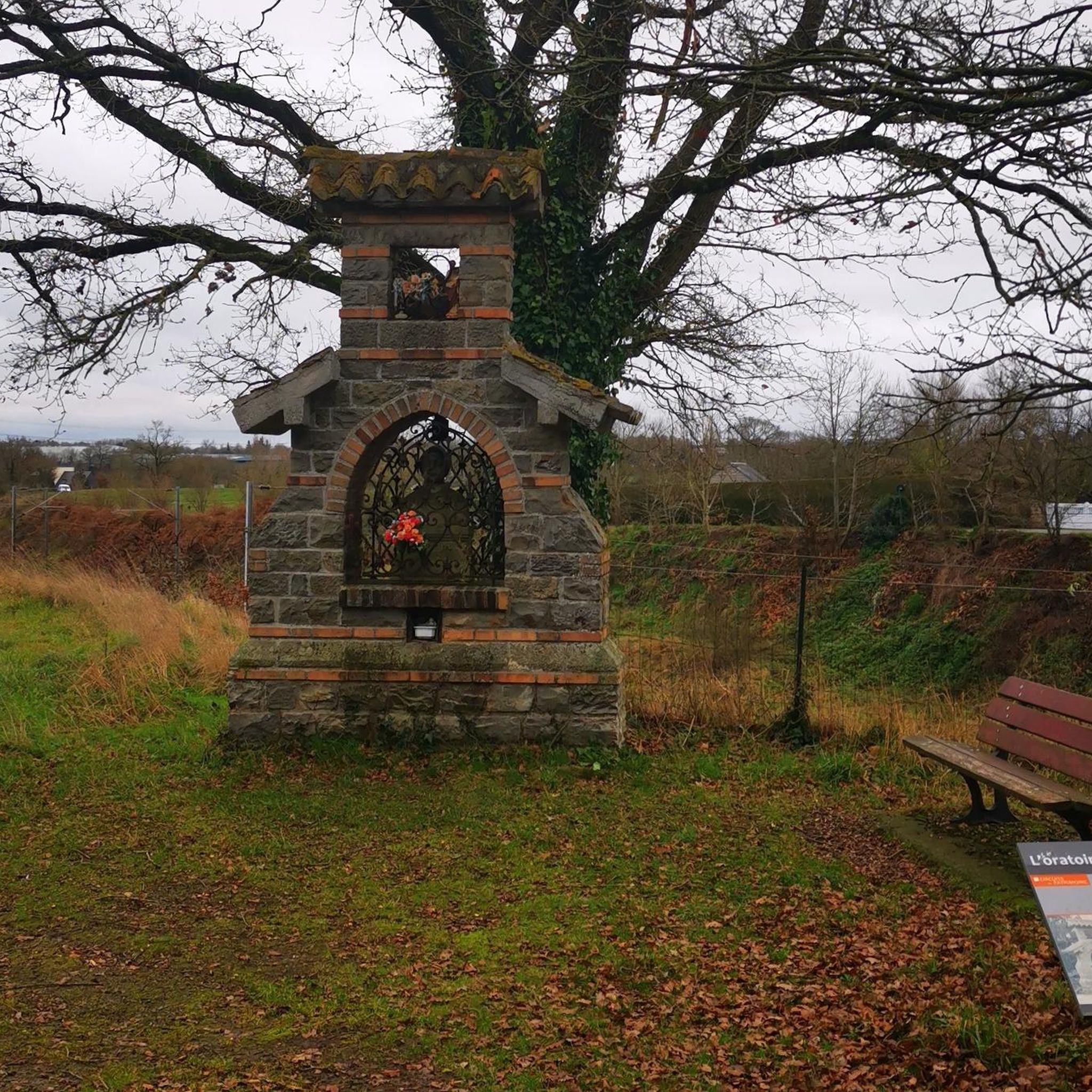
Unusual dimensions for a dolmen. I visited it on a weekday and had the site all to myself. Truly impressive. Also worth seeing is the chestnut tree at the entrance, which tried - but apparently failed - to swallow a megalith at the entrance to the dolmen. Toilets with a tap. Benches.
0
0

New church built from 1861 by Audrouin a hundred meters south of the old one. It was completed in 1875 with the construction of the tower.
0
0
The old church of Broons was destroyed in 1843. A new building, consecrated in 1846, was built on its site. Plans from 1839 of the church tower signed by Auguste Marchand are kept in the departmental archives.
0
0
Old church mentioned as early as 1160 and rebuilt in the 16th and 17th centuries (old tower dated 1582). The current church was entirely built to the plans of Arthur Regnault in 1904 (date and attribution by source). He uses the model of the so-called Plantagenet vaulted ceiling for the covering of the nave and aisles, but for the bell tower, he draws inspiration from Cornish bell walls. Two windows from the late 15th and 16th centuries of the old church were reused on the south side of the nave. This church, rebuilt in the Breton flamboyant style, is representative of the architect's style during this period.
0
0
The construction of the old church, razed in 1880, was attributed to the lord of Gué. The current church was built between 1880 and 1885 by the contractor Jean-Marie Huchet, based on plans by architect Aristide Folie. The furniture program was designed by Arthur Regnault between 1880 and 1900. The oldest stained glass windows are signed Claudius Lavergne et Fils. This church has a Latin cross plan and a porch bell tower at the facade. The interior is divided into three naves covered by false vaults on ribbed vaults. Neo-Gothic style. Spire not built.
0
0
The bell tower is visible from afar and has long dominated the town and its surroundings. The Saint-Pierre church has retained its impact on the local landscape for over a century. It was indeed in 1888 that the Fabrique Council decided to entrust Arthur Régnault, the diocese's architect, with the project for a new construction. His plan was accepted and work began in October 1889, before the blessing of the first stone on March 13, 1890. As an anecdote, the stones are extracted from the quarry of La Bouëxière. Quickly, the inhabitants discovered its citadel-like appearance, Arthur Régnault having wanted to honor the city of Châteaubourg which had not had a castle for a long time! The structural work was completed on March 28, 1893, but due to lack of funds, the bells would wait until 1894. The work on the woodwork and the construction of the high altar took place in 1911, the church being due to host the important Eucharistic congress of 1913. Maintenance work continued over the years, the church having become the property of the municipality since 1905. During the bombings of the summer of 1944, the church was spared. The inhabitants would not forget it: on May 9, 1945, the day after the armistice, the men carried Notre Dame de Boulogne in procession and paraded barefoot through the streets. The centenary was celebrated in 1992 with the decision to install the current organ. The church of Châteaubourg has thus traversed local history from the 15th century – the date of construction of the previous, much smaller church – to that designed by Arthur Régnault.
0
0
The construction of the Notre-Dame de Pocé les Bois church dates from 1890 by architect Regnault. The interior of the church houses a 15th-century polychrome wooden Christ on the cross and an 18th-century polychrome wooden Virgin and Child.
0
0
This parish belonged to the Collegiate Church Notre Dame de VITRE until the year 1116. It was then handed over to the Abbey of Saint Melaine (in RENNES). SAINT-DIDIER, the patron saint of the Parish, is undoubtedly the holy bishop of RENNES who lived at the end of the 7th century. His statue is part of the altarpiece of the high altar (1721), as well as that of Saint GOLVEN.
0
0
Frequently Asked Questions
How many road cycling routes are available around Servon-sur-Vilaine?
There are over 50 road cycling routes available around Servon-sur-Vilaine, catering to various preferences and skill levels. The komoot community has explored more than 300 of these routes.
What is the typical terrain like for road cycling in this region?
The terrain around Servon-sur-Vilaine is characterized by rural charm and extensive agricultural landscapes, with the Vilaine river playing a central role. You'll find a mix of flat sections and gentle climbs, with altitudes generally ranging from 34m to 91m. Some regional routes, particularly towards the nearby Coglais region, can feature more hilly landscapes.
Are there road cycling routes suitable for beginners or those looking for an easy ride?
Yes, Servon-sur-Vilaine offers several easy road cycling routes. For example, the Noyal-sur-Vilaine Church loop from Servon-sur-Vilaine is an easy 12.7 km ride with minimal elevation gain, perfect for a relaxed outing. There are 5 easy routes in total.
What natural features can I expect to see while road cycling around Servon-sur-Vilaine?
You can expect to cycle through tranquil natural landscapes shaped by the Vilaine river. Highlights include the serene Site naturel de Pasdavy, known for its diverse flora and wildlife, and the ruins of the Moulin de Pas Davy. Routes often traverse agricultural fields and greenways, offering a peaceful cycling experience.
Are there any historical landmarks or points of interest along the road cycling routes?
Yes, several routes incorporate historical elements. You might pass by local churches and chapels, or even the ruins of the Moulin de Pas Davy. The Lac de Vern-sur-Seiche – Saint-Armel Church loop from Servon connects natural areas with historical points of interest. Nearby attractions include Châteaugiron Castle and Tizé Estate.
Are there any circular road cycling routes in the area?
Many of the road cycling routes around Servon-sur-Vilaine are designed as loops, offering convenient circular journeys. Examples include the Corbière Pond – Domaine de Bertry loop from Servon and the Quiet Country Road – Noyal-sur-Vilaine Church loop from Servon.
Can I connect to larger cycling networks from Servon-sur-Vilaine?
Servon-sur-Vilaine is well-integrated into broader cycling networks. It's strategically located along the Vilaine river, which is part of the Route 2 (Saint-Malo - Arzal) green route, linking the English Channel to the Atlantic Ocean. This allows for connections to extensive long-distance cycling itineraries within Ille-et-Vilaine and Brittany.
What do other road cyclists say about the routes in Servon-sur-Vilaine?
The road cycling routes in Servon-sur-Vilaine are highly rated by the komoot community, with an average score of 4.1 stars from 8 reviews. Cyclists often praise the rural charm, the peaceful country roads, and the scenic paths along the Vilaine river.
Are there any longer or more challenging road cycling options for experienced cyclists?
While many routes are moderate, there are 6 difficult routes available for those seeking a greater challenge. The varied topography, with gentle climbs and descents, provides opportunities for more demanding rides. Some regional routes, especially towards the Coglais area, offer more significant elevation changes.
What is the best time of year for road cycling in Servon-sur-Vilaine?
The region is enjoyable for road cycling throughout the warmer months. Spring and autumn offer pleasant temperatures and beautiful scenery, while summer provides longer daylight hours. The rural roads and greenways are generally accessible year-round, weather permitting.
Are there any scenic viewpoints along the road cycling routes?
Yes, many routes offer picturesque views of the surrounding countryside. You can find a Beautiful viewpoint over the Étang de la Corbière, which is often included in local loops. The routes along the Vilaine river also provide scenic vistas of the waterway and its natural banks.
What is the average duration for a road cycling route in the area?
Route durations vary significantly based on distance and difficulty. For example, an easy route like the Noyal-sur-Vilaine Church loop from Servon-sur-Vilaine (12.7 km) takes about 30-35 minutes, while moderate routes like the Corbière Pond – Domaine de Bertry loop from Servon (37.6 km) typically take around 1 hour 42 minutes.
Most popular routes around Servon-Sur-Vilaine
Most popular attractions around Servon-Sur-Vilaine

Get inspired with the komoot mobile app


Explore more
Browse the best Road cycling routes in other regions.
