Attractions and Places To See around Ruelle-Sur-Touvre - Top 20
Best attractions and places to see around Ruelle-Sur-Touvre, located in the Charente department of Nouvelle-Aquitaine, France, offers a diverse landscape of historical sites and natural features. The area is characterized by the Touvre River, which flows through the town, and its surrounding valleys. Visitors can explore a blend of cultural heritage and scenic outdoor environments.
Best attractions and places to see around Ruelle-Sur-Touvre
- The most popular attractions is Saint-Pierre d'Angoulême Cathedral, a man-made monument that was built around 1110…
Last updated: August 30, 2026
Vallée des Eaux claires
Highlight (Segment) • Other
Translated by Google •
Tip by

Fleurac Islands
Highlight • Other
Translated by Google •
Tip by

Sign up now to discover places like this
Get recommendations on the best single tracks, peaks, & plenty of other exciting outdoor places.
Sign up for free
Saint-Pierre d'Angoulême Cathedral
Highlight • Monument
The construction of a replacement church …
Translated by Google •
Tip by

Town Hall
Highlight • Other
It is built on the …
Translated by Google •
Tip by
Fleurac Mill
Highlight • Other
Translated by Google •
Tip by

Sign up for free to discover even more attractions around Ruelle-Sur-Touvre.
Sign up for free
Already have an account?
Start today with a free account
Your next adventure awaits.
Login or Signup



Tips from the Community

Its location, near the city walls and an old city gate, corresponds to that of a primitive sanctuary, predating Christianity, probably a temple dedicated to Jupiter. A first cathedral was built during the 4th century, dedicated to Saint Saturninus. The building disappeared when Clovis captured Angoulême in 508, after he drove out the Visigoths following the victory at Vouillé in 507. Clovis and then King Charibert ordered the cathedral's reconstruction in honor of Saint Peter.[2] This second cathedral was consecrated in 566 by Saint Germain, Bishop of Paris, and Saint Euphronius, Bishop of Tours, and is mentioned in Gregory of Tours' History of the Franks.[Note 1] It was burned down, probably by the Normans. The third cathedral was the work of Grimoard of Mussidan, Bishop of Angoulême (991-1018). He was also Abbot of Brantôme in Périgord and used the abbey's revenues to finance its construction. Begun around 991 and consecrated in 1015, it lasted only a century, its dimensions being too small. Only the north wall remains in the second and third bays of the nave, beneath the windows.
0
0


The biblical accounts of the New Testament, which describe the events in the life of Jesus and his disciples, paint a very nuanced picture of the Apostle Peter (Saint-Pierre), to whom the church of Angoulême is dedicated: On the one hand, he is a convinced and determined disciple of Jesus, but also not free from human weakness and fear. In the Garden of Gethsemane, he falls asleep (like the other disciples) when Jesus turns to God the Father after the Last Supper and asks the disciples to pray as well; and after Jesus' arrest, Peter denies three times that he even knows him. But he also weeps over his weakness and, upon encountering the risen Christ, professes his love and loyalty to him. His real name is Simon, but Jesus gives him the name Peter (which means rock), upon which the church is to be built, and he gives him—according to the account of the Evangelist Matthew—the "keys to the kingdom of heaven."
0
0

Originally, the Fleurac mill – on the Charente, at the foot of the castle of the same name – was a wheat and oil mill from the 16th century. It was almost entirely rebuilt at the end of the 19th century, transformed into a paper mill in 1978, then purchased in 1983 by the General Council of Charente and transformed into a paper museum. Abandoned for several decades, it was transformed into a paper mill in 1978 by Mr. Lacombe, descendant of a family of papermakers for four generations. Faced with financial difficulties, this attempt was taken over by an association “Les amis de la tradition papetière d’Angoumois et des provinces voisins” which relaunched the activity of this mill, where paper was made in a vat from linen and cotton using 18th century techniques. The manufacturing equipment and the water wheel were rebuilt. It has been listed as a historic monument since 1984. Today, the Moulin de Fleurac is private property but the site of this mill on the banks of the Charente remains a very popular place for tourists.
0
0

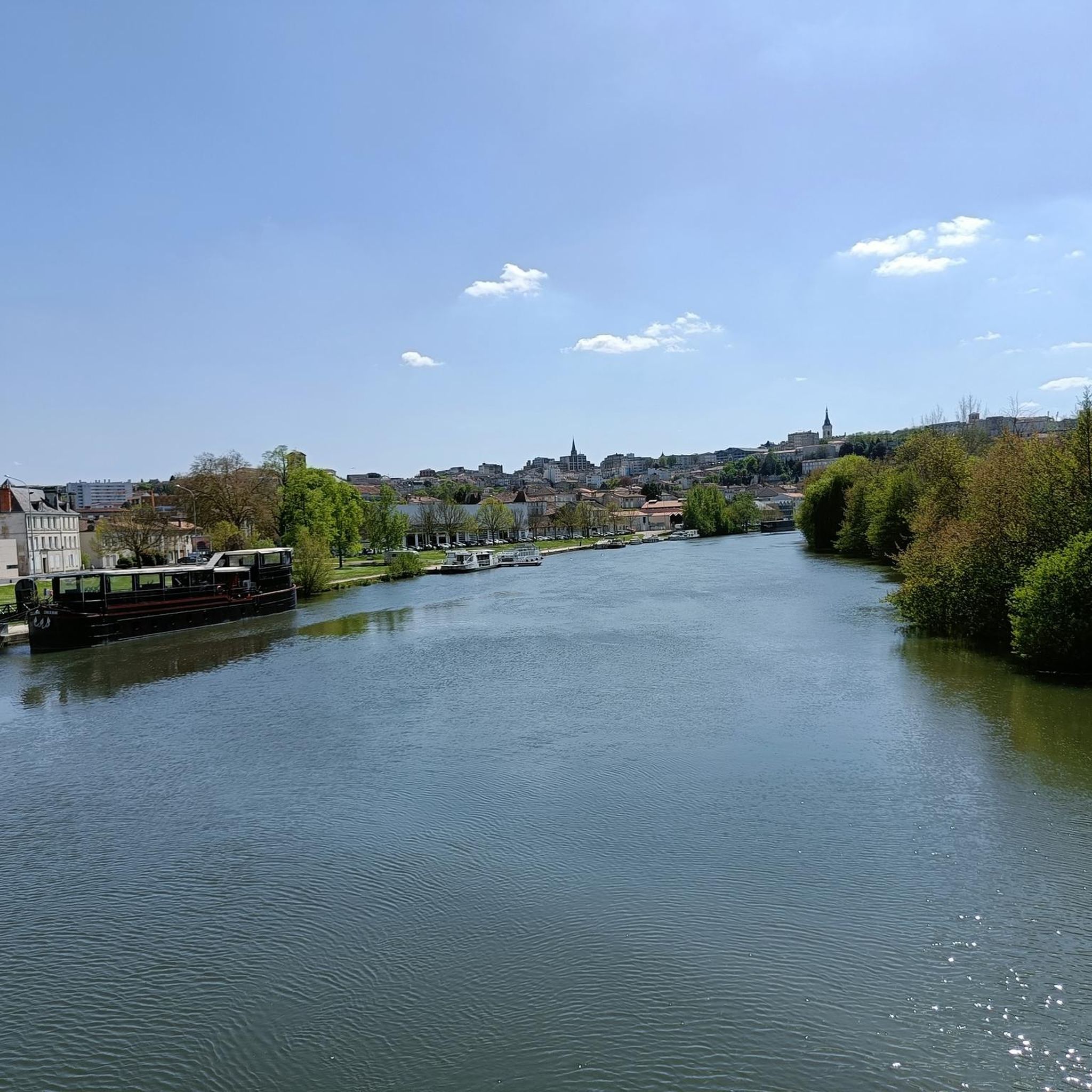
Superb spot to relax on the Charente, before going from one bank to the other. No car, but lots of steps to access the footbridges and locks.
1
0

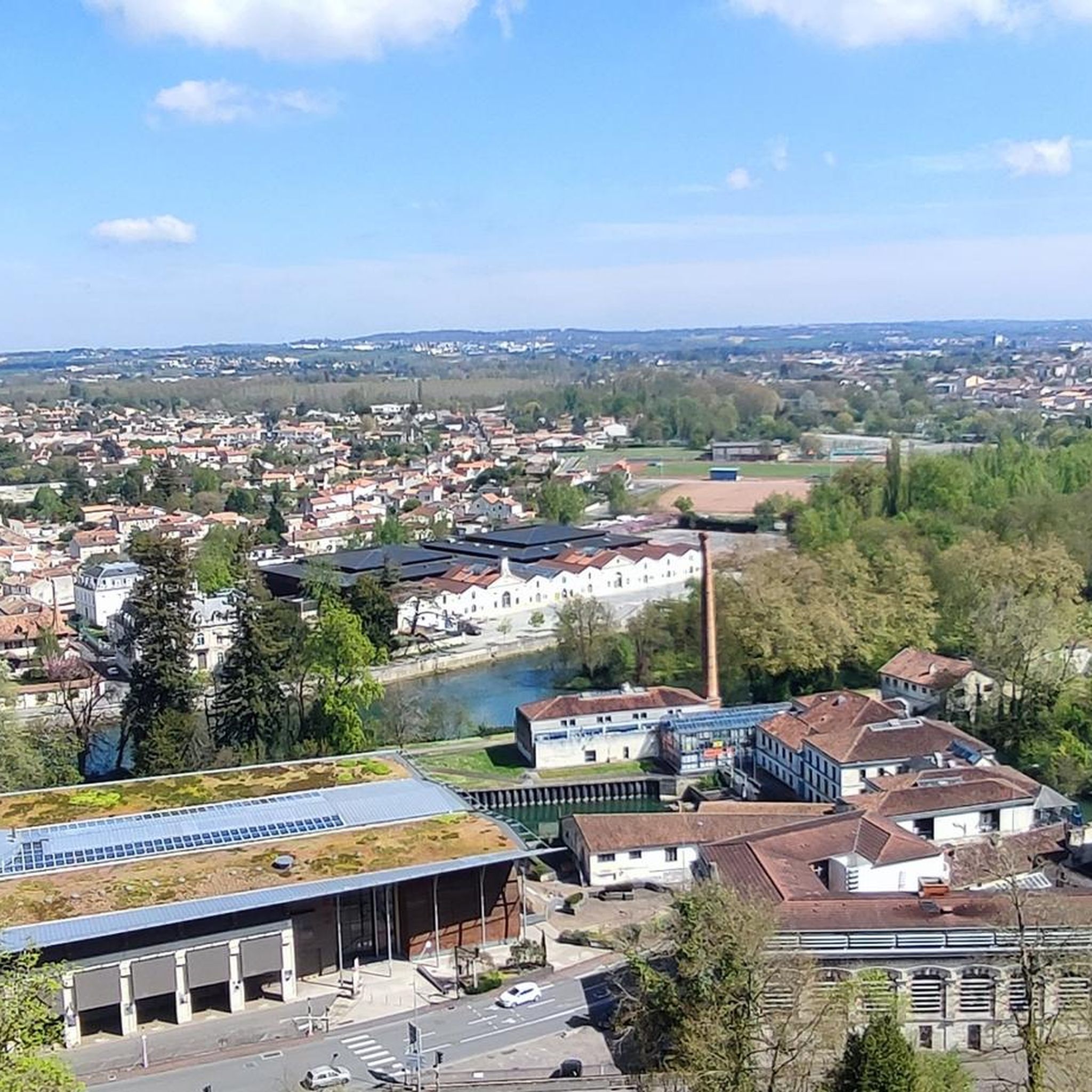
In the heart of the city, this town hall is truly impressive. This public building, the former castle of the Counts of Angoulême, was built in ten years starting in 1858. Paul Abadie Fils, the architect, will preserve two towers, one from the 13th century, the other from the 15th century. The monument presents different architectural styles, witnesses to the history of the city.
5
0

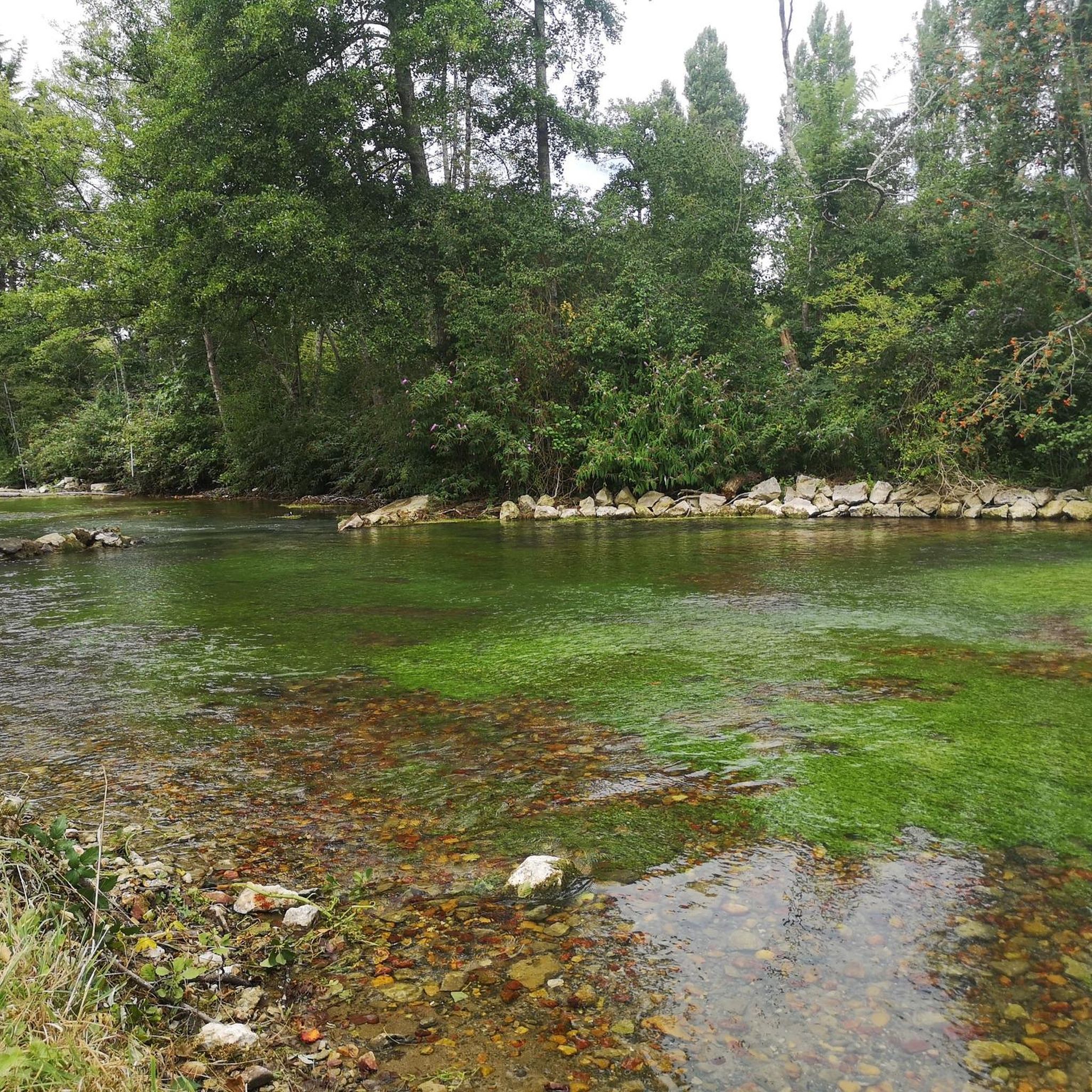
This beautiful valley is classified as a Site of European Interest due to its limestone cliffs and Mediterranean vegetation. The southern slopes are dry grassland which favors a warmer climate, while the northern slopes and valley floor are cooler and wetter. As a natural climbing site, it is known all over the world.
2
0
This beautiful valley is classified as a Site of European Interest due to its limestone cliffs and Mediterranean vegetation. The southern slopes are dry grassland which favors a warmer climate, while the northern slopes and valley floor are cooler and wetter. As a natural climbing site, it is known all over the world.
5
1
Frequently Asked Questions
What natural attractions can I explore around Ruelle-sur-Touvre?
The area boasts several beautiful natural sites. The Vallée des Eaux claires is a scenic valley known for its limestone cliffs and Mediterranean flora, recognized globally as a natural climbing destination. You can also visit the Fleurac Islands, a popular natural area with wooden walkways, ideal for walks and family picnics. The Touvre River itself, with its islands and bridges, offers pleasant areas for exploration.
Are there historical sites to visit in Ruelle-sur-Touvre and its surroundings?
Yes, Ruelle-sur-Touvre is rich in history. You can see the 16th-century Fontaine François Ier, the 17th-century Logis de Fissac, and the Saint-Médard Church of Ruelle, formerly a Cluny priory. Nearby, in Angoulême, don't miss the impressive Saint-Pierre d'Angoulême Cathedral, a significant historical monument with over 70 sculptures on its facade.
What kind of outdoor activities are available near Ruelle-sur-Touvre?
The region offers a variety of outdoor activities. For hiking, you can explore routes like the 'Tour of Garat' or the 'Touvre – Bous Blanc — Braconne hike loop'. Cyclists can enjoy road cycling routes such as the 'Touvre – La Lèche Washhouse loop' or gravel biking trails like the 'Greenway – Fleurac Islands loop'. You can find more details on these activities and routes in the dedicated guides for hiking, road cycling, and gravel biking around Ruelle-sur-Touvre.
Are there any family-friendly attractions or activities in the area?
Absolutely! The Fleurac Islands are a popular spot for families, offering wooden walkways and picnic areas, easily accessible by bike from Angoulême. The Saint-Pierre d'Angoulême Cathedral is also considered family-friendly, offering a glimpse into history and art. For an interactive outdoor adventure, consider the Tèrra Aventura geocaching course available within the commune.
Where can I find panoramic views of the region?
For exceptional panoramic views, head to the Chemin des diligences. From the Villement hill along this path, you can enjoy sweeping vistas of Angoulême, Ruelle, and Champniers.
What cultural experiences does Ruelle-sur-Touvre offer?
Ruelle-sur-Touvre has a rich industrial heritage, with sites like the Fonderie de Ruelle and mentions of 'Bâtiment 87'. The town also embraces street art with painted murals on the theme of 'nature in the city'. You can also experience local life at the weekly markets held on Thursdays and Sundays, or check the active cultural agenda for exhibitions and performances at the Théâtre Jean Ferrat.
Is there a place to learn about the local paper-making history?
Yes, the Fleurac Mill, originally a wheat and oil mill, was transformed into a paper mill and later a paper museum. Although now private property, the site on the banks of the Charente remains a popular spot and highlights the region's paper-making tradition.
What is special about the Touvre River in Ruelle-sur-Touvre?
The Touvre River is a central feature of the town, bisecting it and creating picturesque riverbanks dotted with islands and bridges. It's a tributary of the Charente River and provides a serene backdrop for walks and exploration. The river's flow also played a role in the town's industrial history, notably with the Fonderie de Ruelle.
Are there any unique architectural landmarks in the area?
Beyond the historical residences like Logis de Fissac and Logis de Villement, the Town Hall in nearby Angoulême is a unique architectural landmark. It was transformed from a former castle, incorporating two original towers from the 13th and 15th centuries, and now houses art and archaeology museums.
What do visitors particularly enjoy about the attractions around Ruelle-sur-Touvre?
Visitors appreciate the diverse landscape, from historical monuments to scenic natural features. The Fleurac Islands are loved for their family-friendly atmosphere and ease of access for cyclists. The Vallée des Eaux claires is highly regarded for its natural beauty and climbing opportunities. The blend of cultural heritage and outdoor environments makes the area appealing to many.
Can I find information about local walks along the Touvre River?
Yes, there are urban walks available that follow the Touvre River. You can find more details about these routes, such as the 'Promenade urbaine au fil de la Touvre' or 'Circuit au fil de la Touvre', on the Angoulême tourism website. For example, you can explore routes like Promenade urbaine au fil de la Touvre or Circuit au fil de la Touvre.
Most popular routes around Ruelle-Sur-Touvre

Get inspired with the komoot mobile app


Explore more
Still not found the Highlight you’re looking for? See guides of the top attractions in other regions:
