Attractions and Places To See around La Grande-Fosse - Top 20
Best attractions and places to see around La Grande-Fosse include a variety of historical sites and natural features within the Ballons des Vosges Regional Natural Park. This commune in the Vosges department is characterized by its rugged landscape, with altitudes reaching 820 meters at Servaumont. The area offers insights into ancient history and significant World War I events, making it a notable destination for those interested in both nature and heritage.
Best attractions and places to see around La Grande-Fosse
- The most popular attractions is La Bure Celtic Camp, a historical site that is a fortified plateau known for extensive archaeological research. This site, classified as a Historical Monument, shows evidence of habitation since the Neolithic period and was used intensively by Celts and Romans.
- Another must-see spot is Roche Mère Henry, a fortress of the 1st World War. Visitors can explore the observation platforms and tunnels of this rocky outcrop, which was heavily fortified by German troops and offers an interesting vantage point.
- Visitors also love Trail of the Hamlets Fallen for France – La Fontenelle, a historical site and battlefield. This area features a military cemetery and information boards detailing the trench warfare of 1914/15, with paths suitable for exploring the old battlefield.
- La Grande-Fosse is known for historical sites, viewpoints, and natural monuments. The region offers a variety of attractions to see and explore, from ancient Celtic settlements to World War I battlefields.
- The attractions around La Grande-Fosse are appreciated by the komoot community, with 68 photos and 61 upvotes contributing to their appeal.
Last updated: July 6, 2026
Roche Mère Henry
Highlight • Other
The rock head with viewing platform was massively expanded by German troops and was fiercely contested for years. Underground passages of both German and French troops ran on different levels through the hill and through the various blasts he was named "Pelé" - the scalped.
Today, the two rocks, which are accessible by a staircase and connected by a bridge, offer an interesting vantage point.
Translated by Google •
Tip by

Trail of the Hamlets Fallen for France – La Fontenelle
Highlight • Historical Site
Here are buried some French soldiers who lost their lives on the battlefield of Hill 627, as the military name goes, defending France against the German invaders in the First World War.
There are several paths here, including around the old battlefield. The shortest way is about 600 meters long and also suitable for wheelchairs. There are some information boards with photos from the period 1914/15, when a cruel trench warfare took place here, which also killed three hamlets that were never rebuilt. At the car park there are large information boards in three languages (French, English and German).
Ancient trenches and fortified positions can still be found throughout the area. Unfortunately, also ammunition that did not detonate and can therefore pose a great danger to the curious person. Take care of your children and leave any finds lying around.
Here is some information in German: de.wikipedia.org/wiki/La_Fontenelle
Translated by Google •
Tip by

Sign up now to discover places like this
Get recommendations on the best single tracks, peaks, & plenty of other exciting outdoor places.
Sign up for free
La Bure Celtic Camp
Highlight • Historical Site
The site has been inhabited since at least the Neolithic period. Then used intensively by the Celts and later by the Romans. There is a lot to see from that time, also because there have not been any settlement activities worth mentioning for a long time.
More information e.g. here: fr.wikipedia.org/wiki/Camp_celtique_de_la_Bure
Translated by Google •
Tip by
Saint-Dié Cathedral
Highlight • Religious Site
en.wikipedia.org/wiki/Cathedral_of_Saint-Di%C3%A9
Translated by Google •
Tip by
Col de Steige
Highlight • Mountain Pass
Translated by Google •
Tip by

Sign up for free to discover even more attractions around La Grande-Fosse.
Sign up for free
Already have an account?
Start today with a free account
Your next adventure awaits.
Login or Signup

Tips from the Community

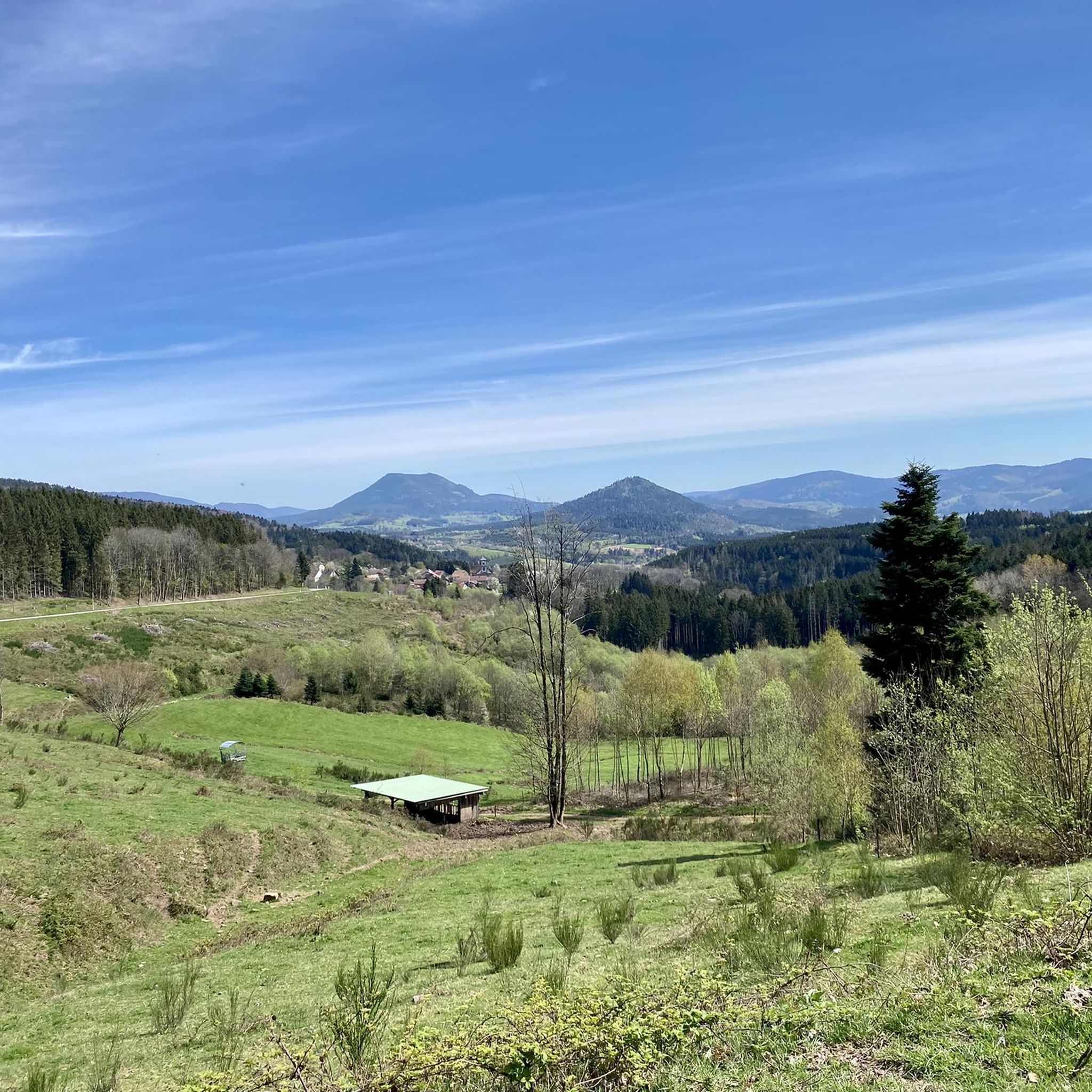
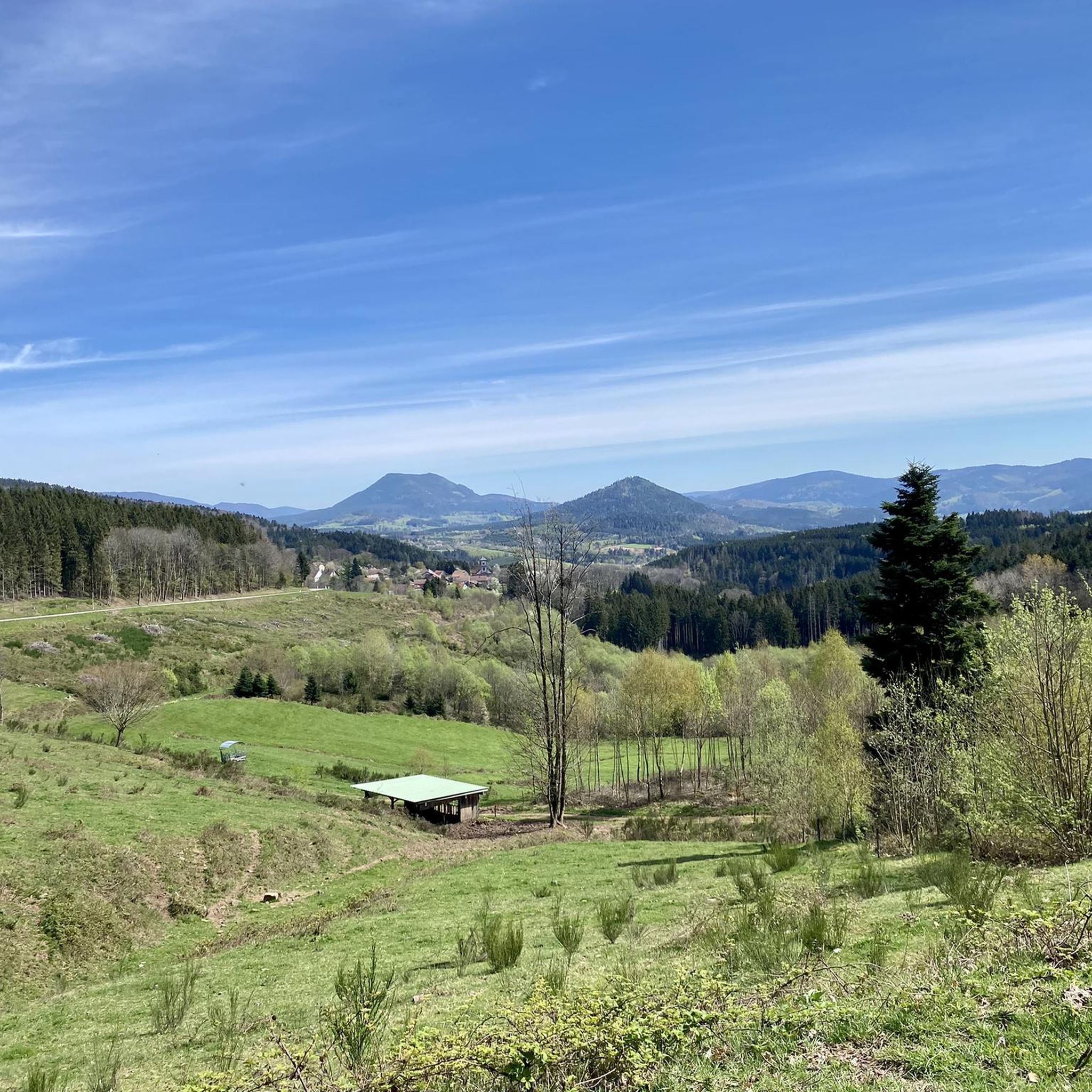
Two prominent rocks form a great viewing point here. They are connected by a bridge and can be reached via a staircase. On the first rock you will find a panoramic map on the brick parapet. There is a natural bench under this rock. The German command post for this section of the front during the First World War is also located here. It was fortified with reinforced concrete in 1916.
2
1

The Celtic camp of the Bure is a fortified plateau bordering the Haute-Meurthe valley in the Grand-East of France. The plateau, now wooded, lies between the communes of Saint-Dié-des-Vosges and that of Hurbache, at the western end of the Ormont massif. This site, known for 23 years of archaeological research from 1964 to 1986, has been classified as a Historical Monument since August 6, 1982. The site has been inhabited since at least the Neolithic period. Then used intensively by the Celts and later by the Romans. There is a lot to see from that time, also because there have not been any settlement activities worth mentioning for a long time. More information e.g. here: https://fr.wikipedia.org/wiki/Camp_celtique_de_la_Bure
6
0
La Fontanelle - military cemetery and battlefield Here are buried some French soldiers who lost their lives on the battlefield of Hill 627, as the military name goes, defending France against the German invaders in the First World War. There are several paths here, including around the old battlefield. The shortest way is about 600 meters long and also suitable for wheelchairs. There are some information boards with photos from the period 1914/15, when a cruel trench warfare took place here, which also killed three hamlets that were never rebuilt. At the car park there are large information boards in three languages (French, English and German). Ancient trenches and fortified positions can still be found throughout the area. Unfortunately, also ammunition that did not detonate and can therefore pose a great danger to the curious person. Take care of your children and leave any finds lying around. Here is some information in German: https://de.wikipedia.org/wiki/La_Fontenelle
2
0
As early as the 7th century, Deodatus (French Dieudonné), who was revered by the people as a saint, is said to have founded a monastery here, from which a community of canons then developed in the 10th century. At that time the church wore the patron saint of St. Mauritius. The diocese of Saint-Dié was only established in 1777 by Pope Pius VI. († 1799) built. The church building, which was built in different architectural styles, was blown up by the Germans in 1944, destroying the entire nave and the choir area along with their vaults. The reconstruction lasted until 1974; in this year the church was newly consecrated. Most of the stained glass windows were made and inserted in the 1980s. https://en.wikipedia.org/wiki/Cathedral_of_Saint-Di%C3%A9
3
0

The Col de Steige from Saint Martin is 9.7km long with a total drop of 249m. The average gradient is 2.57% with maximum gradients of 5.3%.
2
0

A walk marked with panels explaining the front line during 14//18
0
1

Frequently Asked Questions
What kind of outdoor activities can I do near La Grande-Fosse?
The rugged landscape of La Grande-Fosse, situated within the Ballons des Vosges Regional Natural Park, offers excellent opportunities for outdoor activities. You can find numerous routes for hiking and cycling. For detailed hiking trails, explore the Hiking around La Grande-Fosse guide. If you prefer cycling, check out the Cycling around La Grande-Fosse guide or the Road Cycling Routes around La Grande-Fosse guide.
What historical sites can I visit around La Grande-Fosse?
The area around La Grande-Fosse is rich in history. You can explore the ancient La Bure Celtic Camp, a fortified plateau with evidence of habitation since the Neolithic period. For World War I history, visit Roche Mère Henry, a heavily fortified rocky outcrop, or the Trail of the Hamlets Fallen for France – La Fontenelle, a battlefield with a military cemetery and information boards.
Are there any family-friendly attractions or activities in the area?
Yes, there are options for families. The Trail of the Hamlets Fallen for France – La Fontenelle offers a short, approximately 600-meter path that is also suitable for wheelchairs, making it accessible for families with strollers. The Saint-Dié Cathedral is also categorized as family-friendly and offers an interesting historical visit.
What natural features can I explore near La Grande-Fosse?
La Grande-Fosse is nestled within the Ballons des Vosges Regional Natural Park, offering diverse natural beauty. You can explore dense forests, mountains, and local waterways like the Sainte-Catherine stream. The commune itself features a rugged relief, with its highest point, Servaumont, reaching 820 meters, providing scenic views and opportunities for nature walks.
What is the best time to visit La Grande-Fosse for outdoor activities?
The Ballons des Vosges Regional Natural Park is generally enjoyable from spring through autumn for hiking and cycling, when the weather is milder and the trails are clear. Summer offers lush greenery, while autumn brings vibrant foliage. Winter can be beautiful for snow activities, but some trails might be less accessible.
Are there any challenging hiking trails around La Grande-Fosse?
Yes, for experienced hikers, there are challenging routes available. For example, the "Julius Tower (Tour du Climont) – View from Mont Climont loop from Saâles" is a difficult 20 km hike. You can find more challenging options in the Hiking around La Grande-Fosse guide.
Where can I find viewpoints with scenic vistas?
The area offers several excellent viewpoints. Roche Mère Henry provides an interesting vantage point from its two prominent rocks, connected by a bridge. The La Bure Celtic Camp is also noted as a viewpoint, offering expansive views from its fortified plateau.
What is the significance of the Ballons des Vosges Regional Natural Park?
La Grande-Fosse is one of the 201 communes within the Ballons des Vosges Regional Natural Park. This expansive park is significant for its diverse environment, including mountains, dense forests, lakes, and peat bogs. It's a protected area that offers numerous opportunities for nature exploration and outdoor pursuits, preserving the region's natural and cultural heritage.
Can I find any historical churches or religious buildings nearby?
Yes, the commune of La Grande-Fosse has a central church that serves as a notable landmark. Additionally, the Saint-Dié Cathedral, though not directly in La Grande-Fosse, is a significant historical and architectural site in the broader region, with origins dating back to the 7th century.
What do visitors appreciate most about the attractions around La Grande-Fosse?
Visitors particularly enjoy the blend of natural beauty and rich history. The historical sites like La Bure Celtic Camp and Roche Mère Henry offer fascinating insights into ancient and World War I history. The scenic viewpoints and the opportunity to explore the rugged landscape of the Vosges are also highly valued by the komoot community.
Are there any easy walking trails suitable for a leisurely stroll?
Yes, for those seeking easier walks, the Trail of the Hamlets Fallen for France – La Fontenelle offers a short path of about 600 meters. Additionally, the Hiking around La Grande-Fosse guide includes moderate trails like the "Park – Roche des Fées Viewpoint loop from Saales" (9.2 km) which might be suitable for a leisurely pace.
Most popular routes around La Grande-Fosse
Most popular attractions around La Grande-Fosse

Get inspired with the komoot mobile app


Explore more
Still not found the Highlight you’re looking for? See guides of the top attractions in other regions:
