Attractions and Places To See around Hurbache - Top 20
Best attractions and places to see around Hurbache include significant historical sites and natural viewpoints. The region is characterized by its location in the Grand-East of France, featuring a fortified plateau bordering the Haute-Meurthe valley. Hurbache also holds historical importance, particularly related to World War I, with several preserved battlefields and military cemeteries. It offers a blend of historical exploration and outdoor discovery.
Best attractions and places to see around Hurbache
- The most popular attractions is La Bure Celtic Camp…
Last updated: July 2, 2026
Roche Mère Henry
Highlight • Other
The rock head with viewing platform was massively expanded by German troops and was fiercely contested for years. Underground passages …
Translated by Google •
Tip by

Trail of the Hamlets Fallen for France – La Fontenelle
Highlight • Historical Site
Here are buried some French soldiers who lost their lives on the battlefield of Hill 627, as the military name goes, defending France …
Translated by Google •
Tip by

Sign up now to discover places like this
Get recommendations on the best single tracks, peaks, & plenty of other exciting outdoor places.
Sign up for free
La Bure Celtic Camp
Highlight • Historical Site
Translated by Google •
Tip by
Saint-Dié Cathedral
Highlight • Religious Site
Translated by Google •
Tip by
Franco-German Military Cemetery Bertrimoutier
Highlight • Historical Site
Translated by Google •
Tip by

Sign up for free to discover even more attractions around Hurbache.
Sign up for free
Already have an account?
Start today with a free account
Your next adventure awaits.
Login or Signup


Tips from the Community

This impressive First World War cemetery is located in the hamlet of Aux Zières de la Vigne near Bertrimoutier (Vosges). It consists of two parts: a French national necropolis with 966 individual graves, including 12 Russian and 1 Romanian soldier, and a German military cemetery with 6,749 dead, more than 4,000 of whom are buried in ossuaries. The site was created between 1921 and 1924 and has become a symbol of shared remembrance. The German graves are marked with simple metal crosses; the names of the unknown are on bronze plaques. Most of the dead fell during the Battle of Lorraine in August 1914 or during trench warfare in the years that followed.
9
0

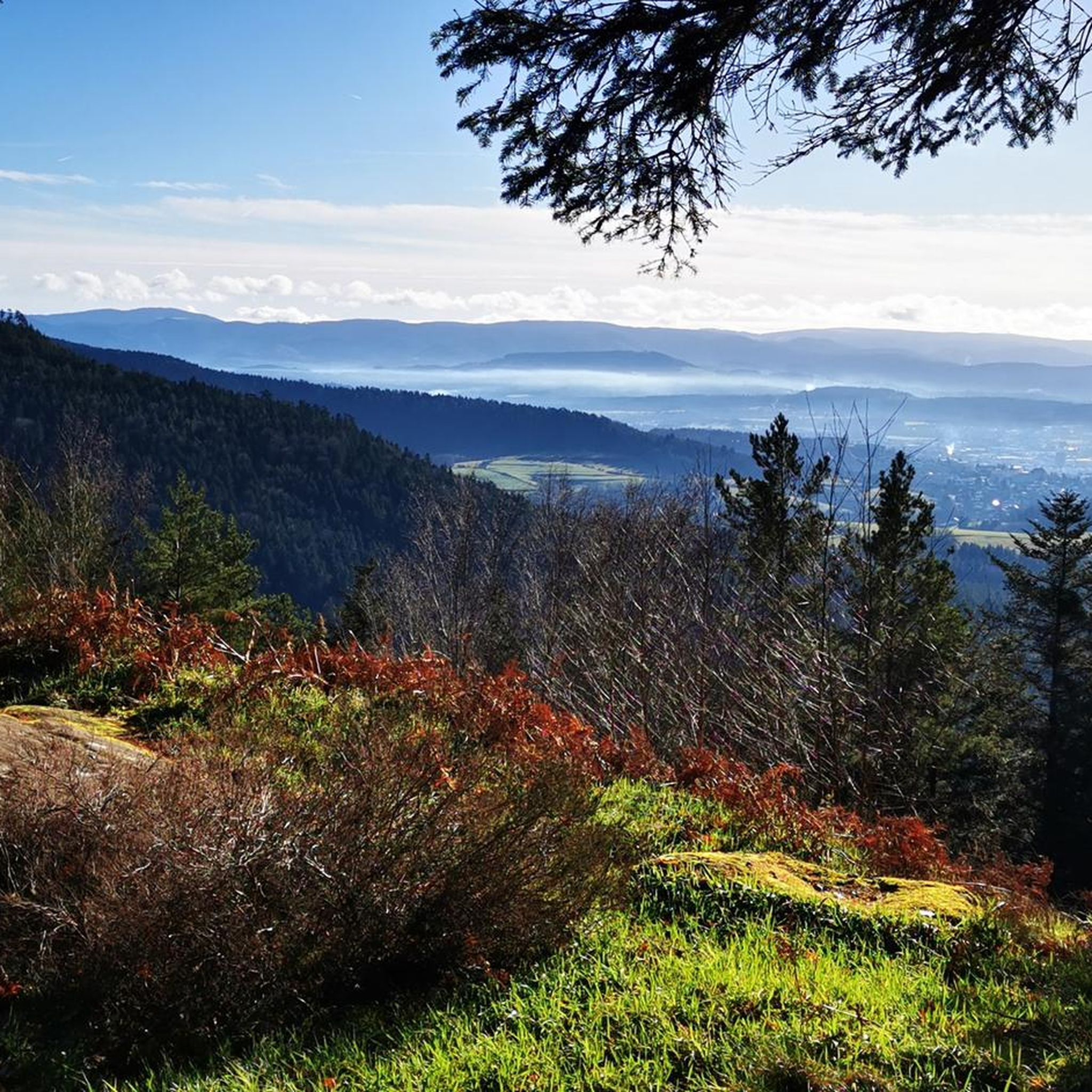
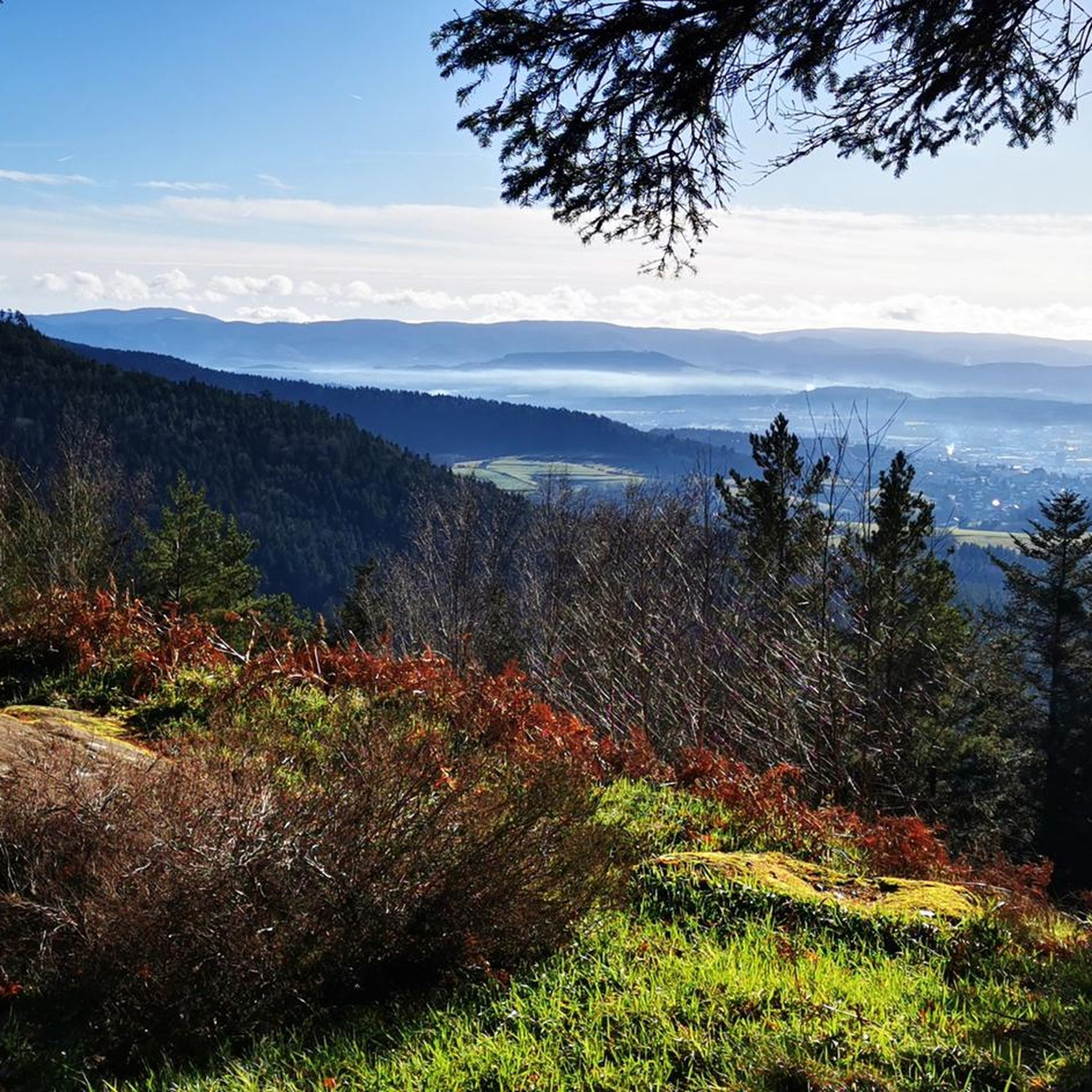
Two prominent rocks form a great viewing point here. They are connected by a bridge and can be reached via a staircase. On the first rock you will find a panoramic map on the brick parapet. There is a natural bench under this rock. The German command post for this section of the front during the First World War is also located here. It was fortified with reinforced concrete in 1916.
2
1

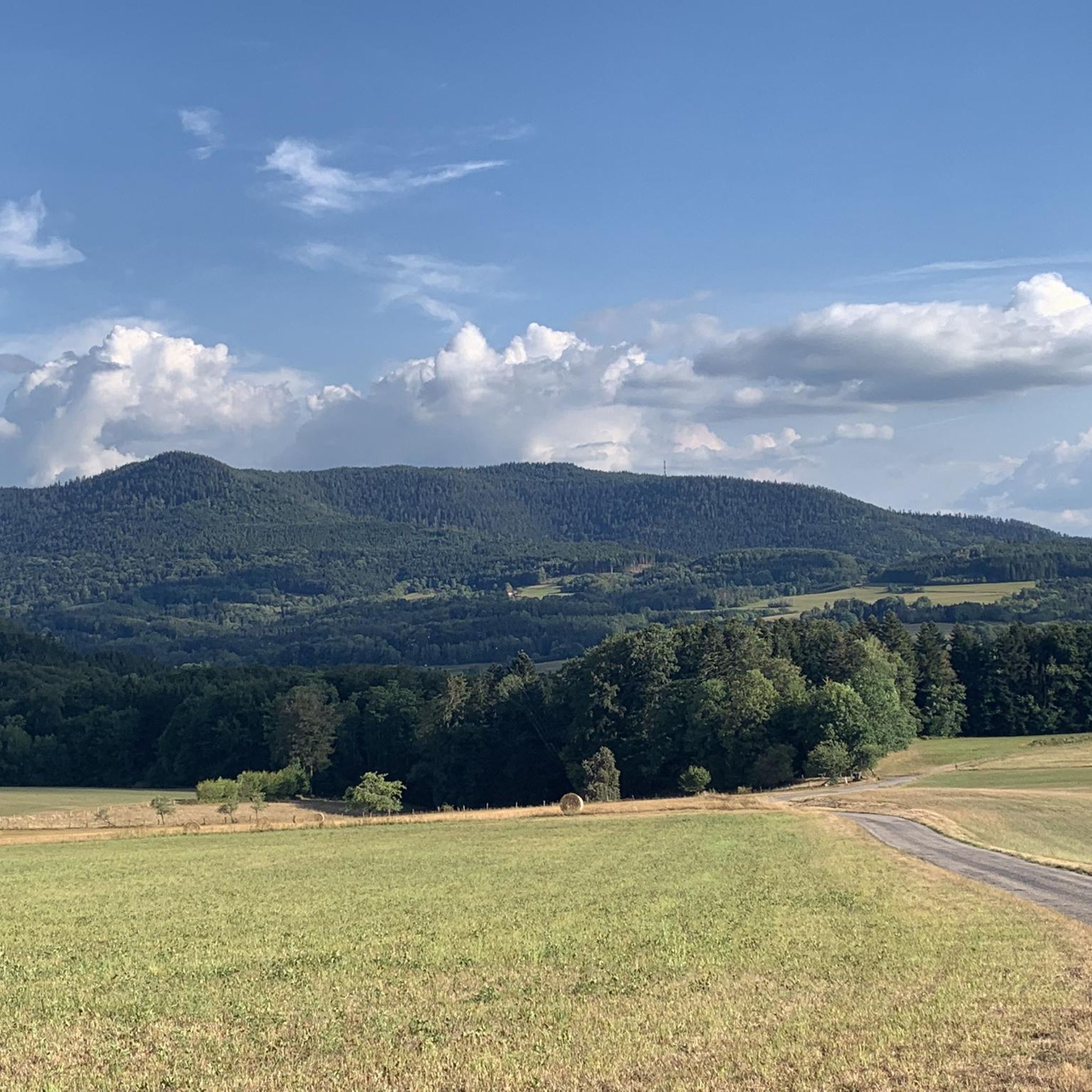
The Celtic camp of the Bure is a fortified plateau bordering the Haute-Meurthe valley in the Grand-East of France. The plateau, now wooded, lies between the communes of Saint-Dié-des-Vosges and that of Hurbache, at the western end of the Ormont massif. This site, known for 23 years of archaeological research from 1964 to 1986, has been classified as a Historical Monument since August 6, 1982. The site has been inhabited since at least the Neolithic period. Then used intensively by the Celts and later by the Romans. There is a lot to see from that time, also because there have not been any settlement activities worth mentioning for a long time. More information e.g. here: https://fr.wikipedia.org/wiki/Camp_celtique_de_la_Bure
6
0
La Fontanelle - military cemetery and battlefield Here are buried some French soldiers who lost their lives on the battlefield of Hill 627, as the military name goes, defending France against the German invaders in the First World War. There are several paths here, including around the old battlefield. The shortest way is about 600 meters long and also suitable for wheelchairs. There are some information boards with photos from the period 1914/15, when a cruel trench warfare took place here, which also killed three hamlets that were never rebuilt. At the car park there are large information boards in three languages (French, English and German). Ancient trenches and fortified positions can still be found throughout the area. Unfortunately, also ammunition that did not detonate and can therefore pose a great danger to the curious person. Take care of your children and leave any finds lying around. Here is some information in German: https://de.wikipedia.org/wiki/La_Fontenelle
2
0
As early as the 7th century, Deodatus (French Dieudonné), who was revered by the people as a saint, is said to have founded a monastery here, from which a community of canons then developed in the 10th century. At that time the church wore the patron saint of St. Mauritius. The diocese of Saint-Dié was only established in 1777 by Pope Pius VI. († 1799) built. The church building, which was built in different architectural styles, was blown up by the Germans in 1944, destroying the entire nave and the choir area along with their vaults. The reconstruction lasted until 1974; in this year the church was newly consecrated. Most of the stained glass windows were made and inserted in the 1980s. https://en.wikipedia.org/wiki/Cathedral_of_Saint-Di%C3%A9
3
0

A walk marked with panels explaining the front line during 14//18
0
1

Frequently Asked Questions
What historical sites can I explore around Hurbache?
Hurbache is rich in history, particularly from World War I and ancient times. You can visit the La Bure Celtic Camp, a fortified plateau with evidence of habitation since the Neolithic period, extensively used by Celts and Romans. Another significant site is the Trail of the Hamlets Fallen for France – La Fontenelle, which features a military cemetery and battlefield from World War I with preserved trenches and information boards. The Franco-German Military Cemetery Bertrimoutier also serves as a poignant reminder of the region's past.
Are there any viewpoints or natural monuments to visit near Hurbache?
Yes, the region offers several scenic viewpoints. Roche Mère Henry is a prominent rock formation that served as a World War I fortress and now provides an interesting vantage point, accessible via a staircase and bridge. The La Bure Celtic Camp also offers great views from its fortified plateau, which is considered a natural monument.
What outdoor activities are available around Hurbache?
The Hurbache area is excellent for various outdoor activities. You can find numerous routes for hiking, mountain biking, and gravel biking. For detailed routes and guides, explore Hiking around Hurbache, MTB Trails around Hurbache, and Gravel biking around Hurbache.
Are there family-friendly attractions in the Hurbache area?
Yes, several attractions are suitable for families. The Trail of the Hamlets Fallen for France – La Fontenelle offers an educational experience with its historical battlefield and information boards, and a short path is even wheelchair accessible. The Franco-German Military Cemetery Bertrimoutier is also considered family-friendly for respectful visits. Additionally, the Saint-Dié Cathedral is a historical and religious site that can be visited by families.
Are there any wheelchair accessible attractions around Hurbache?
Yes, the Trail of the Hamlets Fallen for France – La Fontenelle offers a specific path that is suitable for wheelchairs. This approximately 600-meter-long route allows visitors to explore parts of the World War I battlefield and military cemetery.
What kind of hiking trails can I find near Hurbache?
You'll find a variety of hiking trails, including easy and moderate options. For example, there are easy loops around the La Bure Celtic Camp, such as the 'La Bure Celtic Camp – Great point of view loop from Massif de la Bure' (4.3 km). You can explore more options in the Hiking around Hurbache guide.
What do visitors enjoy most about the attractions around Hurbache?
Visitors particularly appreciate the blend of historical exploration and outdoor discovery. The historical sites like the La Bure Celtic Camp offer insights into ancient civilizations, while World War I sites like La Fontenelle provide a poignant historical experience. The scenic viewpoints, such as Roche Mère Henry, are also highly rated for their panoramic views and historical context.
Can I find information about World War I history in Hurbache?
Absolutely. Hurbache and its surroundings played a significant role in World War I. You can visit the Trail of the Hamlets Fallen for France – La Fontenelle, which is a preserved battlefield with trenches and information boards. Roche Mère Henry was also a WWI fortress, and the Franco-German Military Cemetery Bertrimoutier is a major memorial site.
Are there any religious or architectural landmarks in the area?
Yes, the Saint-Dié Cathedral is a notable religious and architectural landmark. Originally founded in the 7th century, it features various architectural styles and was rebuilt after being damaged in 1944, with most of its stained glass windows installed in the 1980s.
What kind of biking trails are available near Hurbache?
The area around Hurbache offers diverse biking opportunities. You can find challenging gravel biking routes, such as the 'Rascal's Head – Tête du Coquin Summit loop from Senones' (80 km), and various mountain biking trails, including moderate options like the 'View from the Roches de Faucompierre – View from Pierre d'Appel loop from Moyenmoutier' (35 km). More details are available in the Gravel biking around Hurbache and MTB Trails around Hurbache guides.
Are there any hidden gems or less-known spots worth discovering?
While the main attractions are well-known, exploring the extensive network of trails around sites like the La Bure Celtic Camp can lead to discovery of ancient fortifications and less-trodden paths. The historical significance of the entire region, with its preserved WWI trenches and battlefields, offers a deeper, more reflective experience beyond just the main viewpoints.
Most popular routes around Hurbache
Most popular attractions around Hurbache

Get inspired with the komoot mobile app


Explore more
Still not found the Highlight you’re looking for? See guides of the top attractions in other regions:
