The best road cycling routes around Claix
4.5
(33)
1,317
riders
316
rides
Road cycling around Claix offers diverse terrain, from challenging mountain passes to accessible river valley paths. The region is situated near the Vercors Massif, providing demanding ascents and panoramic views. Routes also extend into the foothills of the Belledonne and Chartreuse ranges, while flatter paths are available along the Isère and Drac river valleys. The area is characterized by its significant forest cover and limestone formations.
Best road cycling routes around Claix
- The most popular road cycling route is Mouthiers-sur-Boëme…
Last updated: August 23, 2026
2
riders
71.7km
03:48
840m
840m
Cycle a moderate 44.5-mile (71.7 km) loop through the forests and rolling landscapes around Mouthiers-sur-Boëme, gaining 2750 feet (838 metr
9
riders
57.3km
02:32
500m
500m
Moderate road ride. Good fitness required. Mostly well-paved surfaces and easy to ride.

Sign up for free
5.0
(3)
4
riders
36.1km
01:45
430m
430m
Moderate road ride. Good fitness required. Mostly well-paved surfaces and easy to ride.
4
riders
52.6km
02:19
430m
430m
Moderate road ride. Good fitness required. Mostly well-paved surfaces and easy to ride.
6
riders
57.3km
02:32
380m
380m
Moderate road ride. Good fitness required. Mostly well-paved surfaces and easy to ride.
Get access to more routes and recommendations from other explorers.
Sign up for free
Already have an account?
Our route recommendations are based on thousands of hikes, rides, and runs completed by other people on komoot.
Start today with a free account
Your next adventure awaits.
Login or Signup
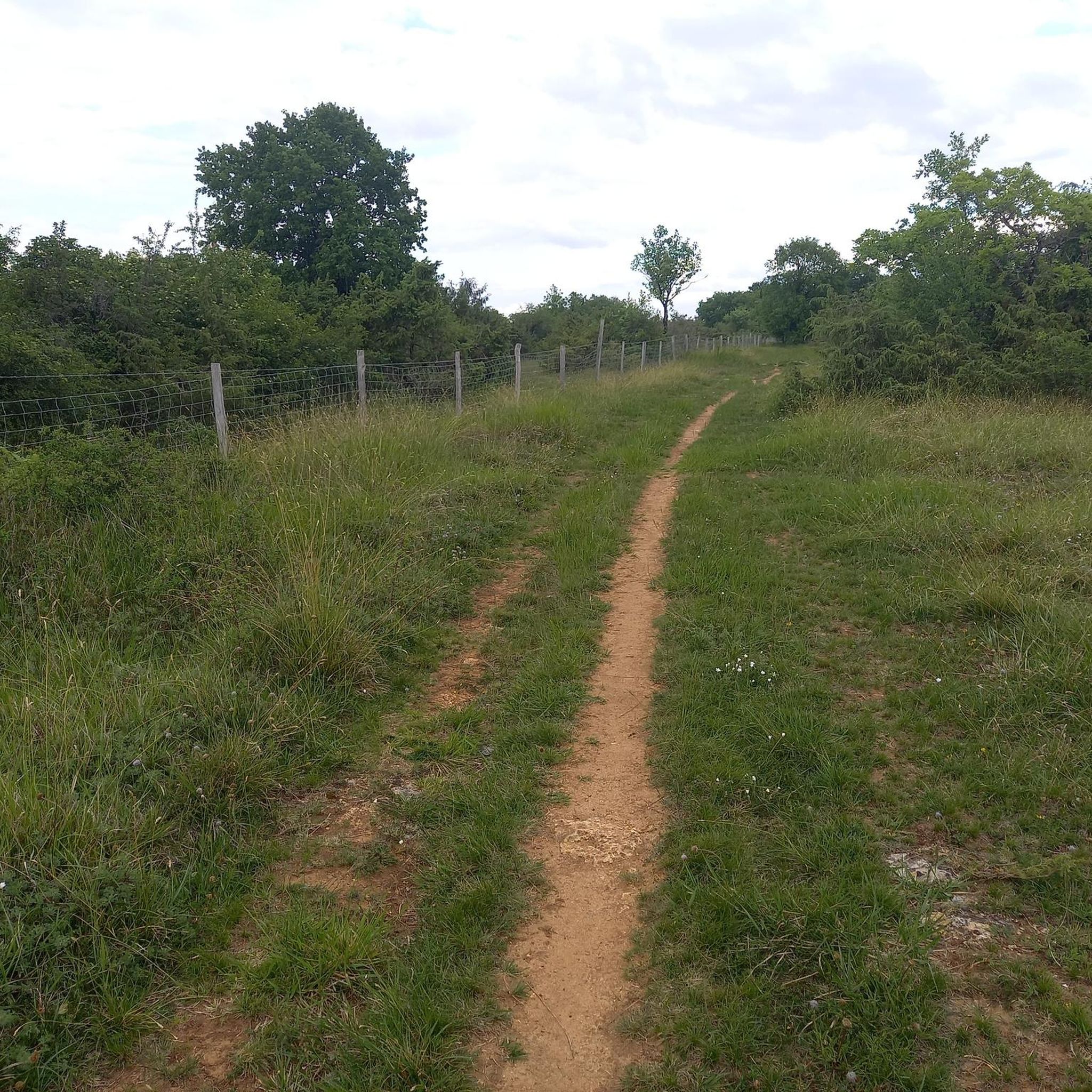
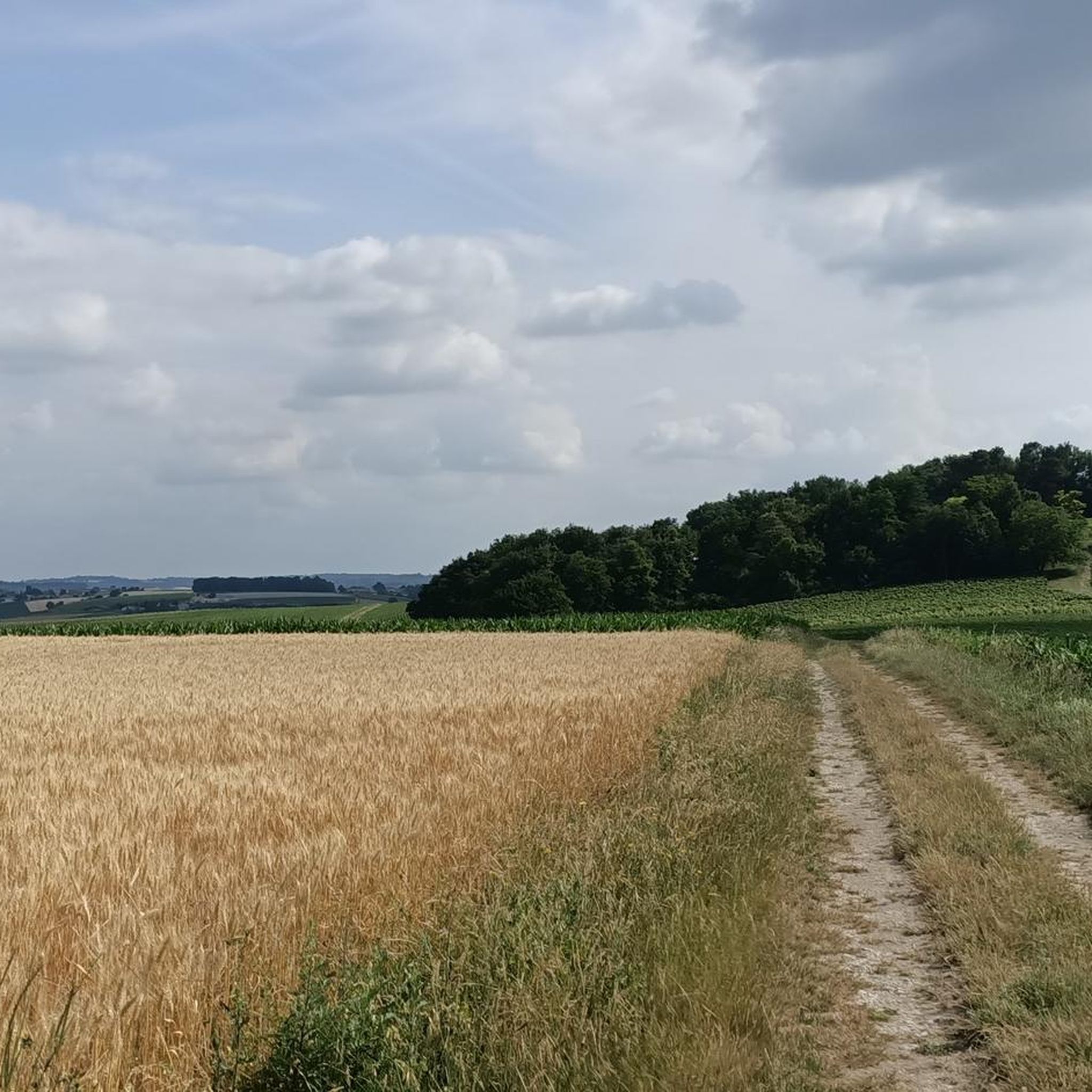


Tips from the Community


The Saint-Cybard Church of Plassac-Rouffiac is located in the village of Plassac-Rouffiac, in Charente. Built in the Romanesque style, it was listed as a historic monument in 1862. At the intersection of an ancient Roman road connecting Périgueux and Saintes, known as the "Boisné Road," and a road south of Angoulême, this small church boasts several assets: refined sculpted decoration, harmonious proportions, and a façade enlivened by arcades. The façade is divided horizontally into four levels by cornices: the ground floor with a central portal flanked by blind arcades, the second and third levels occupied by semicircular arches, and the top level topped with a triangular pediment. The single nave is covered with a pointed barrel vault. The false square, topped by a dome on pendentives, supports an elegant bell tower with a stone tortoiseshell spire. https://mairie.plassac-rouffiac.fr/eglises/ https://www.angouleme-tourisme.com/patrimoine-culturel/eglise-saint-cybard-4/ https://fr.wikipedia.org/wiki/%C3%89glise_Saint-Cybard_de_Plassac
0
0


In the Middle Ages, Barbezieu served the surrounding villages and hamlets as a market, craft and court location. The area is still largely agricultural, with winegrowing playing a leading role: the small town lies in the south of the Cognac wine-growing region and is part of the Petite Champagne region; Pineau des Charentes, a type of liqueur wine, is also produced here. The Barbezieux breed of chicken (poule de Barbezieux) is known nationwide. Several small and medium-sized industrial companies (food packaging, furniture manufacturing, agricultural machinery) have settled in the industrial areas (zones industrielles) outside the town.
2
0
Beautiful view from the bridge over the Charente, the quays and the pier.
0
0

HISTORY BOURG GRAVES SAINT AMANT Like its neighbor Angeac, the parish of Saint-Amant-de-Graves was a dependency of the seigneury of Vibrac. During the Revolution, the commune of Saint-Amant-de-Graves was provisionally called Amant-Charente. On January 1, 1997, the commune of Graves merged with that of Saint-Amant-de-Graves which then took the name of Graves-Saint-Amant. HISTORY CHURCH GRAVES SAINT AMANT The village of Graves is home to a parish church, the Saint-Martin church built in the 12th and 15th centuries. The latter contains in particular a mural painting (main shades red and yellow) dating approximately from the 15th century apparently representing a biblical scene (restored in 1977), which is classified as a historical monument as an object. The church has been listed as a historical monument since 1986. The church of Saint-Amant was given in 1124 by the Bishop of Angoulême, Girard II, to the Abbey of Savigny, who gave it to the priory of Bouteville. The latter kept the parish until the end of the 15th century. In 1460, Saint-Amant was the seat of a priory of its own. Unfortunately, the Wars of Religion were detrimental to it, and it was suppressed in 1580. The church of Graves, which formerly depended on the archdeaconry of Saintes, occupies a picturesque site on the left bank of the Charente. It forms a long rectangle in plan. The nave is composed of a long single bay under a barrel vault, originally Romanesque, but rebuilt at a later date. A square bay under a bell tower follows it. It is vaulted with ribbed liernes. A similar bay, whose vault bears a large, crude shield as a keystone, forms a choir with a flat chevet. Its axial bay is slightly offset to the north. The façade, high under an obtuse triangular gable, bears a cornice with modillions decorated with animals and human masks. The portal has two bare semicircular arches, separated by a chamfered joint cover with large sculpted flowers. The capitals of the side columns have been redone. Between the top of the portal and the level of the pediment, four large stone corbels once supported a canopy. Below, an enigmatic relief, probably late, shows a bearded face between the sun and the moon. The side walls have flat buttresses ending in glacis. They show that the nave, before its renovation, had two short bays. The bell tower is a beautiful piece of architecture. It has a bare base and an openwork floor with two semi-circular bays on each side. A spiral serves it in the southwest corner. Its bays were once separated in two by a small column that supported a small monolithic bare tympanum notched with two arches, and surmounted by a circular opening. This arrangement has been partially preserved. The exterior of the choir has bays from the end of the 12th century, and others probably after the Wars of Religion. Furniture: in the north wall of the bay under the bell tower, a painting shows a kneeling donor on the left, three figures against a background of yellow and red flowers, and, on the right, a priest saying mass near a kneeling altar boy. Despite the state of wear, which has made the inscriptions accompanying the scene illegible in particular, one can see the "Mass of Saint Martin", patron saint of the church. On the north wall of the choir there is another painting showing several scenes from the Passion: Jesus in the Garden of Olives, the arrest of Christ, Christ before Pilate, and the flagellation. These paintings are late, popular in style and somewhat naive.
0
0
The Giraud d'Anqueville, lords of Bois-Charente, built the castle in the 16th century. The main building has a 16th century tower and extensions dating from the 19th century. In 1680, the castle passed through marriage to François Goulard, lord of La Faye, and it became the property of Jean Thioulet, gentleman of the king, at the beginning of the 18th century. Bois-Charente belonged in 1900, at the beginning of the 20th century, to Jean Fougerat known as Élie, a wealthy owner and benefactor for the development of the Cognac vineyard. The Charente pharmacist and winegrower Jean Fougerat (1863-1932) made a fortune by exploiting several pharmaceutical specialties, in particular the famous Rami syrup to treat the bronchi. This bachelor amassed a "considerable fortune", part of his income came from the exploitation of large vineyards that he had acquired around Graves-Saint-amant, his native land. Indeed, after the phylloxera, in 1897, he replanted 350 hectares of vines on his land acquired in the communes of Graves (logis de Bois Charente), Champmillon (domaine de la Chapelle), Saint-Preuil, in 1897 and Lignières-Sonneville between 1898 and 1901. In 1906, he harvested 22,000 hl of wine and produced 3,000 hl of brandy. He developed the logis de Bois Charente and enlarged its park. He planted more than 500 different species there. He set up a wine station where, with his colleagues, he prepared future plantations and improved the distillation processes. In the absence of immediate outlets, he distilled and aged the eau-de-vie and built numerous ageing cellars in Champmillon, Saint-Preuil and Bourg-Charente. When he died, Fougerat donated his estate and his Bois-Charente manor to the city of Angoulême, the universal legatee. She set up an "Institut de la viticulture charentaise" there (soon renamed the "Bureau interprofessionnel du cognac" and repatriated to Cognac in the 1980s). The Manor was active until the early 1980s, then between 2003 and 2016 it became an educational center for young people in judicial protection. The educational support was based on a high-end application restaurant, with the preparation of CAP and BEP certificates as a key. In his will, Jean Fougerat also had an imposing monument erected in Bois-Charente to the glory of Charente viticulture and cognac. Created by the sculptors R. Lamour de dieu and Émile Peyronnet, the work represents "six figures engaged in viticultural work, in bronze bas-relief; a distillery is engraved in marble". Jean Fougerat gave his name to a street in Angoulême and to his foundation, based in Graves-Saint-Amant. The latter supported the Institute of Viticultural Research in 1936, then currently supports the educational center with the CCAS.
0
0

Very pretty village, worth visiting!
0
0
Frequently Asked Questions
How many road cycling routes are available around Claix?
There are over 300 road cycling routes around Claix, catering to various skill levels. You'll find a wide selection, from easier rides to challenging mountain passes.
What kind of terrain can I expect when road cycling near Claix?
Road cycling near Claix offers diverse terrain. You can expect challenging mountain passes and panoramic vistas in the Vercors Massif, as well as routes winding through the foothills of the Belledonne and Chartreuse ranges. For less strenuous rides, there are flatter, more accessible paths along the Isère and Drac river valleys.
Are there road cycling routes suitable for beginners or less experienced riders in Claix?
Yes, Claix offers routes suitable for beginners. For instance, the Claix - Rochefort bike loop is an easier 11.9 km route with moderate elevation gain, featuring natural sections and panoramic views. Overall, there are over 30 easy routes available.
Where can I find challenging road cycling routes with significant climbs near Claix?
For challenging rides, consider routes that tackle significant mountain passes. The Col de la Morte (1,370 m) is known for its demanding climbs and substantial elevation gain. Another difficult option is the Collet of Sinard – Comboire Pass loop, which also presents a challenging ride with considerable ascent. You can explore routes like the Mouthiers-sur-Boëme and Villebois-Lavalette Loop for a difficult experience.
What natural features or viewpoints can I see along road cycling routes in Claix?
Many routes offer stunning natural features and viewpoints. You can enjoy breathtaking views of the surrounding countryside from the Claix Millstone Quarries, a unique limestone plateau. Additionally, routes often provide vistas of the wider French Alps and the scenic Isère and Drac river valleys. The View of Saint-Simeux is another notable highlight.
Are there any circular road cycling routes around Claix?
Yes, many road cycling routes around Claix are circular, allowing you to start and end at the same point. Examples include the challenging Collet of Sinard – Comboire Pass loop and the View of Saint-Simeux – Sireuil Bridge loop from Jurignac.
What do other road cyclists enjoy the most about road cycling in Claix?
The road cycling routes in Claix are highly regarded by the komoot community, with an average rating of 4.6 stars from over 20 reviews. Cyclists often praise the diverse terrain, from demanding mountain ascents to scenic valley rides, and the stunning views of the Vercors Massif and French Alps.
Are there any family-friendly road cycling options in Claix?
For families or those seeking a more relaxed ride, the paths along the Isère and Drac river valleys offer flatter, more accessible options. The Claix - Rochefort bike loop is also a good choice, featuring secure and shaded sections.
What are some notable landmarks or attractions near the road cycling routes?
Beyond the natural beauty, you can find several points of interest. The Church of Notre-Dame de Trois-Palis and the Bain des Dames Beach on the Charente are nearby attractions. The Charente Riverside Path at La Meure also offers a pleasant stop.
What is the best time of year for road cycling in Claix?
The region is generally favorable for road cycling from spring through autumn. Summer offers warm weather, ideal for exploring the river valleys, while spring and autumn provide cooler temperatures perfect for tackling the more challenging mountain passes like the Col de la Morte.
Are there any routes that offer views of historical sites or châteaux?
Yes, some routes provide glimpses of historical architecture. For example, the Château de Bouteville – Shepherdess Pass loop from Jurignac passes by the Château de Bouteville. The Claix - Rochefort bike loop also offers views towards Allières and its château after an ascent.
Most popular attractions around Claix

Get inspired with the komoot mobile app


Explore more
Browse the best Road cycling routes in other regions.
