Attractions and Places To See around Cernex - Top 20
Best attractions and places to see around Cernex, a commune in the Haute-Savoie department of France, offer a blend of historical sites and natural beauty. The region is characterized by its pre-Alpine landscape, providing scenic views and opportunities for exploration. Visitors can discover local landmarks and natural features within Cernex and its immediate surroundings. The area serves as a gateway to the wider Auvergne-Rhône-Alpes region, including destinations like Annecy.
Best attractions and places to see around Cernex
- The most popular…
Last updated: June 22, 2026
Caille Bridge
Highlight • Bridge
Translated by Google •
Tip by

Commandery of Compesières
Highlight • Castle
Translated by Google •
Tip by

Sign up now to discover places like this
Get recommendations on the best single tracks, peaks, & plenty of other exciting outdoor places.
Sign up for free
Tête de la Mandallaz
Highlight • Other
The word mandallaz comes from the …
Translated by Google •
Tip by

Border Marker No. 1 – Westernmost Point of Switzerland
Highlight • Monument
Translated by Google •
Tip by

Ruins of the Bains de la Caille
Highlight • Historical Site
Translated by Google •
Tip by
Sign up for free to discover even more attractions around Cernex.
Sign up for free
Already have an account?
Start today with a free account
Your next adventure awaits.
Login or Signup
Tips from the Community

A beautiful route between Yvoire and Annecy mostly via cycle paths and country roads.
0
0
Head of Mandallaz and Sillingy fault mirror
0
0

Permanent house of Compesières, occupies a special place among the castles of the region due to its role as Commander Johanniter. Of the original ensemble, only the residential wing has survived. The church and economic buildings were replaced by new buildings in the Middle Ages, and the outer walled enclosure that once protected the entire building complex has disappeared today.
0
0

very gloomy place housing the ancient thermal baths of the pont de la quailles
0
0

Ancient thermal baths, a rather dark and gloomy place
0
1
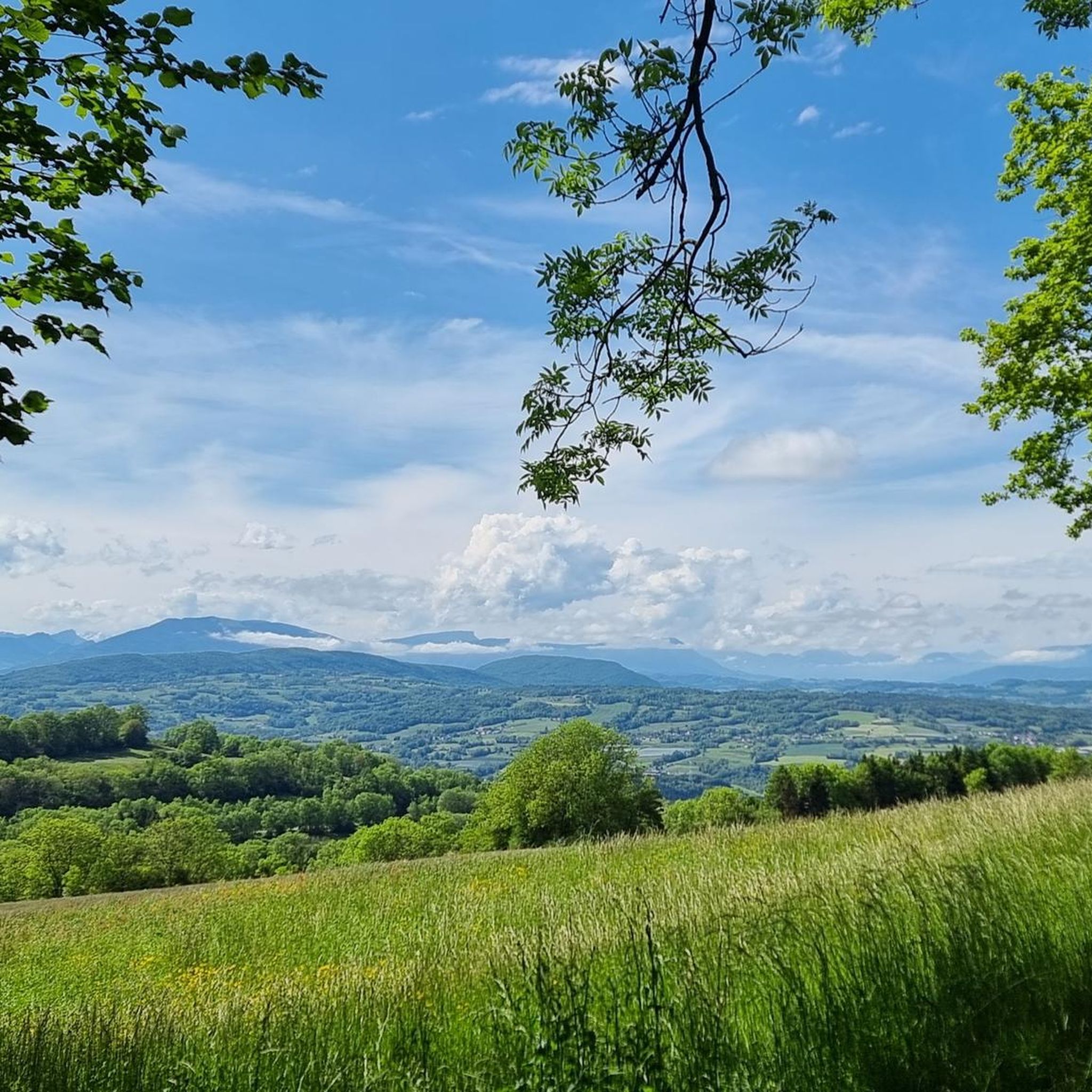
Mandallaz Mountain, also known as Mandallaz Mountain (pronounced Mandalle), or Balme Mountain, is a mountain in the Prealps located in the Haute-Savoie department (France). The word mandallaz comes from the Old French muer, which gave rise to the verbs "remer" and "mouvoir," and more specifically the noun remue. It thus refers to a small chalet located in an alpine pasture, and in Savoyard, muanda, with the diminutive suffix -allaz. The mountain is locally known as Balme Mountain or La Balme-de-Sillingy, from the name of the eponymous commune. In a transcript of a meeting of the Florimontane Academy (1912), a note states that "Mandallaz is wrongly called the mountain of Balme de Sillingy." It can also be called Mandallaz Mountain or simply La Mandallaz. The Mandallaz Mountains are a small pre-Alpine massif, eight kilometers long and three to four kilometers wide, located northwest of the Annecy basin. It extends through the communes of Annecy (formerly Pringy), Choisy, Cuvat, Épagny-Metz-Tessy, La Balme-de-Sillingy, Sillingy, and Allonzier-la-Caille. Its most prominent peak, the Tête de la Mandallaz, at the southern end of the mountain overlooking La Balme-de-Sillingy and Épagny-Metz-Tessy at an altitude of 900 meters, is not its highest point; the highest point is located in the center of the mountain at 923 meters. The Mandallaz offers panoramic views of the Annecy metropolitan area, Lake Annecy, the Alps, the Montagne d'Âge, and the surrounding countryside.
2
1
The Caille baths are former thermal baths, now disused, located in the Usses gorges, in the town of Cruseilles in Haute-Savoie. Probably already known to the Romans1, they are fed by two sulfurous springs which spring at the bottom of the Usses valley, downstream from the Caille bridges. These baths have been used several times at least since the Middle Ages. They were actually developed from the middle of the 19th century but have not been exploited since the 1960s, their location nestled in the gorges, the moderate flow and temperature of the springs not having favored the sustainability of the establishment. The waters are sulphurous, alkaline, gaseous, hot at 24°Re or 30°C1. They are used in drinks, baths, showers and steam baths. They become cloudy as soon as they are exposed to air and then give off a very characteristic odor. They escape in two sources from the limestone bases of the so-called “Châtelard” mountain. Their flow rate of approximately one hundred liters of water per minute corresponds, for example, to the content of a bath per minute1. They are easily digested; also, patients can drink 8 to 12 glasses per day. They are used more particularly against diseases of the skin, joints, gout, rheumatism, scrofula, internal and external engorgement, vapors, migraines, etc. The operation of the baths stopped definitively around the 1960s. The buildings were then partly destroyed, and ruins remained, including the old swimming pool at the entrance to which we can still read the inscription “BENI BE GOD WHO MADE THE SPRINGS BRING OUT. ALONGSIDE THE EVILS, HE PUT THE REMEDY.”
1
0

Frequently Asked Questions
What historical sites can I explore in and around Cernex?
Cernex and its surroundings offer several historical points of interest. You can admire the exterior of the 13th-century Cernex Castle and visit the beautiful Gothic Cernex Church, originally built in 1646. Further afield, explore the Commandery of Compesières, a significant historical and religious site. Don't miss the Border Marker No. 1 – Westernmost Point of Switzerland, a legendary monument from 1816.
Are there any natural viewpoints or scenic spots near Cernex?
Yes, the region boasts stunning natural beauty. The Tête de la Mandallaz offers panoramic views of the Annecy metropolitan area, Lake Annecy, and the Alps. You can also visit the Caille Bridge, which provides impressive views into the deep Usses gorge.
What kind of outdoor activities can I do near Cernex?
The pre-Alpine landscape around Cernex is ideal for various outdoor activities. You can find numerous routes for gravel biking, mountain biking, and running. For specific trails, check out the guides for Gravel biking around Cernex, MTB Trails around Cernex, and Running Trails around Cernex.
Are there family-friendly attractions around Cernex?
Yes, several attractions are suitable for families. The Caille Bridge is a great spot to visit, offering views of the gorge and the opportunity to cross on foot or by bike. The Commandery of Compesières is also listed as family-friendly, providing a historical experience.
Can I visit the Cernex Castle?
The 13th-century Cernex Castle is a private property. While its interior is not open to the public, you can still admire its impressive exterior and two square towers, which have undergone restoration.
What is the story behind the Ruins of the Bains de la Caille?
The Ruins of the Bains de la Caille are the remnants of former thermal baths located in the Usses gorges. Known since Roman times, these baths were fed by sulfurous springs and were developed in the mid-19th century. Although disused since the 1960s, they represent an interesting historical and natural site to explore.
What is the Border Marker No. 1?
The Border Marker No. 1 – Westernmost Point of Switzerland is a legendary monument from 1816. It marks the westernmost point of Switzerland and bears the crests of the Canton of Geneva and the Kingdom of Piedmont-Sardinia, serving as a historical reference point for topographical maps.
What is the best time to visit Cernex for outdoor activities?
The region around Cernex is beautiful year-round. For hiking, cycling, and exploring natural viewpoints like Tête de la Mandallaz, spring, summer, and early autumn offer pleasant weather conditions. Winter can be suitable for different activities, but some trails might be less accessible due to snow.
Are there any nearby cities or major attractions worth visiting from Cernex?
Cernex's location makes it a good base for exploring the wider Auvergne-Rhône-Alpes region. The city of Annecy, with its stunning lake often called the 'Pearl of the French Alps,' is approximately 19-20 kilometers away. Geneva, Switzerland, with attractions like the Jet d'eau, is also within a short drive (around 17-19.5 kilometers).
Can I walk or cycle across the Caille Bridge?
Yes, you can cross the Caille Bridge on foot or by bike, which allows you to avoid the main road and fully appreciate the views of the two bridges and the deep gorge below.
What do visitors enjoy most about the attractions around Cernex?
Visitors particularly appreciate the panoramic views from spots like Tête de la Mandallaz and the historical significance of sites such as the Caille Bridge and the Border Marker No. 1. The blend of natural beauty and rich history makes the area appealing for exploration.
Most popular attractions around Cernex

Get inspired with the komoot mobile app


Explore more
Still not found the Highlight you’re looking for? See guides of the top attractions in other regions:
