Attractions and Places To See around Essé - Top 7
Best attractions and places to see around Essé, located in Ille-et-Vilaine, Brittany, include significant historical and cultural sites. The area is known for its megalithic monuments, such as the largest dolmen in France, and distinctive religious architecture. Visitors can explore castles and sculpture parks, offering a blend of ancient history and artistic expression.
Best attractions and places to see around Essé
- The most popular attractions is Châteaugiron Castle, a castle with parts dating back to the 11th century. The…
Last updated: June 18, 2026
Saint-Maximilien-Kolbé Church
Highlight • Religious Site
Translated by Google •
Tip by

La Roche-aux-Fées Dolmen
Highlight • Monument
Translated by Google •
Tip by

Sign up now to discover places like this
Get recommendations on the best single tracks, peaks, & plenty of other exciting outdoor places.
Sign up for free
Châteaugiron Castle
Highlight • Castle
Translated by Google •
Tip by

Corps-Nuds
Highlight • Settlement
Translated by Google •
Tip by

Château des Pères Sculpture Park
Highlight • Monument
Built on the site of the feudal manor of Plessis-Guériff, the current castle dates from 1722. Partly destroyed during the Hundred Years' War, …
Translated by Google •
Tip by
Sign up for free to discover even more attractions around Essé.
Sign up for free
Already have an account?
Start today with a free account
Your next adventure awaits.
Login or Signup



Tips from the Community

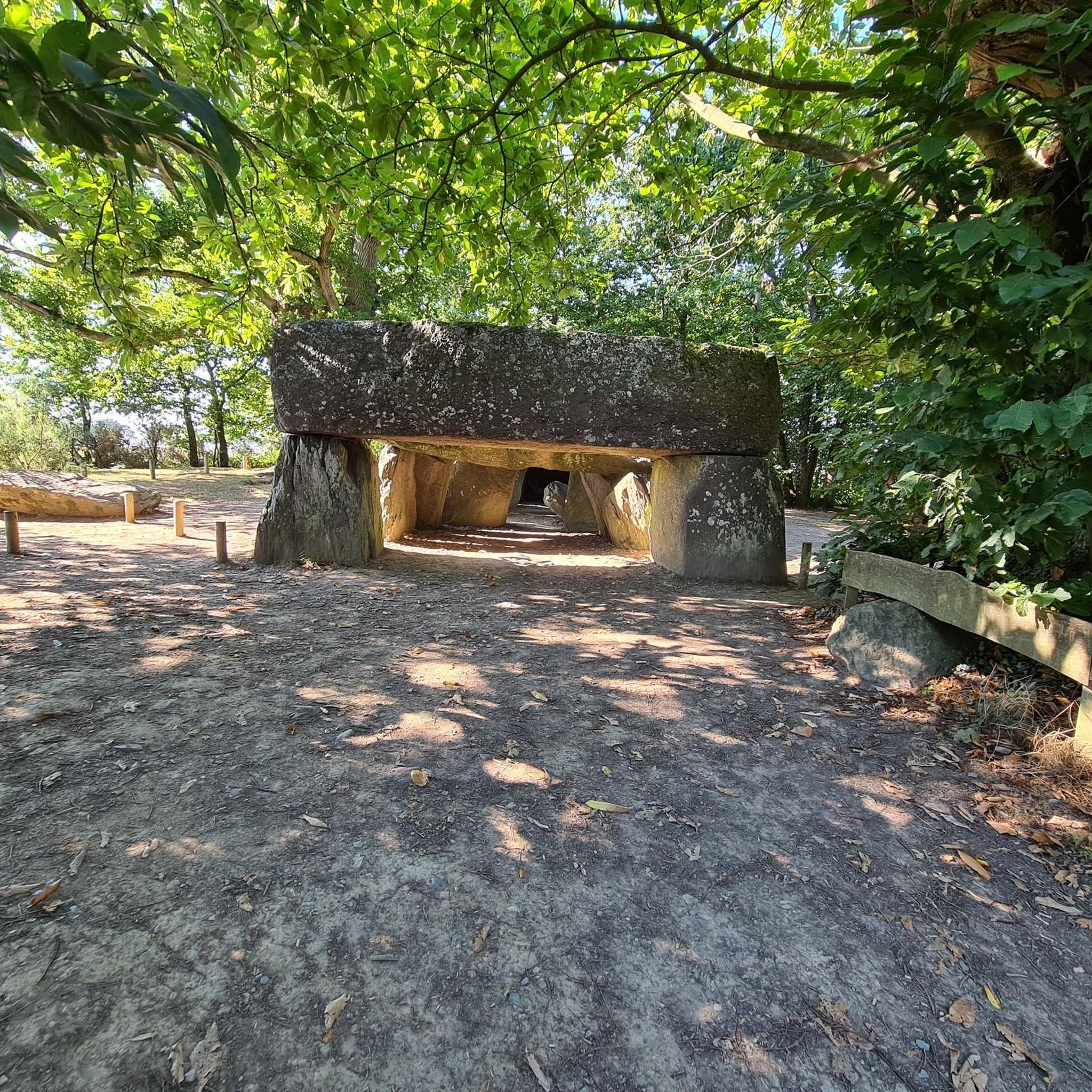
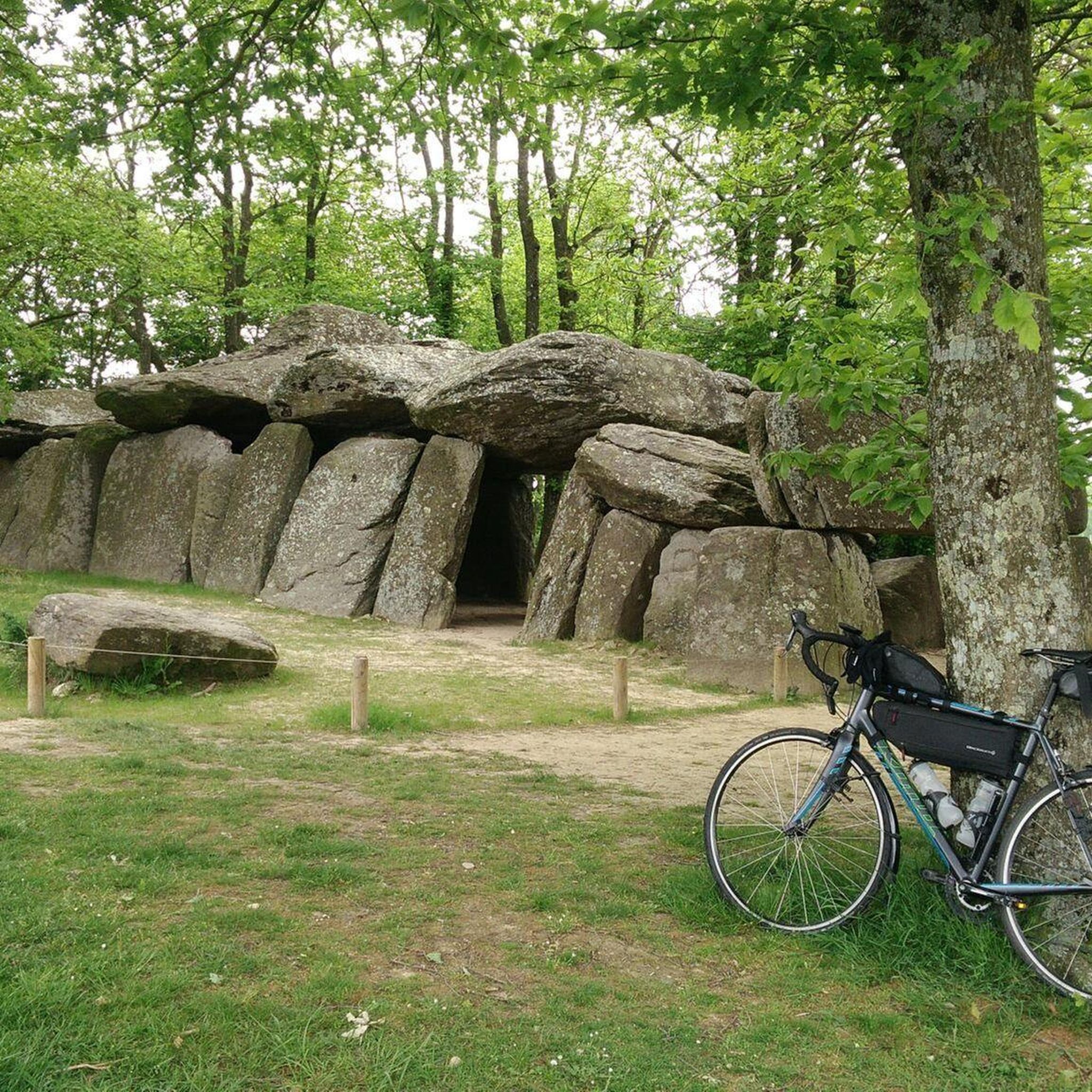
With nearly 20 meters long, 6 meters wide, and 4 meters high, the Roche-aux-Fées remains the largest dolmen in France and one of the best-preserved in Europe. It is composed of a schist-covered passage formed by four chambers whose meaning has not yet been revealed. Although the construction of this monument dates back to the Neolithic period, around 2000 BC, specialists remain perplexed about its construction method. The site is impressive. And when you know that some stones weighing over 40 tons come from several kilometers around, you wonder how the inhabitants of the time managed to move them there. Such a site could only inspire stories, legends, and beliefs. One of them tells that the fairy Viviane, aided by fellow fairies, would have built this imposing monument... in one night. Another concerns lovers: to know if their union will last, couples must walk around the Roche-aux-fées, each in a different direction, and count the stones. If they find the same number of stones, their future will be bright! Through a mysterious alignment during the winter solstice on December 21st or 22nd, the sun rises facing the entrance of the dolmen. At that moment, the light rays magically illuminate the stone located at the back of the covered passage. Access is free and open. The small surrounding roads are charming and quiet.
0
0

Short video of the site: https://www.youtube.com/watch?v=bqEBsKL7P7s
0
0


Very nice place, very friendly! I recommend !
0
0

It is an artistic and cultural place. Built on the site of the feudal manor of Plessis-Guériff, the current castle dates from 1722. Partly destroyed during the Hundred Years' War, it has retained a 15th century wing which is still visible today. You can explore the sculpture park and take part in artistic workshops. It is also a hotel. For all information and reservations click here: https://www.chateaudesperes.fr/en
1
0
The first castle of Châteaugiron was built in the middle of the 11th century by Anquetil, a Norman knight, who had received the lands from Alan III, Duke of Brittany. The oldest part of the current castle is the castle's Romanesque chapel dating from the 12th century. Probably in the 13th century, Châteaugiron castle was rebuilt as a stone fortress. Currently the Château de Châteaugiron fulfills several functions; its main body is used as a town hall, the other parts are used as offices and the independent keep is used for exhibitions. You can book your tickets online here: https://www.tourisme-paysdechateaugiron.bzh/activites/chateau-de-chateaugiron/
0
0

This church stands in the middle of the countryside, you can see it from afar, it is magnificent! The bell tower in the form of a "bulb", characteristic of the Byzantine style, made it pass for an Orthodox church, while it is just linked to the originality of the architect in 1875. Anecdote of the German occupation: in 1941, the Nazi propaganda filmed a film there ("Threshing wheat in Ukraine") to make believe in an advance of German troops in Ukraine (against the Soviet Union). Until 2011, the church was under the patronage of St. Peter the Apostle. On this date, his patronage was changed to that of Saint-Maximilien-Kolbé (1894-1941), a Polish priest with exceptional charisma, especially in the face of Nazism. Held in the Auschwitz concentration camp, he offered himself to take the place of a father sentenced to death. He was canonized (recognized as a "saint" by the Catholic Church in Rome) in 1982.
1
0

The rock of the fairies, French: Roche-aux-fées, located in the middle of green nature, is simply enchanting. If you are interested in megaliths, you should take a break here. The undisputed largest dolmen in France is also closely linked to the legend of the fairy Liliane. The construction of this monument undoubtedly dates back to the Neolithic period, i.e. around 2,000 years before our time. So far, researchers have not found an explanation for exactly how it was built. With its 19.50 meters length, six meters width and four meters height, the structure is more than impressive. And when you consider that some of the stones, which weigh more than 40 tons, come from several kilometers away, you can rightly ask yourself how the people of that time managed to transport them here. This mystery gave rise to a legend: it is said that the impressive structure was built by Viviane and her fairy friends.
2
0
Frequently Asked Questions
What historical sites can I visit around Essé?
Essé in Ille-et-Vilaine is rich in history. You can explore the impressive La Roche-aux-Fées Dolmen, a Neolithic megalith and the largest dolmen in France. Another significant site is Châteaugiron Castle, with parts dating back to the 11th century, including a 12th-century Romanesque chapel. The Château des Pères Sculpture Park also features a castle with a visible 15th-century wing.
Are there any unique architectural sites in the area?
Yes, the Saint-Maximilien-Kolbé Church in Essé is a notable architectural site. Designed by Arthur Regnault, it features a distinctive Byzantine style with a bulbous bell tower, which was quite original for 19th-century religious buildings in Ille-et-Vilaine.
What natural attractions are there to explore near Essé?
While the immediate area of Essé in Ille-et-Vilaine is known for its historical sites, nearby natural features include Forêt de Chevré and Étang de la Cantache. If you venture further into the Charente region, you can find the Pond of the Sèches directly in Essé, and other sites like Site Corot, Réserve naturelle régionale Étang de la Monnerie, and Lac de Saint-Pardoux.
Are there family-friendly activities or attractions in Essé?
Absolutely! Several attractions are marked as family-friendly. Children and adults alike will be fascinated by the ancient La Roche-aux-Fées Dolmen, where legends of fairies abound. Châteaugiron Castle offers a glimpse into medieval history, and the Château des Pères Sculpture Park provides an artistic and cultural experience that can engage all ages.
Where can I go hiking around Essé?
Essé is a great starting point for hiking. You can find various trails, including the moderate 13.6 km 'La Roche-aux-Fées Dolmen – Rigaudière loop from Maison de la Roche aux Fées' or the easy 6.8 km 'Charmes loop from Tresbœuf'. For more options, explore the hiking guide around Essé.
Are there cycling routes available near Essé's attractions?
Yes, there are several cycling opportunities. For touring cyclists, you might enjoy the 'Corps-Nuds – Saint-Maximilien-Kolbé Church loop from Janzé' which is a difficult 42.6 km route, or the moderate 'Tour of Marcillé – Fathers' Castle loop from Essé' at 32.6 km. Road cyclists can find routes like the moderate 23.7 km 'La Roche-aux-Fées Dolmen loop from Essé'. More routes are detailed in the cycling guide around Essé and the road cycling guide.
What is the significance of La Roche-aux-Fées Dolmen?
La Roche-aux-Fées Dolmen is considered the largest dolmen in France, dating back to the Neolithic period (around 2,000 years BC). Its impressive size, measuring 19.50 meters in length, six meters in width, and four meters in height, along with the mystery of how its 40-ton stones were transported, has led to legends of fairies building it. It's a truly magical and impressive historical site.
What do visitors particularly enjoy about the attractions in Essé?
Visitors frequently praise the historical depth and unique character of the sites. For instance, the La Roche-aux-Fées Dolmen is described as 'truly magical and impressive,' highlighting the wonder of ancient human achievement. The Saint-Maximilien-Kolbé Church is admired for its distinctive Byzantine style and its striking appearance in the countryside.
How long should I plan for a visit to La Roche-aux-Fées Dolmen?
While there's no fixed duration, many visitors suggest taking your time to appreciate the scale and history of La Roche-aux-Fées Dolmen. It's recommended to allow at least 30 minutes to an hour to walk around the monument, read the informational signs, and soak in the atmosphere of this ancient site.
Are there any other cultural or historical towns nearby worth visiting?
Beyond Essé, several towns offer rich cultural and historical experiences. Châteaugiron Castle is located about 12 km away. In the Charente region, Confolens (4 km from Essé) boasts an ancient bridge and other sites, while Mortemart (18 km) is recognized as one of France's 'most beautiful villages.' Limoges and Angoulême, both 'Towns of Art and History,' are also within reach.
What is the Château des Pères Sculpture Park?
The Château des Pères Sculpture Park is an artistic and cultural venue built on the site of the former feudal manor of Plessis-Guériff. While the current castle dates from 1722, it retains a 15th-century wing. Visitors can explore the sculpture park, participate in artistic workshops, and even find accommodation there.
What is the best time of year to visit Essé's attractions?
The best time to visit Essé's attractions, particularly outdoor sites like La Roche-aux-Fées Dolmen and the sculpture park, is generally during the spring (April-June) and early autumn (September-October). During these periods, the weather is typically mild and pleasant for exploring, and the natural surroundings are vibrant. Summer can also be enjoyable, though it might be warmer and more crowded.

Get inspired with the komoot mobile app


Explore more
Still not found the Highlight you’re looking for? See guides of the top attractions in other regions:
