Attractions and Places To See around Gourville - Top 5
Best attractions and places to see around Gourville include a variety of historical sites and architectural landmarks. The region offers several cultural points of interest, from ancient ruins to medieval structures. Visitors can explore a landscape rich in history, featuring buildings that span centuries of construction and use. Gourville is a destination for those interested in historical exploration and cultural heritage.
Best attractions and places to see around Gourville
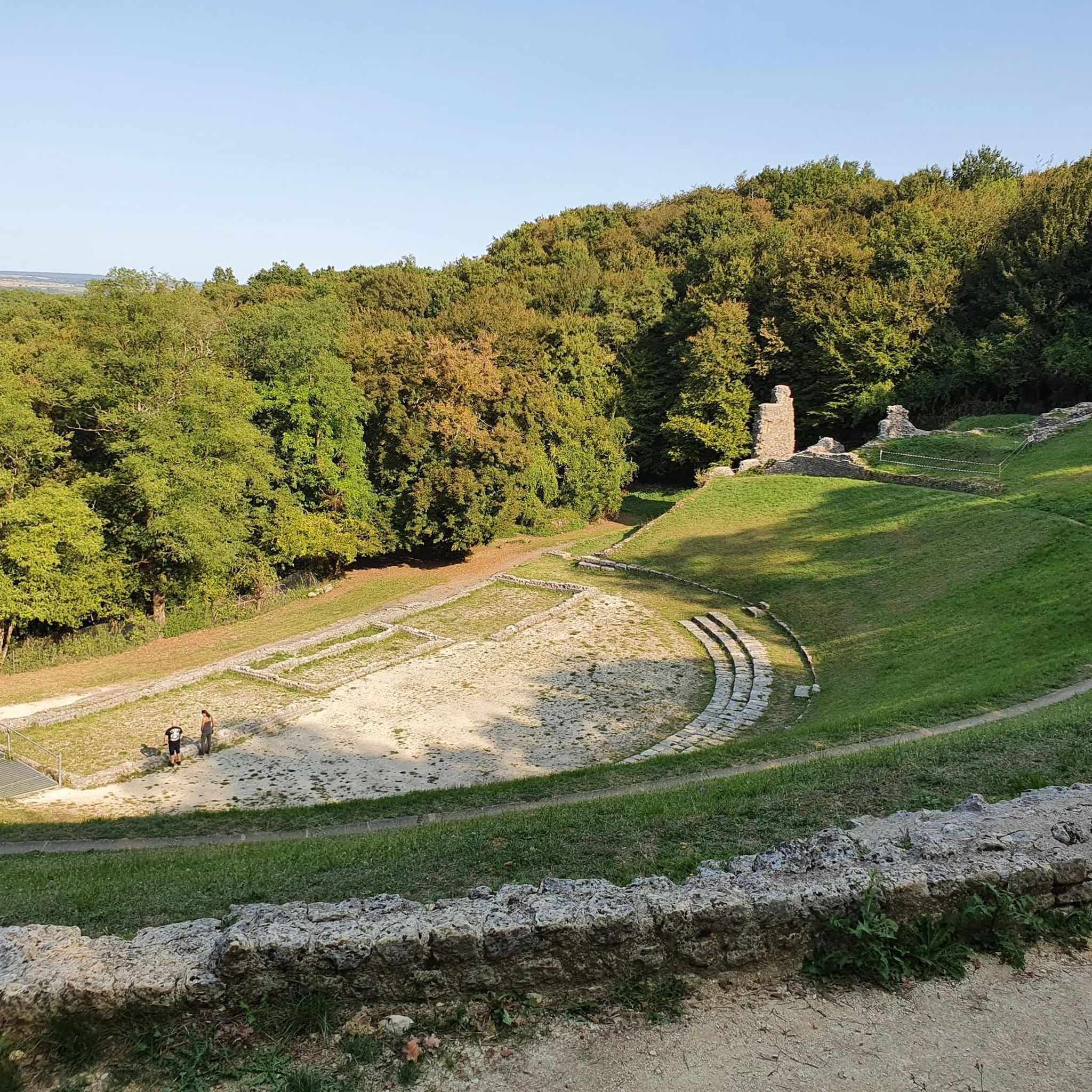
- The most popular attractions is Gallo-Roman Theatre of Bouchauds, a historical site located in Saint-Cybardeaux. Its ruins are situated within a natural concavity.
- Another must-see spot is Notre-Dame de Lanville Priory in Marcillac-Lanville, a conventual priory founded at an unknown date and later attached to the canons regular of Saint Augustine. Major restoration work was carried out in the second half of the 17th century after parts of the building fell into ruin.
- Visitors also love Fontguyon Castle, a castle built in the second half of the 16th century. Elements like its portal and watchtower date from the 17th century.
- Gourville is known for its historical sites, religious buildings, and castles. The area provides a range of attractions to see and explore, reflecting its rich past.
- The attractions around Gourville are appreciated by the komoot community, with 10 photos and 6 upvotes shared by visitors.
Last updated: May 11, 2026
Notre-Dame de Lanville Priory in Marcillac-Lanville
Highlight • Other
Translated by Google •
Tip by

Gallo-Roman Theatre of Bouchauds
Highlight • Historical Site
Translated by Google •
Tip by

Sign up now to discover places like this
Get recommendations on the best single tracks, peaks, & plenty of other exciting outdoor places.
Sign up for free
Fontguyon Castle
Highlight • Castle
Translated by Google •
Tip by

Sainte-Catherine Church of Vervant
Highlight • Religious Site
Translated by Google •
Tip by
Font Franchaud washhouse
Highlight • Monument
It is fed by a spring, and an engraved stone plaque welcomes passersby:
"Modest Font Franchaud, be my page of history. Under your protective roof, all well-placed hearts will know, while washing, how to recall your shelter from the sun and the icy winters. Donated by Jean Rousseau in the year 1885, blessed on August 23, 1885."
Translated by Google •
Tip by

Start today with a free account
Your next adventure awaits.
Login or Signup




Tips from the Community

Covered washhouse north of St-Cybardeaux. Entrance is through a door in the main facade; the back is open. It is fed by a spring, and an engraved stone plaque welcomes passersby: "Modest Font Franchaud, be my page of history. Under your protective roof, all well-placed hearts will know, while washing, how to recall your shelter from the sun and the icy winters. Donated by Jean Rousseau in the year 1885, blessed on August 23, 1885."
0
0

The castle was built in the second half of the 16th century, but certain elements date from the 17th. Thus, the portal and the watchtower at the entrance both date from the 17th century.
0
0

A Gallo-Roman theater, which is located on the territory of the commune of Saint-Cybardeaux. The ruins of the Gallo-Roman theater of Bouchauds are at the heart of a natural concavity.
1
0

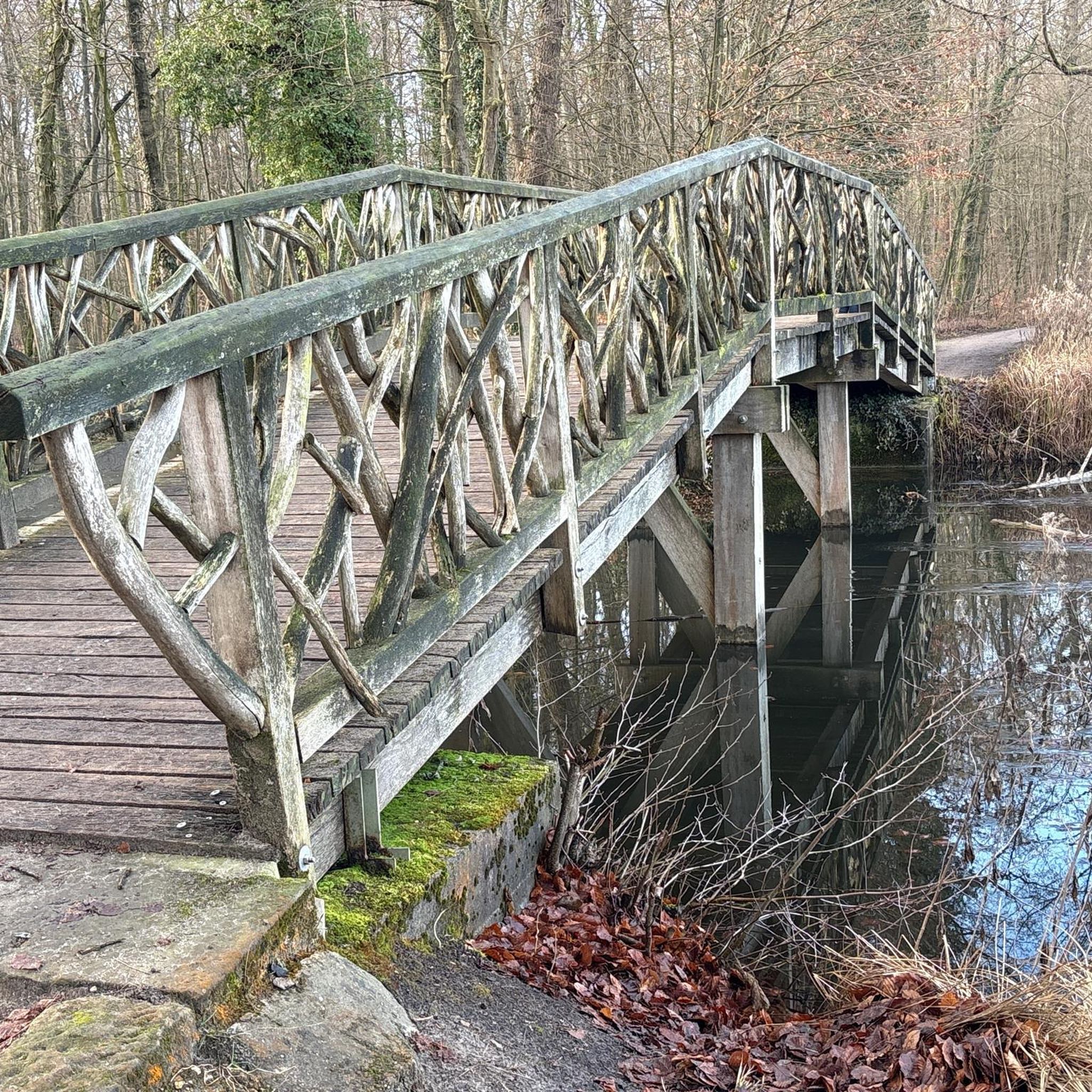
Located in the archpriest of Ambérac, diocese of Angoulême, the conventual priory of Notre-Dame de Lanville, founded at an unknown date, was attached around 1120 to the rule of the canons regular of Saint Augustine. It will remain conventual until its suppression in 1791. The buildings were largely in ruins in 1632 and the difficulties becoming greater and greater, the priory was united with the abbey of Sainte-Geneviève du Mont. The visit reports of 1636 and 1672 indicate that major work was carried out to raise the priory in the second half of the 17th century. The buildings located to the south of the church could be the lodgings of the prior or the chaplain. They include a main building for residential use, flanked by two north and south wings constituting the outbuildings, arranged around a closed courtyard. The partly modern north wing has retained some openings characteristic of the 14th and 15th centuries. A long vaulted cellar of a broken cradle develops under the entire length of this wing. The south wing has semicircular openings alternating with small rectangular bays, no doubt from the 17th century. The rectangular main building opens, to the west, onto a terrace overlooking a pool spanned by a bridge-staircase. The house itself is built on a long barrel-shaped cellar with a basket handle. The church was fortified in the 15th century. In its primitive state, its nave was covered with three domes which collapsed and were replaced, in the 15th century, by ribbed vaults. In 1904, the presence of a channeled stream having weakened the foundations of the building, the facade collapsed.
1
0
The church of Vervant has a western facade, in freestone, pierced with a pointed arch portal framed by pinnacles and surmounted by a cornice. Above, in a pointed arch, is a round oculus. The pediment gable has a narrow opening and is surmounted by a stone cross. The north and south facades are pierced with pointed arch windows and are adorned with buttresses. The east facade, flanked by a sacristy with a hollow-tiled hipped roof, is pierced by a small rectangular bay. The whole is covered with a long-sided roof made of mechanical tiles. The hexagonal bell tower is surmounted by a lantern with a hexagonal roof.
0
0

Frequently Asked Questions
What kind of historical sites can I explore around Gourville?
The Gourville area is rich in history, offering several significant historical sites. You can visit the ancient ruins of the Gallo-Roman Theatre of Bouchauds, located within a natural concavity in Saint-Cybardeaux. Another notable historical landmark is the Font Franchaud washhouse, a covered washhouse from 1885 with an engraved plaque, north of St-Cybardeaux.
Are there any notable religious buildings to visit in the Gourville area?
Yes, the region features significant religious architecture. The Notre-Dame de Lanville Priory in Marcillac-Lanville is a conventual priory with a long history, undergoing major restoration in the 17th century. You can also visit the Sainte-Catherine Church of Vervant, known for its distinctive western facade, pointed arch portal, and hexagonal bell tower.
Can I visit any castles near Gourville?
Absolutely. The area features historical castles, such as Fontguyon Castle. This castle was built in the second half of the 16th century, with elements like its portal and watchtower dating from the 17th century.
What outdoor activities can I do near these attractions?
Beyond visiting historical sites, you can enjoy various outdoor activities. There are numerous routes for hiking, road cycling, and gravel biking. For hiking, explore trails like the "Théâtre Antique des Bouchauds loop from Saint-Cybardeaux." Cyclists can find routes such as the "Keep of Montignac-Charente – Saint-Amant-de-Boixe Abbey loop from Gourville." You can find more details on these and other routes in the dedicated guides for Hiking around Gourville, Road Cycling Routes around Gourville, and Gravel biking around Gourville.
Are there easy hiking trails near Gourville's attractions?
Yes, for those looking for easier walks, the "Théâtre Antique des Bouchauds loop from Saint-Cybardeaux" is an easy hiking route that takes you near the Gallo-Roman Theatre of Bouchauds. You can explore more options in the Hiking around Gourville guide.
What is the best time to visit the attractions around Gourville?
The region's historical sites and architectural landmarks can generally be enjoyed throughout the year. However, for the most pleasant experience, especially if you plan to combine sightseeing with outdoor activities like hiking or cycling, spring and autumn offer milder temperatures and beautiful scenery.
Are there any hidden gems or less-known historical spots worth discovering?
Beyond the more prominent sites, the Font Franchaud washhouse offers a charming glimpse into local history. This covered washhouse, dating back to 1885, is fed by a spring and features an engraved stone plaque, providing a unique and tranquil historical stop.
What do visitors appreciate most about the attractions in Gourville?
Visitors to Gourville's attractions often appreciate the rich historical context and the well-preserved architectural heritage. The komoot community has shared 10 photos and given 6 upvotes, highlighting the visual appeal and historical significance of sites like the Gallo-Roman Theatre of Bouchauds and the Notre-Dame de Lanville Priory.
Are there family-friendly activities among the attractions?
While the primary attractions are historical and architectural, many families enjoy exploring the ruins of the Gallo-Roman Theatre of Bouchauds, which can spark imagination about ancient times. The open spaces around some sites also offer room for children to explore, making them suitable for a family outing.
Can I find walking routes of varying durations near Gourville's attractions?
Yes, there are various walking routes available. For example, the "Théâtre Antique des Bouchauds loop from Saint-Cybardeaux" is an easy, shorter option. Other hiking routes in the area, such as the "Laundry – Tour of Rouillac loop from Rouillac," offer moderate challenges and longer durations. You can find detailed information on distances and difficulty levels in the Hiking around Gourville guide.
Is there parking available for the attractions?
Parking availability varies by specific attraction. For major sites like the Gallo-Roman Theatre of Bouchauds, there is typically designated parking nearby. For smaller, more remote sites, street parking or small pull-offs might be available. It's advisable to check local signage upon arrival.
Most popular routes around Gourville

Get inspired with the komoot mobile app


Explore more
Still not found the Highlight you’re looking for? See guides of the top attractions in other regions:
