Attractions and Places To See around Édon - Top 11
Best attractions and places to see around Édon include a diverse range of historical sites, religious buildings, and natural monuments. The region features significant architectural heritage, such as grand castles and ancient churches, alongside unique geological formations. Visitors can explore man-made shelters carved into rock, offering insights into past eras. Édon provides opportunities to discover both cultural landmarks and natural curiosities.
Best attractions and places to see around Édon
- The most popular attractions is The Cluzeaux of Argentine, a…
Last updated: July 2, 2026
Château de la Mercerie
Highlight • Castle
Translated by Google •
Tip by

Saint-Cybard Church of Dignac
Highlight • Religious Site
Translated by Google •
Tip by

Sign up now to discover places like this
Get recommendations on the best single tracks, peaks, & plenty of other exciting outdoor places.
Sign up for free
The Cluzeaux of Argentine
Highlight • Cave
Translated by Google •
Tip by

Saint-Martin Church of Argentine
Highlight • Other
Translated by Google •
Tip by

Vouzan Castle
Highlight • Castle
Translated by Google •
Tip by
Sign up for free to discover even more attractions around Édon.
Sign up for free
Already have an account?
Start today with a free account
Your next adventure awaits.
Login or Signup


Tips from the Community

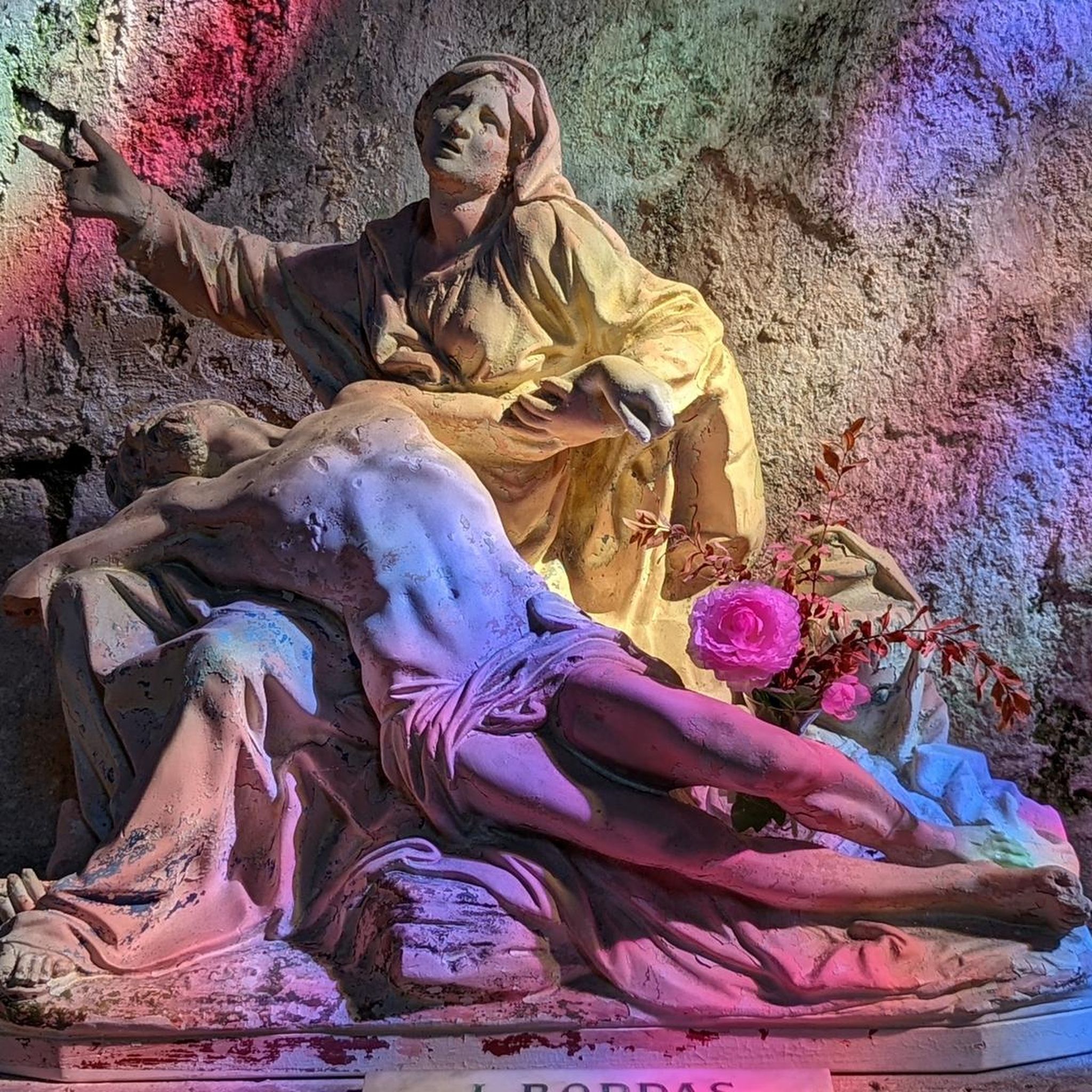
The building, constructed in the 12th century, was enlarged in the 15th century by the north and south aisles dedicated to the Virgin and Saint John the Baptist. It was restored in 1875-1876. It has a basilica plan with a single nave, on which is grafted to the east a false square surmounted by a dome on pendentives and which ends in a vaulted apse. Side chapels with flat chevet were added, to the north and south, in the 15th century. The facade is pierced by a door with a triple projection and an open window. The building was fortified at the time of the Hundred Years' War. The whole is surmounted, to the east, at the level of the dome, by a square bell tower on two levels. The base is decorated with three blind arcades; The upper floor is decorated, on each side, with three semicircular arches mounted on small columns, highlighted by a circular stringcourse and enclosing twin bay windows. https://www.dignac.fr/histoire-et-patrimoine/ https://monumentum.fr/monument-historique/pa00104355/dignac-eglise-saint-cybard
0
0

The Romanesque church of Saint-Martin d'Argentineau was built in three different eras. The bell tower and a small choir were built in the 11th century. The choir was enlarged in the 12th century and the church and side aisle to the north were built in the 15th century. The church was listed as a historical monument in 1974. The modern church windows, which bathe the church in a special light, are particularly noteworthy. The neighboring cemetery is also worth seeing.
2
0

Cluzeaux are shelters made by man in the rock. They are typical of Périgord. In the village of Argentina, perched on a rocky spur above the Nizonne valley, we find some dating from the Middle Ages. Grain silos, but also a huge necropolis have been built there. The site, free to access and very impressive, can be visited all year round.
3
0

The extraordinary history of this grandiose residence began in 1924, in the heart of a small 19th century manor (to the left of the current façade): the troubadour castel of La Mercerie was then acquired by Alphonse and Raymond Réthoré. From then on, the two brothers, dreaming of the great Versailles, devoted all their resources to enlarging and embellishing the building. The work undertaken is commensurate with the ambition that drives it. Outside, colonnades and balusters in white stone soon extend the first building. the cut stone increases the gigantism and the rigor of a facade with a perfect rhythm. Inside, nothing is too beautiful for La Mercerie, Raymond brings back from his travels furniture and paintings, chandeliers and precious woods, marbles from Italy, azulejos from Portugal etc. He returns from Italy with a painter sculptor who will carry out on the spot the most monumental decorations with the assistance of the inhabitants of the country. The treasures are piling up, but 30 years of work will not be enough to complete the colossal project. The collections are dispersed during auctions in June 1987. When the two brothers died, the castle fell into oblivion, until the mobilization of the inhabitants of the town, who decided to found an association to safeguard this unique and prestigious heritage. The Béruges room, the central living room, the Vernet living room, the vestibule, the mahogany gallery and the large Azulejos gallery, each more impressive than the last, now fully conquers the visitor eager for cultural discoveries. A short tour of the belvedere of the castle allows you to admire it from the height. In the park of the castle, the rose garden and the arboretum can be visited by little train. The little train is random due to the health context and will be reserved for people with reduced mobility and children, and mainly on Sundays.
0
0

Pretty castle in height after a climb from Angoulême
1
0
Its dazzling white stone facade extends over 220 meters in length, in the middle of a 50 Ha green setting. Some rare and remarkable trees adorn the walk through the park.
2
0
The origin of the house dates back to the 15th century. It is preceded by a 17th century portal. The chapel is the old parish church, bought in 1902 by the owner of the castle, with the old cemetery on the bedside. A square window to the south and outbuildings to the east are preserved. Facades and roofs of the castle and the chapel; portal on the street as an extension of the facade of the chapel; dovecote (square tower south of the castle); floor of the plot containing the archaeological remains, at the apse of the chapel.
2
0
Frequently Asked Questions
What unique historical sites can I explore around Édon?
Beyond the well-known spots, you can discover The Cluzeaux of Argentine, which are ancient shelters carved into rock, typical of Périgord. These sites, dating from the Middle Ages, served as grain silos and a necropolis, offering a fascinating glimpse into past eras.
Are there any notable castles or historical residences to visit near Édon?
Yes, you can visit Château de la Mercerie, known for its impressive 220-meter white stone facade and opulent interiors. Another historical residence is Vouzan Castle, with origins dating back to the 15th century, featuring a 17th-century portal and a chapel that was once the old parish church.
What religious buildings are worth seeing in the Édon area?
The region features several significant religious sites. The Saint-Martin Church of Argentine is a Romanesque church built across three different eras, noted for its modern windows that create a special light inside. Additionally, the Saint-Cybard Church of Dignac, constructed in the 12th century and later enlarged, showcases a basilica plan and a fortified structure from the Hundred Years' War.
What kind of outdoor activities can I do near Édon's attractions?
The area around Édon offers a variety of outdoor activities. You can find numerous routes for mountain biking, running, and cycling. For detailed guides and routes, explore the MTB Trails around Édon, Running Trails around Édon, and Cycling around Édon guides.
Are there mountain biking trails in the Édon area?
Yes, the Édon area is great for mountain biking. You can find moderate trails like the 'Lover's oak – BOUEX - forest loop from Dignac' or 'The Cluzeaux of Argentine loop from La Rochebeaucourt-et-Argentine'. More options are available in the MTB Trails around Édon guide.
Can I find running trails near Édon?
Absolutely. There are several running loops around Édon, including moderate routes from Peugis, Champagne-et-Fontaine, and Puy de Versac. For a full selection of routes, check out the Running Trails around Édon guide.
Are there cycling routes available around Édon?
Yes, cyclists can enjoy various routes, from moderate to difficult. Popular options include the 'Villebois-Lavalette Exploration Loop 54C' and 'The Haberdashery – Château de la Mercerie loop from Musée de Tourbiere'. Discover more routes in the Cycling around Édon guide.
What do visitors particularly enjoy about the attractions in Édon?
Visitors appreciate the diverse range of historical sites, religious buildings, and natural monuments. The unique geological formations like the Cluzeaux, the grandeur of Château de la Mercerie, and the architectural beauty of churches like Saint-Martin Church of Argentine are frequently highlighted.
Are there any hidden gems or less-known spots worth discovering around Édon?
While not widely advertised, the historical significance and unique structure of The Cluzeaux of Argentine make it a fascinating, less-trodden path for those interested in ancient human shelters and necropolises carved directly into rock.
What is the best time of year to visit Édon's attractions?
The best time to visit Édon's attractions is generally during the spring (April to June) and autumn (September to October) when the weather is mild and pleasant for exploring historical sites and engaging in outdoor activities. Summers can be warm, while winters are cooler but still offer opportunities for exploration.
Are there family-friendly attractions around Édon?
Many of the historical sites and natural monuments can be enjoyed by families. For instance, exploring The Cluzeaux of Argentine offers an engaging historical experience. The grounds of Château de la Mercerie, with its vast park, can also be enjoyable for a family outing, especially with the option of a little train ride in the rose garden and arboretum for children and those with reduced mobility.

Get inspired with the komoot mobile app


Explore more
Still not found the Highlight you’re looking for? See guides of the top attractions in other regions:
