Attractions and Places To See around Bourg-Charente - Top 20
Attractions and places to see around Bourg-Charente offer a diverse range of historical and cultural sites. This region, known for its scenic landscapes along the Charente river, features a mix of architectural heritage and natural beauty. Visitors can explore more than 5 unique things to do, from ancient abbeys to grand châteaux. The area provides opportunities to discover local history and enjoy the tranquil environment.
Best attractions and places to see around Bourg-Charente
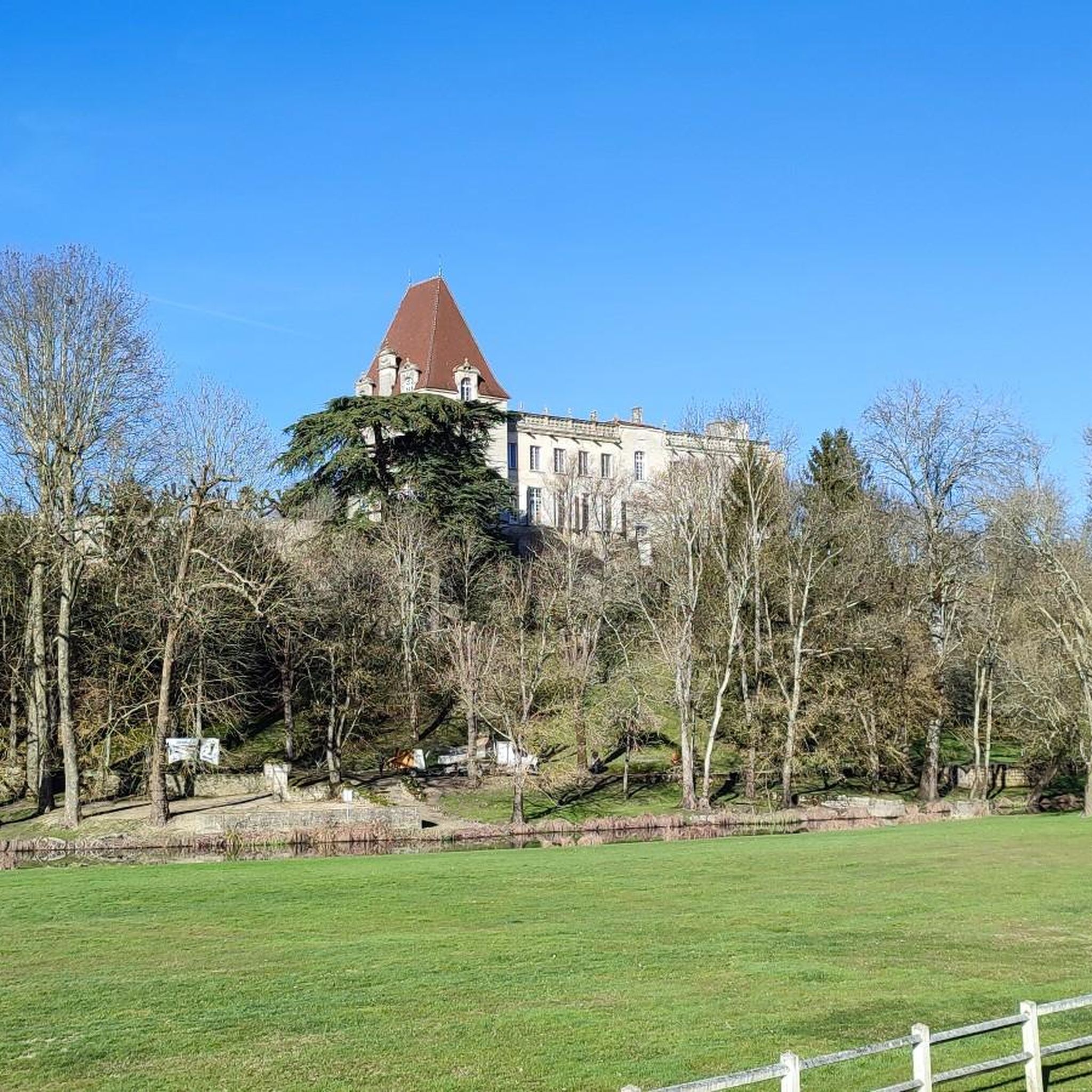
- The most popular attractions is Chateau des Chabannes, a historical building that accompanies other residences of cognac house owners from the late 19th century. It is set within a park sloping down to the river, featuring a terrace with a stone balustrade and a basin with rockery.
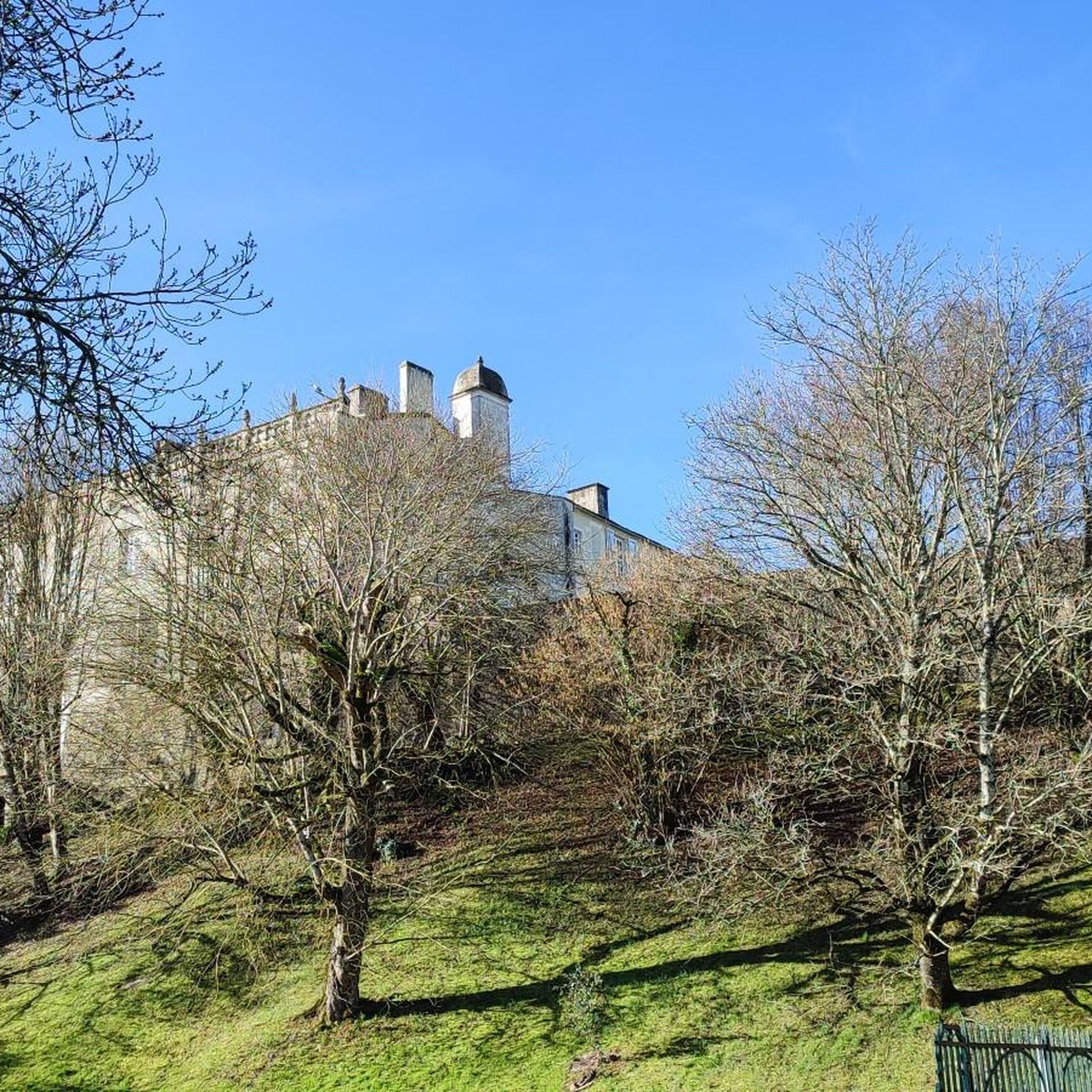
- Another must-see spot is Bourg-Charente Castle, a 17th-century mansion. Nestled on a rocky promontory, this castle also houses the remains of a medieval fortress and serves as a production site for Grand Marnier.
- Visitors also love Abbaye de Bassac, a thousand-year-old abbey with a rich history. This religious building offers a cultural and spiritual experience, allowing visitors to explore its courtyard, gardens, and vaulted gallery.
- Bourg-Charente is known for its castles, historical sites, and religious buildings. The area offers a variety of attractions to see and explore, reflecting centuries of regional heritage.
- The attractions around Bourg-Charente are appreciated by the komoot community, with more than 110 upvotes and 8 photos shared by visitors.
Last updated: August 25, 2026
Bourg-Charente Castle
Highlight • Castle
Acquired in the 20th century, this château houses cellars for producing Grand Marnier. It can be visited from Monday to Friday from 8 a.m. to 5 p.m.
Translated by Google •
Tip by

Chateau des Chabannes
Highlight • Other
Translated by Google •
Tip by

Sign up now to discover places like this
Get recommendations on the best single tracks, peaks, & plenty of other exciting outdoor places.
Sign up for free
Abbaye de Bassac
Highlight • Religious Site
Translated by Google •
Tip by

Logis de Gardépée in Saint-Brice
Highlight • Other
Translated by Google •
Tip by
a church authorized by King Louis XIV
Highlight • Other
Towards the end of the 14th century, lived Foulques de Gondeville who was succeeded by his son Armand. Then came Jean Bouterouhe, whose daughter Agnès, married Guillaume de Cruc. The latter thus became lord of Gondeville and left this lordship to his heirs. His granddaughter, Magdeleine de Cruc, ceded Gondeville to Jean de La Rochebeaucourt, younger son of the house of Saint-Même and received in exchange the land of Courpignac, in Saintonge (May 10, 1590). In the early years of the 17th century, the heirs of Jean de La Rochebeaucourt sold the land of Gondeville to Samuel de Lanauve, adviser to Parliament, which was acquired in 1655 by Pierre Laisné, sieur du Chardonneaux.
In 1664, he had a lawsuit with Isaac de Culant, lord of Saint Even, about the enclave of Gondreville, which he succeeded in having erected into a parish. In May 1683, he reiterated his request to King Louis XIV for a church to be built in the town. It was finally built by his son-in-law Mr de Nanclas in 1700 and thanks to a grant of 1000 pounds granted by the King.
It was demolished by the storm of February 20, 1879 between 1879 and 1880 under the direction of architect Augustin Landry. New restorations took place at the beginning of the 20th century, in particular according to the plans of the architect Luis Martin.
Translated by Google •
Tip by

Sign up for free to discover even more attractions around Bourg-Charente.
Sign up for free
Already have an account?
Start today with a free account
Your next adventure awaits.
Login or Signup



Tips from the Community

The Charente in this sector is lined with many castles, the area is rich thanks to the production of Cognac and Pineau.
0
0

Bourg-Charente castle is a 17th century mansion. Nestled on a rocky promontory, it is located a few kilometers from Cognac. It also houses the remains of a medieval fortress. Acquired in the 20th century, this château houses cellars for producing Grand Marnier. It can be visited from Monday to Friday from 8 a.m. to 5 p.m.
0
0

It is in this castle that the cognac cellars of the Marnier-Lapostolle family are located, used for the production of Grand Marnier cognac.
4
0

Castle with a fairly compact architecture, rich in details and various corbels that seem to come out of a Walt Disney story. It doesn't look very well maintained, what a pity!
0
1

Abbey of Saint-Étienne de Bassac, (Sancti Stephani de Bassaco vel Bassacensis, Bassacum): Monks of the order of Saint-Benoît, united in 1666 to the Congregation of Saint-Maur. It was founded at the beginning of the 11th century by one of the Princes of Angoulême, called Guadardus de Lorichis, in honor of St-Etienne, the first martyr, according to what is reported in the acts of the life of Grimourd (bishop of 'Angoulême), but in the history of Angoulême it is said that it was founded by Wardrard de Jarnac, and his wife Rixende. Be that as it may, the church and the regular places having been destroyed by the heretics, the Benedictines of the congregation of St Maur who were introduced there, restored everything, and had a beautiful church built. The Abbot has the collation of a few simple priories, and the appointment to a few parishes. • Foundation in the 11th century. Church rebuilt from 1247 to 1286. • Defensive works at the end of the 14th century. • Abbey burnt down by the Anglo-Saxons in 1434. • Reconstruction in the second half of the 15th century. • Abbey plundered by the Protestants between 1564 and 1569. • Maurist reform introduced in 1666 after the abbey had been abandoned for nearly a century: rehabilitation and restoration until 1746 (conventual building, guest room, etc.). • Abbey sold as national property during the Revolution. • Destruction of the Gothic cloister in 1820. • Major restoration work on the church and abbey buildings during the 19th and 20th centuries. Many times transformed over the course of congregations and historical events, it mixes Romanesque, Gothic, Baroque and Classical styles. Listed as a Historic Monument, the Saint-Étienne de Bassac abbey today unveils a rectangular abbey church consisting of 4 bays and a flat chevet. Gothic in style, it has however retained the bases of the original walls and has domed rib vaults. Romanesque, the bell tower is not lacking in charm, just like the apse and the 13th century chapel pierced by a bay and covered with a ribbed vault. The 17th century convent buildings are also still visible. Like several other religious sites around the world, the abbey of Saint-Étienne de Bassac had a “Gate of Mercy” in 2015-2016; door which, on the margins of the Holy Doors open every 25 years or according to the exceptions fixed by the pope during the course of the holy years or Jubilees, was established at the abbey of Saint-Étienne de Bassac following the desire of Pope Francis to see the Jubilee of Mercy spread all over the world. In short, this Door, like all the other doors of Mercy, supports the Holy Doors in their roles in the Jubilee of Mercy proclaimed by Pope Francis from December 8, 2015 to November 20, 2016 In addition, the Saint-Étienne abbey now hosts retreats, and also has an approval to receive green classes. Opening hours: Monday: 09:00 – 18:30 • Tuesday: 09:00 – 18:30 • Wednesday: 09:00 – 18:30 • Thursday: 09:00 – 18:30 • Friday: 09:00 – 6:30 p.m. • Saturday: 9:00 a.m. – 6:30 p.m. • Sunday: 9:00 a.m. -6:30 p.m.
0
0

Gondeville is noted in 1252, during an exchange between Jean Rot, squire, lord of Châteauneuf and Sallomon de Gondeville, knight. The lords of Gondeville have been known since the 13th century. They had the right of high, medium and low justice. In compensation for work carried out on the Charente, they had obtained the right to collect a bushel of salt on each barge of salt going up the course of the river. They came under the lordship of Bouteville. But Gondeville was not a parish and depended on that of Saint-Même. Towards the end of the 14th century, lived Foulques de Gondeville who was succeeded by his son Armand. Then came Jean Bouterouhe, whose daughter Agnès, married Guillaume de Cruc. The latter thus became lord of Gondeville and left this lordship to his heirs. His granddaughter, Magdeleine de Cruc, ceded Gondeville to Jean de La Rochebeaucourt, younger son of the house of Saint-Même and received in exchange the land of Courpignac, in Saintonge (May 10, 1590). In the early years of the 17th century, the heirs of Jean de La Rochebeaucourt sold the land of Gondeville to Samuel de Lanauve, adviser to Parliament, which was acquired in 1655 by Pierre Laisné, sieur du Chardonneaux. In 1664, he had a lawsuit with Isaac de Culant, lord of Saint Even, about the enclave of Gondreville, which he succeeded in having erected into a parish. In May 1683, he reiterated his request to King Louis XIV for a church to be built in the town. It was finally built by his son-in-law Mr de Nanclas in 1700 and thanks to a grant of 1000 pounds granted by the King. It was demolished by the storm of February 20, 1879 between 1879 and 1880 under the direction of architect Augustin Landry. New restorations took place at the beginning of the 20th century, in particular according to the plans of the architect Luis Martin.
0
0
The Château de Garde-Épée in Saint-Brice is built on the edge of a plateau overlooking the Charente in the distance. In January 1553, Sieur Ancelin, a merchant, bought this fief from the Marquis de Caravaz (the Marquis de Carabas in Perrault's tale) with permission to build a crenellated house there with a gigantic flight, fish pond and warren. Around the middle of the 17th century, Jean Ancelin having died childless, his heirs sold the domain of Garde-Épée to a Mr. Richard, who was still the owner in 1698. Finally the house of Garde-Épée passed into the family of Jarnac de Garde-Épée, which still owns it today with the abbey of Châtre, through a private company, the Société de Garde-Épée, whose main shareholder is Henri de Jarnac. On the right, before the entrance, the imposing round flight has 2600 putlogs. It is covered with a pepperbox roof with three skylights and dates from 1553. The arms of the Ancelins are visible above the door. The entrance is imposing with a carriage entrance surmounted by a long curtain wall crowned with merlons. The buildings form a vast quadrilateral. The house which occupies the north side was rebuilt at the end of the 18th century with two levels under a low roof; it is extended by two single level wings. The courtyard has a curious well covered with a roof. The castle has been listed as a historical monument since October 30, 1973.
0
0
Frequently Asked Questions
Are there family-friendly attractions around Bourg-Charente?
Yes, several attractions are suitable for families. The Bourg-Charente Castle, a 17th-century mansion with remains of a medieval fortress, offers an interesting historical experience. Additionally, the Abbaye de Bassac, a thousand-year-old abbey, provides a cultural and spiritual journey through its courtyard, gardens, and vaulted gallery.
What historical sites can I visit in Bourg-Charente?
Bourg-Charente is rich in historical sites. You can explore the Bourg-Charente Castle, a 17th-century mansion built on a rocky promontory, which also houses the remains of a medieval fortress. The Abbaye de Bassac is another significant historical and religious building with a thousand-year history. Don't miss the ruins of Château de Bouteville, built around the year 1000 on the site of a Roman villa, offering an imposing view over the Charente valley.
What outdoor activities can I do near Bourg-Charente's attractions?
The area around Bourg-Charente offers various outdoor activities, particularly cycling and running. You can find numerous road cycling routes, gravel biking trails, and running paths. For detailed routes and guides, explore the Road Cycling Routes around Bourg-Charente, Gravel biking around Bourg-Charente, and Running Trails around Bourg-Charente guides.
Are there cycling routes near Bourg-Charente's attractions?
Yes, there are many cycling opportunities. You can find both road cycling and gravel biking routes. For example, a moderate road cycling route is the "Chateau des Chabannes – Bourg-Charente Castle loop from Bourg-Charente" covering 47.9 km. For gravel biking, consider the "The Jarnac Quays – Chateau des Chabannes loop from Jarnac-Charente" (83.1 km, difficult). More options are available in the Road Cycling Routes and Gravel biking guides.
Are there running or walking trails near Bourg-Charente's attractions?
Absolutely. There are several running and walking trails available. A moderate running route is the "Bourg-Charente – Bourg-Charente Castle loop from Bourg-Charente," which is about 10.2 km. For more challenging options, the "Chateau des Chabannes – Vibrac Bridge loop from Bourg-Charente" is a difficult 35.8 km trail. You can find more details and routes in the Running Trails around Bourg-Charente guide.
Are there any unique or lesser-known attractions to discover?
Beyond the main castles and abbeys, consider visiting the Logis de Gardépée in Saint-Brice. This dwelling, built around the mid-16th century, features a crenellated house with a unique round flight and has been listed as a historical monument. It offers a glimpse into the region's rich architectural history and is still privately owned by the Jarnac de Garde-Épée family.
What is the best time to visit Bourg-Charente attractions?
The region's attractions, including historical sites and outdoor areas, are generally enjoyable throughout the year. However, for pleasant weather for outdoor activities like cycling and running, spring and autumn are ideal. Summer offers warmer temperatures, perfect for exploring the Charente river area, while winter provides a quieter experience for historical site visits.
Can I visit the production site for Grand Marnier at Bourg-Charente Castle?
Yes, the Bourg-Charente Castle serves as a production site for Grand Marnier. It houses the cognac cellars of the Marnier-Lapostolle family. Visitors can typically visit the castle from Monday to Friday, between 8 a.m. and 5 p.m., to learn about its history and connection to the famous liqueur.
What kind of architecture can I expect to see?
The architecture around Bourg-Charente is diverse, reflecting centuries of regional heritage. You'll find 17th-century mansions like Bourg-Charente Castle, medieval fortress remains, and 19th-century residences of cognac house owners such as Chateau des Chabannes. The Abbaye de Bassac showcases a harmonious blend of Gothic, Baroque, and Classical styles from its thousand-year history.
Are there any viewpoints or scenic spots in the area?
Yes, the region offers scenic views, particularly along the Charente river. The Chateau des Chabannes is set within a park sloping down to the river, featuring a terrace with a stone balustrade that serves as a belvedere. Additionally, the ruins of Château de Bouteville provide an imposing viewpoint dominating the Charente valley, especially towards Angeac.
What is the significance of the Charente river to the attractions?
The Charente river plays a significant role in the region's landscape and history. Many châteaux, including Chateau des Chabannes, are situated along its banks, often with parks sloping down to the water. The river was crucial for trade, particularly for the cognac industry, and its presence contributes to the scenic beauty and historical context of the area's attractions.
Most popular routes around Bourg-Charente
Most popular attractions around Bourg-Charente

Get inspired with the komoot mobile app


Explore more
Still not found the Highlight you’re looking for? See guides of the top attractions in other regions:
