Attractions and Places To See around Agris - Top 20
Attractions and places to see around Agris include a blend of historical, cultural, and natural sites. Located in the Charente department of Nouvelle-Aquitaine, southwestern France, the commune is traversed by the Tardoire and Bandiat valleys. The region features varied topography with undergrowth, hillsides, and extensive forests like the Braconne Forest.
Best attractions and places to see around Agris
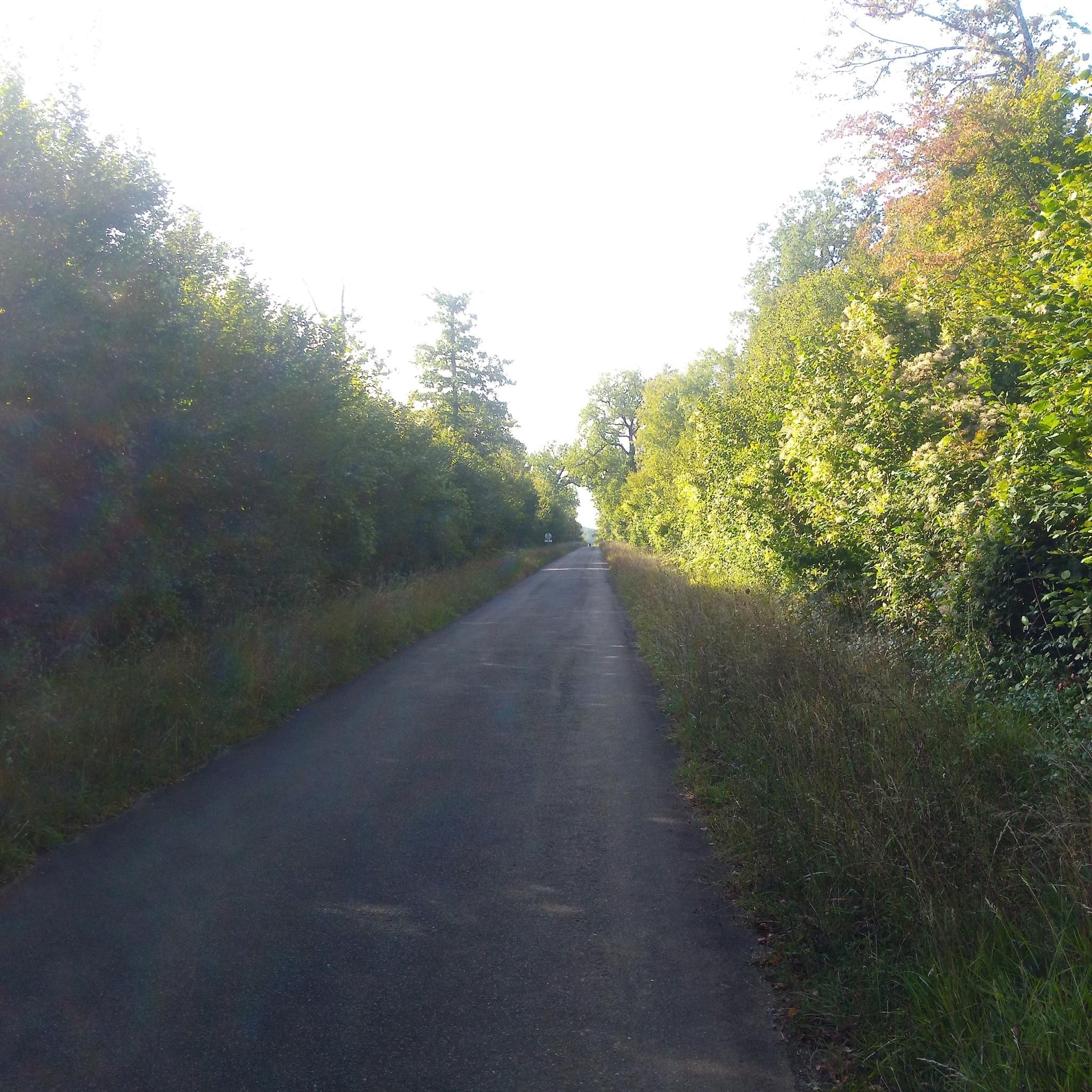
- The most popular attractions is Coulée d'OC, a paved cycling route that spans 15 kilometers. This route offers an easy-to-access path…
Last updated: May 9, 2026
La Rochefoucauld Castle Bridge
Highlight • Castle
Translated by Google •
Tip by

La Rochefoucauld Castle
Highlight • Castle
Translated by Google •
Tip by

Sign up now to discover places like this
Get recommendations on the best single tracks, peaks, & plenty of other exciting outdoor places.
Sign up for free
Saint Martin's Church, Mornac
Highlight • Other
This …
Translated by Google •
Tip by
Coulée d'OC
Highlight (Segment) • Other
Translated by Google •
Tip by

Rancogne Castle
Highlight • Other
Translated by Google •
Tip by
Sign up for free to discover even more attractions around Agris.
Sign up for free
Already have an account?
Start today with a free account
Your next adventure awaits.
Login or Signup



Tips from the Community

15th century stone bridge known as that of the Château de la Rochefoucauld. From the building, there is a superb view of the imposing castle and the waters of the Tardoire. It has been listed as a Historic Monument since 1935. The castle, renowned for being one of the most beautiful and oldest in Charente, can be visited all year round. It is the only castle in France that has been inhabited by the same family for more than 1,000 years. Do not miss !
2
0

In the heart of Charente, the Château de la Rochefoucauld stands like a page of history mixed with an enchanted tale. Built around the 16th century on the site of an 11th century fortress, this gem has been cherished by the same family since its earliest days. And that’s something! Strolling through its rooms or admiring the landscape from its towers, you feel the weight of history. It's as if the castle whispers to us both history lessons and stories of adventure.
0
0

This magical 16th century Renaissance castle is built on an 11th century fortress whose towers have been preserved. The castle and its gardens have been classified as a historical monument since 1955. Definitely worth the short detour!
0
0


Appearing in 1019 with Foucauld, lord of La Roche, the La Rochefoucauld family has long been considered a branch of the Lusignan, due to the similarity of their arms. It seems, in reality, that Foucauld was a close relative of the Viscount of Limoges, descendant of a Grand of the court of Charlemagne. Only four other families in France (including that of the Capetians) can claim such seniority. The history of the castle is inseparable from the history of the La Rochefoucauld family which, itself, is part of the political life of its time, century after century. The castle of La Rochefoucauld provides a remarkable illustration of the interweaving of politics and architecture through the life of a family which has continuously owned the castle since Fucaldus laid the first fortification around 980. With the history of the La Rochefoucauld family, the use of architecture for social and political purposes finds one of its most spectacular manifestations. This earned it the justified title of “pearl of Angoumois”. The castle is an anthology of seven centuries of architecture and the home of the La Rochefoucauld family, still present for over a thousand years. To see: the monumental Renaissance staircase (108 steps!), the boudoir of Marguerite de Valois, the kitchens dug into the karst, the state rooms, guards, the 18th century libraries, the main courtyard and its galleries from the 16th.
3
0
The Château de Rancogne, made up of four buildings arranged around a large square courtyard, was built in two stages; the main building dates from the enivrons of 1520, the rest including the keep with a high watchtower, was built around 1588-1589. At that time, we probably built the round tower covered with a pepperbox. The keep appearing isolated, addition of modern arcades to attach it to the main building, at the end of which a round tower looms little protruding. A low waterfall approaches the castle. This residence has been owned by the Desormeaux family since the end of the 18th century ...
0
0
This building, known from 1110, was rebuilt for the first time around the middle of the 12th century and has undergone other transformations which have modified its original appearance. This building, known from 1110, was rebuilt for the first time around the middle of the 12th century and has undergone other transformations which have modified its original appearance. The history of the church reveals to us that two priests left a memory in the life of the parish: Jean Vergereau named in 1661, died on May 2, 1708 and was buried in the sanctuary; François Faunier du Plessis, who arrived in Mornac on January 18, 1778, was deported to Ile Madame. He died there on September 2, 1794 following ill-treatment inflicted by the revolutionaries. A commemorative plaque was awarded to him on April 28, 1929. The portal is framed by two fonts dating from the 17th century. A coat of arms decorates the first floor. The bell tower has two bells. The oldest dates from 1564 or 1584 and the second dates back to 1724. Some stones carved or engraved by the Compagnons du Tour de France, vestiges of these restorations, appear in the walls of the village. The sacristy has a paved floor made up of these small stones called "Dent de Loup" or "Cœurs de demoiselles".
0
0
Appeared in 1019 with Foucauld, Lord of La Roche, the family of La Rochefoucauld has long been considered a branch of the Lusignan, due to the similarity of their weapons. It seems, in fact, that Foucauld was a close relative of the Viscount of Limoges, descended from a Grand of the court of Charlemagne. Only four other families in France (including that of the Capetians) can claim such seniority. The history of the castle is inseparable from the history of the La Rochefoucauld family, which itself, century after century, is part of the political life of its time. The castle of La Rochefoucauld gives a remarkable illustration of the interweaving of politics and architecture through the life of a family which has owned the castle without interruption since Fucaldus laid the first fortification around 980. With the history of the La Rochefoucauld family, the use of architecture for social and political ends finds one of its most spectacular manifestations. This earned it the justified title of "Pearl of Angoumois". The castle is an anthology of seven centuries of architecture and the residence of La Rochefoucauld, still present, for more than a thousand years. To see: the monumental Renaissance staircase (108 steps!), Marguerite de Valois' boudoir, the kitchens dug into the karst, the ceremonial rooms, the guards, the 18th century libraries, the main courtyard and its galleries 16th century. Visit sheet translated into 17 languages.
1
0
Frequently Asked Questions
What historical sites can I visit near Agris?
The region around Agris is rich in history. You can explore the impressive La Rochefoucauld Castle, a magnificent structure with seven centuries of architecture, located just 5 km away. Within Agris, don't miss the 12th-century Parish Church of Saint Caprais, a registered historical monument, and the ancient Croix de la Tuilière wayside cross.
Are there any castles to explore around Agris?
Yes, the most prominent is La Rochefoucauld Castle, continuously owned by the La Rochefoucauld family for over a thousand years. Visitors can admire its monumental Renaissance staircase, the boudoir of Marguerite de Valois, and 18th-century libraries. You can also see the La Rochefoucauld Castle Bridge, offering superb views of the castle and the Tardoire river. Another notable site is Rancogne Castle, featuring a keep with a high watchtower.
What natural areas are good for outdoor activities?
The Braconne Forest, located to the west of Agris, offers extensive wooded areas perfect for hiking and cycling. It features interesting geological formations like the Fosse Limousine and Fosse Rode. The Tardoire and Bandiat Valleys also contribute to the varied topography, providing beautiful landscapes for exploration.
Are there cycling routes suitable for different skill levels?
Absolutely. The Coulée d'OC is a paved, 15-kilometer route with little elevation change, making it easy to access and suitable for touring cyclists. For more options, you can explore various cycling routes around Agris, including the 'La Rochefoucauld Bike Loop 51B - Discovery Circuit' or the 'Château de La Rochefoucauld – Château Forest loop', which range from easy to moderate difficulty. Find more details on Cycling around Agris.
Where can I find hiking trails near Agris?
The area around Agris is well-suited for hiking. The Braconne Forest offers numerous opportunities, including the 'Lac Noir loop'. You can also find trails like the 'Château Forest – Château de La Rochefoucauld loop'. For a comprehensive list of options, check out the MTB Trails around Agris guide, which also includes hiking-friendly paths.
Are there family-friendly attractions in the Agris area?
Yes, several attractions are suitable for families. Both La Rochefoucauld Castle and the La Rochefoucauld Castle Bridge are listed as family-friendly. The paved Coulée d'OC cycling route is also excellent for families due to its easy access and minimal elevation change, with many equipped picnic areas.
What archaeological discoveries have been made in Agris?
Agris is famous for the discovery of the ceremonial Celtic Agris Helmet, dating from the 4th century BC, found in the Perrats Cave. This masterpiece of Celtic art, crafted from iron, bronze, and gold leaf, is now displayed in the Angoulême Museum. The Tardoire valley also shows evidence of prehistoric human activity, with a Neolithic workshop discovered near Pont d'Agris.
What is the best time of year to visit Agris for outdoor activities?
The region is generally pleasant for outdoor activities from spring through early autumn. Spring and early summer offer mild temperatures and lush greenery, ideal for hiking and cycling. Autumn provides beautiful foliage. While the Coulée d'OC cycling route is shaded, making it very slippery in rainy weather, most routes are enjoyable in dry conditions.
Are there any dog-friendly walking options?
Many of the natural areas and trails around Agris are suitable for walks with dogs, particularly in the Braconne Forest and along the Tardoire and Bandiat Valleys. Always ensure your dog is under control and check local regulations for specific trails or protected areas.
What is there to see in the nearby town of La Rochefoucauld?
Beyond its famous castle, the town of La Rochefoucauld, about 6 km from Agris, is charming to explore. You can enjoy its atmosphere and the views of the Tardoire river from the La Rochefoucauld Castle Bridge. The town also serves as a starting point for several cycling and running routes.
Can I find any unique historical monuments within Agris itself?
Yes, Agris has its own historical gems. The Parish Church of Saint Caprais, dating from the 12th to 14th centuries, is a registered historical monument housing significant objects like a 17th-century winged tabernacle. Additionally, the Croix de la Tuilière, a tall wayside cross first mentioned in 1642, and the Croix du Puyssaguet, built in 1739, are notable historical monuments within the commune.
What kind of running trails are available near Agris?
For runners, there are several trails around Agris, particularly within the Braconne Forest. Examples include a 'Running loop from Forêt domaniale de la Braconne' and the 'Gouffre de la Baisse à Barret loop'. You can find more detailed running routes and their difficulty levels in the Running Trails around Agris guide.
What do visitors particularly enjoy about the attractions around Agris?
Visitors appreciate the blend of historical richness and natural beauty. The La Rochefoucauld Castle is often highlighted for its history and architecture, with some noting it's worth visiting even without admission. The Coulée d'OC cycling route is praised for being a nice, accessible path for touring bikers. The area's extensive forests and river valleys are also popular for outdoor activities.

Get inspired with the komoot mobile app


Explore more
Still not found the Highlight you’re looking for? See guides of the top attractions in other regions:
