Top 6 Castles around Fouquebrune
Best castles around Fouquebrune are found within the Charente region, offering a range of historical and architectural experiences. While Fouquebrune itself features a historically significant fortified church with castle-like characteristics, the surrounding area provides several notable châteaux. This region is characterized by its rich heritage, reflecting periods like the Hundred Years' War and the Wars of Religion. Visitors can explore various defensive structures and grand residences that showcase centuries of French history.
Best castles around Fouquebrune
- The most popular castles…
Last updated: June 24, 2026
Château de la Rochandry
Highlight • Castle
Translated by Google •
Tip by

Château de la Tranchade
Highlight • Castle
Translated by Google •
Tip by

Sign up now to discover places like this
Get recommendations on the best single tracks, peaks, & plenty of other exciting outdoor places.
Sign up for free
Château de la Mercerie
Highlight • Castle
Translated by Google •
Tip by

Chateau du diable
Highlight • Castle
Translated by Google •
Tip by

Château de Torsac
Highlight • Castle
Translated by Google •
Tip by
Sign up for free to discover even more castles around Fouquebrune.
Sign up for free
Already have an account?
Start today with a free account
Your next adventure awaits.
Login or Signup


Tips from the Community

A former stronghold during the Hundred Years' War, the building is said to have served as a landmark for the English, nicknamed the Red Devils, which is said to have given it its name. The building is currently privately owned. https://www.chateau-fort-manoir-chateau.eu/chateaux-charente-chateau-a-puymoyen-chateau-du-diable.html https://www.francebleu.fr/emissions/histoires-et-patrimoine-dans-les-2-charentes/les-charentes-mysterieuses-le-chateau-du-diable-a-puymoyen-16-1426390
0
0

Magnificent little Charentais village, with a small church and its garden
0
0

The extraordinary history of this grandiose residence began in 1924, in the heart of a small 19th century manor (to the left of the current façade): the troubadour castel of La Mercerie was then acquired by Alphonse and Raymond Réthoré. From then on, the two brothers, dreaming of the great Versailles, devoted all their resources to enlarging and embellishing the building. The work undertaken is commensurate with the ambition that drives it. Outside, colonnades and balusters in white stone soon extend the first building. the cut stone increases the gigantism and the rigor of a facade with a perfect rhythm. Inside, nothing is too beautiful for La Mercerie, Raymond brings back from his travels furniture and paintings, chandeliers and precious woods, marbles from Italy, azulejos from Portugal etc. He returns from Italy with a painter sculptor who will carry out on the spot the most monumental decorations with the assistance of the inhabitants of the country. The treasures are piling up, but 30 years of work will not be enough to complete the colossal project. The collections are dispersed during auctions in June 1987. When the two brothers died, the castle fell into oblivion, until the mobilization of the inhabitants of the town, who decided to found an association to safeguard this unique and prestigious heritage. The Béruges room, the central living room, the Vernet living room, the vestibule, the mahogany gallery and the large Azulejos gallery, each more impressive than the last, now fully conquers the visitor eager for cultural discoveries. A short tour of the belvedere of the castle allows you to admire it from the height. In the park of the castle, the rose garden and the arboretum can be visited by little train. The little train is random due to the health context and will be reserved for people with reduced mobility and children, and mainly on Sundays.
0
0

The Château de la Tranchade dominates the Anguienne valley on a rocky outcrop protecting the south-eastern access to Angoulême. A strategic stronghold to control Angoulême, La Tranchade has often been besieged.
4
0

Pretty castle in height after a climb from Angoulême
1
0
Its dazzling white stone facade extends over 220 meters in length, in the middle of a 50 Ha green setting. Some rare and remarkable trees adorn the walk through the park.
2
0
Three truncated rectangular towers and beautiful vaulted rooms remain from the 13th century castle, which was extensively altered in the 17th century. The battlements on fancy battlements are from the 19th century.
0
0
It would be Chanderic, Lord of Saintes at war against the Count of Angoulême, who would have built a fortress, around the 9th century, on the rock where the current castle is located. During the Hundred Years War this castle was disputed between the French and the English. In 1387 Louis de Sancerre, Marshal of France, drove them out. The English took over the castle and were driven out again in 1416 by the Sire de Barbazan, captain of Charles VII who had it demolished. Rebuilt in Gothic style in the 15th century by Jean de La Rochandry, the castle passed by marriage to the Saint-Gelais in 1445, then to the Tison d'Argence and, around 1580, to the Forgues de Lavedan who had it modified and enlarged around 1613 and he gave a Renaissance look. The castle was sold in 1681 to Etienne Chérade, Count of Montbron. In the 18th century, as it threatened to ruin, the Lady of Rouffiac had part of the walls knocked down. In 1850 the banker Servant, from Angoulême, bought what remained of the castle of La Rochandry, had it rebuilt in 1852 as it is today and was ruined in this operation.
1
0
Frequently Asked Questions
What types of castles and historical sites can I explore around Fouquebrune?
The area around Fouquebrune offers a diverse range of historical sites, from fortified churches to grand châteaux. You'll find medieval strongholds, such as the Château de la Rochandry, which was rebuilt in Gothic style, and Renaissance-era residences like the modified Château de la Rochandry. The region's history, including the Hundred Years' War and the Wars of Religion, is reflected in these structures.
Is there a castle directly within Fouquebrune?
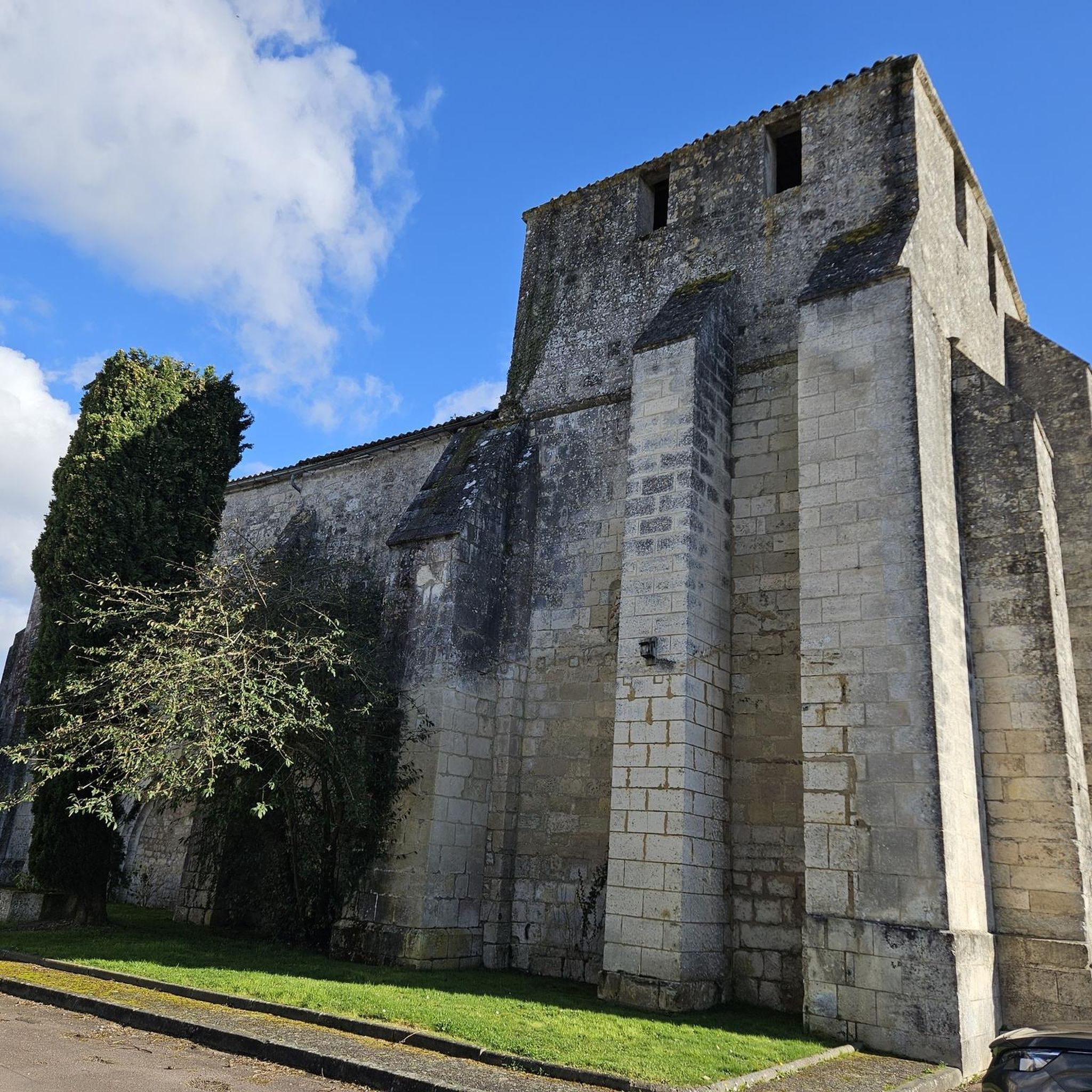
While Fouquebrune doesn't have a traditional castle, it is home to a historically significant fortified church, dedicated to Saint Maurice. This 12th-century church was heavily fortified in the 14th century, giving it a castle-like appearance with robust buttresses and a square tower that may have served as a keep. Its exterior is freely accessible for discovery.
Which castles near Fouquebrune are known for their unique architecture?
The Château de la Mercerie, located about 4 km from Fouquebrune, is known as the 'Little Versailles of Charente' due to its dazzling white stone facade extending over 220 meters. Another architectural highlight is the Château de la Tranchade, which dominates the Anguienne valley from a rocky outcrop and features a postern flanked by asymmetrical square towers.
What historical context do the castles around Fouquebrune offer?
Many castles in the region, such as the Château de la Rochandry and the Château de la Tranchade, played strategic roles during the Hundred Years' War, often being besieged and disputed between French and English forces. The fortified church of Fouquebrune also reflects the tumultuous periods of medieval and early modern French history.
Are there any less crowded castles to visit near Fouquebrune?
For a potentially less crowded experience, consider visiting the Château de Torsac. While extensively altered in the 17th century, it retains 13th-century elements like three truncated rectangular towers and beautiful vaulted rooms, offering a glimpse into history in a smaller, charming village setting.
What outdoor activities can I do near the castles around Fouquebrune?
The area offers various outdoor activities. You can find numerous hiking trails, such as the 'Boëme Valley loop from Mouthiers-sur-Boëme' or the 'Hiking loop from Fouquebrune'. For cyclists, there are road cycling routes like the 'Château de la Mercerie – Villebois-Lavalette Castle loop'. Explore more options on the Hiking around Fouquebrune, Running Trails around Fouquebrune, and Road Cycling Routes around Fouquebrune guide pages.
Are there specific hiking trails that pass by or near these castles?
Yes, some hiking routes offer views or proximity to castles. For instance, the Château de la Rochandry is visible from the GR4 trail or from the heights of Moutiers sur Boëme. You can find more detailed hiking routes, including those near castles, in the Hiking around Fouquebrune guide.
What do visitors enjoy most about the castles around Fouquebrune?
Visitors appreciate the rich history and architectural beauty. For example, the Château de la Rochandry is noted for its superb appearance. The Château de la Mercerie is admired for its grandiose scale and the significant rehabilitation efforts by volunteers. The strategic locations and defensive elements of many structures also capture visitors' interest.
Can I visit the Château de Rochebrune, and what makes it special?
The Château de Rochebrune, dating from the 11th and 12th centuries, is an historic castle in Étagnac, Charente. It has preserved medieval and Renaissance elements and is still family-owned. Visitors can explore its apartments, which were redesigned in the 19th century and furnished with style. Its strategic location was chosen by Jourdain I before his Crusade. You can learn more about its history on Wikipedia.
Are there any castles near Fouquebrune that are particularly suitable for families?
While specific 'family-friendly' categories aren't always listed, castles with extensive grounds or unique features can appeal to families. The Château de la Mercerie, with its large park and arboretum, might offer space for children to explore. Some parts of its park can even be visited by a small train, particularly on Sundays, which could be enjoyable for families.
What is the best time of year to visit the castles in the Fouquebrune area?
The Charente region generally enjoys pleasant weather from spring through early autumn (April to October), making these months ideal for visiting castles. During these periods, the weather is typically mild, allowing for comfortable exploration of both interiors and exterior grounds. Summer offers longer daylight hours, while spring and autumn provide beautiful scenery with fewer crowds.
Are there any castles with a mysterious or intriguing past near Fouquebrune?
The Chateau du diable (Devil's Castle) has an intriguing past. A former stronghold during the Hundred Years' War, it is said to have served as a landmark for the English, who were nicknamed the Red Devils, supposedly giving the castle its name. It's a privately owned building, offering a glimpse into a more enigmatic piece of local history.
Most popular routes around Fouquebrune
Most popular attractions around Fouquebrune

Get inspired with the komoot mobile app


Explore more
Looking for the best castles somewhere else? Discover other guides around Fouquebrune:
