The best road cycling routes around Ploërdut
4.1
(21)
679
riders
156
rides
Road cycling routes around Ploërdut are set within the varied terrain of central Brittany, characterized by a mix of woodlands, open countryside, and river valleys. The region features an extensive network of greenways and canal towpaths, including sections along the Nantes-Brest Canal, offering generally flat and scenic options. Beyond these, the landscape includes rolling hills and diverse rural paths, providing a range of cycling experiences.
Best road cycling routes around Ploërdut
- The most popular road cycling route is Saint-Jean-Baptiste Church…
Last updated: July 5, 2026
15
riders
22.7km
01:09
280m
280m
Easy road ride. Great for any fitness level. Mostly well-paved surfaces and easy to ride.
10
riders
83.8km
03:57
820m
820m
Moderate road ride. Good fitness required. Mostly well-paved surfaces and easy to ride.

Sign up for free
6
riders
36.2km
01:36
320m
320m
Moderate road ride. Good fitness required. Mostly well-paved surfaces and easy to ride.
3
riders
Moderate road ride. Good fitness required. Mostly well-paved surfaces and easy to ride.
4
riders
59.5km
02:49
560m
560m
Moderate road ride. Good fitness required. Mostly well-paved surfaces and easy to ride.
Get access to more routes and recommendations from other explorers.
Sign up for free
Already have an account?
Our route recommendations are based on thousands of hikes, rides, and runs completed by other people on komoot.
Start today with a free account
Your next adventure awaits.
Login or Signup

Tips from the Community

Dating from 1666, the building takes its name from a former archbishop who died in 762. In the shape of a Latin cross, the western portal is dominated by a projecting square tower, resting on four consoles. The building preserves a polychrome wooden statue representing the Trinity, dating from the 17th century.
0
0
This chapel is believed to date from the 16th or 18th century. It houses sculpted sandstone slabs and a polychrome wooden statue of the Virgin and Child, dating from the 18th century. Below, about twenty meters away, is a devotional fountain in a rectangular basin surrounded by low walls.
0
0
Built in 1865 by the Countess of Cossé-Brissac, this chapel was built in homage to Saint Anne, in accordance with the promise made at the birth of her daughter. It is distinguished by its door surmounted by a rosette-shaped stained-glass window and a steeple with a granite balcony. Modest in size, the chapel was initially reserved exclusively for the service of the lords of the manor.
0
0
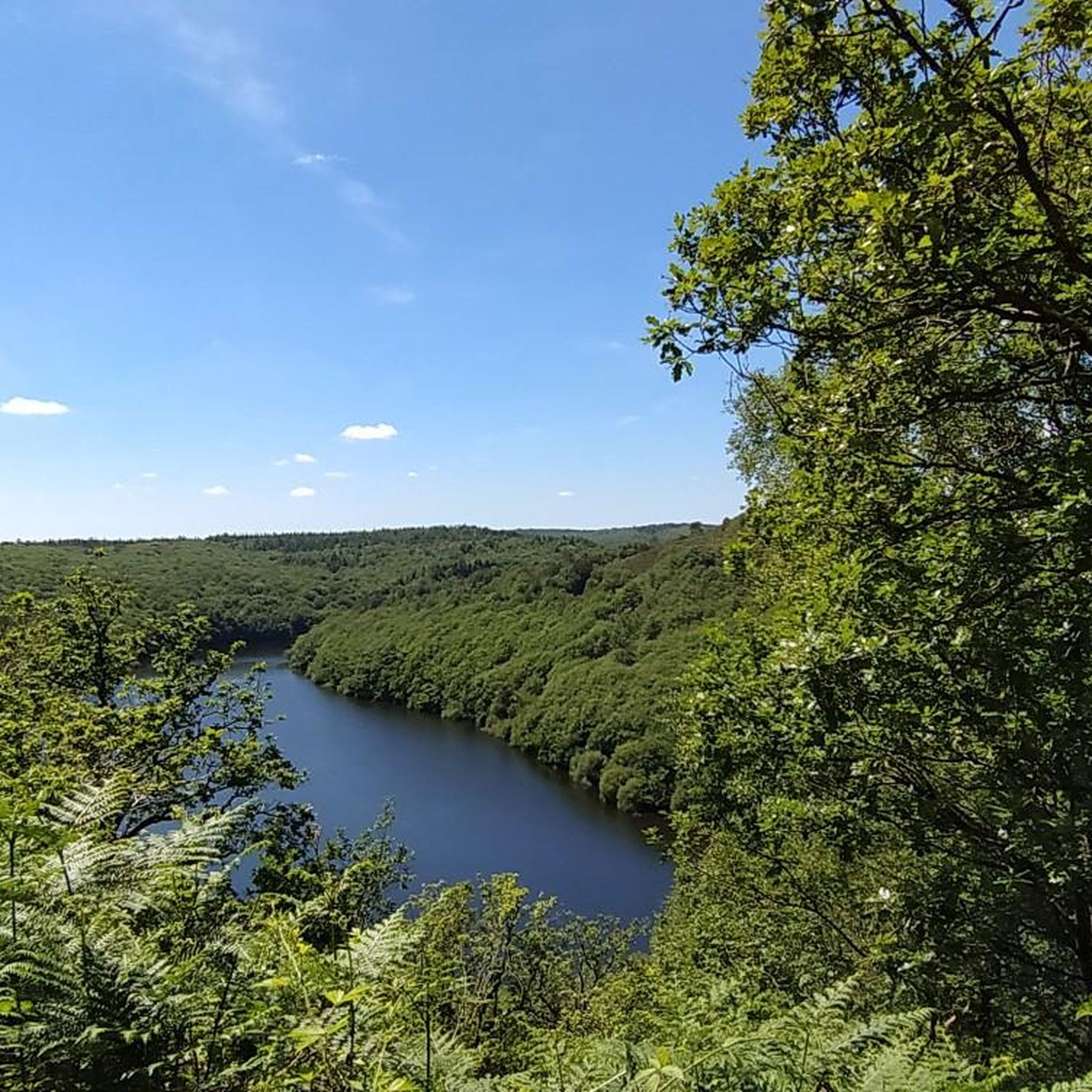
Road along the Scorff valley, offering a peaceful landscape.
0
0
Completed in the 16th century in the Gothic style, the church features Romanesque vaults, testifying to an older building. Outside, opening onto the porch, the 16th-century ossuary is distinguished by its three elegant basket-handle arches, resting on charming molded columns. Upon entering the church, one immediately sees the blue vault, a symbol of the sky in Romanesque art. The decoration continues with the polychrome wooden sablières, displaying scenes of hunting and everyday life.
0
0
Founded by the lords of Kermerien, only the original western gate, dating from the 15th century, remains today. The current building was rebuilt in the second half of the 17th century.
1
0
Built in the 15th century, this church underwent numerous alterations in the 16th, 17th, and 19th centuries. Request the keys from the Town Hall to enter.
1
0
Bat House: A unique museum in France entirely dedicated to the ladies of the night. You'll discover everything about their lifestyle and preconceived notions through a modern, playful, and accessible exhibition design. You'll observe the Greater Horseshoe Bat live on the church roof. In summer, don't miss "Bat Nights," a magical experience offered by the museum by reservation. Our Lady of Kernascléden Church: The parish church, which was once a simple chapel, was built between 1420 and 1464. It is one of the finest examples of Flamboyant Gothic art in Brittany, recognizable by its slender lines, sculpted decorations, and rich architecture. It is a veritable lacework of stone carved from granite. You'll also see the Danse Macabre there. A terrifying masterpiece depicting the triumph of death. As you enter the village, just 200 m on your left, you will find the Notre-Dame fountain.
1
0
Frequently Asked Questions
How many road cycling routes are available around Ploërdut?
There are over 160 road cycling routes around Ploërdut, offering a wide range of options for different skill levels and preferences. These routes are highly rated by the komoot community, with an average score of 4.1 stars.
What makes road cycling in Ploërdut unique?
Ploërdut, nestled in Brittany, offers a diverse landscape for road cycling. You'll find a mix of tranquil canal towpaths along the Nantes-Brest Canal and Blavet River, rolling hills, woodlands, and open countryside. This variety ensures engaging rides, from relaxed spins to more challenging ascents.
Are there easy road cycling routes suitable for beginners or families?
Yes, Ploërdut offers several easy road cycling routes. The region's greenways and canal towpaths, particularly along the Blavet River, provide generally flat and scenic options perfect for a relaxed pace. For example, the Saint-Jean-Baptiste Church loop from Le Croisty is an easy 14.1-mile route that offers a scenic introduction to the local countryside.
Can I find challenging road cycling routes in Ploërdut?
Absolutely. While the canal paths offer gentler rides, the wider countryside around Ploërdut includes rolling hills and varied terrain that can provide a more vigorous workout. There are 17 difficult routes available, and many moderate routes like the Guémené-sur-Scorff – Saint-Jean-Baptiste Church loop from Le Croisty, which covers 52 miles with significant elevation changes, are popular among experienced cyclists.
Are there long-distance road cycling trails near Ploërdut?
Yes, the region is part of Brittany's extensive network of greenways and long-distance cycling routes. These marked paths often utilize former railway lines or canal towpaths, connecting picturesque villages and diverse landscapes. The Guémené-sur-Scorff – Saint-Jean-Baptiste Church loop from Le Croisty is a good example of a longer route at 52 miles, connecting notable towns through varied terrain.
What historical sites or landmarks can I discover along the road cycling routes?
As you cycle around Ploërdut, you can encounter several historical points of interest. Notable sites include the beautiful Chapelle Sainte-Anne des Bois, the late Gothic Sainte-Barbe Chapel and Renaissance Staircase in Le Faouët, and the Notre-Dame de Crénénan Chapel with its unique artistic treasures. The village of Locuon also features the only Gallo-Roman granite quarry in Western Europe.
Are there any natural features to see while cycling around Ploërdut?
The region is rich in natural beauty. Cyclists can enjoy the serene towpaths along the Nantes-Brest Canal, including sections like the Path between two bodies of water on the Nantes-Brest Canal. The Blavet Valley offers peaceful natural landscapes, and you'll ride through varied countryside, woodlands, and charming villages, with some routes offering views from promontories like Castennec or Maneguen.
What is the best time of year for road cycling in Ploërdut?
Brittany generally offers pleasant cycling conditions from spring through early autumn. Summer months provide warmer weather, ideal for exploring the varied countryside and canal paths. However, the constantly changing landscape makes it engaging throughout the milder seasons.
Are there circular road cycling routes available in the area?
Yes, many of the road cycling routes around Ploërdut are designed as loops, allowing you to start and finish in the same location. Examples include the Saint-Jean-Baptiste Church – Abbey loop from Le Croisty, a 22.7-mile route, and the Guémené-sur-Scorff – Locmaria-Berrien loop from Saint-Gilles, which is 46.1 miles long.
What do other road cyclists enjoy most about road cycling in Ploërdut?
The area is highly rated by the komoot community, with an average score of 4.1 stars from over 20 reviews. Cyclists often praise the diverse terrain, which includes quiet woodlands, open countryside, and the scenic canal paths. The well-maintained network of greenways and varied route options for all abilities are also frequently highlighted.
Where can I find parking for road cycling routes in Ploërdut?
While specific parking locations vary by route, many villages and towns in the Ploërdut region, including Ploërdut itself and starting points for popular routes like Le Croisty or Saint-Gilles, offer public parking facilities. It's advisable to check the starting point of your chosen route for the most convenient parking options.
Most popular attractions around Ploërdut

Get inspired with the komoot mobile app


Explore more
Browse the best Road cycling routes in other regions.
