The best MTB trails around Saint-Julien-Mont-Denis
4.6
(191)
2,269
riders
13
rides
Mountain bike trails around Saint-Julien-Mont-Denis offer diverse terrain within the Maurienne Valley of the Savoie department. The region features a dramatic mountainous landscape, with altitudes ranging from 552 meters to 2,824 meters, providing varied opportunities for mountain biking. Riders can expect challenging ascents and descents across diverse geology, including areas composed of slate, and routes that traverse significant mountain passes.
Best mountain bike trails around Saint-Julien-Mont-Denis
- The most popular mountain bike trail is Monumental work... – Chapel Saint roch ...…
Last updated: July 1, 2026
5.0
(1)
18
riders
Hard mountain bike ride. Very good fitness required. Advanced riding skills necessary. Some portions of the route may require you to push your bike.
5.0
(1)
14
riders
38.2km
04:13
1,540m
1,540m
Hard mountain bike ride. Very good fitness required. Advanced riding skills necessary. Some portions of the route may require you to push your bike.

Sign up for free
4.5
(2)
17
riders
Hard mountain bike ride. Very good fitness required. Suitable for all skill levels.
10
riders
16.8km
01:41
670m
670m
Moderate mountain bike ride. Good fitness required. Suitable for all skill levels.
4.0
(2)
12
riders
16.3km
01:45
690m
690m
Moderate mountain bike ride. Good fitness required. Suitable for all skill levels.
Get access to more routes and recommendations from other explorers.
Sign up for free
Already have an account?
Our route recommendations are based on thousands of hikes, rides, and runs completed by other people on komoot.
Start today with a free account
Your next adventure awaits.
Login or Signup

Tips from the Community

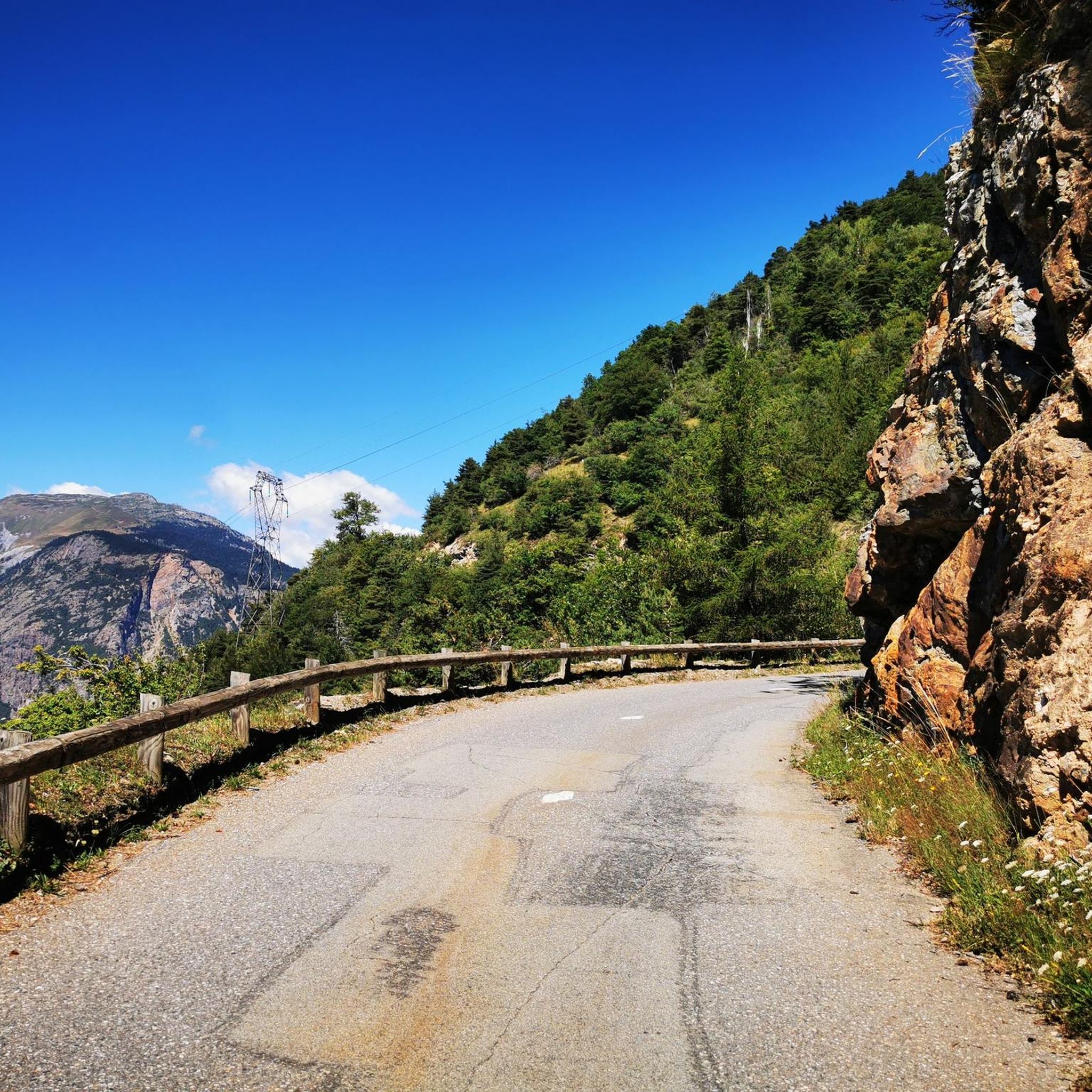
Unfortunately there is nothing along the way. The bar in the village is currently permanently closed. Fountain helpful
2
0
I passed by it. First a large parking lot, next to it a few leisure activities.
2
0
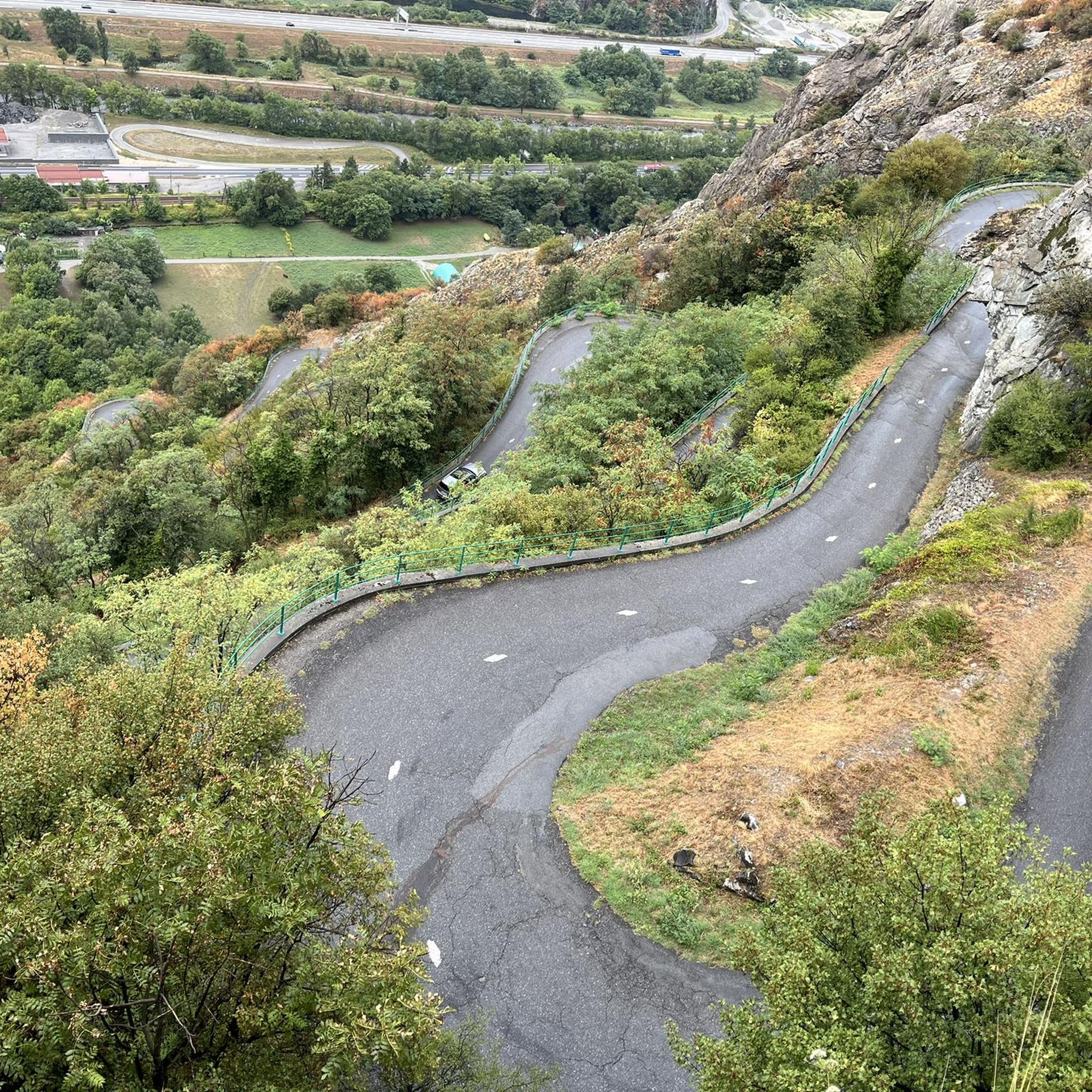
Nice place, many options to ride various passes.
2
0
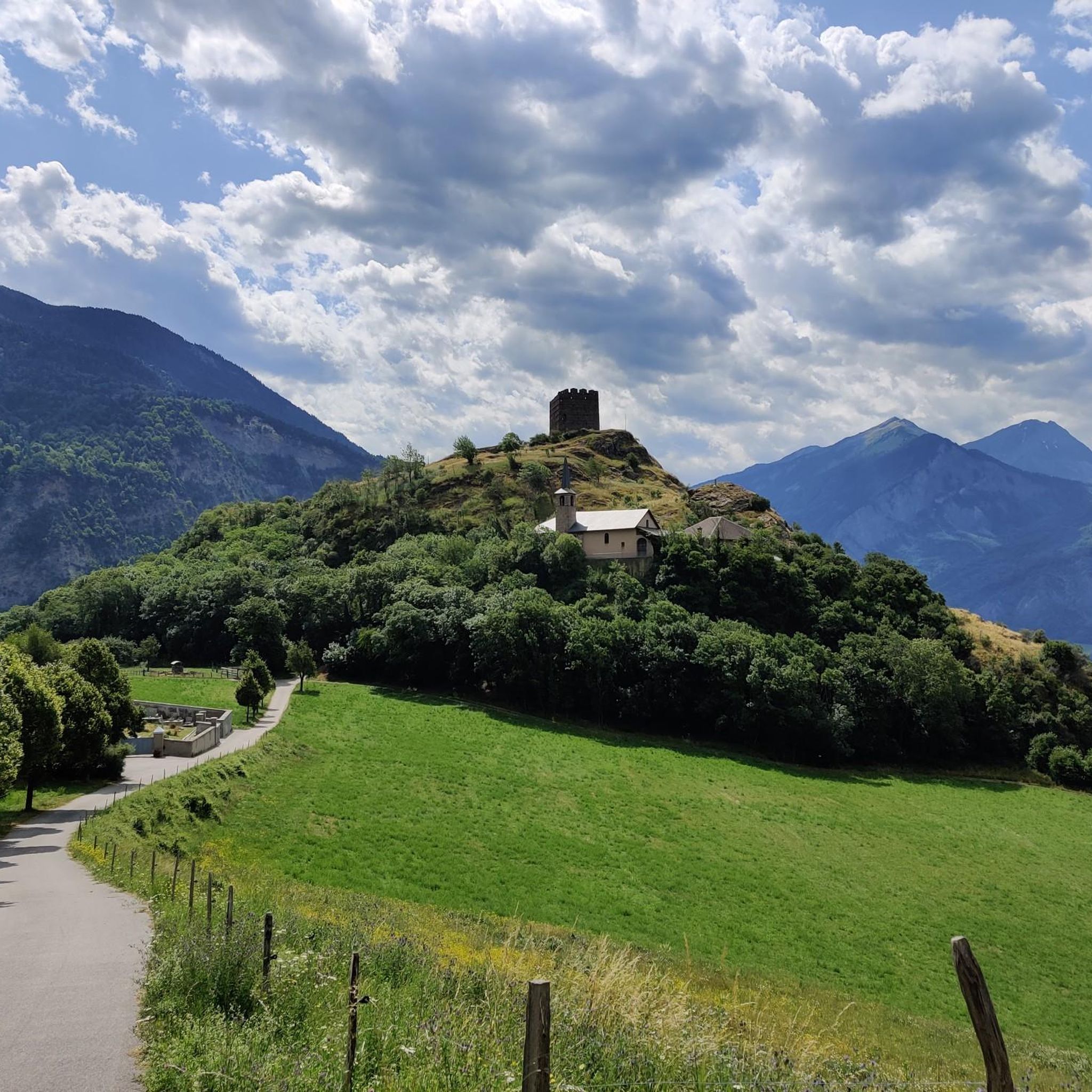
Imposing tower in the center.
2
0

The history of the tower bells (continued) The next writings date from the revolutionary period: the bells were taken down on December 12 and 13, 1793. During this operation, the third bell, known as "la None" (likely because it was particularly used by the chapter for this office), was broken. On December 21, it was decreed that the four largest bells would be weighed in Chambéry as they could not be weighed in Saint-Jean-de-Maurienne1. The following day, the syndic-procurator of Arc informed the general syndic-procurator of the dispatch of 24 bells to Chambéry, including: 9 bells from the Chapter, 4 from Saint-Christophe, 2 from the Bernardines, 1 from the Capucins, 1 from the Pénitents, 1 from Saint-Antoine, 1 from the Miséricorde, 1 from Bonne-Nouvelle, 1 from Notre-Dame, and 1 from the Collège. This would make a total of 10 bells for the Grand Clocher tower of the Cathedral and Notre-Dame. Several writings indicated that the cathedral's carillon consisted of 11 bells. With the obligation to leave one bell per belfry to sound alarms and civil assemblies, the cross-referencing of information therefore provides a certain logic. Private archives offer a variation to the above information in a writing by abbé Guiguet, vicar at the cathedral between 1853 and 1858. He recounts "from contemporary and eyewitnesses" that the cathedral's carillon was composed, as of December 2, 1793, "of nine bells; three formed, as today, the clock's chime, but they were arranged to serve simultaneously for the carillon. They were preserved, along with the clock". At the Concordat, the three bells of the clock and its movement seem to have been reinstalled, meaning they were not sent to Chambéry in 1793. In the 19th century, the cathedral's liturgical carillon was therefore partially reconstituted. In 1812, a bell known as "des Pénitents" was cast in Briançon, likely by the Vallier and Gautier dynasties, founders active in that town who also largely contributed to the repopulation of Savoyard belfries during that period. In 1828, the large bell cracked, and a new one was immediately commissioned by the Chapter. This bell cost 1994.6 livres at a rate of 36 livres per quintal, weighed in Saint-Jean-de-Maurienne, a sum fixed on September 17, 1828. Payment was made to the founders Jean-François Gautier and François Vallier on September 14, 1829, after a one-year guarantee on the bell. The years 1864 and 1865 saw the arrival of two bells in the belfry: first the third by the Beauquis brothers, then the second by the Paccard brothers. No archives have been found to help contextualize these purchases. Many questions remain open, particularly that of a recasting or an addition, but also the manufacturing of these two bells (a year apart!) by these two competing founders! At the end of 1873, the small "Pénitents" bell cracked. A new bell was ordered from the Paccard brothers. A quote was submitted to the chapter with the trade-in of the old bell, weighing 174 kilos. A new bell weighing 228 kilos would therefore be installed in its place. In 1935, the ringing bells of the Grand Clocher were electrified. They first started with the three large ones, considering that "the small bell is not suitable for this transformation". The municipality took charge of burying the electrical wires between the sacristy and the Grand Clocher, and the diocese financed the electrification itself. It was probably at this time that the "Cloche du Chapitre", installed in the slender belfry adjoining the cathedral, was silenced. Its access is unfortunately impossible today, but its rehabilitation is under study. We hope to be able to reach it one day to uncover its secrets and give it liturgical use again! Although the cathedral chapter is currently dormant, new practices are emerging in the cathedral. A "guard of honor" has formed around the relics that the cathedral houses. It notably organizes public or private venerations and participates in the great liturgical hours of the cathedral, the mother church of the diocese.
0
0
The history of the tower bells The large bell tower of Saint-Jean-de-Maurienne is imposing with its silhouette and large dimensions. It should be known that, in reality, it was initially the bell tower of the Notre-Dame church, neighboring the cathedral. This enormous tower was adorned with a spire between the 15th century and the Revolution, making it a tower of almost 80 meters! When it was razed, this spire fell on the church and damaged the nave. The religious building was therefore reduced, and the street separating them was created. This bell tower housed, during its golden age, a peal of over 10 bells! On May 10, 1326, the Confraternity of the Holy Spirit requested permission from the canons to use a bell to announce their assemblies. This request was granted. The archives of the chapter of Vercelli (Italy) house a document of interest to the bell history of Saint-Jean-de-Maurienne: in 1475, Amédée Gavit, vicar of Cardinal d'Estouteville, then bishop of Maurienne, commissioned Claude Milon of Geneva and Claude Vionnet of Sallanches (Faucigny) to cast new bells for the cathedral. Unfortunately, there are not enough elements to fully appreciate the work that took place there. Another document, found in the parish archives of Saint-Pancrace, precisely details the casting of new bells during the summer of 1667. Canon Nicolas Féjoz recounts the following: • On July 23, the large bell was lowered, and on July 26, the second bell. Both were recast on July 30: the large bell under the invocation of All Saints and the second in honor of Saint John the Baptist. • On August 3, a contract was made to recast the fourth and fifth bells. • On August 8, the bishop blessed the two large bells and another bell, also dedicated to All Saints. We do not know what rank this last one occupied in the peal... • On September 7, the bishop blessed four new bells: the fourth, fifth, sixth, and ninth bells in order of weight. In 1712, Canon Cueillerat paid 200 florins to Georges Arnaud, a founder from Saint-Jean-de-Maurienne, for the casting of a bell for the Notre-Dame church.
0
0
Frequently Asked Questions
What kind of mountain biking terrain can I expect around Saint-Julien-Mont-Denis?
The region offers a dramatic mountainous landscape with varied terrain, ranging from 552 meters to 2,824 meters in altitude. You'll encounter diverse geology, including areas composed of slate, and routes that feature challenging ascents and descents through the Maurienne Valley.
How many mountain bike trails are available in Saint-Julien-Mont-Denis?
There are over a dozen mountain bike trails available around Saint-Julien-Mont-Denis, offering a range of experiences for riders.
What are the difficulty levels of mountain bike trails in Saint-Julien-Mont-Denis?
The mountain bike trails in Saint-Julien-Mont-Denis are primarily moderate to difficult. There are 5 moderate routes and 7 difficult routes, catering to riders looking for a challenge.
Are there any notable landmarks or viewpoints accessible by mountain bike in Saint-Julien-Mont-Denis?
Yes, the region is rich in natural landmarks and viewpoints. You can find routes that offer views of impressive features like the Grand Perron. Other prominent peaks in the area include Pointe de la Masse and Cime de Caron, which provide extensive panoramic views of the Alps.
Are there mountain bike trails that include famous mountain passes?
Yes, the region is known for its challenging mountain passes. You can find routes that incorporate climbs to passes like Col du Télégraphe, a popular destination for cyclists. One such route is the Col du Télégraphe – View of Valloire loop from Saint-Julien-Mont-Denis.
What do other mountain bikers enjoy the most about mountain biking in Saint-Julien-Mont-Denis?
The mountain bike routes in Saint-Julien-Mont-Denis are highly rated by the komoot community, with an average score of 4.7 stars. Riders often praise the dramatic mountainous landscapes, the challenge of the mountain passes, and the diverse terrain that makes for engaging rides.
Are there any circular mountain bike routes available?
Yes, many of the mountain bike trails in Saint-Julien-Mont-Denis are designed as loops. Examples include the Monumental work... – Chapel Saint roch ... loop from Costerg and the Saint-Jean-de-Maurienne – Cochemin Pass loop from Saint-Julien-Mont-Denis.
What is the best time of year for mountain biking in Saint-Julien-Mont-Denis?
The region benefits from a microclimate due to its sunny exposure, making spring through autumn generally ideal for mountain biking. Summer offers access to higher altitudes, while spring and autumn provide pleasant temperatures and vibrant scenery. Always check local weather conditions before heading out.
Are there any family-friendly mountain bike trails in the area?
While many trails in Saint-Julien-Mont-Denis are rated moderate to difficult, some sections or shorter routes might be suitable for families with older, experienced children. It's recommended to review the specific route details and elevation profiles to ensure they match your family's skill level.
Is public transport available to access mountain bike trails?
Saint-Julien-Mont-Denis is situated in the Maurienne Valley, which has some public transport options. For specific trailheads, it's best to research local bus services or train connections to nearby towns like Saint-Jean-de-Maurienne and plan your route accordingly, as direct access to all trail starts may vary.
Where can I find parking for mountain biking in Saint-Julien-Mont-Denis?
Parking is generally available in and around the village of Saint-Julien-Mont-Denis. For specific trailheads, look for designated parking areas near the starting points of routes, often in village centers or at the base of popular climbs. Always check local signage for any restrictions.
Are there any regulations or permits required for mountain biking in Saint-Julien-Mont-Denis?
Generally, no specific permits are required for mountain biking on established trails in the public domain around Saint-Julien-Mont-Denis. However, always respect private property, follow trail etiquette, and be aware of any local regulations, especially when riding through protected natural areas or near ski resorts.
Most popular routes around Saint-Julien-Mont-Denis
Most popular attractions around Saint-Julien-Mont-Denis

Get inspired with the komoot mobile app


Explore more
Browse the best MTB trails in other regions.
