Attractions and Places To See around Saint-Julien-La-Geneste - Top 13
Attractions and places to see around Saint-Julien-La-Geneste are located in the Puy-de-Dôme department of France, offering a diverse landscape. The region features natural elements such as the Sioule River and several waterfalls, alongside notable architectural landmarks. Visitors can explore historical castles, impressive viaducts, and unique geological sites. The area provides opportunities for outdoor activities and cultural experiences within the wider Auvergne region.
Best attractions and places to see around Saint-Julien-La-Geneste
- The most popular attractions is Queuille Viewpoint, a viewpoint…
Last updated: July 2, 2026
Cascade of the 3 Pools of Chambonnet
Highlight • Waterfall
Translated by Google •
Tip by

Cascade de la Tine
Highlight • Waterfall
Translated by Google •
Tip by
Sign up now to discover places like this
Get recommendations on the best single tracks, peaks, & plenty of other exciting outdoor places.
Sign up for free
Fades Dam
Highlight • Other
Translated by Google •
Tip by

Queuille Viewpoint
Highlight • Viewpoint
Translated by Google •
Tip by

Saint-Bravy Church
Highlight • Religious Site
Translated by Google •
Tip by

Sign up for free to discover even more attractions around Saint-Julien-La-Geneste.
Sign up for free
Already have an account?
Start today with a free account
Your next adventure awaits.
Login or Signup

Tips from the Community

At this time of year, what "calm"! And what beauty!
0
0

"The waterfall of the 3 vats of Chambonnet is one of the best kept secrets of the Combrailles. The Cubes stream descends successively into 3 natural potholes and forms a waterfall, in the heart of the forest. (Combrailles Auvergne Tourisme)." Access is easy from the small car park near the Sioule road. A small bridge that crosses the Sioule is also nice to see, opposite the direction of the waterfall of the 3 Cuves. After about 15/20 minutes of walking, the waterfall is offered to you on 3 levels. A small path climbs to the top if you feel like it... Be careful not to slip though! Busy in summer, and it flows little, so prefer winter, or after a good period of rain.
0
0
"A hike from the town of the commune allows you to reach the waterfall. The Auzelle stream flows into the Chalamont, forming a pretty 10m high waterfall in the woods. Magnificent site! (Combraille Auvergne Tourisme). A beautiful waterfall easily accessible from the road. The path is clean, as are the small wooden bridges. The proposed route is pleasant, in the heart of a small forest, while following the river.
0
0

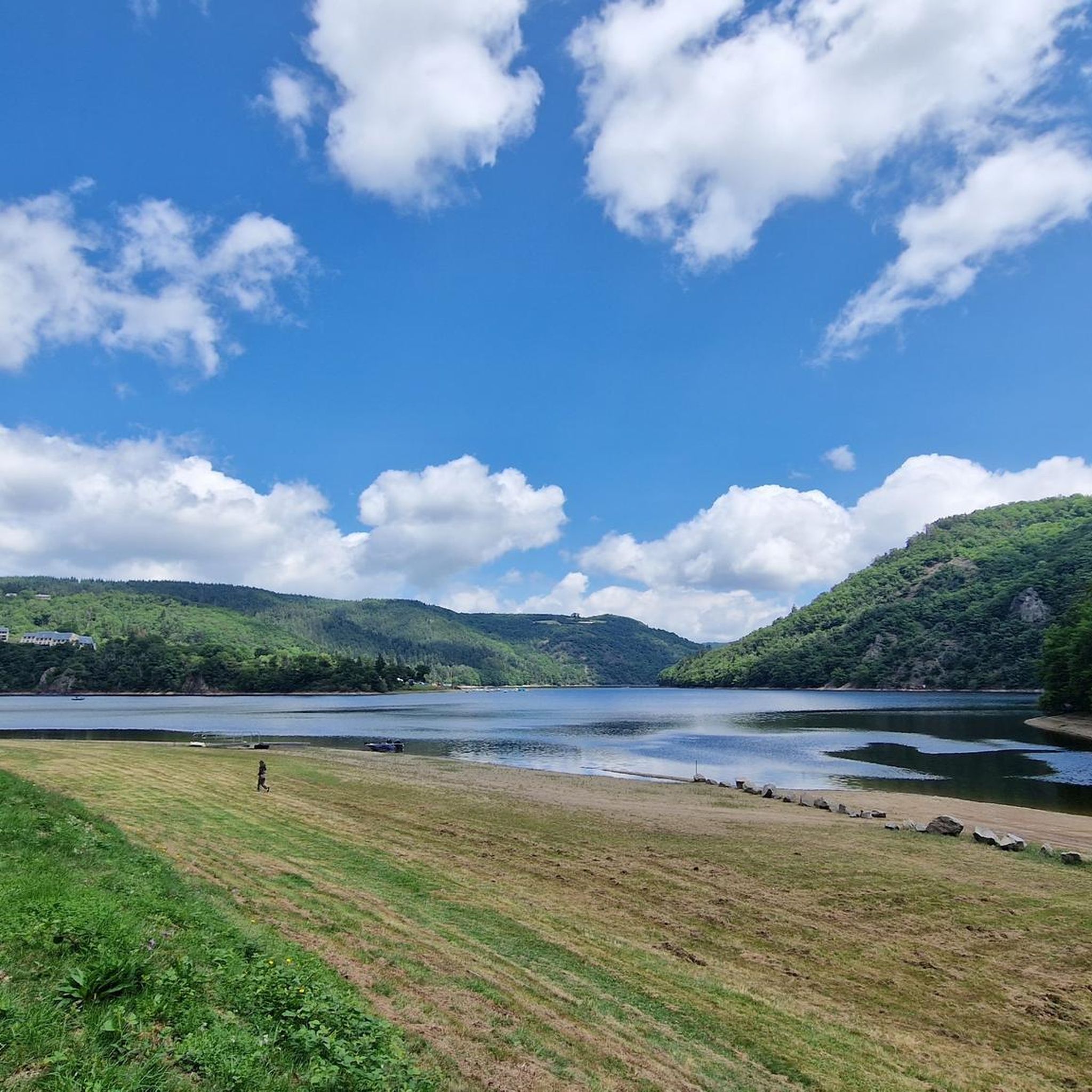
The Fades dam is the largest dam in the Sioule valley. This impressive structure, built in 1968, holds up to 69 million cubic meters of water and powers a hydroelectric power station. From the top of the dam, you can admire the view of the lake and the surrounding mountains. Along the way, you may encounter wild animals, such as deer, foxes or birds of prey.
3
0

The construction of the first castle of Pionsat dates back to the end of the 14th century, in the heart of the Hundred Years' War. It is probably the work of Guy Aubert, lord of Pionsat (and nephew of Pope Innocent VI), who applied Charles V's edict of 1367 on the fortification of the kingdom, to strengthen the defenses of the Auvergne against English raids. Over the centuries, the castle took the form of an enclosure with several towers (perhaps five) and a keep according to a fairly detailed plan of which there are still remains, in particular part of the main building and a tower. Since 1482, and the purchase by Jacques de Chazeron, first butler of King Louis XI, of the stronghold of PIONSAT where he built a square tower with a Gothic door in the courtyard.
0
0
The current Saint-Bravy church in Pionsat is quite recent. On the other side of the church square was an older church. This Romanesque church of Pionsat is only known to us from two lithographs. Because its strength was seriously doubted in the mid-19th century, it was decided to build a new one on land acquired by the municipality in August 1859. The current one was built in a neo-modern church using stones from the old church. Romanesque style and where the bell “Anne de Chazeron” was installed, presented in 1569 by Gilbert de Chazeron, lord of Pionsat and to whom the virtue of warding off storms is attributed. The Saint-Bravy Church was consecrated in August 1888.
0
0

This is the Fades viaduct.
0
0

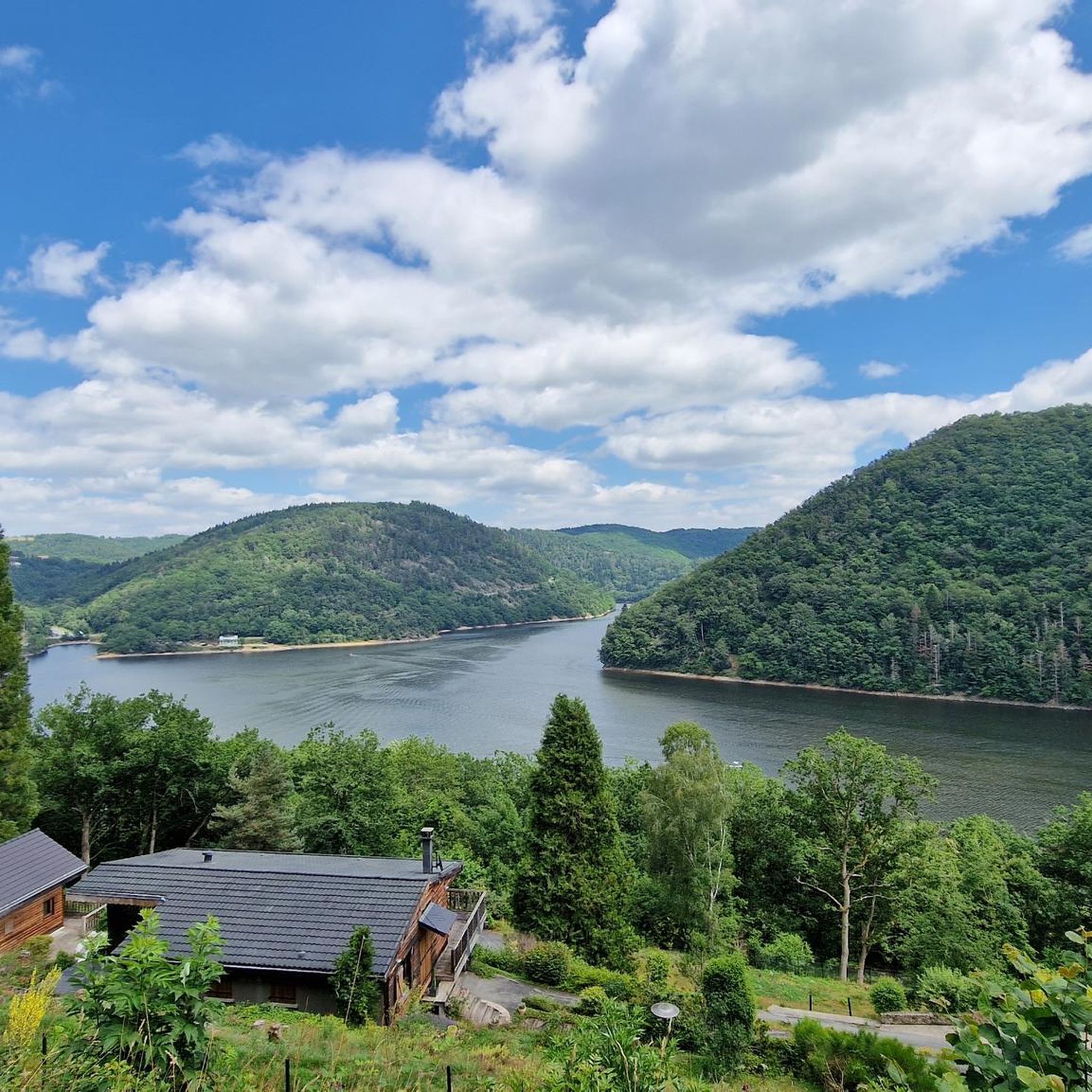
The meander of Queuille is one of the most famous panoramas of Auvergne and undoubtedly the most spectacular of Combrailles.
2
0
Frequently Asked Questions
What natural features can I explore around Saint-Julien-La-Geneste?
The region is rich in natural beauty, particularly its waterfalls and river landscapes. You can visit the impressive Cascade de la Tine, a 10-meter high waterfall easily accessible from the road. Another beautiful spot is the Cascade of the 3 Pools of Chambonnet, where the Cubes stream descends into three natural potholes. Don't miss the spectacular Queuille Viewpoint, offering a famous panorama of the Meander of Queuille along the Sioule River.
Where can I find the best scenic views in the area?
For breathtaking vistas, head to the Queuille Viewpoint, which provides one of the most renowned panoramas of Auvergne, overlooking the Meander of Queuille. Another significant viewpoint is the View of the Fades viaduct and dam, offering a unique perspective on the historic Viaduc des Fades, once the world's highest bridge.
Are there historical sites or architectural wonders to visit?
Yes, the region boasts several historical and architectural marvels. The most prominent is the Viaduc des Fades, an impressive railway viaduct over the Sioule River, which was a record-breaker when inaugurated in 1909. You can also explore historic castles such as Château Rocher and Château de Chazeron, and the Le Manoir de Veygoux, all contributing to the area's rich heritage.
What unique cultural or educational experiences are available?
For a unique cultural experience, visit Dhagpo Kundreul Ling, a Buddhist temple in the region. Those interested in geology and local industry might enjoy the Maison de la pierre Volvic, showcasing the famous Volvic stone, or the Musée Wolframines. For a fun and educational day out, Vulcania is an amusement park focused on the Auvergne's volcanic landscape.
Are there family-friendly attractions or activities?
Absolutely! The Cascade de la Tine is easily accessible and family-friendly, offering a pleasant walk through a small forest. For an active adventure, consider the VÉLORAIL ÉLECTRIQUE DES FADES, an electric rail-bike activity near the Viaduc des Fades. Vulcania, a volcano-themed amusement park, also provides an entertaining and educational experience for all ages.
What outdoor activities can I do near these attractions?
The area around Saint-Julien-La-Geneste is perfect for outdoor enthusiasts. You can find numerous routes for cycling, running, and road cycling. Explore the region's diverse landscapes on a bike with routes like the 'Roman Bridge of Menat loop' or the 'Viaduc des Fades – Fades Dam loop'. For runners, there are trails such as the 'Running loop from Le Fal' or 'The cascade loop from Saint-Priest-des-Champs'. Discover more options in the Cycling around Saint-Julien-La-Geneste, Running Trails around Saint-Julien-La-Geneste, and Road Cycling Routes around Saint-Julien-La-Geneste guides.
Are there hiking trails near the attractions?
Yes, the region offers various hiking opportunities. Many of the natural attractions, like the Cascade de la Tine and the Cascade of the 3 Pools of Chambonnet, are accessible via pleasant walking paths. While specific hiking guides are not listed here, the general area is well-suited for exploring on foot, with trails often leading through forests and along rivers. The path to the Queuille Viewpoint also offers a rewarding walk.
What is the best time to visit Saint-Julien-La-Geneste for outdoor activities?
The best time to visit for outdoor activities like hiking and cycling is generally from spring to autumn. During these seasons, the weather is milder and more conducive to exploring the natural landscapes and attractions. Waterfalls like the Cascade of the 3 Pools of Chambonnet are particularly impressive after periods of rain, making late autumn or spring ideal for seeing them at their fullest.
What do visitors enjoy most about Saint-Julien-La-Geneste?
Visitors particularly appreciate the stunning natural beauty and the tranquility of the area. The panoramic views from the Queuille Viewpoint are a consistent highlight, often described as 'magnificent'. The peaceful walks to waterfalls like the Cascade de la Tine, through clean paths and small forests, are also highly valued for their calm and beauty.
Are there any museums in the vicinity?
Yes, for those interested in history and science, the region offers a few specialized museums. You can visit the Musée Paléontologique for insights into prehistoric life, or the Musée Wolframines, which might focus on minerals or mining history. The Maison de la pierre Volvic also serves as a site showcasing the local Volvic stone, famous in the region.
Can I experience the Viaduc des Fades up close?
Absolutely! Beyond viewing it from the View of the Fades viaduct and dam, you can get a more interactive experience. The VÉLORAIL ÉLECTRIQUE DES FADES offers an electric rail-bike activity that allows you to traverse parts of the area, providing a unique perspective of this impressive structure and its surroundings.
Most popular routes around Saint-Julien-La-Geneste

Get inspired with the komoot mobile app


Explore more
Still not found the Highlight you’re looking for? See guides of the top attractions in other regions:
