The best walks and hikes around Saint-Augustin
4.6
(485)
5,630
hikers
252
hikes
Hiking around Saint-Augustin offers a network of trails primarily characterized by its coastal proximity and low-lying terrain. The region features gentle paths, often near beaches and maritime landscapes, with minimal elevation changes. These routes typically traverse areas with a mix of open views and some wooded sections, providing accessible outdoor experiences. The landscape is generally flat, making it suitable for a range of hiking abilities.
Best hiking trails around Saint-Augustin
- The most popular hiking route is Conche de Nauzan – Conche de Gilet loop from Saint-Palais-sur-Mer, a 5.4 miles (8.7 km) trail that takes 2 hours 14 minutes to complete, offering views of the coastline.
- Another top favourite among local hikers is Conche de Nauzan loop from Saint-Palais-sur-Mer, an easy 2.5 miles (4.0 km) path that explores the coastal area with gentle gradients.
- Local hikers also love the Hiking loop from Les Mathes, a 3.4 miles (5.5 km) trail leading through coastal surroundings, often completed in about 1 hour 25 minutes.
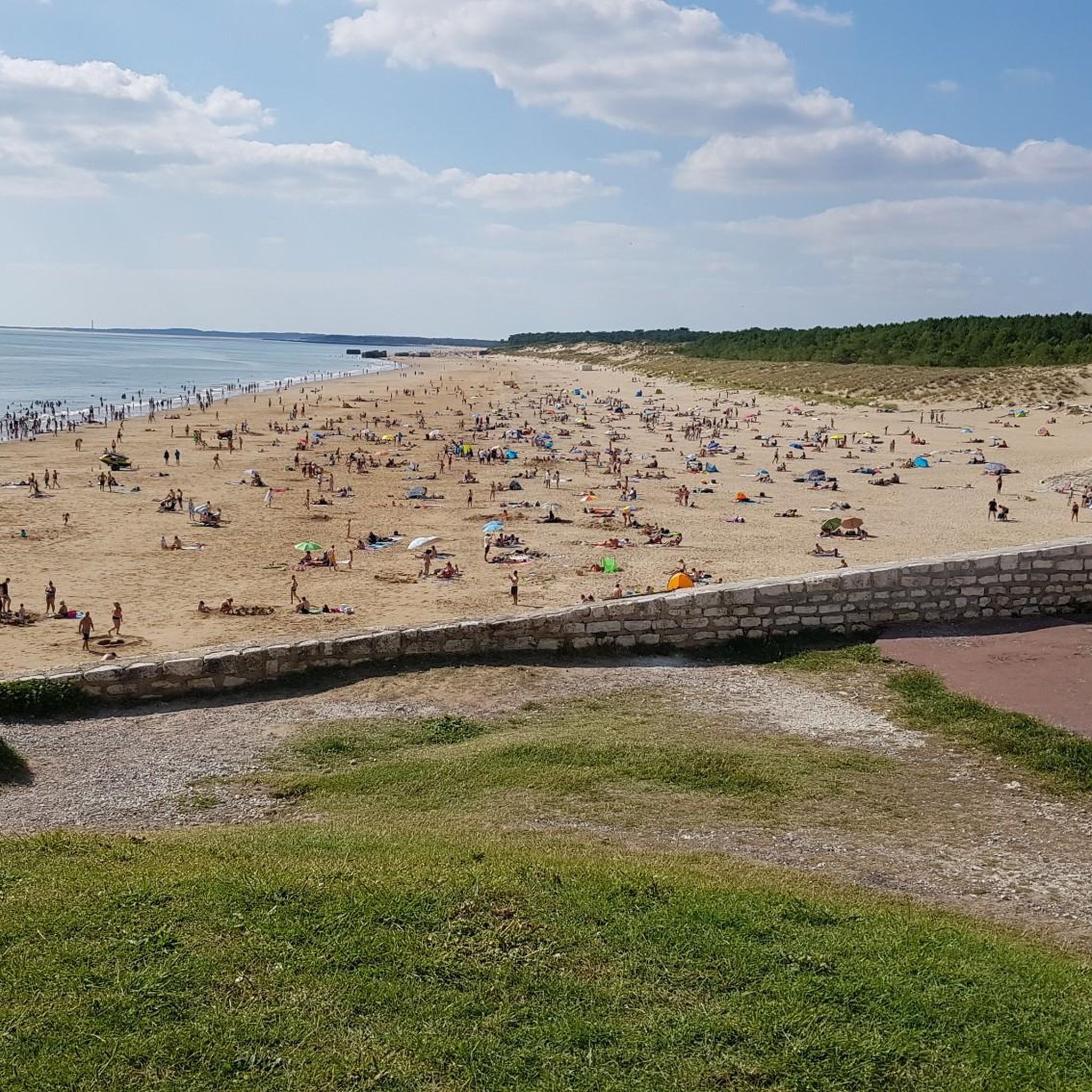
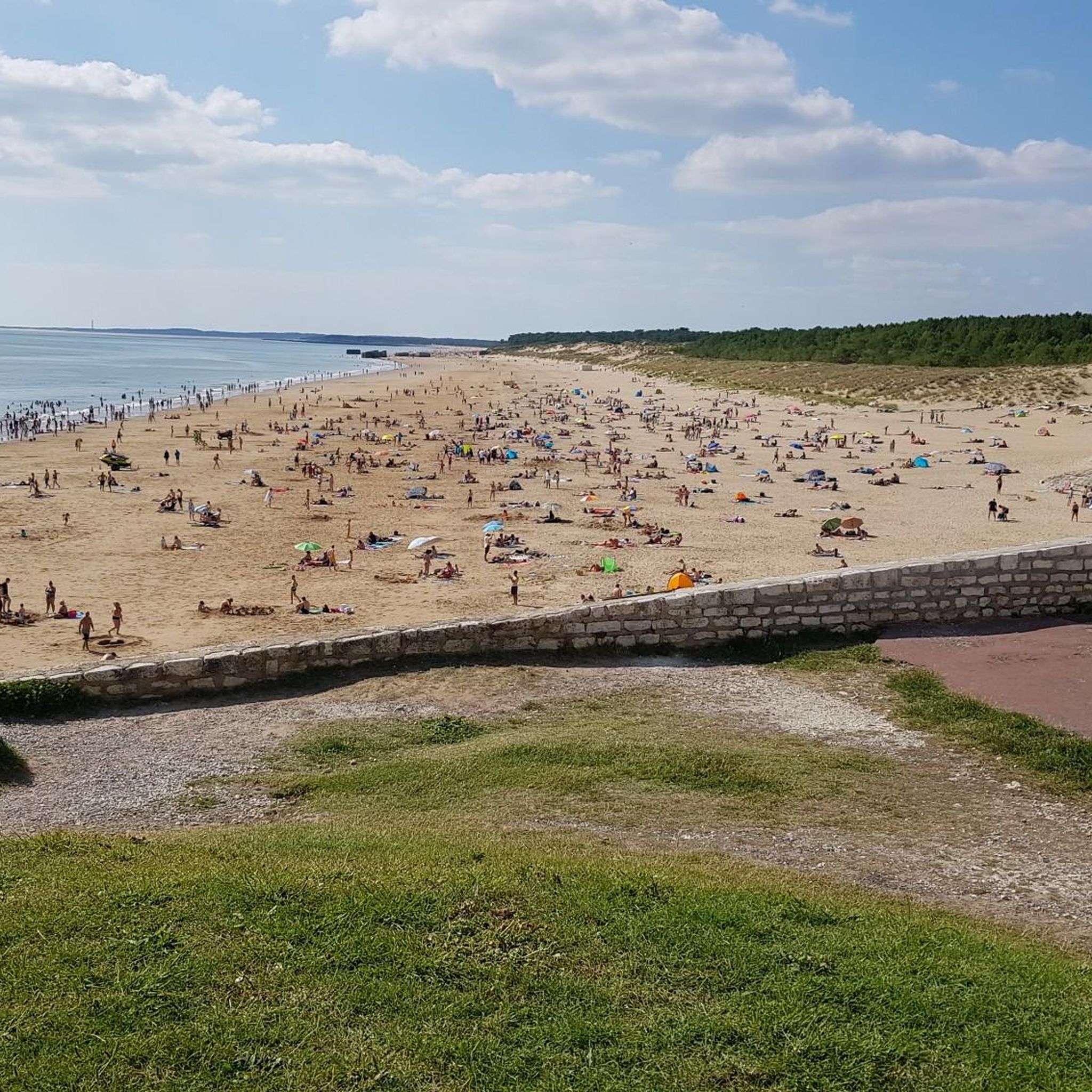
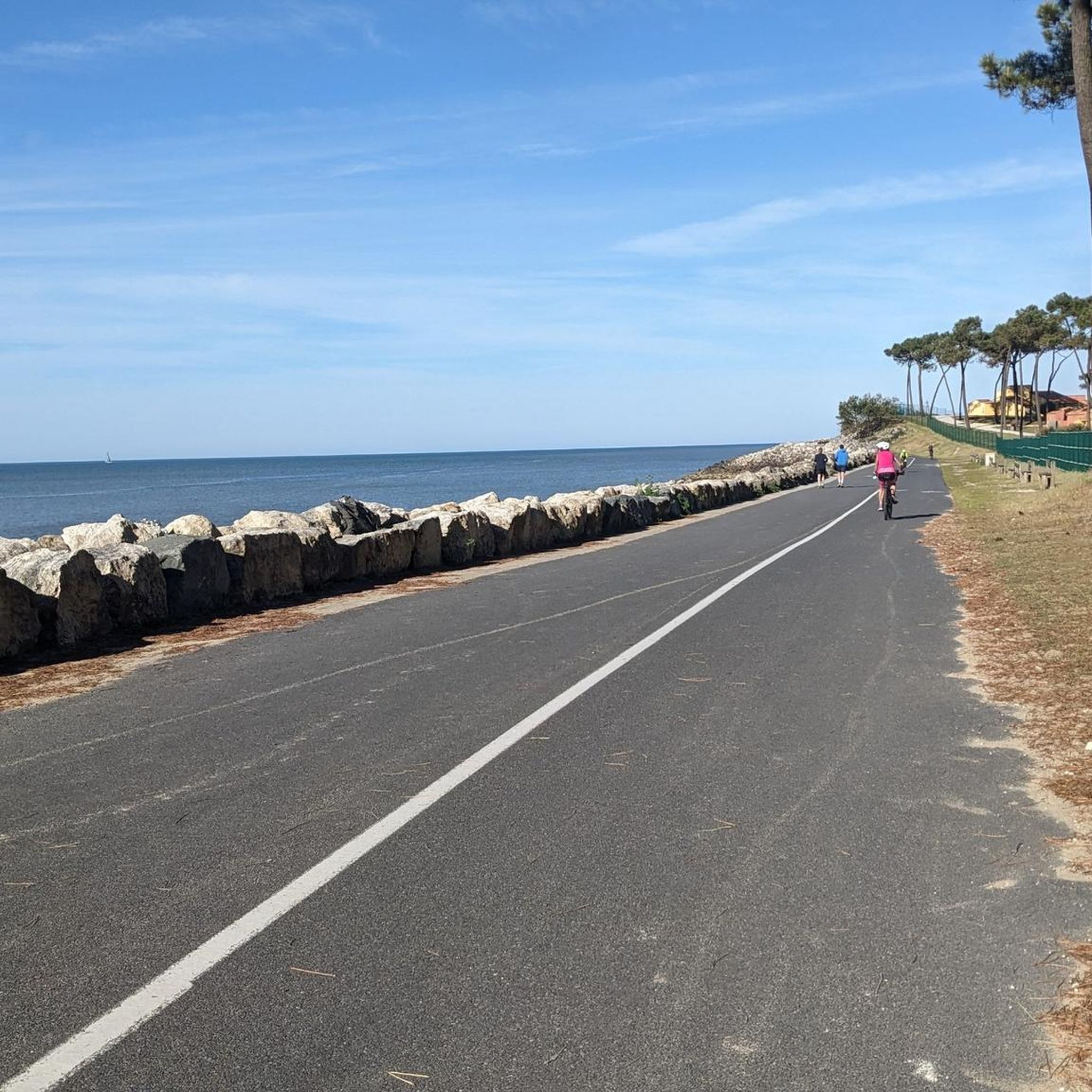
- Hiking around Saint-Augustin is defined by coastal paths, sandy stretches, and low-lying woodlands. The network offers options for different ability levels, from short, easy walks to longer moderate routes.
- The routes in Saint-Augustin are highly rated by the komoot community with an average score of 4.6 stars from over 470 reviews. More than 5,800 hikers have used komoot to explore Saint-Augustin's varied terrain.
Last updated: July 1, 2026
4.4
(20)
279
hikers
Moderate hike. Good fitness required. Easily-accessible paths. Suitable for all skill levels.
4.8
(22)
271
hikers
8.76km
02:16
40m
40m
Moderate hike. Good fitness required. Easily-accessible paths. Suitable for all skill levels.

Sign up for free
5.0
(10)
130
hikers
5.69km
01:29
40m
40m
Easy hike. Great for any fitness level. Easily-accessible paths. Suitable for all skill levels.
5.0
(6)
23
hikers
8.87km
02:18
50m
50m
Moderate hike. Good fitness required. Easily-accessible paths. Suitable for all skill levels.
4.0
(3)
22
hikers
5.76km
01:29
20m
20m
Easy hike. Great for any fitness level. Easily-accessible paths. Suitable for all skill levels.
Get access to more routes and recommendations from other explorers.
Sign up for free
Already have an account?
Our route recommendations are based on thousands of hikes, rides, and runs completed by other people on komoot.
Start today with a free account
Your next adventure awaits.
Login or Signup

Tips from the Community

🏰 Interior visit Entering Cordouan means discovering a unique place, halfway between a royal monument and a maritime structure. Here are the main stages of the visit 👇 🚪 1. The base and the guardroom As soon as you enter (accessible at low tide), you step into a massive stone base - Very thick walls to withstand storms - Old technical and storage rooms - Austere atmosphere, typical of a defensive structure at sea ⛪ 2. The royal chapel This is the symbolic heart of the lighthouse, absolutely remarkable. - Dedicated to Notre-Dame de Cordouan - Decorated with marble, sculptures, and elegant vaults - Designed to resemble a palace chapel 👉 This is what gives the lighthouse its nickname "Versailles of the sea". 👑 3. The king's apartments Above the chapel are rooms intended to accommodate the king (even though he never came). - Vaulted and decorated rooms - Fireplaces and period elements - Later used by the lighthouse keepers 🌀 4. The monumental staircase - Approximately 300 steps - Spiral stone staircase - Natural light through narrow openings 👉 The climb is gradual, with several landings allowing you to discover the successive levels. 💡 5. The lantern room You then arrive at the technical part of the lighthouse: - Modern lighting system - Old Fresnel lens (major historical element) - Mechanisms that have evolved over the centuries 🌊 6. The exterior balcony At the top: - Spectacular 360° view of the Gironde estuary and the Atlantic Ocean - Unique sensation of being isolated in the open sea 🧭 What makes the visit unique - Rare blend of royal luxury and maritime engineering - Monument still in operation - Access dependent on tides and weather - Feeling of total isolation, especially at high tide 💡 Tip: The visit usually includes a boat trip from Royan or Le Verdon. You should bring suitable shoes (damp and sometimes slippery ground).
0
0
🏰 Historic The Cordouan lighthouse, located at the entrance to the Gironde estuary, is one of France's most remarkable maritime monuments. Nicknamed "the king of lighthouses" or "the Versailles of the sea," it has a unique history of over 400 years. ⚓ Origins (14th – 16th century) As early as the 14th century, a first rudimentary fire tower existed on the Cordouan plateau to signal dangers to sailors. The estuary was then very dangerous, with numerous shipwrecks, which threatened trade towards Bordeaux. 👑 Construction of the royal lighthouse (1584 – 1611) The current construction began in 1584 under the reign of Henry III, then continued under Henry IV. Architect Louis de Foix designed an exceptional building: * both a lighthouse and a royal prestige monument * richly decorated (chapel, sculptures, apartments) It was completed and lit in 1611. 👉 At that time, it was considered an architectural marvel, sometimes compared to the lighthouse of Alexandria. 🔬 Evolutions and modernization (18th – 19th century) Between 1788 and 1790, engineer Joseph Teulère raised the lighthouse by about 20 meters to improve its visibility. In 1823, the Fresnel lens was installed, a major innovation that revolutionized lighthouse lighting worldwide. 🏛️ Heritage recognition Classified as a historic monument as early as 1862, among the very first in France. Still in operation, it is the oldest French lighthouse still in service. Listed as a UNESCO World Heritage site in 2021, as a masterpiece of maritime architecture. ⚙️ Contemporary era The lighthouse was automated in 2006, but remains maintained and monitored by teams. It is now visited in season and is a major tourist site on the Charente and Gironde coast.
0
0
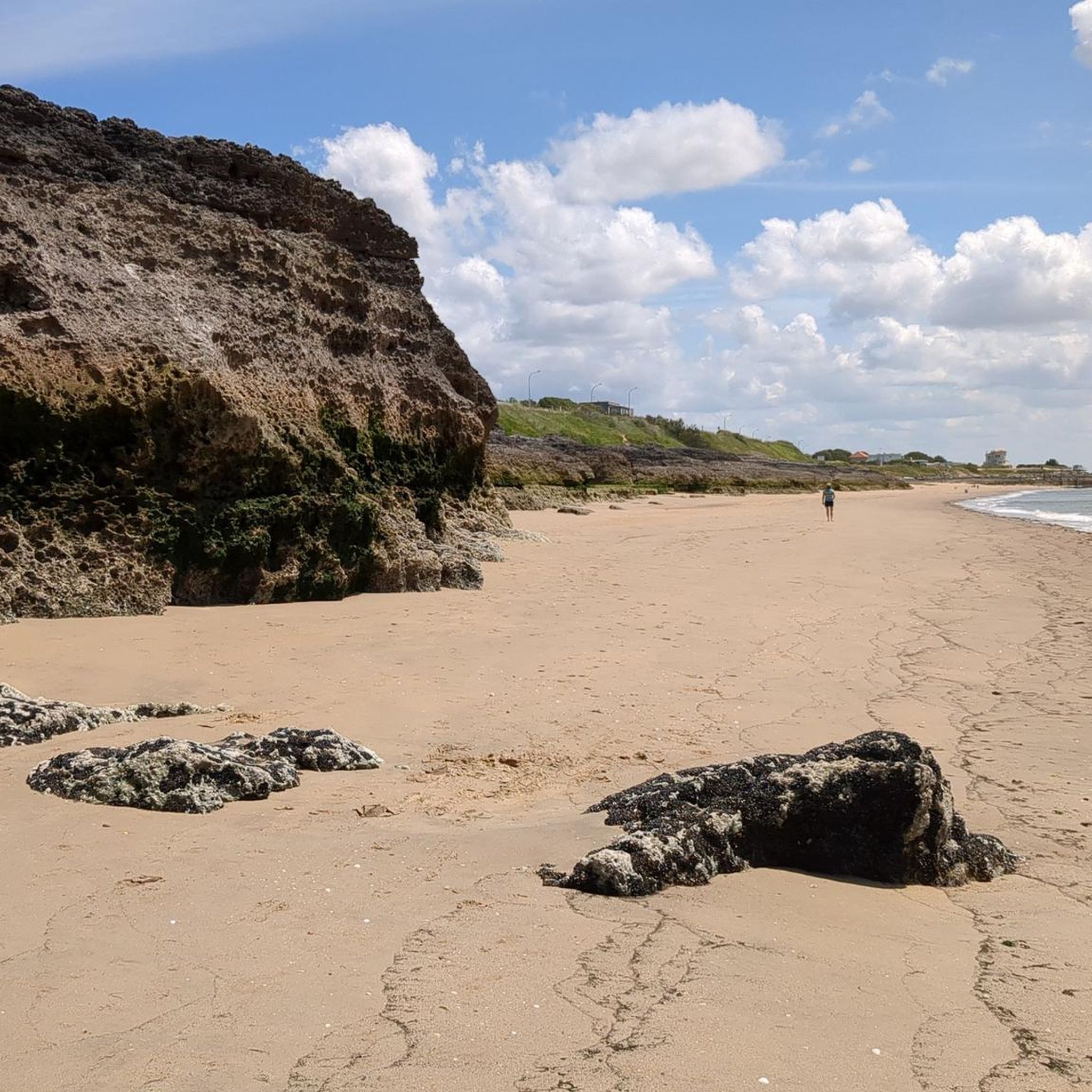
The Platin beach, located in Saint-Palais-sur-Mer, is one of the most characteristic coastal sites in the region, both for its landscape and its history. 🌊 A site shaped by the sea The Platin beach is distinguished by its limestone cliffs and small coves. This coastline belongs to the Côte Nord de Beauté, between Royan and La Palmyre. The word “Platin” comes from the local dialect and refers to a rocky plateau exposed at low tide. For millennia, marine erosion has sculpted these rocks, creating caves, overhangs, and typical reliefs. 🐟 A traditional activity: fishing and fishing huts As along the entire Charente coast: - Locals practiced shore fishing (shellfish, crustaceans). - Carrelets (fishing huts on stilts) were installed on the rocks or cliffs, emblems of the local landscape. - These structures have now become a heritage and tourist feature. 🪖 A site marked by the Second World War During the Second World War: - The coastline, including the Platin, was integrated into the Atlantic Wall built by the German army. - Bunkers and defensive structures were established on the heights to monitor the Gironde estuary. - Some remains are still visible today, integrated into the landscape. 🏖️ Tourist boom From the end of the 19th century and especially in the 20th century, Saint-Palais-sur-Mer became a popular seaside resort. The Platin beach attracts visitors for: - its wilder setting than the large beaches, - its rocks and coves, - its view of the estuary. Today, it is appreciated for swimming, walking, and photography. 🌿 Today: a natural and heritage site The Platin beach is recognized for: - its preserved environment, - its remarkable geology, - its blend of history and nature. It is one of the emblematic places on the Charente coast, between maritime heritage and historical memory.
0
0
The carrelets of Saint-Palais-sur-Mer are among the most emblematic elements of the Charente coastline. Their history blends traditional fishing, tourist development, and local heritage. 🐟 Origin of the carrelets Originally, the word "carrelet" referred to a square fishing net used since the 17th century. A precise description can be found as early as 1769, in the writings of the scholar Henri-Louis Duhamel du Monceau, who mentioned this type of fishing on the Saintonge coast. 👉 At that time, these were not yet the current huts, but simply a net operated from rudimentary structures. ⚓ Artisanal fishing structures The first local carrelets were simple wooden platforms, built by the fishermen themselves to stand above the water. They were mainly used to catch shrimp, fish, and crabs near the shore, without going out to sea. 👉 It was a family and coastal fishery, less dangerous than sea fishing. 🏖️ 19th – early 20th century: transition to a leisure activity At the turn of the 20th century, with the rise of seaside resorts like Saint-Palais, the carrelets evolved. Holidaymakers and notable figures adopted this practice: construction of fixed jetties, appearance of huts on stilts. The carrelets then became places for relaxation as much as for fishing. 👉 They already contributed to the postcard image of the coast. 🪵 After 1945: democratization and multiplication After the Second World War, the number of carrelets increased sharply. They became a symbol of popular leisure and conviviality. The transition was gradually made from a means of subsistence to a recreational activity. 🌊 Storms and reconstruction The carrelets are fragile in the face of storms: 1999: massive destruction (up to 90% in some areas) 2010 (Xynthia storm): new damage Many have been rebuilt identically, respecting tradition. 🏛️ Today: protected heritage In Charente-Maritime, there are about 400 carrelets. They are: integrated into the public maritime domain allocated by administrative authorization (often renewed every 5 years) Since 2018, they have been recognized as cultural heritage of the department. 👉 In Saint-Palais, they can be observed in particular: at Pont du Diable at the conche du Concié at the Puits de l’Auture
0
0
The puits de l’Auture is an emblematic natural site located in Puits de l’Auture, north of the commune of Saint-Palais-sur-Mer. Its name often intrigues, and its history blends geology, local traditions, and maritime observation. 🌊 Origin and formation The puits de l’Auture is not a man-made well, but a natural formation: It is a cavity carved into the limestone rock by marine erosion. Under the effect of waves and infiltrations, the rock gradually collapsed, forming a sort of vertical chasm open to the sea. During strong swells or tides, water rushes in violently, creating spectacular eddies. 📜 Origin of the name The term “Auture” probably comes from Old French or the local dialect: It could derive from “hauteur” (height) or “autre” (other), evoking a high or separate place. Another hypothesis suggests a deformation of an old word related to a natural cavity or opening. No completely certain origin has been formally established, which adds to the mystery of the place. ⚓ Local historical role The site has had several uses or functions over time: 👀 Observation point Located on the rocky cornice, it served as a natural observation post to monitor the sea. Locals and fishermen could spot boats, storms, or dangers. 🎣 Fishing activities As elsewhere on the coast of Royan, particularly near the famous carrelets (fishing huts on stilts), the area was frequented by fishermen. The rocks around the well allowed for shore fishing or line fishing. 🌿 A remarkable natural site Today, the puits de l’Auture is mainly: A popular walking spot along the coastal path. A listed site for its landscape and geological interest. A remarkable viewpoint over the Atlantic Ocean, especially at sunset. ⚠️ Caution The site remains fragile and potentially dangerous: Unstable cliffs Powerful waves during storms It is advisable to stay on the marked trails.
0
0
La Chapelle Notre-Dame-des-Aviateurs, often called the aviators' chapel, is a small religious building steeped in an original history, blending faith, aviation, and local memory. 🏗️ Origins (late 19th – early 20th century) In 1896, the Platin land was purchased by Parisian industrialist Joseph Odelin. In 1904, he had a small private oratory built, dedicated to the Virgin, capable of accommodating about twenty people. Faced with the increase in the local population, the chapel was enlarged in 1908, with a larger nave. ✈️ Link with aviation (from 1909) In 1909, after the exploit of Louis Blériot (crossing the English Channel), the chapel was named “Notre-Dame des Aviateurs”. Very quickly, it became a symbolic place for pilots: In 1910, an aviator flew over the chapel and dropped a wreath of flowers. This gesture launched a tradition of aerial pilgrimages, unique in France. 👉 The chapel thus became the protector of aviators… and also of sailors, with blessings of the sea and sky. ⛪ Religious life and pilgrimages From 1911 onwards, masses were officially authorized. From 1916, major pilgrimages brought together civilians and military personnel (several thousand people). This tradition continued until the 1980s, despite an interruption during the Second World War. 💣 Destruction and reconstruction In 1945, during the bombings of Royan (end of the war), the chapel was severely damaged. It was rebuilt in 1947, then restored several times (notably in 1994). 🕊️ Memory and current role The chapel notably commemorates a bomber crew that crashed nearby in 1945. Today it is: open mainly in summer for services maintained by a local association since 2005 Inside, one can see model airplanes offered as ex-votos, testimonies of gratitude from aviators.
0
0
The Church of the Assumption of Our Lady, also known as the Pontaillac Chapel, is a small 19th-century chapel built to serve the parishioners of the Pontaillac seaside district. Replaced around 1890 by a larger chapel (Our Lady of the Angels), it was deconsecrated and converted into a private residence, while retaining its heritage exterior: a discreet yet significant witness to the religious and urban history of Royan and its beaches. 📍 Location and context • The building is located on Boulevard de la Falaise in Royan, facing the ocean, in the Pontaillac/Vaux-sur-Mer district, right on the beach. 🏛️ Origins and Religious History 🛠️ Construction • Faced with the rise of seaside tourism in the mid-19th century, the Catholic community of Pontaillac wanted a place of worship near the beaches and the developing villas. • After disagreements with the parish priest of Royan regarding the location of a church, parishioners had this small Neo-Romanesque/Neo-Gothic chapel built in 1870 on the cliff, then administratively within the territory of Vaux-sur-Mer (and therefore outside the parish jurisdiction of Royan). 🙏 Liturgical Role and Replacement • For a few years, it served as the local place of worship for the faithful of the seaside district. • With the development of Pontaillac, the building proved too small and too far from the town center. • Thus, the construction of the larger Notre-Dame-des-Anges Chapel (still a Catholic chapel today) in the center of Pontaillac in 1891 eventually replaced this first place of worship. 🏗️ Deconsecration and Transformation 🏡 End of Religious Function • Once the new chapel (Notre-Dame-des-Anges) was built, the old chapel on the cliff gradually lost its religious function and ceased to be used for regular services. 🏠 Conversion into a Private Residence • The building was then deconsecrated (that is, removed from official Catholic worship) and transformed into a private residence. • Today, while the exterior still reflects its original function with its simple and traditional architecture, the interior has been adapted for residential use, having lost its liturgical purpose. 🗺️ Architecture and Style 🧱 Original Style The chapel features modest architecture, typical of small rural/seaside chapels of the 19th century: simple volumes, use of local materials, and small proportions suited to a limited community. • In the Neo-Gothic style, it forms a single nave of five bays, lit by a series of round-arched windows. • The façade, pierced by a rose window, is flanked by two buttresses and surmounted by a simple stone cross. 🏖️ Landscape Setting • Perched on the cliff above the beach, the building formerly offered worshippers a direct view of the ocean, a setting very characteristic of seaside chapels on the Atlantic coast. 📌 Historical and Heritage Significance • The former chapel illustrates the beginnings of organized religious life in Pontaillac before the growth and complete urban development of the area. • It is an architectural and historical testament to the first phase of the local community's development, before the construction of larger buildings in the town center. • Its conversion into a residence reflects the evolving uses of religious heritage in areas where the population and needs have changed over time.
0
0
📍 Introducing the Gilet Cove The Gilet Cove is a small, natural beach on the oceanfront, located on Boulevard de la Conche de Gilet / Boulevard de la Falaise, in the town of Vaux-sur-Mer, just before Royan. 🌿 It's a sheltered, rocky cove, appreciated for its tranquility and more intimate setting compared to the larger urban beaches nearby. 🏖️ At high tide, the sea can completely cover this small beach, making the space very limited; at low tide, you can enjoy a patch of sand and rocks for relaxing or swimming. 🧭 Features & Tips 📍 Type of place: small, unsupervised beach, nestled among the rocks with sand and cliffs. 🏖️ Tides: access is best at low tide — at high tide the beach can disappear underwater. 🐶 Animals: prohibited from April 1st to September 30th (subject to municipal regulations). 👣 Access: via stairs from the boulevard above, surrounded by villas with sea views. 🚫 Lifeguard services: no lifeguard station or marked services. 📍 Location La Conche de Gilet is often considered the last small beach in Vaux-sur-Mer before reaching Royan/Pontaillac when following the coastline from Saint-Palais-sur-Mer.
0
0
Frequently Asked Questions
How many hiking trails are available around Saint-Augustin?
There are over 200 hiking trails around Saint-Augustin. The region is known for its accessible outdoor experiences, with a strong emphasis on coastal paths and gentle gradients.
Are there many easy hiking routes suitable for beginners in Saint-Augustin?
Yes, Saint-Augustin is ideal for beginners, with over 130 easy routes. The terrain is generally flat with minimal elevation changes, making it very accessible. An example is the Conche de Nauzan loop from Saint-Palais-sur-Mer, which is an easy 2.5-mile path exploring the coastal area.
What kind of terrain can I expect on hikes in Saint-Augustin?
Hikes in Saint-Augustin primarily feature coastal paths, sandy stretches, and low-lying woodlands. The terrain is generally flat with gentle paths and minimal elevation changes, offering a mix of open views and some wooded sections near beaches and maritime landscapes.
Are there any circular hiking routes in the Saint-Augustin area?
Yes, many routes in Saint-Augustin are circular, allowing you to start and end at the same point. For instance, the Hiking loop from Les Mathes is a popular 3.4-mile trail that leads through coastal surroundings.
What are some family-friendly hiking options around Saint-Augustin?
The generally flat and gentle paths in Saint-Augustin are well-suited for families. Routes like the Raymond Vignes Leisure Park loop from Moulin de la Brunette offer a short, easy walk perfect for all ages.
Are dogs allowed on the hiking trails in Saint-Augustin?
Many trails in the Saint-Augustin region are dog-friendly, especially those along the coast and through woodlands. It's always advisable to check local signage for specific restrictions, particularly in nature reserves or protected beach areas, and to keep dogs on a leash.
What is the best time of year to go hiking in Saint-Augustin?
The best time to hike in Saint-Augustin is typically during the spring and autumn months when the weather is mild and pleasant. Summer can also be enjoyable, especially for coastal walks, but it can be warmer. Winter offers a quieter experience, though some facilities might have reduced hours.
Are there any specific viewpoints or scenic spots along the trails?
Given the coastal nature of Saint-Augustin, many trails offer open views of the maritime landscape and beaches. Routes often provide scenic vistas of the Atlantic coast. For example, the Conche de Nauzan – Conche de Gilet loop from Saint-Palais-sur-Mer offers continuous coastal views.
What interesting landmarks or attractions can I see near the hiking routes?
The Saint-Augustin area is rich with coastal attractions. You can explore places like Chay Beach, the historic Lighthouse of George de Didonne's port, or the charming Conche de Gilet. These are often accessible directly from or very close to the hiking paths.
How long do hiking trails typically take to complete in Saint-Augustin?
Hiking durations vary, but many trails in Saint-Augustin are designed for shorter excursions. For example, the Camping Bonne Anse loop from Zoo de la Palmyre is an easy route that takes around 1 hour 57 minutes, while shorter paths can be completed in under an hour.
What do other hikers enjoy most about the trails in Saint-Augustin?
The hiking trails in Saint-Augustin are highly rated by the komoot community, with an average score of 4.6 stars from over 470 reviews. Hikers often praise the beautiful coastal scenery, the accessibility of the gentle paths, and the well-maintained routes that offer a relaxing outdoor experience.
Most popular routes around Saint-Augustin
Most popular attractions around Saint-Augustin

Get inspired with the komoot mobile app


Explore more
Browse the best Hikes in other regions.
