The best road cycling routes around Médis
4.1
(173)
5,611
riders
288
rides
Road cycling around Médis features a landscape characterized by its proximity to the Atlantic coast and the Seudre estuary, offering mostly flat to gently rolling terrain. The region includes rural roads, coastal paths, and areas around waterways, making it suitable for various road cycling experiences. Elevation gains are generally low, providing accessible routes for many riders. The area's composition of agricultural land and coastal stretches defines the riding environment.
Best road cycling routes around Médis
- The most popular road cycling…
Last updated: July 3, 2026
4.5
(2)
78
riders
Moderate road ride. Good fitness required. Mostly well-paved surfaces and easy to ride.
15
riders
44.8km
01:52
250m
250m
Easy road ride. Great for any fitness level. Mostly well-paved surfaces and easy to ride.

Sign up for free
16
riders
Moderate road ride. Good fitness required. Mostly well-paved surfaces and easy to ride.
15
riders
20.0km
00:49
90m
90m
Easy road ride. Great for any fitness level. Mostly well-paved surfaces and easy to ride.
28
riders
56.7km
02:24
280m
280m
Moderate road ride. Good fitness required. Mostly well-paved surfaces and easy to ride.
Get access to more routes and recommendations from other explorers.
Sign up for free
Already have an account?
Our route recommendations are based on thousands of hikes, rides, and runs completed by other people on komoot.
Start today with a free account
Your next adventure awaits.
Login or Signup

Tips from the Community

Built from 1955 and consecrated in 1958, the Notre-Dame de Royan church symbolizes the city standing tall and proud again. The reinforced concrete monument thus fits into the general trend of renewal in sacred art after the sad events the world experienced in the 1940s. It is considered today as a feat and a masterpiece of modern architecture. "Upon entering this concrete cathedral, be silent. Here, everything is momentum, rigor, roughness, austere beauty. The twilight sings the elusive, the divine, variable and constant like the sea." ANDRÉ MALRAUX Minister of Cultural Affairs (1958-1969)
1
0

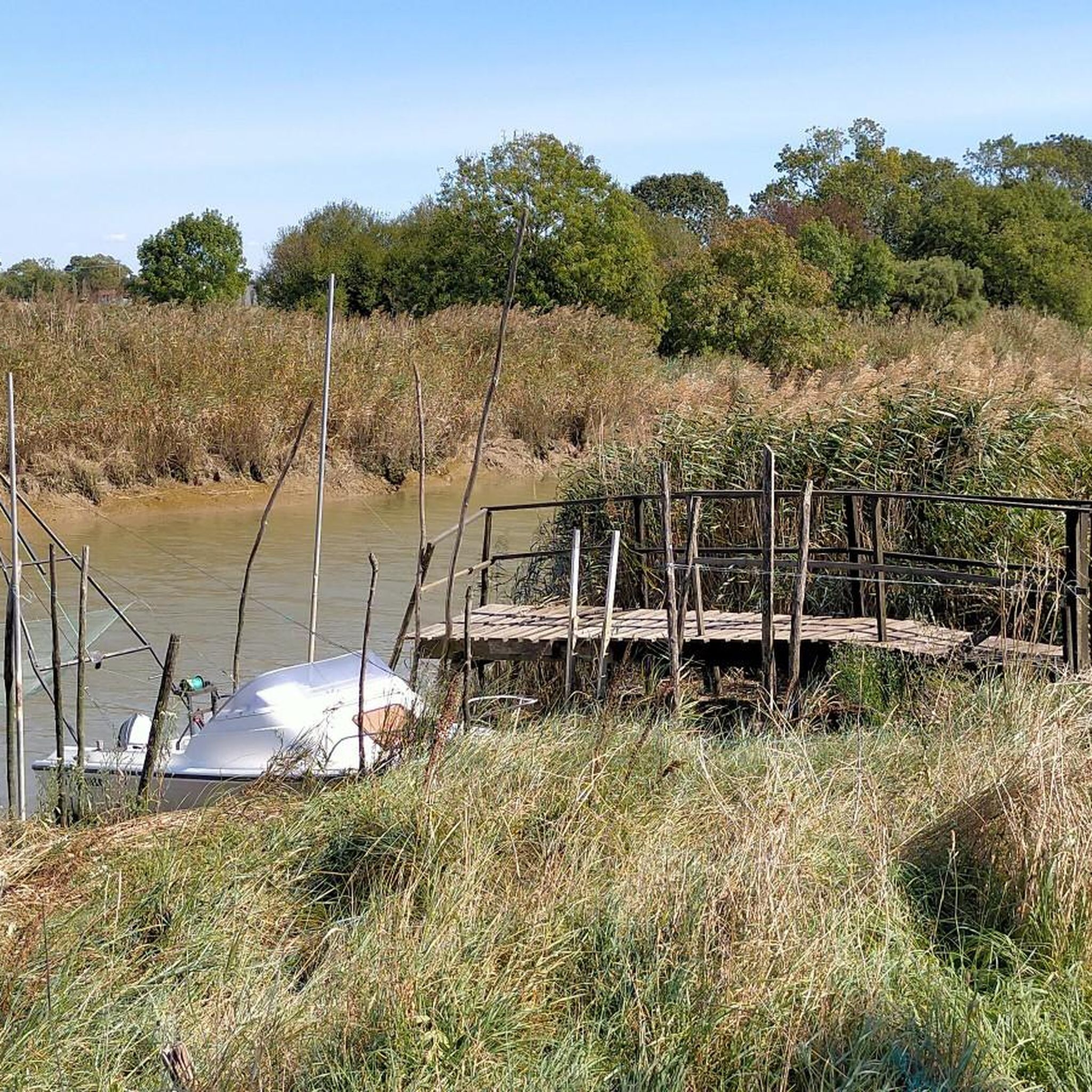
The carrelets of Saint-Palais-sur-Mer are among the most emblematic elements of the Charente coastline. Their history blends traditional fishing, tourist development, and local heritage. 🐟 Origin of the carrelets Originally, the word "carrelet" referred to a square fishing net used since the 17th century. A precise description can be found as early as 1769, in the writings of the scholar Henri-Louis Duhamel du Monceau, who mentioned this type of fishing on the Saintonge coast. 👉 At that time, these were not yet the current huts, but simply a net operated from rudimentary structures. ⚓ Artisanal fishing structures The first local carrelets were simple wooden platforms, built by the fishermen themselves to stand above the water. They were mainly used to catch shrimp, fish, and crabs near the shore, without going out to sea. 👉 It was a family and coastal fishery, less dangerous than sea fishing. 🏖️ 19th – early 20th century: transition to a leisure activity At the turn of the 20th century, with the rise of seaside resorts like Saint-Palais, the carrelets evolved. Holidaymakers and notable figures adopted this practice: construction of fixed jetties, appearance of huts on stilts. The carrelets then became places for relaxation as much as for fishing. 👉 They already contributed to the postcard image of the coast. 🪵 After 1945: democratization and multiplication After the Second World War, the number of carrelets increased sharply. They became a symbol of popular leisure and conviviality. The transition was gradually made from a means of subsistence to a recreational activity. 🌊 Storms and reconstruction The carrelets are fragile in the face of storms: 1999: massive destruction (up to 90% in some areas) 2010 (Xynthia storm): new damage Many have been rebuilt identically, respecting tradition. 🏛️ Today: protected heritage In Charente-Maritime, there are about 400 carrelets. They are: integrated into the public maritime domain allocated by administrative authorization (often renewed every 5 years) Since 2018, they have been recognized as cultural heritage of the department. 👉 In Saint-Palais, they can be observed in particular: at Pont du Diable at the conche du Concié at the Puits de l’Auture
0
0
📍 Introducing the Gilet Cove The Gilet Cove is a small, natural beach on the oceanfront, located on Boulevard de la Conche de Gilet / Boulevard de la Falaise, in the town of Vaux-sur-Mer, just before Royan. 🌿 It's a sheltered, rocky cove, appreciated for its tranquility and more intimate setting compared to the larger urban beaches nearby. 🏖️ At high tide, the sea can completely cover this small beach, making the space very limited; at low tide, you can enjoy a patch of sand and rocks for relaxing or swimming. 🧭 Features & Tips 📍 Type of place: small, unsupervised beach, nestled among the rocks with sand and cliffs. 🏖️ Tides: access is best at low tide — at high tide the beach can disappear underwater. 🐶 Animals: prohibited from April 1st to September 30th (subject to municipal regulations). 👣 Access: via stairs from the boulevard above, surrounded by villas with sea views. 🚫 Lifeguard services: no lifeguard station or marked services. 📍 Location La Conche de Gilet is often considered the last small beach in Vaux-sur-Mer before reaching Royan/Pontaillac when following the coastline from Saint-Palais-sur-Mer.
0
0

Here you'll find a romantic little lighthouse, and behind it lies a garden with a bench overlooking the sea, a lovely place to stop for a break. Afterwards, you can continue along the cliff to the right until you reach Euro Velo 1 again.
0
0

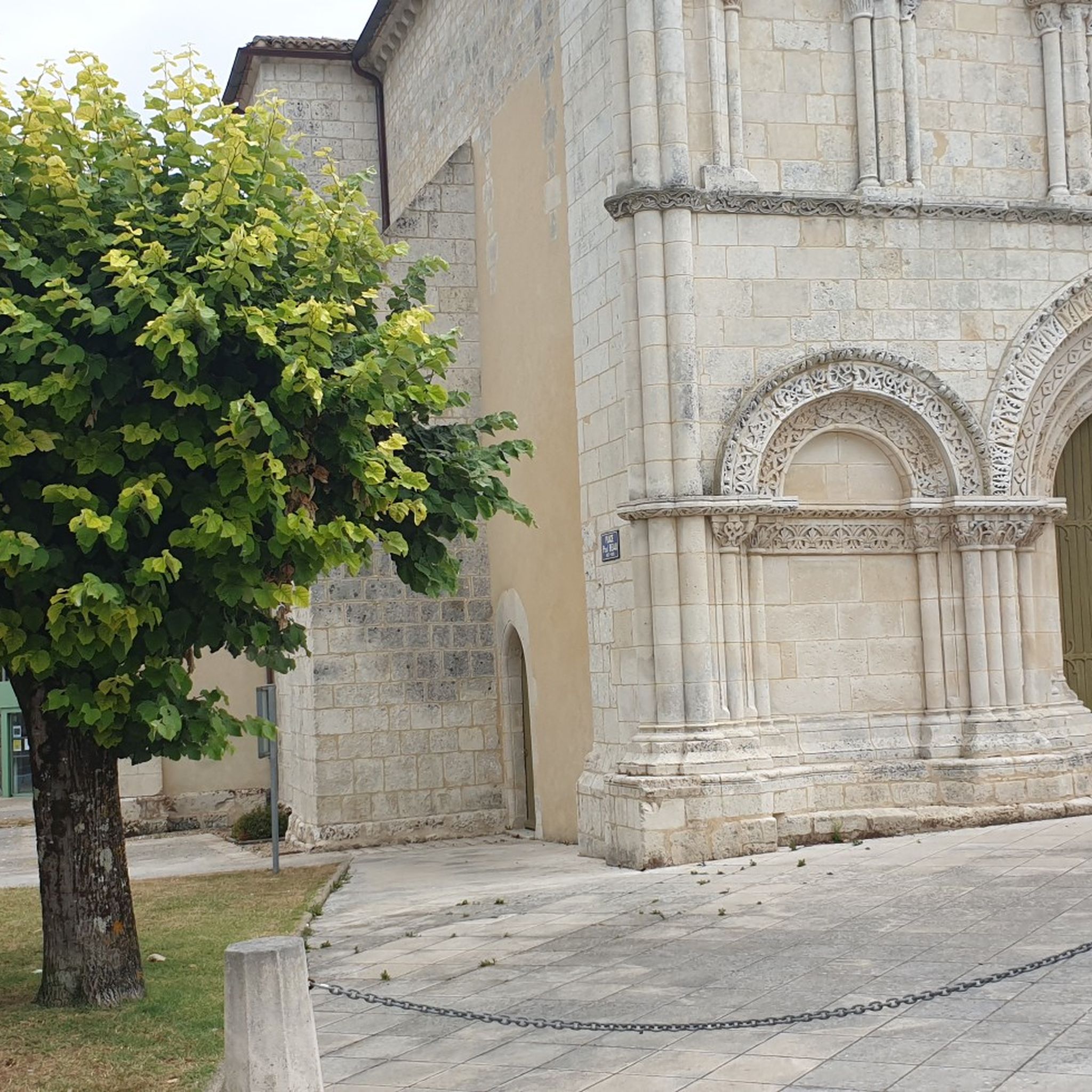
Very beautiful church. A must-see!
0
0

Perfect beachside bike trail along the boulevard, with several rest stops with seating and beach acces.
0
0
The port of Royan is located between the Foncillon district and the Grande Conche beach, in the heart of the city. Ideally located at the mouth of the Gironde, in the immediate vicinity of the Atlantic Ocean and opposite Port-Médoc, it consists of a marina with a thousand rings and a fishing port, specializing in “noble” species (sole, meagre, sea bass, etc.). You will find the harbor master's office, the Fishing Port and the auction, as well as a covered shopping arcade, “Les voûtes du Port”, which extends the shopping arcades of the “Front de Mer”. Port, 1100 sheltered places – Reception pontoon – Secure pontoons. Access pass is 0.30 m above the zero of the nautical charts. Basins after dredging 2.30 m from the zero of the nautical charts. Services: water, electricity (220 V) on pontoon, toilets, WC, showers, handling in closed technical area, recovery of careening water, grey water and black water pumps, maintenance and ship repair workshops, ship chandlers on the port, wifi, 24/24 CB fuel, slipway. V.H.F. 9. The port is sheltered from all winds because it is protected by the landing stage of the ferries which ensure the crossing of the Gironde for the crossings to the Pointe de Grave/Le Verdon-sur-Mer.
1
0

At the exit of the Coubre national forest, the landscape opens onto the dunes, and you can see the lighthouse. The Coubre lighthouse watches over maritime traffic in the Gironde estuary.
0
0
Frequently Asked Questions
How many road cycling routes are available around Médis?
Médis offers a wide selection of road cycling routes, with over 290 options available. These routes cater to various skill levels, including easy, moderate, and a few more challenging rides.
What is the best time of year for road cycling in Médis?
The region around Médis, with its coastal and estuary climate, is generally pleasant for road cycling from spring through autumn. The mild weather during these seasons makes for comfortable riding conditions, allowing you to fully enjoy the coastal paths and rural roads.
Are there road cycling routes suitable for beginners or families in Médis?
Yes, Médis has numerous easy road cycling routes, with over 60 options designed for less experienced riders or families. These routes typically feature flat to gently rolling terrain, making them accessible and enjoyable for a relaxed ride. Many follow the quiet rural roads or coastal paths.
What kind of terrain can I expect on road cycling routes around Médis?
Road cycling around Médis is characterized by mostly flat to gently rolling terrain. You'll find routes along the Atlantic coast, through rural agricultural lands, and beside the Seudre estuary. Elevation gains are generally low, providing an accessible experience for most cyclists.
Are there any challenging road cycling routes for advanced riders?
While the region is largely flat, there are a few routes that offer more challenge. Médis features 8 difficult road cycling routes, which may include longer distances or slightly more varied terrain compared to the predominantly flat options. These routes provide a good test for advanced cyclists looking for a longer endurance ride.
What can I see along the road cycling routes in Médis?
Many routes offer scenic views of the Atlantic coast and the Seudre estuary. You can pass by beautiful beaches like Saint-Georges-de-Didonne Beach or Chay Beach. Some routes also take you through charming villages and past natural landmarks such as the Suzac Forest or the Caillaud cliff at Talmont sur Gironde.
Are there any loop trails for road cycling in Médis?
Yes, many of the road cycling routes in Médis are designed as loops, allowing you to start and finish at the same point. For example, the Seudre Bridge – Mornac-sur-Seudre loop from Saujon is a popular option, offering a circular journey through the estuary landscape.
What are some popular longer road cycling routes in the area?
For longer rides, consider routes like the Coubre Lighthouse – Notre-Dame Church, Royan loop from Saujon, which covers nearly 90 km and explores the Atlantic coast, or the Notre-Dame Church, Royan – Mornac-sur-Seudre loop from Saujon, a 65 km route with coastal views.
What do other road cyclists enjoy most about road cycling in Médis?
The road cycling experience in Médis is highly rated by the komoot community, with an average score of 4.1 stars from over 190 reviews. Cyclists often praise the region's diverse scenery, from coastal paths to tranquil rural roads, and the generally low elevation gain that makes routes accessible and enjoyable.
Are there any specific attractions or natural monuments to look out for?
Absolutely. Beyond the beaches, you might encounter unique natural formations like the Grottes de Matata, a series of caves, or the picturesque Conche de Gilet. The Marsh Cycle Path in Meschers-sur-Gironde also offers a distinct cycling experience through wetland landscapes.
Can I find routes that combine coastal views with rural landscapes?
Yes, many routes in Médis offer a blend of coastal and rural scenery. For instance, the Mornac-sur-Seudre – A beautiful route loop from Le Train des Mouettes - Saujon takes you through both rural landscapes and areas near the coast, providing a varied and engaging ride.
Most popular attractions around Médis

Get inspired with the komoot mobile app


Explore more
Browse the best Road cycling routes in other regions.
