The best cycling routes around Basses
4.5
(27)
121
riders
61
rides
Touring cycling routes around Basses traverse a landscape characterized by rural areas, historical sites, and gently rolling terrain. The region features a network of paths that connect charming villages and significant landmarks, offering varied cycling experiences. These routes often lead through agricultural lands and past historical châteaux, providing scenic views and cultural points of interest.
Best touring cycling routes around Basses
- The most popular touring cycling route is Château de la Mothe Chandeniers – loop in Haut Loudunais, a…
Last updated: May 8, 2026
6
riders
48.3km
02:55
370m
370m
Cycle a moderate 30.0-mile loop in Haut Loudunais, exploring vineyards, forests, and the romantic ruins of Château de la Mothe Chandeniers.
4.8
(5)
13
riders
36.9km
02:17
220m
220m
Hard bike ride. Good fitness required. You may need to push your bike for some segments of this route.

Sign up for free
4.0
(2)
10
riders
29.4km
01:49
190m
190m
Moderate bike ride. Good fitness required. Mostly paved surfaces. Suitable for all skill levels.
8
riders
101km
07:22
1,010m
1,010m
Hard bike ride. Very good fitness required. Mostly paved surfaces. Suitable for all skill levels.
3.0
(1)
5
riders
49.0km
03:54
400m
400m
Moderate bike ride. Good fitness required. Mostly paved surfaces. Suitable for all skill levels.
Get access to more routes and recommendations from other explorers.
Sign up for free
Already have an account?
Our route recommendations are based on thousands of hikes, rides, and runs completed by other people on komoot.
Start today with a free account
Your next adventure awaits.
Login or Signup



Tips from the Community


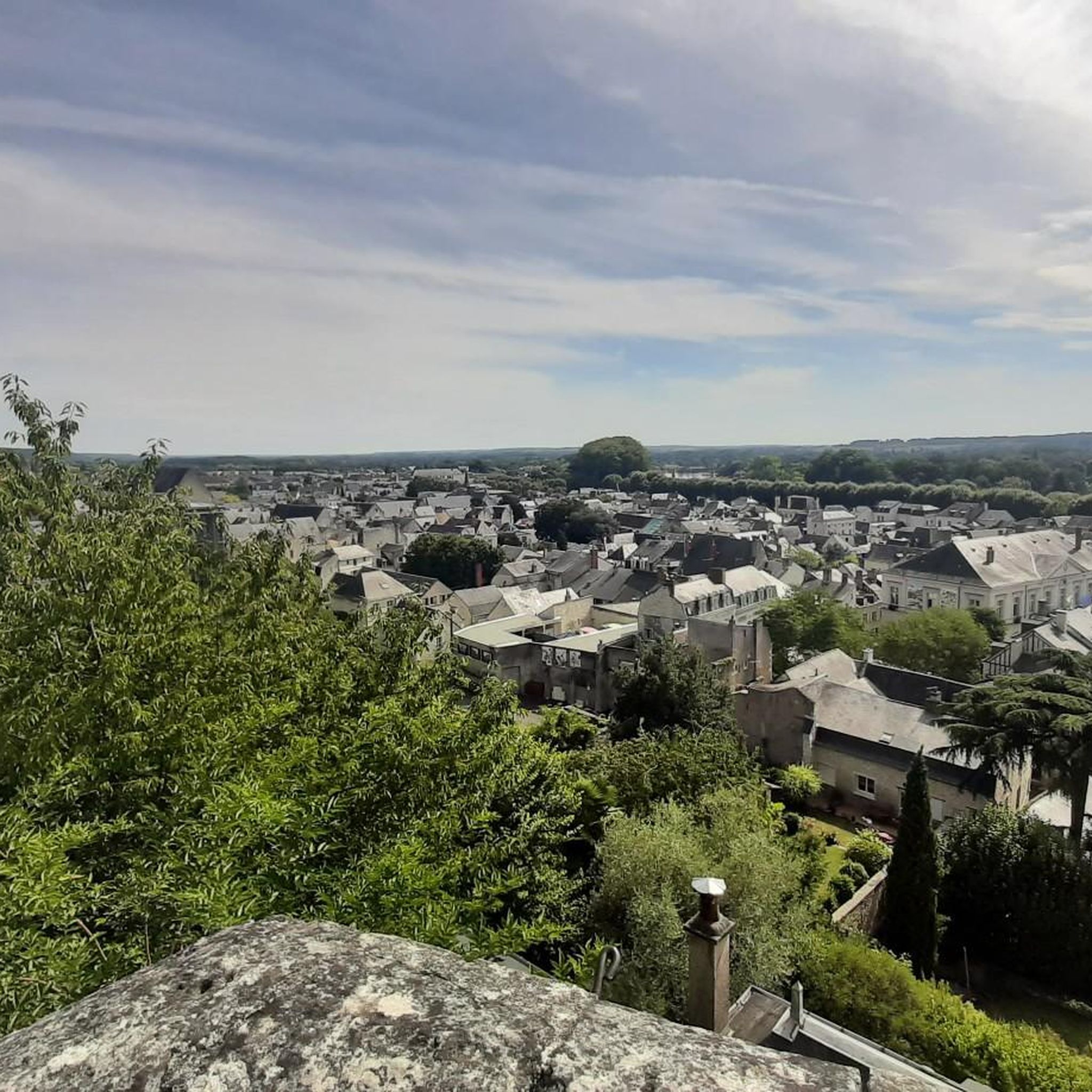
The Royal Abbey of Fontevraud is one of the largest monastic communities in Europe dating back to the Middle Ages. It is a place with a rich history, located in the heart of the Loire Valley and listed as a UNESCO World Heritage Site. The abbey is a unique cultural site! An abbey with a royal destination, a formidable prison is today a place of creation (museum of modern art).
3
0
History in brief Antiquity: the site is strategically located on a promontory and has been inhabited for 3,000 years. It was not fortified until the end of the Roman Empire. Middle Ages: in 1154, the new King of England, Henry II Plantagenet, became ruler of an empire stretching from Scotland to the Pyrenees and made Chinon his continental capital. He had a large palace built next to the fortress, which has now disappeared. In 1189, abandoned by his sons, Richard the Lionheart and John Lackland, and fleeing from the King of France, he eventually died there. Philippe Auguste had the defensive Tour du Coudray built there after the siege of 1205. Renaissance: in 1454, the fortress became the main residence of Queen Marie d'Anjou, who lived there without her husband. She spent lavishly on decorating the house to her taste. From the 16th century onwards, the fortress was gradually abandoned and fell into disrepair. Despite the dangerous nature of the terrain, it became a public promenade in 1824 and was listed as a monument in 1840. The restoration of the estate began in 1854 thanks to the efforts of the writer Prosper Mérimée. Source: https://loirelovers.fr/en/visit-royal-fort-chinon/
5
0
History in brief Antiquity: the site is strategically located on a promontory and has been inhabited for 3,000 years. It was not fortified until the end of the Roman Empire. Middle Ages: in 1154, the new King of England, Henry II Plantagenet, became ruler of an empire stretching from Scotland to the Pyrenees and made Chinon his continental capital. He had a large palace built next to the fortress, which has now disappeared. In 1189, abandoned by his sons, Richard the Lionheart and John Lackland, and fleeing from the King of France, he eventually died there. Philippe Auguste had the defensive Tour du Coudray built there after the siege of 1205. Renaissance: in 1454, the fortress became the main residence of Queen Marie d'Anjou, who lived there without her husband. She spent lavishly on decorating the house to her taste. From the 16th century onwards, the fortress was gradually abandoned and fell into disrepair. Despite the dangerous nature of the terrain, it became a public promenade in 1824 and was listed as a monument in 1840. The restoration of the estate began in 1854 thanks to the efforts of the writer Prosper Mérimée. Source: https://loirelovers.fr/en/visit-royal-fort-chinon/
6
0
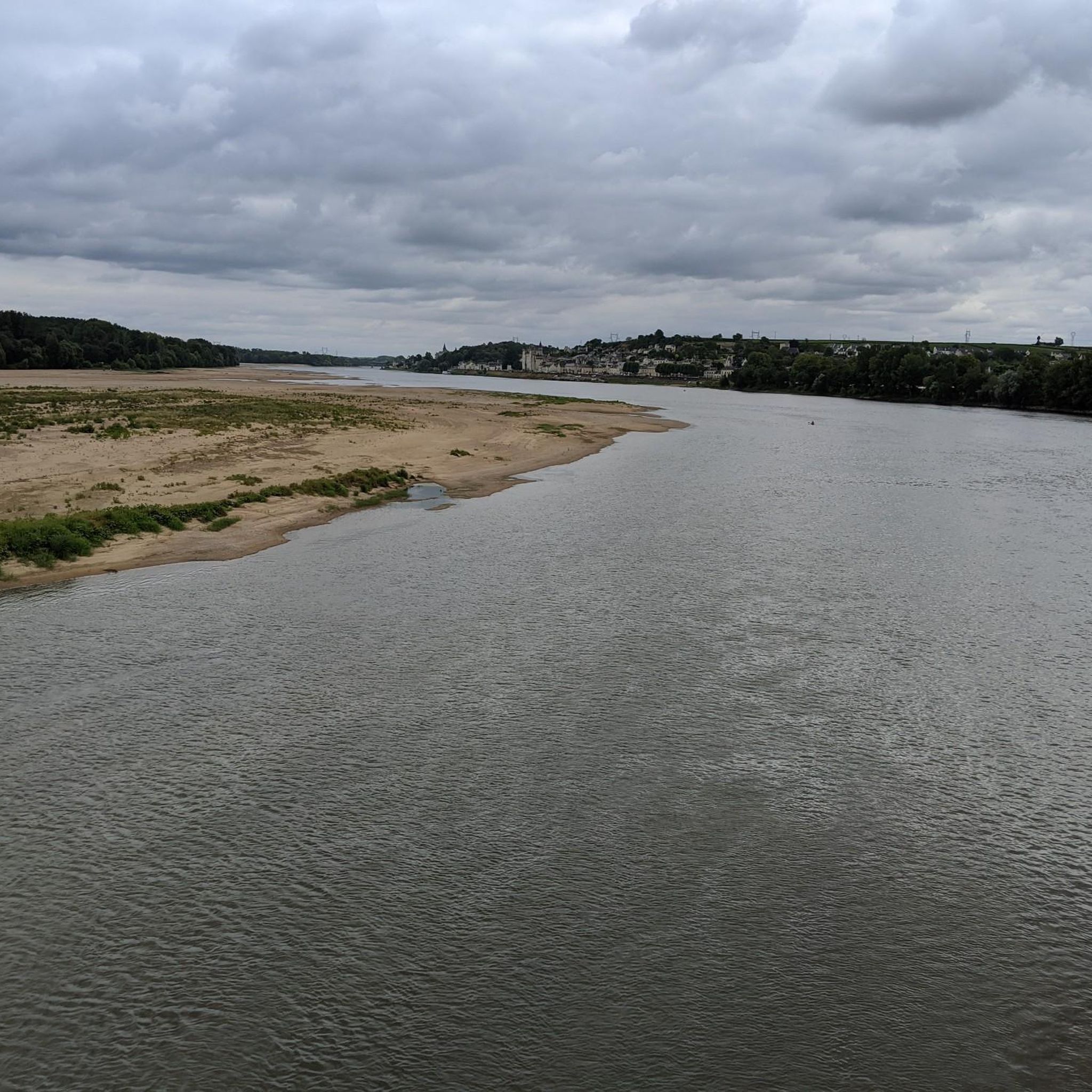
On this bridge over the La Vienne you have a nice view of the skyline of Candes-Saint-Martin. This cozy village is located near the confluence of the Vienne and the Loire.
4
0
Tough calf biter. Here you know why there are gears on your bike.
0
0
Here you are at the prayer house of the small community of Couziers. If you stop here, one of the 108 inhabitants of the village will come out for a chat.
4
0
Brief: The Notre-Dame-de-Pitié chapel, dating from 1579, is remarkable for both its late Renaissance architecture and its interior decoration, which was completely rebuilt in 1871-1872 around the sculpted group of the Virgin of Pitié that it houses (a work that was handed over after thefts in 2003). The foundations of this chapel are historically linked to the officers of the Abbey of Fontevraud and to Abbess Éléonore de Bourbon. It should be noted that the renovation of the chapel after the Franco-Prussian War took place in connection with the Central Prison of Fontevraud, since prisoners contributed to the painted decorations. The chapel is isolated and has not been maintained for decades. Today, it is in a worrying state: the striking elements of the sculpted furniture have disappeared or have been stored to prevent theft. The painted canvas has been altered and shows a general shabby-chic style. The murals are in some places very degraded (flaking, holes), as is the vault with false wainscoting on plaster laths. A restoration of this interior and fixing the furniture in place would be necessary. This would undoubtedly also help to clarify the question of the decor that already existed in the 1871-1872 program. Want to know more? Click on https://gertrude.paysdelaloire.fr/dossier/IA49010716
4
0
Frequently Asked Questions
How many touring cycling routes are available in Basses?
There are over 50 touring cycling routes available in Basses, offering a wide range of experiences through rural areas and past historical sites. These routes cater to various skill levels, from easy to challenging.
What is the overall rating for touring cycling in Basses?
The touring cycling routes in Basses are highly rated by the komoot community, with an average score of 4.5 stars from over 27 reviews. More than 127 touring cyclists have used komoot to explore the region's varied terrain, often praising the scenic views and cultural points of interest.
Are there easy touring cycling routes suitable for beginners or families in Basses?
Yes, Basses offers several easy touring cycling routes. There are 11 routes categorized as easy, perfect for beginners or families looking for a relaxed ride through the region's charming villages and agricultural lands. While specific family-friendly routes aren't highlighted, the easier options provide a good starting point.
Are there challenging touring cycling routes for experienced cyclists in Basses?
Absolutely. For experienced touring cyclists seeking a challenge, Basses features 12 difficult routes. These paths often include more significant elevation changes and cover longer distances, such as the Chinon Fortress – Fontevraud loop from Les Chevaux Blancs, which spans over 100 km with substantial climbs.
What kind of landscapes and attractions can I expect to see on a touring cycling route in Basses?
Touring cycling routes in Basses traverse diverse landscapes characterized by rural areas, agricultural lands, and gently rolling terrain. You'll often encounter historical châteaux and significant landmarks. For example, the Château de la Mothe Chandeniers – loop in Haut Loudunais leads directly past the historic Château de la Mothe Chandeniers, while the Fontevraud – Notre-Dame-de-Pitié Chapel loop from Les Trois-Moutiers explores sites like Fontevraud and Notre-Dame-de-Pitié Chapel.
Are there any circular touring cycling routes in Basses?
Many of the touring cycling routes in Basses are designed as loops, allowing you to start and end in the same location. Examples include the popular Château de la Mothe Chandeniers – loop in Haut Loudunais and the Pouant loop from Les Trois-Moutiers, which offers a pleasant ride through rural and village landscapes.
What is a good moderate touring cycling route to explore the region?
A great moderate option is the Bike loop from Basses. This route covers approximately 49 km (30 miles) with about 400 meters of elevation gain, offering a balanced ride through the region's characteristic rural roads and gentle hills.
What is the best time of year for touring cycling in Basses?
Given the region's rural and historical character, spring and autumn are generally ideal for touring cycling in Basses. These seasons offer pleasant temperatures, often with less crowded paths and beautiful natural scenery, such as blooming wildflowers in spring or colorful foliage in autumn. Summers can be warm, while winters might be cooler and wetter.
How long do touring cycling routes in Basses typically take to complete?
The duration of routes varies significantly based on distance and difficulty. For instance, the Château de la Mothe Chandeniers – loop in Haut Loudunais, a moderate 48.3 km route, typically takes around 2 hours 55 minutes. More challenging and longer routes, like the Chinon Fortress – Fontevraud loop from Les Chevaux Blancs (102 km), can take over 7 hours.
Are there any less-known or 'hidden gem' touring cycling routes in Basses?
While many routes are popular, exploring some of the less-frequented paths can reveal hidden charms. For instance, the Pouant loop from Les Trois-Moutiers, though known, offers a delightful journey through rural and village landscapes that might feel like a discovery for those new to the area, providing a genuine taste of local life away from the busiest trails.

Get inspired with the komoot mobile app


Explore more
Browse the best Cycling routes in other regions.
