Top 5 Castles around Champagney
Castles around Champagney are characterized by historical fortifications and strategic structures, many offering expansive views of the surrounding landscape. The area features a collection of military architecture, including citadels, forts, and castle ruins. These sites are often situated on hills, providing both historical insight and natural exploration opportunities. The region's terrain allows for walks that combine cultural discovery with scenic vistas.
Best castles around Champagney
- The most popular castles is Vauban Citadel, a historical site that features a beautiful green esplanade and views of Besançon. This UNESCO World Heritage Site is considered one of the most beautiful in France.
- Another must-see spot is Fort de Chaudanne, a historical site located at the top of an eponymous hill. Visitors can go around the fort to appreciate its fortifications and the trench surrounding it, along with many viewpoints over different areas of the city.
- Visitors also love Ruins of Montferrand castle, a castle built in the 11th century, now in ruins with only the tower remaining. It offers views of the Doubs, highlighting its strategic historical location.
- Champagney is known for its diverse range of historical sites, including well-preserved citadels, military forts, and ancient castle ruins. These structures provide insight into the region's past and offer varied exploration experiences.
- The castles around Champagney are appreciated by the komoot community, with over 140 upvotes and more than 90 photos shared by visitors.
Last updated: July 1, 2026
Fort de Chaudanne
Highlight • Historical Site
If it cannot be visited, you can however go around it and appreciate its fortifications as well as the trench which surrounds it.
The fort is in a preserved natural environment and offers many viewpoints over different areas of the city, including the loop (the historic center).
Chaudanne is also a place of choice to admire the Citadel from its full length.
Several options are available to you to get there: by road from the Velotte district, or by the forest path from the Chemin de Mazagran.
Translated by Google •
Tip by

View of the Vauban Citadel
Highlight • Viewpoint
Translated by Google •
Tip by

Sign up now to discover places like this
Get recommendations on the best single tracks, peaks, & plenty of other exciting outdoor places.
Sign up for free
Fort de Planoise
Highlight • Viewpoint
The fort itself is a set of fortifications organized on the foothills of the hill with a central building at the top. By walking the paths of the hill, you will be able to discover many vestiges.
Translated by Google •
Tip by
Tour de la Pelote
Highlight • Historical Site
Translated by Google •
Tip by
Fort Griffon
Highlight • Historical Site
Today, the buildings are used by the French University for teacher training, but the structural adaptations were carried out while maintaining the original 17th century walls.
Translated by Google •
Tip by

Sign up for free to discover even more castles around Champagney.
Sign up for free
Already have an account?
Start today with a free account
Your next adventure awaits.
Login or Signup


Tips from the Community

UNESCO World Heritage Site
0
0

Here you get a good idea of the size of the citadel.
9
0

The Tour de la Pelote is a medieval cannon tower that was integrated into the fortification program created by Vauban in the 17th century. The original roof structure from the Vauban era was destroyed in a fire in 2013, but the building was extensively restored in 2016. The tower can be visited as part of city tours, for example. https://www.besancon-tourisme.com/
3
0
Fort Griffon in Besançon is a 17th century military monument that has been included in the UNESCO World Heritage List as part of the "Network of Major Vauban Sites". Today, the buildings are used by the French University for teacher training, but the structural adaptations were carried out while maintaining the original 17th century walls.
2
0

In 1475, under the reign of Duke Charles the Bold (1433-1477), sovereign of the Burgundian state, this tower was built at the foot of the Battant bastion, where the Mouillère stream flows into the Doubs. . The name of this tower comes from Pierre Pillot, lord of Chenecey, and co-governor of Besançon, from whom the land for the building was purchased, for the construction of this building. https://fr.wikipedia.org/wiki/Tour_de_la_Pelote
3
0
This remarkable tower (2nd half 15th C) was integrated into Vauban's design, so that it did not have to be demolished. Now there is a restaurant.
6
0

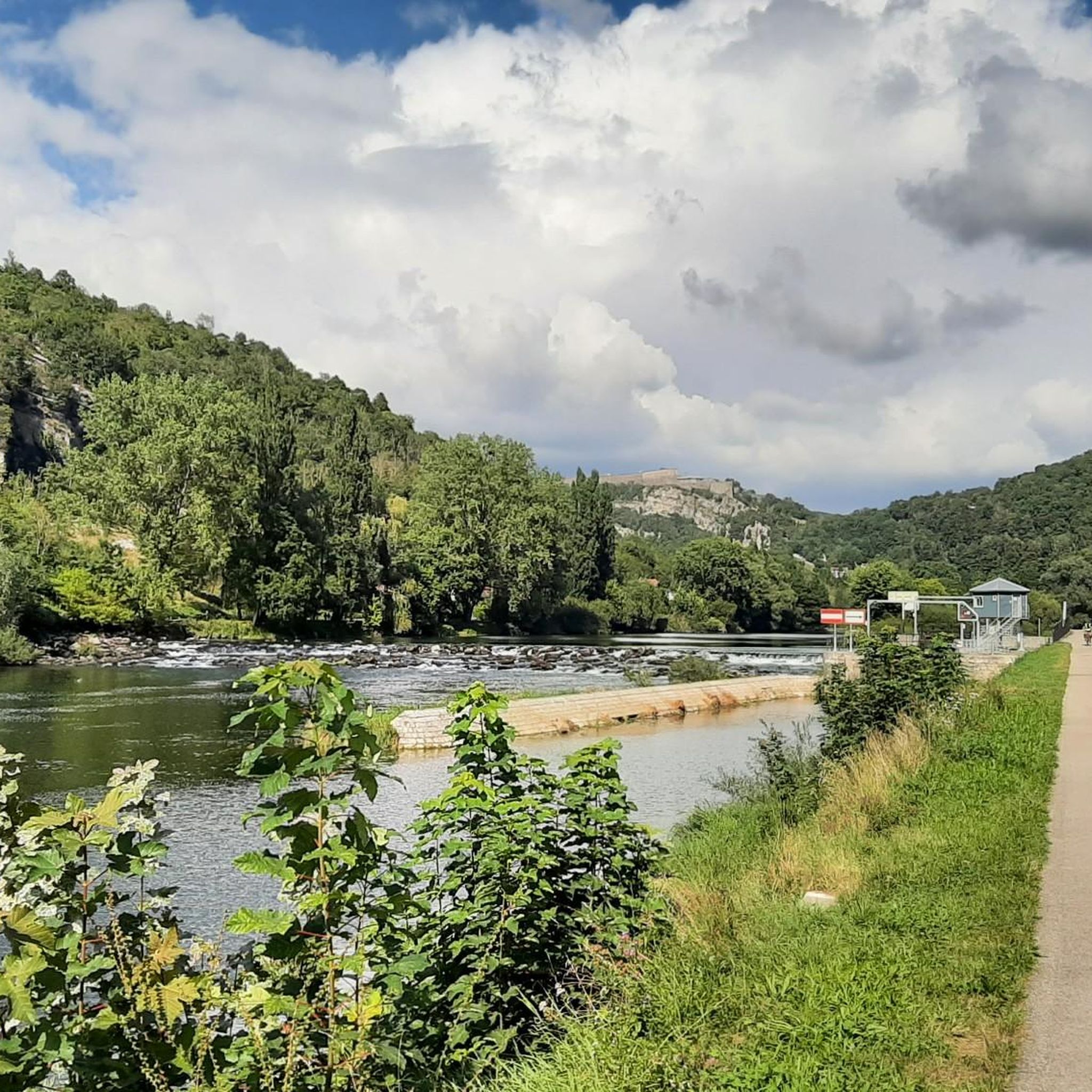
On my way back along Doub, the citadel is the first thing that appears from further away. a great sight.
3
0

Ideal location to admire the Citadel from a particularly flattering angle with a beautiful low angle and superb vanishing lines. You can also admire the geology of the cliff on which the Citadel sits. In the early hours of the morning and evening, look up towards the crest of the cliffs, there is a good chance that you will see the silhouettes of a few chamois.
3
0
Frequently Asked Questions
What are some of the most popular castles and historical sites around Champagney?
Visitors frequently enjoy the Vauban Citadel, a UNESCO World Heritage Site known for its beautiful green esplanade and views of Besançon. Other popular spots include Fort de Chaudanne, offering extensive fortifications and city views, and the Ruins of Montferrand castle, an 11th-century site with a remaining tower and strategic views of the Doubs.
Are there family-friendly castles to visit near Champagney?
Yes, the Vauban Citadel is considered family-friendly, offering a large green esplanade and even a small zoo within its grounds. The Tour de la Pelote is also a family-friendly historical site, integrated into Vauban's design and part of the old city wall.
What natural features and viewpoints can I find near these castles?
Many castles around Champagney offer excellent viewpoints. Vauban Citadel provides beautiful views of Besançon. Fort de Chaudanne offers numerous viewpoints over different areas of the city, including the historic center, and is set in a preserved natural environment. The Ruins of Montferrand castle provide stunning views of the Doubs river, highlighting its strategic location.
What outdoor activities can I do near the castles around Champagney?
The region offers various outdoor activities. You can find numerous MTB trails, running trails, and road cycling routes. For example, you can explore routes like the 'Feudal Enclosure of Châtelard – Recologne Castle loop' for MTB, or the 'Running loop from Pelousey'. For more details on these and other routes, visit the MTB Trails around Champagney, Running Trails around Champagney, and Road Cycling Routes around Champagney guides.
Are there hiking trails near the castles?
Yes, many castles are situated in areas with hiking opportunities. The Ruins of Montferrand castle, for instance, requires a hike to reach its strategic vantage point. You can find various running and MTB trails that often pass by or near historical sites, offering a blend of cultural discovery and scenic walks. Check the Running Trails around Champagney guide for routes that might suit your hiking preferences.
What is the history of Château de la Houillère in Champagney, Haute-Saône?
The Château de la Houillère, built in the mid-19th century, is an elegant manor in the Napoleon III style. It originally served as official housing for the directors of the Ronchamp coal mines, connecting it to the region's industrial past. While it was previously a bed and breakfast, it transitioned to a private residence in 2020. Its architectural style and historical significance remain notable.
Can I visit Château Priqueler in Champagney, Haute-Saône?
The Château Priqueler is located in the village center of Champagney, Haute-Saône, and can be admired from the outside. However, specific details regarding public access or visitation information are not widely available.
What remains of the ancient fortified castle in Champagney, Haute-Saône?
Historically, the lords of Champagney built a significant fortified castle. By 1857, only sections of its towers and the keep remained. Today, it is in a ruinous state, indicating its long history but not offering much for direct visitation.
Are there any castles in Champagney, Jura?
Historical records mention a 'Château' and a 'Maison-forte' (fortified house) on Rue du Château in Champagney, Jura, dating to the 19th century. However, comprehensive details on their features, historical significance, or public accessibility are not widely documented.
What do visitors enjoy most about the castles around Champagney?
Visitors appreciate the blend of historical insight and natural exploration. The castles and historical sites are often situated on hills, providing both cultural discovery and scenic vistas. The komoot community has shown strong engagement, with over 140 upvotes and more than 90 photos shared, highlighting the visual appeal and historical value of these sites.
What is the best time to visit the castles around Champagney?
While specific weather patterns for Champagney are not detailed, generally, spring and autumn offer pleasant temperatures for exploring historical sites and engaging in outdoor activities like hiking and cycling around the castles. Summer can also be enjoyable, though it might be warmer.
Are there any cafes or restaurants near the castles in Champagney?
The guide data does not specify cafes or restaurants directly adjacent to each castle. However, as Champagney is a commune, you can expect to find local establishments within the village or nearby towns to refresh yourself after your explorations.
How long should I plan for a visit to the castles around Champagney?
The duration of your visit depends on the specific castle and your interest. For a major site like the Vauban Citadel, you could easily spend several hours, especially if you explore the museums. Smaller sites or ruins might only require an hour or two. If you plan to combine castle visits with hiking or cycling, allocate a full day or more.
Most popular routes around Champagney
Most popular attractions around Champagney

Get inspired with the komoot mobile app


Explore more
Looking for the best castles somewhere else? Discover other guides around Champagney:
