The best cycling routes around Glénouze
4.6
(22)
118
riders
41
rides
Touring cycling around Glénouze offers routes through the rural landscapes of western France, characterized by gentle rolling hills and open countryside. The region features a network of quiet roads and paths, often passing by historical châteaux and agricultural fields. Elevation changes are generally moderate, making it suitable for various cycling abilities. The area provides access to significant regional cycling routes like the Chemin d'Eleanor, connecting to the broader Loire à Vélo and Scandibérique networks.
Best touring cycling routes around Glénouze
…Last updated: July 3, 2026
6
riders
48.3km
02:55
370m
370m
Cycle a moderate 30.0-mile loop in Haut Loudunais, exploring vineyards, forests, and the romantic ruins of Château de la Mothe Chandeniers.
5.0
(3)
18
riders
11.7km
00:40
20m
20m
Easy bike ride. Great for any fitness level. Mostly paved surfaces. Suitable for all skill levels.

Sign up for free
4.8
(5)
13
riders
36.9km
02:17
220m
220m
Hard bike ride. Good fitness required. You may need to push your bike for some segments of this route.
5.0
(2)
11
riders
61.9km
03:37
340m
340m
Moderate bike ride. Good fitness required. Mostly paved surfaces. Suitable for all skill levels.
4.0
(2)
10
riders
29.4km
01:49
190m
190m
Moderate bike ride. Good fitness required. Mostly paved surfaces. Suitable for all skill levels.
Get access to more routes and recommendations from other explorers.
Sign up for free
Already have an account?
Our route recommendations are based on thousands of hikes, rides, and runs completed by other people on komoot.
Start today with a free account
Your next adventure awaits.
Login or Signup




Tips from the Community


The Royal Abbey of Fontevraud is one of the largest monastic communities in Europe dating back to the Middle Ages. It is a place with a rich history, located in the heart of the Loire Valley and listed as a UNESCO World Heritage Site. The abbey is a unique cultural site! An abbey with a royal destination, a formidable prison is today a place of creation (museum of modern art).
3
0
Welcome to the shop. Let yourself be triggered by the products offered. The abbey is a unique cultural place! An abbey with a royal destination, a formidable prison is today a place of creation (museum of modern art). Buy a ticket and dive back in time.
3
0
Here you are at the prayer house of the small community of Couziers. If you stop here, one of the 108 inhabitants of the village will come out for a chat.
4
0
Brief: The Notre-Dame-de-Pitié chapel, dating from 1579, is remarkable for both its late Renaissance architecture and its interior decoration, which was completely rebuilt in 1871-1872 around the sculpted group of the Virgin of Pitié that it houses (a work that was handed over after thefts in 2003). The foundations of this chapel are historically linked to the officers of the Abbey of Fontevraud and to Abbess Éléonore de Bourbon. It should be noted that the renovation of the chapel after the Franco-Prussian War took place in connection with the Central Prison of Fontevraud, since prisoners contributed to the painted decorations. The chapel is isolated and has not been maintained for decades. Today, it is in a worrying state: the striking elements of the sculpted furniture have disappeared or have been stored to prevent theft. The painted canvas has been altered and shows a general shabby-chic style. The murals are in some places very degraded (flaking, holes), as is the vault with false wainscoting on plaster laths. A restoration of this interior and fixing the furniture in place would be necessary. This would undoubtedly also help to clarify the question of the decor that already existed in the 1871-1872 program. Want to know more? Click on https://gertrude.paysdelaloire.fr/dossier/IA49010716
4
0
Fontevraud-l'Abbaye is located in the natural region of the Loire Valley, listed as a "living cultural landscape" by UNESCO. As its name suggests, the history and present of the municipality are closely linked to the Abbey of Notre-Dame, founded in 1099. The abbey presents the originality of being part of a mixed order, but led by abbesses until the Revolution. was the necropolis of the Plantagenet dynasty. The recumbent figures of Richard the Lionheart, Henry II and Eleanor of Aquitaine are still preserved there. The vast abbey complex was transformed by Napoleon I into a penal colony and then into a "central house". This extraordinary prison closed its doors in 1963. While the abbey church and the various monastic sites were rehabilitated, the entire old abbey has since housed a prestigious cultural centre with, among other things, a renowned art museum, welcoming meetings and artists in residence. Art, history and heritage are highlighted throughout the year.
4
0
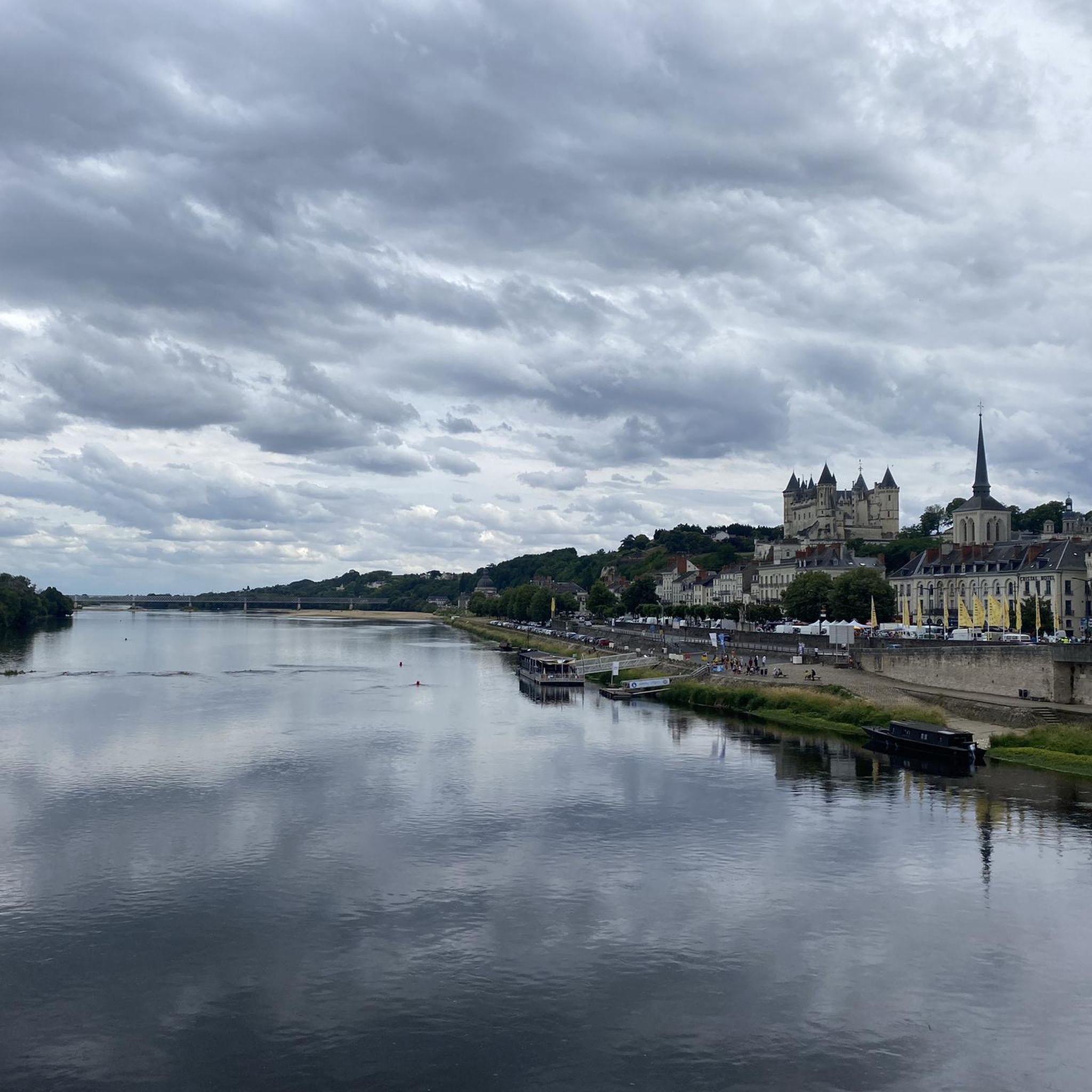
Simply enjoy the beautiful views over the city but especially over the mighty Loire River.
2
0
Frequently Asked Questions
How many touring cycling routes are available around Glénouze?
There are over 35 touring cycling routes available in the Glénouze area, offering a variety of experiences for different skill levels.
What do other touring cyclists say about the routes in Glénouze?
The touring cycling routes in Glénouze are highly rated by the komoot community, with an average score of 4.5 stars from over 30 reviews. Cyclists often praise the region's quiet roads, charming rural landscapes, and the historical châteaux along the way.
Are there easy touring cycling routes suitable for beginners or families in Glénouze?
Yes, Glénouze offers 5 easy touring cycling routes perfect for beginners or families. An excellent option is the Bike loop from Château de la Mothe-Chandeniers, which is 8.6 miles (13.9 km) long and takes about 49 minutes to complete, exploring the immediate surroundings of the château.
What are the options for longer, more challenging touring cycling routes?
For those seeking a challenge, there are 7 difficult touring cycling routes. A notable option is the Saumur – Montreuil-Bellay Castle loop from Berrie, a demanding 69.8 miles (112.4 km) path that connects two significant castles through varied terrain.
Are there circular touring cycling routes around Glénouze?
Many of the touring cycling routes around Glénouze are designed as loops, allowing you to start and end at the same point. For example, the popular Château de la Mothe Chandeniers – loop in Haut Loudunais is a 30.0 miles (48.3 km) circular route.
What kind of scenery can I expect on touring cycling routes near Glénouze?
The Glénouze region is characterized by its rural countryside, gentle rolling hills, and open agricultural fields. You'll often cycle past historic châteaux and through charming French villages, offering a picturesque and tranquil experience.
Are there any historical sites or landmarks to see along the touring cycling routes?
Absolutely! The Glénouze area is rich in history. You can cycle past impressive landmarks such as the iconic La Mothe-Chandeniers Castle, the grand Château d'Oiron, or the ancient Vaon Dolmen. Many routes are designed to showcase these historical gems.
When is the best time of year to go touring cycling in Glénouze?
The best time for touring cycling in Glénouze is typically from spring to autumn (April to October). During these months, the weather is generally mild and pleasant, with blooming landscapes in spring and vibrant colors in autumn, making for ideal cycling conditions.
Are the touring cycling routes around Glénouze suitable for dogs?
While many routes utilize quiet country roads, it's important to keep your dog on a leash, especially near agricultural areas or villages. Always ensure your dog is fit enough for the distance and that you carry enough water for both of you. Check local regulations regarding dogs in specific areas.
Where can I find parking for touring cycling routes near Glénouze?
Parking is generally available in the centers of the small towns and villages that serve as starting points for many routes, such as near the châteaux or local amenities. Always look for designated parking areas to ensure you're not obstructing local traffic or private property.
Are there opportunities for wild swimming near the touring cycling routes in Glénouze?
While Glénouze is more known for its land-based attractions, the wider region of Nouvelle-Aquitaine has rivers and lakes. However, specific wild swimming spots directly adjacent to the touring cycling routes are not prominent. Always check local signage and safety guidelines if you find a potential spot.
Are there places to stop for refreshments along the touring cycling routes?
Yes, many touring cycling routes pass through or near small villages where you can find local bakeries, cafes, or small shops to refuel. It's always a good idea to carry some snacks and water, especially on longer routes, as services might be sparse between villages.
Most popular attractions around Glénouze

Get inspired with the komoot mobile app


Explore more
Browse the best Cycling routes in other regions.
