Attractions and Places To See around Nouvoitou - Top 20
Attractions and places to see around Nouvoitou include a blend of historical charm and natural beauty within the Ille-et-Vilaine department of Brittany, France. The commune is traversed by the Seiche and Yaigne rivers, offering picturesque landscapes. Nouvoitou emphasizes preserving its natural heritage through green spaces and provides numerous hiking and cycling paths through verdant bocage and forest trails. The area offers opportunities for historical exploration and outdoor recreation, complemented by offerings in neighboring towns.
Best attractions and places to see…
Last updated: June 23, 2026
Saint-Maximilien-Kolbé Church
Highlight • Religious Site
Translated by Google •
Tip by

Saint-Georges Palace
Highlight • Other
Translated by Google •
Tip by

Sign up now to discover places like this
Get recommendations on the best single tracks, peaks, & plenty of other exciting outdoor places.
Sign up for free
Châteaugiron Castle
Highlight • Castle
Translated by Google •
Tip by

Tizé Estate
Highlight • Castle
In 1314 the Tizé family acquired the property, thus giving its name …
Translated by Google •
Tip by

The Seiche River and Its Mining History
Highlight • River
It …
Translated by Google •
Tip by

Sign up for free to discover even more attractions around Nouvoitou.
Sign up for free
Already have an account?
Start today with a free account
Your next adventure awaits.
Login or Signup



Tips from the Community

The Palais Saint-Georges has the Jardin Saint Georges at its feet.
1
1

This 17th century palace has had several lives: abbey, barracks and today the headquarters of various municipal services.
0
0

Very nice place, very friendly! I recommend !
0
0

The first castle of Châteaugiron was built in the middle of the 11th century by Anquetil, a Norman knight, who had received the lands from Alan III, Duke of Brittany. The oldest part of the current castle is the castle's Romanesque chapel dating from the 12th century. Probably in the 13th century, Châteaugiron castle was rebuilt as a stone fortress. Currently the Château de Châteaugiron fulfills several functions; its main body is used as a town hall, the other parts are used as offices and the independent keep is used for exhibitions. You can book your tickets online here: https://www.tourisme-paysdechateaugiron.bzh/activites/chateau-de-chateaugiron/
0
0

It is in a writing from 1226 that the manor of Tizé is mentioned for the first time. In 1314 the Tizé family acquired the property, thus giving its name to the Domaine. After several generations, the title of lord of Tizé passed to other families by alliance. These successive marriages allowed the Domaine de Tizé to expand. (Source: auboutduplongeoir.fr) The Au bout du plungeoir association has welcomed, supported and accompanied since 2005 the emerging projects of teams of artists and other creators who work together: theater, architecture, dance, visual arts humanities, music, design, cinema and research of all natures. (Source: auboutduplongeoir.fr)
0
0

This church stands in the middle of the countryside, you can see it from afar, it is magnificent! The bell tower in the form of a "bulb", characteristic of the Byzantine style, made it pass for an Orthodox church, while it is just linked to the originality of the architect in 1875. Anecdote of the German occupation: in 1941, the Nazi propaganda filmed a film there ("Threshing wheat in Ukraine") to make believe in an advance of German troops in Ukraine (against the Soviet Union). Until 2011, the church was under the patronage of St. Peter the Apostle. On this date, his patronage was changed to that of Saint-Maximilien-Kolbé (1894-1941), a Polish priest with exceptional charisma, especially in the face of Nazism. Held in the Auschwitz concentration camp, he offered himself to take the place of a father sentenced to death. He was canonized (recognized as a "saint" by the Catholic Church in Rome) in 1982.
1
0


The Cuttlefish originates in the west of the village of Petre in Ille-et-Vilaine, in a small pond near the locality of L’Epine Houget, at an altitude of 167 m. It passes in total through twenty-six municipalities, ie twenty-four municipalities located in Ille-et-Vilaine and two municipalities in Mayenne. We cannot dissociate the cuttlefish from the exploitation of the Pont-Péan mining site which has shaped it since 1729, and this for two centuries. Period of combat with and against water, especially with its bed, first channeled from the confluence of the Vilaine to the castle of Carcé, then diverted by a channel from Carcé to Pont-Péan.
3
0
Frequently Asked Questions
What historical landmarks can I explore in and around Nouvoitou?
Nouvoitou and its surroundings offer a rich history. You can visit the 17th-century granite Croix du Cimetière en Granit in the church square. Nearby, Châteaugiron Castle, first built in the 11th century, features a 12th-century Romanesque chapel and now serves as a town hall and exhibition space. In Rennes, the historic Saint-Georges Palace, a former abbey residence completed in 1670, is now an administrative building with a public garden.
Are there any notable churches or religious sites to visit?
Yes, the Saint-Maximilien-Kolbé Church is a must-see. Known for its distinctive Byzantine-style architecture and bulb-shaped bell tower, it stands beautifully in the countryside. The ancient Église Saint-Martin in Nouvoitou's town square also features a significant 17th-century granite cemetery cross.
What natural features and green spaces can I enjoy in Nouvoitou?
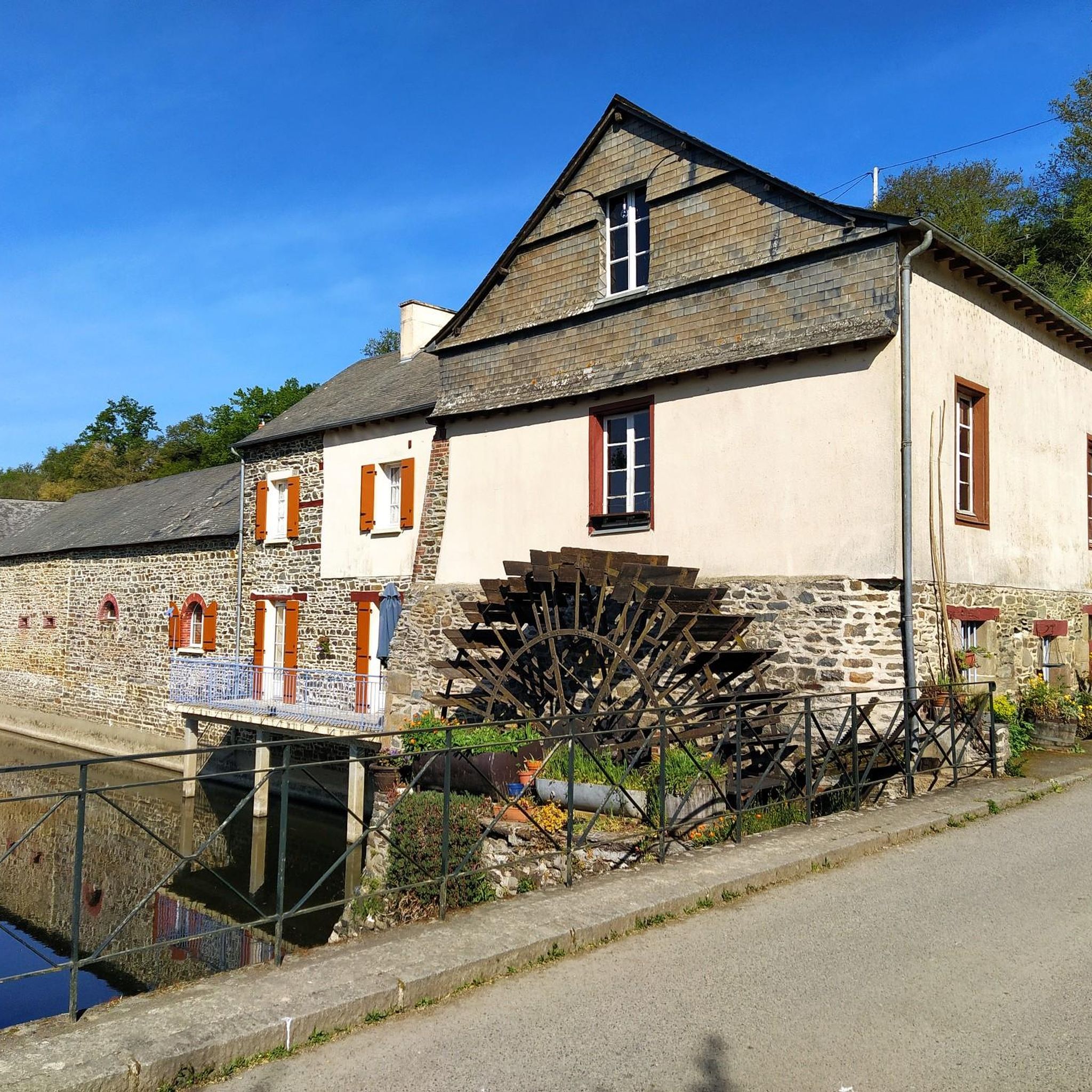
Nouvoitou is graced by the Seiche and Yaigne rivers, which create picturesque landscapes perfect for strolls. The area is committed to preserving its natural heritage, offering numerous green spaces, verdant bocage, and forest trails. The Seiche River is particularly notable for its three mills.
What kind of hiking trails are available in Nouvoitou?
Nouvoitou offers a variety of marked hiking loops catering to different preferences. Options include a 30-minute circuit through the town center, the 5.4 km Boucle de la Lande, the 11 km Boucle de l'Yaigne, the 8.5 km Boucle de Saint-Martin, and the 16.5 km Boucle des deux moulins. An 8 km route, the "Itinéraire sud/Moulin de Tertron," also leads to the Tertron mill.
Are there any family-friendly attractions around Nouvoitou?
Absolutely! Châteaugiron Castle is a great family-friendly option. Its historical significance and the opportunity to explore its grounds make it an engaging visit for all ages. The castle also hosts exhibitions, and you might even spot a giant ant sculpture on its tower!
Where can I find unique historical buildings or 'hidden gems' in the area?
Beyond the main attractions, consider visiting the Tizé Estate, a manor first mentioned in 1226, which has expanded through successive family alliances. The private Manoir du Grand Corcé in Nouvoitou also holds historical significance with its schist and limestone construction. Additionally, the operational Tertron Mill on the road to Epron offers a glimpse into local heritage.
What outdoor activities, like cycling or mountain biking, are available near Nouvoitou?
The region around Nouvoitou is excellent for outdoor sports. You can find various routes for mountain biking, gravel biking, and general cycling. For detailed routes, explore the MTB Trails around Nouvoitou, Gravel biking around Nouvoitou, and Cycling around Nouvoitou guides. These guides offer routes ranging from easy to difficult, such as the 'Banks of the Seiche – Single VTT near Epron loop' or the 'Parc de la Réserve – Seiche Valley loop'.
What do visitors particularly enjoy about the attractions around Nouvoitou?
Visitors appreciate the blend of historical charm and natural beauty. Many enjoy the unique architecture of sites like the Saint-Maximilien-Kolbé Church, noting its striking appearance in the countryside. The historical depth of places like Châteaugiron Castle and the beautiful green areas around Saint-Georges Palace are also frequently highlighted.
Is there a major city nearby with additional attractions?
Yes, Rennes, located about 13 km from Nouvoitou, is a significant regional highlight and a 'Town of Art and History.' It boasts a picturesque medieval center and attractions like Parc du Thabor and Parc des Gayeulles. Rennes also offers cultural venues such as Le Liberté for performances.
Are there any gardens or parks worth visiting near Nouvoitou?
Yes, the Jardin des fontaines et parc de l'Athanor, located about 8 km away, is a remarkable garden that makes for a recommended detour. Additionally, the Saint-Georges Palace in Rennes features a beautiful public garden that is open to visitors.
What is the best way to travel to Nouvoitou and its surrounding attractions?
While specific public transport details for Nouvoitou itself are best checked locally, the nearby city of Rennes is a major transport hub. The Rennes train station is a multimodal station connecting train, bus, and metro, making it a convenient point of arrival for exploring the wider region.
Most popular routes around Nouvoitou

Get inspired with the komoot mobile app


Explore more
Still not found the Highlight you’re looking for? See guides of the top attractions in other regions:
