The best road cycling routes around Saint-Didier
4.5
(91)
2,622
riders
378
rides
Road cycling routes around Saint-Didier offer diverse terrain within the heart of Provence, France. The region is characterized by the Vaucluse and Luberon mountains, with the iconic Mont Ventoux providing a dramatic backdrop. Cyclists navigate through the Comtat Venaissin, a landscape rich in agricultural and wine-growing areas, featuring vineyards, cherry, and almond groves. Picturesque perched villages are common, and routes often follow paved surfaces through varied elevation profiles.
Best road cycling routes around Saint-Didier
- The most popular road cycling route…
Last updated: October 18, 2026
4.0
(4)
14
riders
Moderate road ride. Good fitness required. Mostly well-paved surfaces and easy to ride.
5.0
(2)
40
riders
58.1km
02:35
400m
400m
Moderate road ride. Good fitness required. Mostly well-paved surfaces and easy to ride.

5.0
(2)
25
riders
40.8km
01:51
360m
360m
Moderate road ride. Good fitness required. Mostly well-paved surfaces and easy to ride.
5.0
(1)
26
riders
59.0km
02:45
500m
500m
Moderate road ride. Good fitness required. Mostly well-paved surfaces and easy to ride.
19
riders
Moderate road ride. Good fitness required. Some segments of this route may be unpaved and difficult to ride.
Get access to more routes and recommendations from other explorers.
Already have an account?
Our route recommendations are based on thousands of hikes, rides, and runs completed by other people on komoot.
Start today with a free account
Your next adventure awaits.


Tips from the Community

Unusual dimensions for a dolmen. I visited it on a weekday and had the site all to myself. Truly impressive. Also worth seeing is the chestnut tree at the entrance, which tried - but apparently failed - to swallow a megalith at the entrance to the dolmen. Toilets with a tap. Benches.
0
0

Magnificent city, ancient alleys, a labyrinth with exceptional heritage
0
0

Church built in the 15th century, from that period only the choir and the chapel to the north, which became the sacristy, currently remain. The nave and transept were rebuilt in 1851 (inscription: MR. RUPIN MAIRE ET LES PAROISSIENS 1851). The tower is dated 1859, it was built by Guyon, an entrepreneur from Vitré.
0
0
The Town Hall (15th century-1904), located place de la Mairie. Its bell tower dates from 1534. It is the former church transformed into a town hall by the mayor-châtelain, Jacques le Cardinal de Kernier, at the beginning of the 20th century. The latter had built a new church for the inhabitants of Val-d'Izé.
0
0
The church was built from 1889 to 1895, in sandstone, granite, and limestone. With a Latin cross plan, the building is composed of three naves. The main nave is covered by domes on pendentives, and the crossing of the transept features a lantern tower. The overall design of the ensemble is neo-Romanesque with a bichromy of materials and different stonework. The domed roof, the multiple decorative details, and the play of polychrome materials reflect a mastered art of the Romanesque architecture of Angoumois.
0
0
New church built from 1861 by Audrouin a hundred meters south of the old one. It was completed in 1875 with the construction of the tower.
0
0
Old church mentioned as early as 1160 and rebuilt in the 16th and 17th centuries (old tower dated 1582). The current church was entirely built to the plans of Arthur Regnault in 1904 (date and attribution by source). He uses the model of the so-called Plantagenet vaulted ceiling for the covering of the nave and aisles, but for the bell tower, he draws inspiration from Cornish bell walls. Two windows from the late 15th and 16th centuries of the old church were reused on the south side of the nave. This church, rebuilt in the Breton flamboyant style, is representative of the architect's style during this period.
0
0
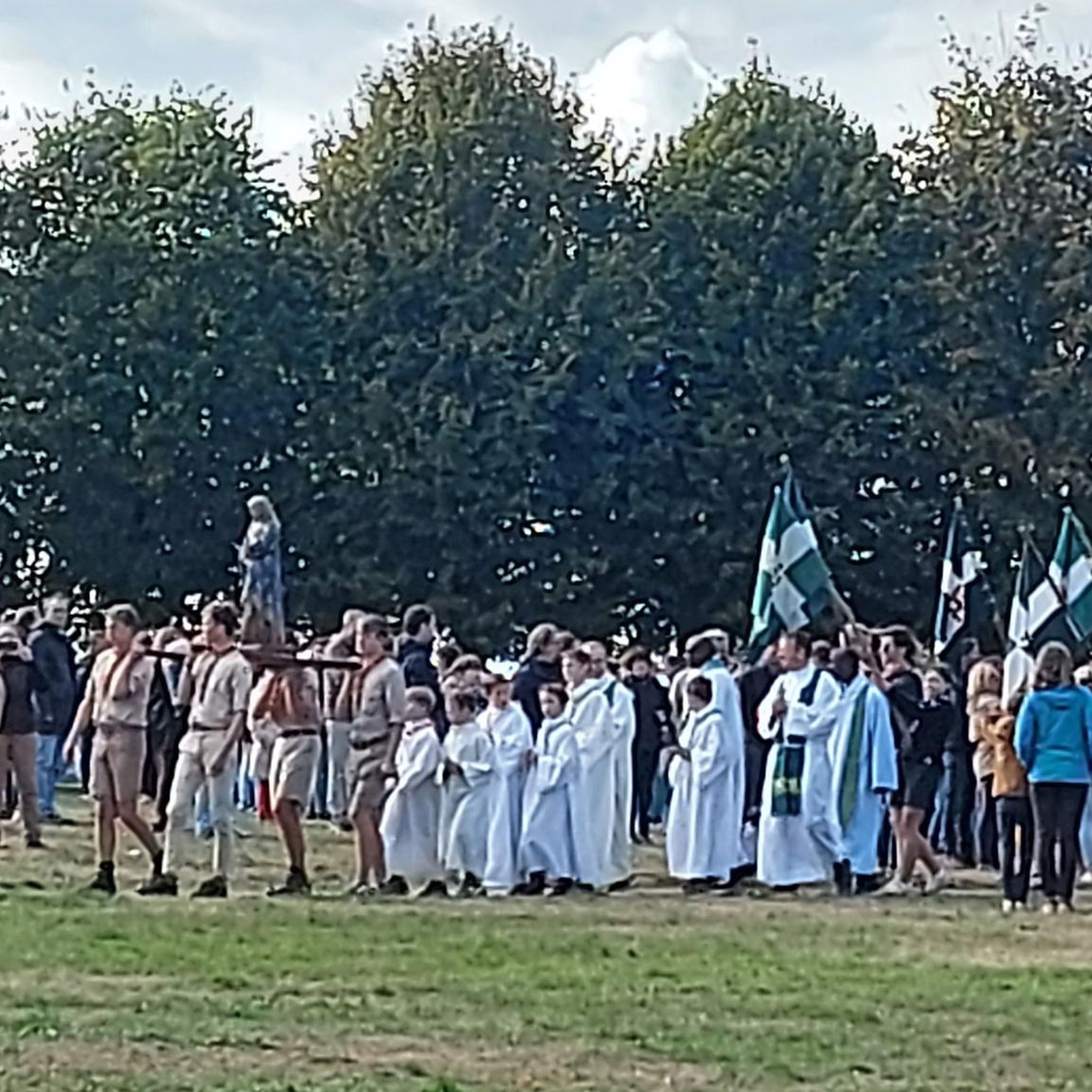
The bell tower is visible from afar and has long dominated the town and its surroundings. The Saint-Pierre church has retained its impact on the local landscape for over a century. It was indeed in 1888 that the Fabrique Council decided to entrust Arthur Régnault, the diocese's architect, with the project for a new construction. His plan was accepted and work began in October 1889, before the blessing of the first stone on March 13, 1890. As an anecdote, the stones are extracted from the quarry of La Bouëxière. Quickly, the inhabitants discovered its citadel-like appearance, Arthur Régnault having wanted to honor the city of Châteaubourg which had not had a castle for a long time! The structural work was completed on March 28, 1893, but due to lack of funds, the bells would wait until 1894. The work on the woodwork and the construction of the high altar took place in 1911, the church being due to host the important Eucharistic congress of 1913. Maintenance work continued over the years, the church having become the property of the municipality since 1905. During the bombings of the summer of 1944, the church was spared. The inhabitants would not forget it: on May 9, 1945, the day after the armistice, the men carried Notre Dame de Boulogne in procession and paraded barefoot through the streets. The centenary was celebrated in 1992 with the decision to install the current organ. The church of Châteaubourg has thus traversed local history from the 15th century – the date of construction of the previous, much smaller church – to that designed by Arthur Régnault.
0
0
Frequently Asked Questions
How many road cycling routes are available around Saint-Didier?
There are over 15 road cycling routes around Saint-Didier, offering a variety of experiences for cyclists. These routes are highly rated by the komoot community, with an average score of 4.5 stars from over 40 reviews.
What kind of terrain can I expect on road cycling routes near Saint-Didier?
Road cycling around Saint-Didier is characterized by rolling hills, agricultural plains, and stunning views of the Vaucluse and Luberon mountains, including the iconic Mont Ventoux. Routes often follow paved surfaces through diverse landscapes, from vineyards and cherry orchards to picturesque perched villages.
Are there road cycling routes suitable for beginners or those looking for an easy ride?
Yes, Saint-Didier offers several easy road cycling routes. For example, the Hôtel de Ville – Châteaugiron Castle loop from Saint-Didier is an easy 27.9 km (17.4 miles) trail with gentle elevation gains, typically completed in about 1 hour and 10 minutes. Another easy option is the Châteaugiron Castle – Châteaugiron Castle loop from Saint-Didier, which is 43.8 km (27.2 miles) long with moderate elevation.
What are some of the longer or more challenging road cycling routes in the area?
For those seeking a longer ride, the Châteaugiron Castle – Châteaugiron Castle loop from Saint-Didier covers 43.8 km (27.2 miles) with 278 meters of elevation gain. While still rated easy, its length provides a good challenge. The region also offers routes like the 'View of Gordes – Route de Gordes loop' at 49.9 km with 920 meters of elevation, and the 'Touring the Comtat Venaissin by bike' which is a difficult, long-distance route covering 112.9 km with 1,400 meters of ascent, often broken into stages.
What kind of landmarks or viewpoints can I see along the road cycling routes?
The routes around Saint-Didier offer numerous scenic viewpoints and historical landmarks. You can enjoy magnificent panoramas of Mont Ventoux and the Dentelles de Montmirail. Many routes pass through charming perched villages like Venasque, Le Beaucet, and La Roque-sur-Pernes. Specific attractions include Châteaugiron Castle and the Notre-Dame Church. You might also encounter natural features like the Étang de la Corbière.
Are there any family-friendly road cycling options around Saint-Didier?
While specific 'family-friendly' routes are not explicitly detailed for road cycling, many of the easier, shorter loops with gentle elevation gains could be suitable for families with older children or those comfortable with road cycling. The Hôtel de Ville – Châteaugiron Castle loop from Saint-Didier is an easy 27.9 km route that could be a good starting point.
What is the best time of year for road cycling in Saint-Didier?
The region of Provence, where Saint-Didier is located, is generally excellent for cycling from spring through autumn. Spring offers pleasant temperatures and blooming landscapes, while autumn provides cooler weather and beautiful fall colors. Summer can be hot, especially in July and August, so early morning rides are recommended during these months.
Are there circular road cycling routes available from Saint-Didier?
Yes, many of the road cycling routes around Saint-Didier are circular loops, making them convenient for starting and ending in the same location. Examples include the Roadbike loop from Saint-Didier (26.1 km) and the Acigné Bridge – View of Acigné Mill loop from Saint-Didier (33 km).
What do other road cyclists enjoy most about cycling in Saint-Didier?
The komoot community rates road cycling in Saint-Didier highly, with an average score of 4.5 out of 5 stars. Cyclists frequently praise the diverse landscapes, from agricultural plains to mountain views, and the charming perched villages. The well-maintained paved surfaces and variety of routes catering to different fitness levels are also often highlighted.
Are there any specific routes that offer views of Mont Ventoux?
Many routes in the Saint-Didier area offer magnificent panoramas of Mont Ventoux, often referred to as the 'Giant of Provence.' The 'Hilltop Villages Loop' routes, for instance, are known for providing scenic climbs and views of this iconic mountain within the Mont Ventoux Regional Natural Park.
Where can I find parking when planning a road cycling trip to Saint-Didier?
Saint-Didier, as a central village in Provence, typically offers public parking options. It's advisable to look for designated parking areas within the village center or near the starting points of popular routes. Specific parking details for individual routes are usually available on local tourism websites or detailed route descriptions.
Can I find cafes or restaurants along the road cycling routes for a break?
Yes, the region around Saint-Didier is dotted with charming towns and villages, such as Mazan, Pernes-les-Fontaines, and Carpentras, which are often part of cycling routes. These villages typically offer cafes, bakeries, and restaurants where you can stop for refreshments and meals during your ride.
Most popular routes around Saint-Didier
Most popular attractions around Saint-Didier

Get inspired with the komoot mobile app


Explore more
Browse the best Road cycling routes in other regions.
