The best cycling routes around Chaume-Lès-Baigneux
4.1
(8)
34
riders
10
rides
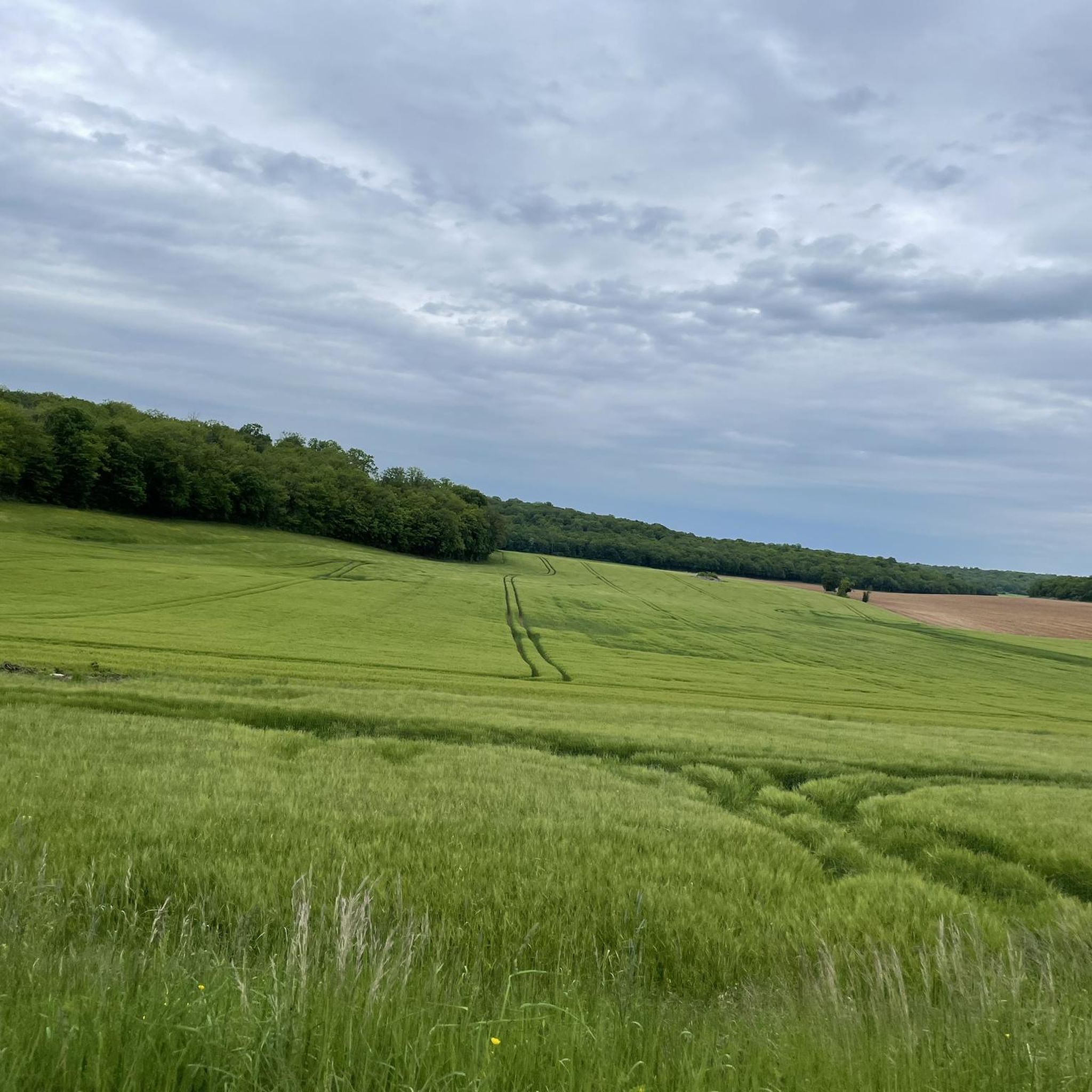
Touring cycling routes around Chaume-Lès-Baigneux traverse the picturesque Côte-d'Or department in Burgundy, France. The region features diverse natural landscapes, including wooded areas, valleys with varying gradients, and views of vineyards. Water features like the Laigne stream and its affluents are present, with sources such as those in Combe Gautrot. This rural setting combines cultural heritage with opportunities for outdoor exploration.
Best touring cycling routes around Chaume-Lès-Baigneux
- The most popular touring cycling route is Semur en Auxois – MuséoParc Alésia loop…
Last updated: May 7, 2026
3.3
(3)
9
riders
67.5km
04:12
520m
520m
Hard bike ride. Very good fitness required. Mostly paved surfaces. Suitable for all skill levels.
4
riders
33.4km
02:08
350m
350m
Moderate bike ride. Good fitness required. Mostly paved surfaces. Suitable for all skill levels.

Sign up for free
5.0
(2)
3
riders
38.7km
02:24
400m
400m
Moderate bike ride. Good fitness required. Mostly paved surfaces. Suitable for all skill levels.
5
riders
45.6km
02:49
440m
440m
Moderate bike ride. Good fitness required. Mostly paved surfaces. Suitable for all skill levels.
4.0
(1)
3
riders
25.2km
01:37
320m
320m
Moderate bike ride. Good fitness required. Mostly paved surfaces. Suitable for all skill levels.
Get access to more routes and recommendations from other explorers.
Sign up for free
Already have an account?
Our route recommendations are based on thousands of hikes, rides, and runs completed by other people on komoot.
Start today with a free account
Your next adventure awaits.
Login or Signup
Popular around Chaume-Lès-Baigneux


Tips from the Community

An interestingly designed public space near the bridge over the Brenne River, a prime spot with a view, a bridgehead, and a city terrace. Designed by local architects Atelier B2A, 2019.
2
0

The Abbey of Fontenay, like all monasteries and places of worship, was, of course, founded or built first and foremost as a place of prayer. Due to its outstanding significance, it has also been honored with the title of "World Heritage Site" by UNESCO. The German-language television series "Treasures of the World – Heritage of Humanity" documents these special sites around the world in quarter-hour segments. One episode also deals with this abbey, and the website reads: * "France at the end of the 11th century. Christianity has prevailed. The noble abbots of the Benedictine monasteries live in prosperity. The monastic ideal of poverty and modesty seems to have been forgotten. A new order is founded in Burgundy. It calls its followers to return to early Christian ideals: to work and poverty, to humility and seclusion from the world. The monks establish their first monastery, "Citeaux," after which they later call themselves Cistercians. The order grows rapidly. The monks clear the forests and regulate the rivers. Their religious houses soon spread throughout France, even to Germany. The Fontenay Abbey is also founded under them." The film is available in the ARD media library at the following link =>> https://www.ardmediathek.de/video/schaetze-der-welt/fontenay-frankreich-folge-11/swr/Y3JpZDovL3N3ci5kZS83MjQ3MjIw
3
0
The Abbey of Fontenay was, like all monasteries and places of worship, of course founded or built first and foremost as a place of prayer. Due to its outstanding importance, it has also been "ennobled" by UNESCO with the title of "World Cultural Heritage". The German-language television series "Treasures of the World - Heritage of Humanity" documents these special sites all over the world in quarter-hour contributions. One episode also deals with this abbey, on the website you can read: * "France at the end of the 11th century. Christianity has prevailed. The noble abbots of the Benedictine monasteries live in prosperity. The monks' ideal of poverty and modesty seems to have been forgotten. A new order is founded in Burgundy. It calls on its followers to return to original Christian ideals: to work and poverty, to humility and seclusion from the world. The monks found their first monastery "Citeaux", after which they later call themselves Cistercians. The religious order grows quickly. The monks clear the forests and regulate the rivers. Their religious houses soon spread across France and into Germany. The Fontenay monastery was founded under them." The film is available in the ARD media library at the following link: => https://www.ardmediathek.de/video/schaetze-der-welt/fontenay-frankreich-folge-11/swr/Y3JpZDovL3N3ci5kZS83MjQ3MjIw
5
0

A place that has fallen out of time. Several castles and some former blacksmiths. No tours, no places to stop for refreshments
1
0
If you like parks, views and old buildings, you shouldn't miss this park.
1
0

Beautiful sight. But there is only a small sign. A visit is not possible.
3
0
The world heritage monastery is worth a visit. However, there is an entrance fee.
3
0

A world heritage abbey from the 12th century. Its territory extends over 1200 ha. The Abbey is decorated with a landscaped park classified in 2004 as a “Remarkable Garden” by the National Council of Parks and Gardens. You can book tickets in advance to visit this place on this site: https://www.abbayedefontenay.com the price starts from 9 euros.
2
0
Frequently Asked Questions
How many touring cycling routes are available around Chaume-Lès-Baigneux?
There are over 10 touring cycling routes available around Chaume-Lès-Baigneux, offering a variety of experiences for different skill levels. These routes are highly rated by the komoot community, with an average score of 4.1 stars.
What kind of terrain can I expect on touring cycling routes in this region?
The region around Chaume-Lès-Baigneux offers diverse terrain for touring cyclists. You can expect to traverse wooded landscapes, providing shaded routes, as well as scenic valleys and vineyards, such as the Flavigny vineyard. While some routes along canals are flat, the broader region also features hills, offering engaging ascents and rewarding vistas.
Are there any long-distance touring cycling routes near Chaume-Lès-Baigneux?
Yes, for those seeking longer rides, the region offers extensive options. One notable long-distance route is the ☀️ Messigny Technical – Guillaume Gate loop from Baigneux-les-Juifs, which spans over 155 km and features significant elevation gain. The broader Burgundy region also has well-developed long-distance routes like the 'Tour of Burgundy by bike' and the 'Voie Bleue' along the Saône.
What are some interesting landmarks or attractions I can see along the cycling routes?
The touring cycling routes around Chaume-Lès-Baigneux are rich with historical and natural attractions. You can visit the Alesia Archaeological Site and the Vercingetorix Monument. Other points of interest include the Lavoir des Celliers, a restored wash house with vineyard views, and Pont Brémur, a quiet picnic spot by the river. The Théâtre des Roches d'Alise-Sainte-Reine also offers a unique cultural experience.
Are there any family-friendly touring cycling routes in the area?
While specific family-friendly routes are not detailed in the immediate vicinity, the broader Burgundy region is known for its tranquil canal-side paths, which are generally flat and safe for families. Routes along the Canal de Bourgogne or the Saône River (Voie Bleue) are particularly suitable due to minimal uphill sections and varied scenery. These are often away from motorized traffic.
What is the best time of year for touring cycling in Chaume-Lès-Baigneux?
The best time for touring cycling in Chaume-Lès-Baigneux is generally from spring through early autumn. During these months, the weather is pleasant for outdoor activities, and you can fully appreciate the wooded landscapes, vineyards, and cultural sites. Summer also offers opportunities to enjoy open-air performances at places like the Théâtre des Roches d'Alise-Sainte-Reine.
Are there any circular touring cycling routes available?
Yes, many of the touring cycling routes around Chaume-Lès-Baigneux are designed as loops. For example, the Lake on Le Brévon – Rochefort-sur-Brévon loop from Saint-Marc-sur-Seine offers a moderate 33.4 km circular path with scenic views. Another option is the Bike loop from Villaines-en-Duesmois, covering 38.7 km.
Where can I find parking for cycling routes in Chaume-Lès-Baigneux?
While specific parking locations for each route are not detailed, many touring cycling routes in the region start from villages or towns like Bussy-le-Grand, Saint-Marc-sur-Seine, or Chapelle Sainte-Marguerite. These locations typically offer public parking facilities suitable for accessing the trails. It is advisable to check local village information for designated parking areas.
What is the difficulty level of touring cycling routes in this area?
The touring cycling routes around Chaume-Lès-Baigneux cater to various skill levels. You'll find a mix of moderate and difficult routes. For instance, the Semur en Auxois – MuséoParc Alésia loop from Bussy-le-Grand is considered difficult, while the Fontenay Abbey – Parc Buffon loop from Chapelle Sainte-Marguerite is a moderate option.
Can I combine touring cycling with wine tourism in this region?
Absolutely. The proximity to renowned vineyards and wine-producing areas, including the 'Climats de Bourgogne' (a UNESCO World Heritage site), makes combining cycling with wine tourism a popular choice. Routes like the 'Voie des Vignes' wind through vineyards and wine villages, offering opportunities for wine tastings and visits to world-renowned wine estates. For more information on active wine tours, you can visit Burgundy Tourism.
Are there any routes that feature lakes or rivers?
Yes, the region includes routes that highlight its water features. The Lake on Le Brévon – Rochefort-sur-Brévon loop from Saint-Marc-sur-Seine is a moderate route that offers scenic views around a lake and along the Brévon river. The broader Burgundy region is also known for its network of canals and rivers, with dedicated cycling paths often running alongside them, such as the Canal de Bourgogne.
Most popular routes around Chaume-Lès-Baigneux
Most popular attractions around Chaume-Lès-Baigneux

Get inspired with the komoot mobile app


Explore more
Browse the best Cycling routes in other regions.
