The best cycling routes around Bouillé-Saint-Paul
4.3
(34)
382
riders
77
rides
Touring cycling routes around Bouillé-Saint-Paul, now part of Val en Vignes, traverse the Deux-Sèvres department in western France. The region features a gentle topography with elevations ranging from 47 to 107 meters, making it accessible for various fitness levels. Cyclists can explore riverine scenery along the Argenton River, viticultural landscapes with Saumur and Anjou appellations, and shaded woodlands. Dedicated cycling infrastructure, including alternative bike routes, supports exploration.
Best touring cycling routes around Bouillé-Saint-Paul
- The most popular touring cycling route is…
Last updated: May 21, 2026
5.0
(1)
3
riders
33.9km
01:58
130m
130m
This easy 21.1-mile touring cycling loop explores the picturesque Thouet Valley, passing the Ballastière Pond and Argenton River.
5.0
(1)
14
riders
24.7km
01:34
120m
120m
Easy bike ride. Great for any fitness level. Mostly paved surfaces. Suitable for all skill levels.

Sign up for free
13
riders
Hard bike ride. Very good fitness required. Mostly paved surfaces. Suitable for all skill levels.
5.0
(1)
11
riders
Hard bike ride. Good fitness required. You may need to push your bike for some segments of this route.
5.0
(1)
10
riders
Easy bike ride. Great for any fitness level. Mostly paved surfaces. Suitable for all skill levels.
Get access to more routes and recommendations from other explorers.
Sign up for free
Already have an account?
Our route recommendations are based on thousands of hikes, rides, and runs completed by other people on komoot.
Start today with a free account
Your next adventure awaits.
Login or Signup



Tips from the Community

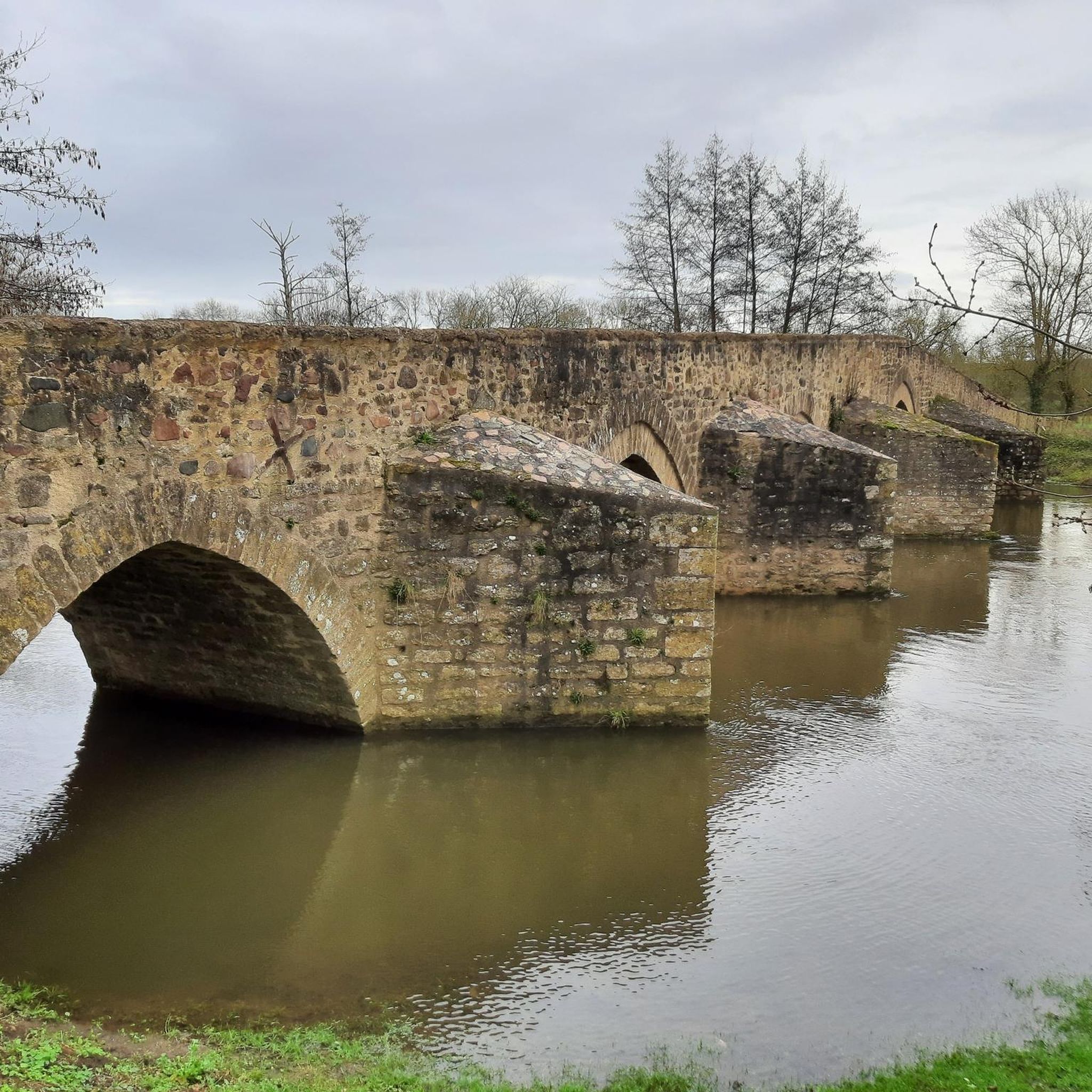
The Church of Saint-Généroux is a site well worth a visit during a hike. It dates back to the 10th century and is considered one of the oldest churches in France, as it features pre-Romanesque architecture found nowhere else. The church is located on the banks of the Thouet River. You can also admire the Romanesque bridge (13th century).
0
0

Beautiful view taken from the small bridge
0
0

Dating from the 13th century, at the foot of the city ramparts, this bridge ultimately offers the best view of the Château de Thouars.
0
0

Without the characteristic wings - which used to capture the power of the wind to set the heavy millstones in motion - the once proud windmill, which was certainly impressive at the time, is missing an essential architectural element. From a distance, the observer can see its modern successors: within sight of the former windmill, the slender towers and turbine blades of a modern wind farm, which is used to generate electricity, rise into the sky.
2
0
In the proverbial "good old days" of centuries past, this (former) windmill, standing in a very prominent position in the vast landscape, must have made a deep impression on the viewer. However, this changed a long time ago: the no longer intact tower stump is missing the wings, precisely those elements that were once so fundamental to the appearance of those four-armed giants (at least that is what the character "Don Quixote" invented by Miguel Cervantes thinks in one of the famous Spanish author's bizarre stories).
3
0
Montreuil, or small monastery, and Bellay, named after Lord Berlay installed in 1025 by Foulque de Nerra, founder of the rich province of Anjou, has been a walled town since the 13th century. Located at the crossroads of Anjou, Touraine and Poitou, the city became a strategic and commercial issue from the Middle Ages. This interest is reflected in the construction of fortified enclosures. A first belt (11th century), direct protection of the castle, is completed by an impressive rampart (13th century) encompassing the upper and lower towns, while a third enclosure ensures control of the ford. Six monumental gates, four of which still exist, were opened by the lords of Harcourt. These great builders endowed Montreuil-Bellay with exceptional architecture, which characterizes the appearance of the town even today: tuffeau lacework on the facades of the houses, the bossage of the towers of the Porte Saint-Jean, the tangle of the roofs of the house of the castle, turreted manors, castle chapel turned collegiate church, castles, Saint-Jean hospital... The 15th century is undoubtedly the golden century of Montreuil-Bellay, which can now be discovered in this preserved setting.
1
0

A must-see among the castles of the Loire, that of Montreuil-Bellay is very impressive, although less known, with its 15 defense towers and its 600 meters of ramparts. Fully furnished and inhabited by the same family since 1822, the castle located on a rocky promontory can be visited. Just like the gardens, suspended above the Thouet. From the ramparts, you will have a breathtaking view of the vineyards of the château's wine estate.
1
0

Beautiful town with castle and majestic ramparts, located in the heart of the Loire-Anjou-Touraine regional natural park on the edge of the Thouet. In the heart of the Saumur vineyards, Montreuil-Bellay is the perfect place to visit cellars and taste regional wines.
1
0
Frequently Asked Questions
How many touring cycling routes are available in Bouillé-Saint-Paul?
There are over 75 touring cycling routes around Bouillé-Saint-Paul, offering a wide range of options for different skill levels and preferences.
What is the general terrain like for cycling around Bouillé-Saint-Paul?
The terrain around Bouillé-Saint-Paul is generally gentle, with elevations ranging from 47 to 107 meters. This makes it accessible for various fitness levels, featuring picturesque riverine scenery along the Argenton River, charming viticultural landscapes, and shaded woodlands.
Are there easy touring cycling routes suitable for beginners or families?
Yes, Bouillé-Saint-Paul offers 26 easy touring cycling routes, perfect for beginners or families. An excellent option is the Argenton Valley Cycling Route, an easy 21.1-mile (33.9 km) trail that follows the tranquil Argenton River.
Are there more challenging routes for experienced cyclists?
For experienced cyclists seeking a challenge, there are 10 difficult routes available. One such route is the Pont des Chouans on the Thouet – Saint-Médard Church of Thouars loop from Mauzé-Thouarsais, a 57.4-mile (92.3 km) trail leading through the Thouet river area.
What historical landmarks can I see while cycling in the area?
You can encounter several historical landmarks. The A Roman bridge loop from Argenton-l'Église features the historic Pont des Chouans on the Thouet, an 11th and 12th-century bridge. You might also pass by the Saint-Médard Church of Thouars or catch glimpses of local heritage like the Lavoir de Fronteau.
Are there any natural features or scenic spots to look out for?
Absolutely. The routes often follow the tranquil Argenton River, offering beautiful riverine scenery and 'prairies humides' (wet meadows). You can also cycle through viticultural landscapes with Saumur and Anjou appellations, and enjoy shaded woodlands. Keep an eye out for the Pommiers Waterfall, a notable natural attraction in the vicinity.
What do other touring cyclists say about the routes in Bouillé-Saint-Paul?
The touring cycling routes in Bouillé-Saint-Paul are highly rated by the komoot community, with an average score of 4.4 stars from over 40 reviews. Cyclists often praise the diverse terrain, from serene river valleys to charming vineyards, and the well-maintained paths that make for an enjoyable experience.
Are there circular touring cycling routes available?
Yes, many routes in the area are designed as loops, allowing you to start and end at the same point. For example, the Ballastière Pond – Montreuil-Bellay Castle loop from Argenton-l'Église is a great circular option for exploring the region.
What is the best time of year for touring cycling in Bouillé-Saint-Paul?
The Deux-Sèvres region generally offers pleasant cycling conditions from spring through autumn. Spring and early summer provide lush green landscapes and comfortable temperatures, while autumn brings beautiful colors to the vineyards and woodlands. During warmer months, the shaded wooded areas along routes offer a refreshing atmosphere.
Can I bring my dog on the cycling routes?
While many outdoor areas in France are dog-friendly, it's always best to check specific local regulations for each route or natural park. Generally, dogs on a leash are permitted on public paths, but ensure they are well-behaved and that you clean up after them. Some routes might pass through private vineyards where dogs may not be allowed.
What are the options for parking when cycling in Bouillé-Saint-Paul?
Parking is generally available in the villages and towns that serve as starting points for many routes, such as Bouillé-Saint-Paul itself or nearby Argenton-l'Église. Look for designated public parking areas, often near town centers or local amenities. Specific parking details can sometimes be found on individual route descriptions.
Is public transport available to reach the cycling routes, especially with a bike?
Public transport options in rural areas like Bouillé-Saint-Paul can be limited. While some regional buses or trains might serve larger towns in Deux-Sèvres, bringing bikes on board can be restricted, especially during peak hours. It's advisable to check with local transport providers like SNCF (for trains) or regional bus services for their specific policies regarding bicycles before planning your trip.
Most popular routes around Bouillé-Saint-Paul
Most popular attractions around Bouillé-Saint-Paul

Get inspired with the komoot mobile app


Explore more
Browse the best Cycling routes in other regions.
