Attractions and Places To See around Saint-Sigismond - Top 5
Best attractions and places to see around Saint-Sigismond. This commune in the Loiret department is known for its historical sites and connection to the Loire Valley. The area offers opportunities for walking, cycling, and exploring local heritage. It features woodlands and historical landmarks, providing a blend of cultural and natural experiences.
Best attractions and places to see around Saint-Sigismond
- The most popular attractions is Lignerolles Mill, a viewpoint that is one of the last pivotal windmills in the Loiret…
Last updated: July 1, 2026
Lignerolles Mill
Highlight • Viewpoint
Translated by Google •
Tip by

Saint-André Church of Patay
Highlight • Religious Site
In the 7th century, the Benedictine abbey of Bonneval created a priory-curate. Its existence is confirmed by a bull from Pope Gregory second half of the 16th century.
Translated by Google •
Tip by

Sign up now to discover places like this
Get recommendations on the best single tracks, peaks, & plenty of other exciting outdoor places.
Sign up for free
Church of the Très-Sainte-Trinité
Highlight • Other
Translated by Google •
Tip by
Coulmiers Dolmen
Highlight • Other
Translated by Google •
Tip by

Saint-Pierre Church of Guillonville
Highlight • Religious Site
Translated by Google •
Tip by
Start today with a free account
Your next adventure awaits.
Login or Signup
Popular around Saint-Sigismond


Tips from the Community

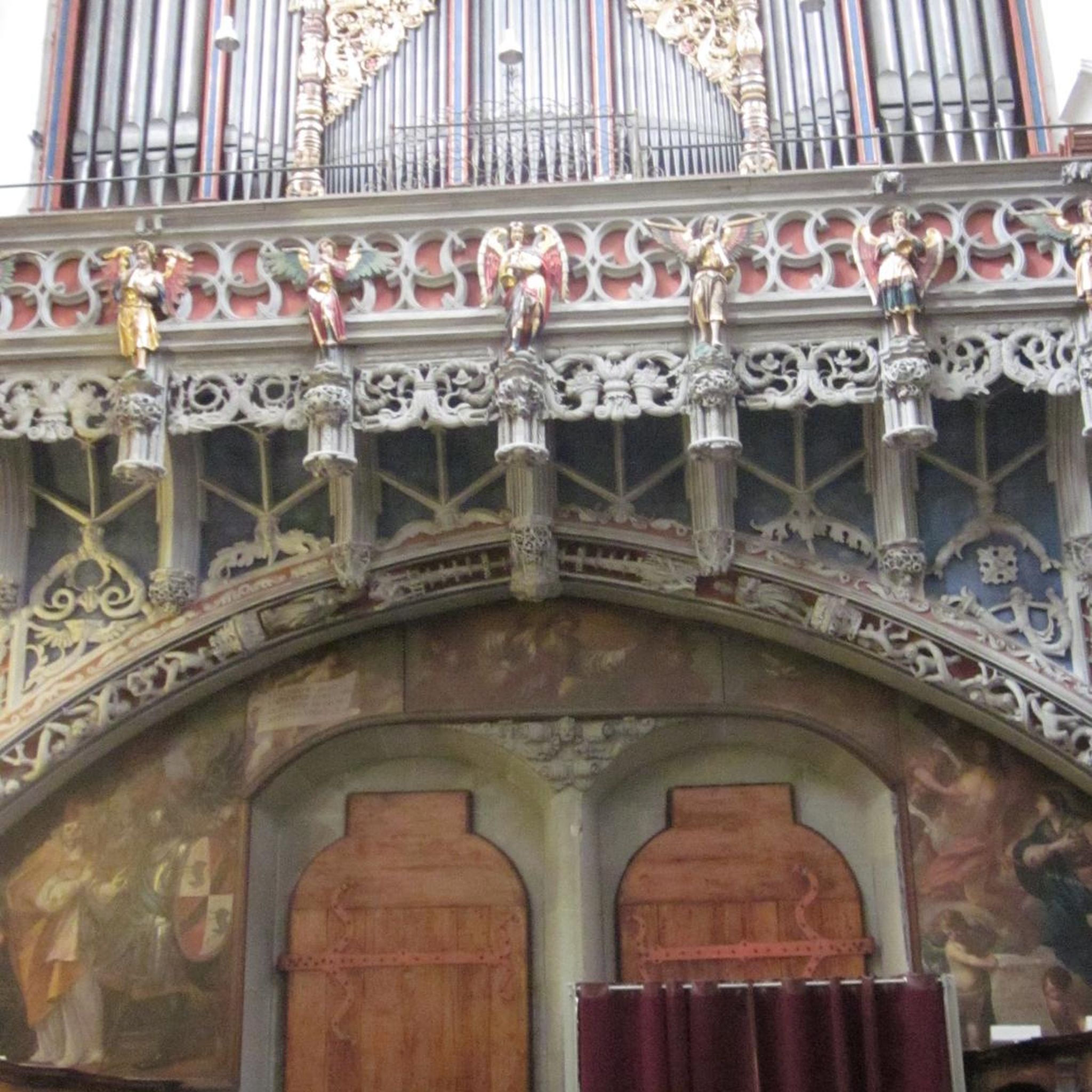
The church of Guillonville, in Eure et Loir, in the Center-Val de Loire, is attached to the parish of Saint Martin en Beauce, of the Deanery of Beauce, in the diocese of Chartres. The church is placed under the protection of Saint Peter.
0
0
The Saint André church (13th-15th-16th centuries) In the 7th century, the Benedictine abbey of Bonneval created a priory-curate. Its existence is confirmed by a bull from Pope Gregory second half of the 16th century. In 1793 the church was desecrated and transformed into wine and spirits warehouses. In 1801, the church was returned to worship and changed diocese: from the diocese of Chartres, to which it belonged before the Revolution, it passed to the diocese of Orléans, notably for reasons of distance: Chartres is 48 km from Patay then that Orléans is only 27 km away. The church is 30 m long and 17 m wide. The oldest parts are located near the large porch (13th century). One of the pillars of the nave is decorated with a vestige of Danse Macabre from the mid-15th century. A small masonry door on the right communicated with the old priory, of which ruins remain to the south of the church. The choir dates from the 14th century; the apse wall was decorated with paintings at the end of the 19th century, the chapels were then redeveloped and equipped with new stained glass windows. The keystones of the large nave were made from casts taken from the figurines which adorn the Thesis Room of the University of Orléans, built in 1411. The bell tower, located to the north of the choir, would be an old watchtower. Its pinnacles and eight openings were made after the Wars of Religion. The four bells were melted in 1868. The largest was cracked by a Prussian shell in 1870 and was recast in 1871. Since that year, Ernestine (809 kg, 1 m 12 in diameter at the base, sounding the F), Gabrielle (550 kg, 0.981 m in diameter, sounding the ground), Anne (398 kg, 0.573 m in diameter) and Marie (222 kg, 0.724 m in diameter, sounding the C) give rhythm to the daily life of the small town of Patay, old Beauceron railway junction. On August 15, 1944, an ammunition train was blown up at Patay station. The station was blown up, except for the carriage shed, and all the windows in the town were shattered. Luckily, a providential storm limited the damage. The only two stained glass windows that survived the explosion are those on the right side aisle which date from 1930 and relate the communion of Joan of Arc in the Patay church in 1429. The church was listed as a Historic Monument in 1925 by decree of October 6, 1925.
0
0
The first church, dating from the 13th century, was partly demolished and remodeled several times over the centuries. Placed under the name of the Most Holy Trinity, it took its current form at the end of the 15th century, but was most certainly rebuilt in the 19th century. Extensive renovation work was undertaken at the start of the 21st century.
0
0

The Moulin de Lignerolles is one of the last pivotal windmills in the Loiret department. Built in 1848, this wooden mill belonged to Louis-Joseph Soulas, famous painter and director of the Orléans School of Fine Arts. You can admire the restored mill and its ingenious mechanism, as well as the panoramic view of the plain. The mill is open to the public on Sundays from 2:30 p.m. to 6 p.m., and also hosts various events throughout the year, such as a flea market, concerts and exhibitions. Visiting the Moulin de Lignerolles is an excellent way to discover the heritage and charm of the Beauceron countryside.
2
0

Fun to see a dolmen right next to the path.
0
0
A beautiful Dolmen in the middle of the fields.
0
0
nice to discover a menhir in a field.
1
0
Frequently Asked Questions
What historical and cultural sites can I explore around Saint-Sigismond?
Saint-Sigismond, located in the Loiret department, is rich in history. You can visit the Lignerolles Mill, a preserved pivotal windmill offering panoramic views. Discover the ancient Coulmiers Dolmen, an archaeological site situated amidst fields. The Church of the Très-Sainte-Trinité, with its 15th-century origins, and the historic Saint-André Church of Patay are also notable. Additionally, the Saint-Pierre Church of Guillonville offers further insight into the region's religious heritage.
Are there family-friendly attractions in the Saint-Sigismond area?
Yes, several attractions are suitable for families. The Lignerolles Mill is a great spot for all ages to learn about local heritage and enjoy the views. The historic churches, such as the Saint-André Church of Patay and the Saint-Pierre Church of Guillonville, are also considered family-friendly, offering a glimpse into the past. The Coulmiers Dolmen provides an interesting outdoor discovery for curious minds.
What kind of outdoor activities can I do near Saint-Sigismond?
The area around Saint-Sigismond is ideal for various outdoor activities. You can enjoy walking and cycling, with routes like 'La Loire à Vélo' and 'La Scandibérique' passing through the wider Loiret department. The La Grande Planche nautical center offers opportunities for swimming, and fishing is also a popular pastime. For more structured routes, explore the cycling routes around Saint-Sigismond or the running trails.
Are there good cycling routes around Saint-Sigismond?
Absolutely. Saint-Sigismond is situated in a region well-suited for cycling. You can find various routes, including easy bike loops from Boulay-les-Barres, Épieds-en-Beauce, and Favelles. For a moderate challenge, try the Pont de Muides-sur-Loire – Meung-sur-Loire loop from Baccon. The wider Loiret department also features major cycling paths like 'La Loire à Vélo' and 'La Scandibérique'. Discover more options on the cycling guide for Saint-Sigismond.
What natural features can I see in the Saint-Sigismond area?
While Saint-Sigismond is known for its historical sites, the surrounding Loiret department offers natural beauty. The area features extensive woodlands, including the vast Bois de Bucy, perfect for walks. The region's connection to the Loire Valley means you're close to the natural landscapes shaped by the river. You can also enjoy the panoramic views from the Lignerolles Mill, overlooking the plain.
What do visitors enjoy most about the Lignerolles Mill?
Visitors particularly enjoy the historical significance and the scenic views from the Lignerolles Mill. It's one of the last pivotal windmills in the Loiret department, built in 1848. People appreciate seeing its restored mechanism and the panoramic vista of the Beauceron countryside. It's also a place where various events like flea markets, concerts, and exhibitions are hosted, adding to its appeal.
Can I find running trails near Saint-Sigismond?
Yes, there are several running trails available. You can find moderate running loops from Coinces, Boulay-les-Barres, Montcornu, and Saint-Péravy-la-Colombe, with distances ranging from approximately 5.6 km to 10.3 km. These trails offer a great way to explore the local landscape on foot. For detailed information and routes, check out the running trails guide for Saint-Sigismond.
What is the significance of the Coulmiers Dolmen?
The Coulmiers Dolmen is an archaeological site that offers a unique historical discovery. It's notable for being situated right in the middle of fields, providing an unexpected encounter with ancient history along a path. Visitors find it interesting to discover such a monument in an open, natural setting.
What is the best time of year to visit Saint-Sigismond for outdoor activities?
The Loiret department, where Saint-Sigismond is located, generally experiences pleasant weather for outdoor activities from spring through early autumn. During these seasons, temperatures are mild, making it ideal for walking, cycling, and exploring historical sites. Summer offers the warmest weather for nautical activities, while spring and autumn provide comfortable conditions for longer excursions with beautiful natural scenery.
Are there any notable churches to visit in the vicinity of Saint-Sigismond?
Yes, the area features several historically significant churches. The Church of the Très-Sainte-Trinité, which took its current form in the late 15th century, is a key landmark. The Saint-André Church of Patay, with parts dating back to the 13th century and a rich history including its transformation during the French Revolution, is also a must-see. Additionally, the Saint-Pierre Church of Guillonville is another beautiful religious building worth visiting.
Where can I find more information about Saint-Sigismond (Loiret) and its attractions?
For additional details on Saint-Sigismond and its surrounding attractions in the Loiret department, you can visit the official tourism website for the region. Specific information about the town and things to do can be found at tourismeloiret.com and tourismeloiret.com/voir-faire.

Get inspired with the komoot mobile app


Explore more
Still not found the Highlight you’re looking for? See guides of the top attractions in other regions:
