Attractions and Places To See around Amigny-Rouy - Top 20
Attractions and places to see around Amigny-Rouy include historical landmarks, natural features, and cultural sites within the Hauts-de-France region. The commune is bordered by the Oise River to the north and features a large forested area to the south, alongside farmlands and wetlands. Historical points of interest include the Église Saint-Quentin and the site of an old tramway station. The area also has a past linked to hemp retting.
Best attractions and places to see around Amigny-Rouy
- The most popular…
Last updated: July 6, 2026
Coucy Castle
Highlight • Castle
Translated by Google •
Tip by

Laon Gate (Coucy-le-Château-Auffrique)
Highlight • Other
Translated by Google •
Tip by

Sign up now to discover places like this
Get recommendations on the best single tracks, peaks, & plenty of other exciting outdoor places.
Sign up for free
Hermitage Rock Caves
Highlight • Cave
Translated by Google •
Tip by
Croix Sézinne
Highlight • Monument
Translated by Google •
Tip by
Saint-Sauveur Church of Coucy-le-Château-Auffrique
Highlight • Religious Site
Tip by

Sign up for free to discover even more attractions around Amigny-Rouy.
Sign up for free
Already have an account?
Start today with a free account
Your next adventure awaits.
Login or Signup



Tips from the Community


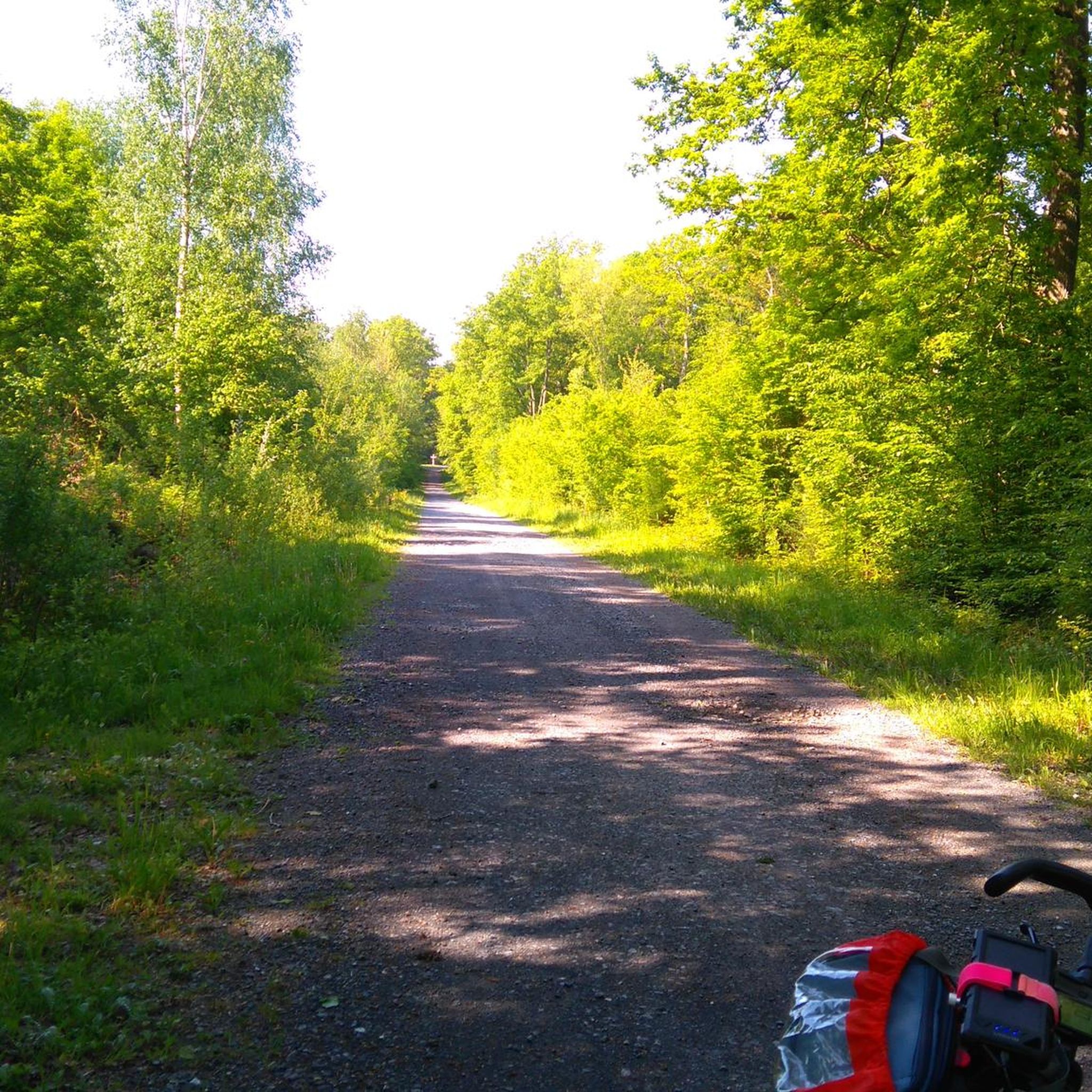
In the forest south of Saint-Nicolas-Aux-Bois, we encounter a small sacred monument, which, based on its intention, can be classified as a memorial cross. The metal cross located at the top of the monument, surrounded by trees, is comparatively small in relation to the towering, divided shaft. The base of the "Croix Sézinne" consists of two (three if you count the transition) stone elements: a square shaft at the bottom, a slightly projecting, tapered connecting piece in the middle section, and above it, a round shaft that supports the actual cross.
2
0

The Grottes des Roches de l'Ermitage are natural and artificial caves dug by erosion in the limestone rock. You can explore the two largest caves, with a length of 21 m and 36 m respectively, or admire the impressive stack of blocks which forms a large shelter on the side of the valley. The site is also rich in history and legend, as it is said to be where the Irish monk Goban settled in the 7th century and performed many miraculous healings.
2
0
Coucy Castle is a magnificent castle built in the 13th century by Enguerrand III, Lord of Coucy. It was one of the largest and most impressive castles in Europe, with a massive keep and four towers dominating the landscape. The castle was partially destroyed during the First World War, but its ruins still bear witness to its past glory. You can discover the castle and its history by participating in the Trail Enguerrand, a running race that takes you around the castle and its surroundings. The race is 30 km long, with 700 m of altitude difference, and it offers breathtaking views of the castle and the countryside. You can also opt for a shorter distance of 15 km, with 370 m of elevation gain. The race takes place in April and you can register online on the official website. By hiking this trail, you will not only get a good workout, but also a cultural and historical experience.
2
0
The Croix Sézinne in Saint-Nicolas-Aux-Bois is a historic monument located in the Saint-Gobain forest, in the Aisne department, in France. This is a cross which commemorates a medieval conflict between the monks of the neighboring abbey and the local lords.
2
0
The Grottes des Roches de l'Ermitage are natural and artificial caves dug by erosion in the limestone rock. You can explore the two largest caves, with a length of 21 m and 36 m respectively, or admire the impressive stack of blocks which forms a large shelter on the side of the valley. The site is also rich in history and legend, as it is said to be where the Irish monk Goban settled in the 7th century and performed many miraculous healings.
2
1
This medieval gate, built in the 13th century, was part of the impressive fortifications of Coucy-le-Château, a town once famous for its castle and its motto: "I am neither king, nor prince, nor count, I am the lord of Coucy ". The Porte de Laon is a massive structure with two round towers and an arched passage, defended by a drawbridge, a double portcullis and a barbican. You can admire the architecture and military devices of this ancient bastion, as well as the panoramic view of the city and the surrounding countryside.
3
0
The Croix Sézinne is a cross-shaped monument located in the Saint-Gobain forest, near the village of Saint-Nicolas-aux-Bois in France. It is a historical and cultural landmark which commemorates the death of three young Flemish lords captured and executed by the lord of Coucy in the 13th century.
2
0
Frequently Asked Questions
What historical sites can I explore around Amigny-Rouy?
The region offers several significant historical sites. You can visit Coucy Castle, a 13th-century fortress whose ruins provide a glimpse into its past as one of Europe's largest castles. Another notable site is Laon Gate (Coucy-le-Château-Auffrique), a medieval gate that was part of Coucy-le-Château's fortifications. Within Amigny-Rouy itself, the Église Saint-Quentin d'Amigny-Rouy features a 16th-century stained glass window, and the site of the Ancienne gare du tramway de Tergnier à Anizy - Pinon marks a historical transportation point.
What natural attractions are there to see near Amigny-Rouy?
Amigny-Rouy is rich in natural beauty. The Oise River forms the northern and northwestern boundary of the commune, and several smaller waterways like the Ruisseau de Servais and the Ru de Greve traverse the area. The southern part of the commune features a large forested area, alongside farmlands and wetlands. You can also explore the Hermitage Rock Caves, natural and artificial caves carved into limestone rock.
Are there walking or hiking routes near Amigny-Rouy's attractions?
Yes, there are various routes for walking and running. For example, you can find several running loops starting from Amigny-Rouy itself or nearby Sinceny. The forested areas, including the Saint-Gobain forest where Croix Sézinne is located, offer opportunities for walks. You can explore more options on the Running Trails around Amigny-Rouy guide.
Can I go cycling around Amigny-Rouy?
Absolutely. The region provides diverse cycling opportunities. There are numerous mountain biking trails, including loops through the Saint-Gobain Caves area, and road cycling routes that take you through picturesque landscapes, such as the 'View of the Castle' loop from Viry-Noureuil. For detailed routes, check the MTB Trails around Amigny-Rouy guide and the Road Cycling Routes around Amigny-Rouy guide.
Are there family-friendly attractions in the Amigny-Rouy area?
Yes, Coucy Castle is considered a family-friendly attraction. Its vast ruins and historical significance can be engaging for visitors of all ages. Exploring the natural features like the forested areas and the Hermitage Rock Caves can also be an adventurous outing for families.
What religious landmarks are present in Amigny-Rouy and its surroundings?
Amigny-Rouy is home to the Église Saint-Quentin d'Amigny-Rouy, a significant religious site with a notable 16th-century stained glass window. Additionally, a Calvaire (Calvary) is present within the commune. Nearby, you can visit Croix Sézinne, a cross-shaped monument in the Saint-Gobain forest commemorating a medieval conflict. The Saint-Sauveur Church of Coucy-le-Château-Auffrique is another historical religious building with origins dating back to the 12th century.
What do visitors enjoy most about the attractions around Amigny-Rouy?
Visitors appreciate the rich history and the impressive scale of sites like Coucy Castle, often highlighting its magnificent ruins and the historical context. The architectural details of Laon Gate and the serene, historical atmosphere of Croix Sézinne in the forest are also frequently mentioned. The area's blend of historical landmarks and natural beauty, such as the Hermitage Rock Caves, provides a diverse experience.
Are there any unique cultural or historical aspects of Amigny-Rouy?
Beyond its landmarks, Amigny-Rouy has a unique past linked to hemp retting, a traditional process for extracting fibers from hemp. The commune's coat of arms, adopted in 2002, also reflects its history, including a war cross, and the Monument aux morts stands as a tribute to the fallen.
What kind of forest areas can be found near Amigny-Rouy?
The southern part of Amigny-Rouy features a large forested area, which is part of a more extensive forest. This includes the Saint-Gobain forest, known for its historical significance and natural beauty, where you can find monuments like Croix Sézinne and explore various trails.
Are there any modern points of interest in Amigny-Rouy?
While rich in history, Amigny-Rouy also features a modern-day château (castle) situated on a hill overlooking the Oise valley. This château replaced the 19th-century Château de la Garenne, which was destroyed in 1917, offering a contemporary architectural presence in the landscape.
What is the significance of the Oise River to Amigny-Rouy?
The Oise River is a prominent natural feature, forming the northern and northwestern boundary of Amigny-Rouy. It contributes significantly to the commune's landscape, alongside other waterways and wetlands, offering scenic views and influencing the local ecosystem.
Most popular routes around Amigny-Rouy

Get inspired with the komoot mobile app


Explore more
Still not found the Highlight you’re looking for? See guides of the top attractions in other regions:
