The best road cycling routes around Grand-Fougeray
4.2
(26)
597
riders
115
rides
Road cycling routes around Grand-Fougeray offer a diverse landscape for cyclists. The region features varied elevations, ranging from 3 to 92 meters, providing a mix of flatter sections and gentle ascents. Routes often wind through charming countryside, characterized by lush flora and the presence of the River Chère along its southern border. Many cycling paths are well-paved, including greenways, ensuring a comfortable ride.
Best road cycling routes around Grand-Fougeray
- The most popular road cycling route is Château de Châteaubriant –…
Last updated: July 6, 2026
7
riders
64.0km
02:39
420m
420m
Moderate road ride. Good fitness required. Mostly well-paved surfaces and easy to ride.
7
riders
51.0km
02:14
380m
380m
Moderate road ride. Good fitness required. Mostly well-paved surfaces and easy to ride.

Sign up for free
5
riders
52.2km
02:12
330m
330m
Moderate road ride. Good fitness required. Mostly well-paved surfaces and easy to ride.
5
riders
30.6km
01:22
210m
210m
Easy road ride. Great for any fitness level. Mostly well-paved surfaces and easy to ride.
3.0
(1)
5
riders
53.5km
02:21
450m
440m
Moderate road ride. Good fitness required. Some segments of this route may be unpaved and difficult to ride.
Get access to more routes and recommendations from other explorers.
Sign up for free
Already have an account?
Our route recommendations are based on thousands of hikes, rides, and runs completed by other people on komoot.
Start today with a free account
Your next adventure awaits.
Login or Signup



Tips from the Community

Sorry for the Mouaisiens...
0
0
An ancient feudal fortress, the castle of Derval was considered in its time as one of the strongholds of the Marches of Brittany with its 9 towers. After experiencing prestigious sieges, including that of Du Guesclin, in 1598, it would fall under the axe of the Edict of Nantes which condemned it to demolition. The only remnant, the old keep, renamed Tour Saint-Clair and giving its name to the castle, still resists and bears witness today to the history of the castle known since the 11th century.
0
0
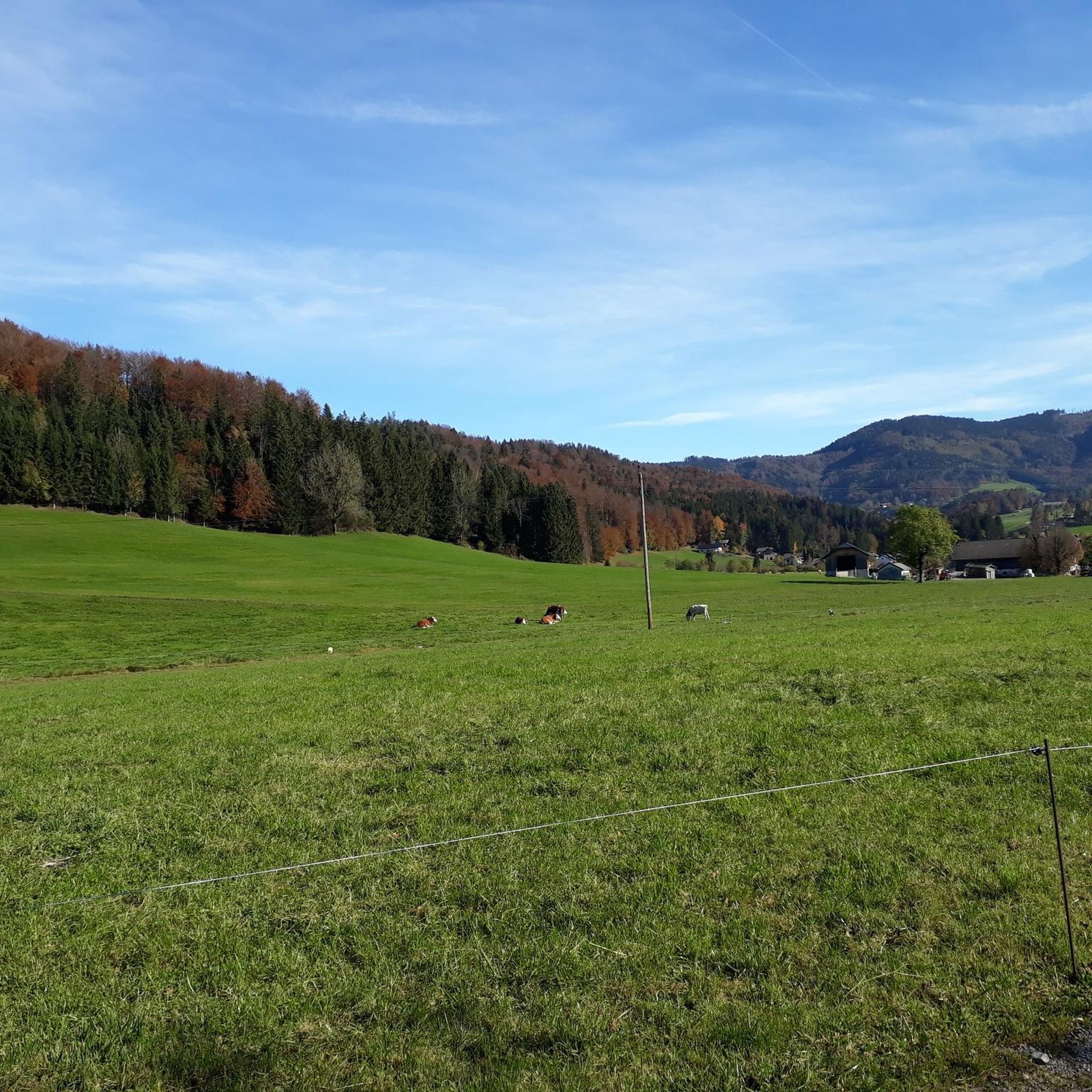
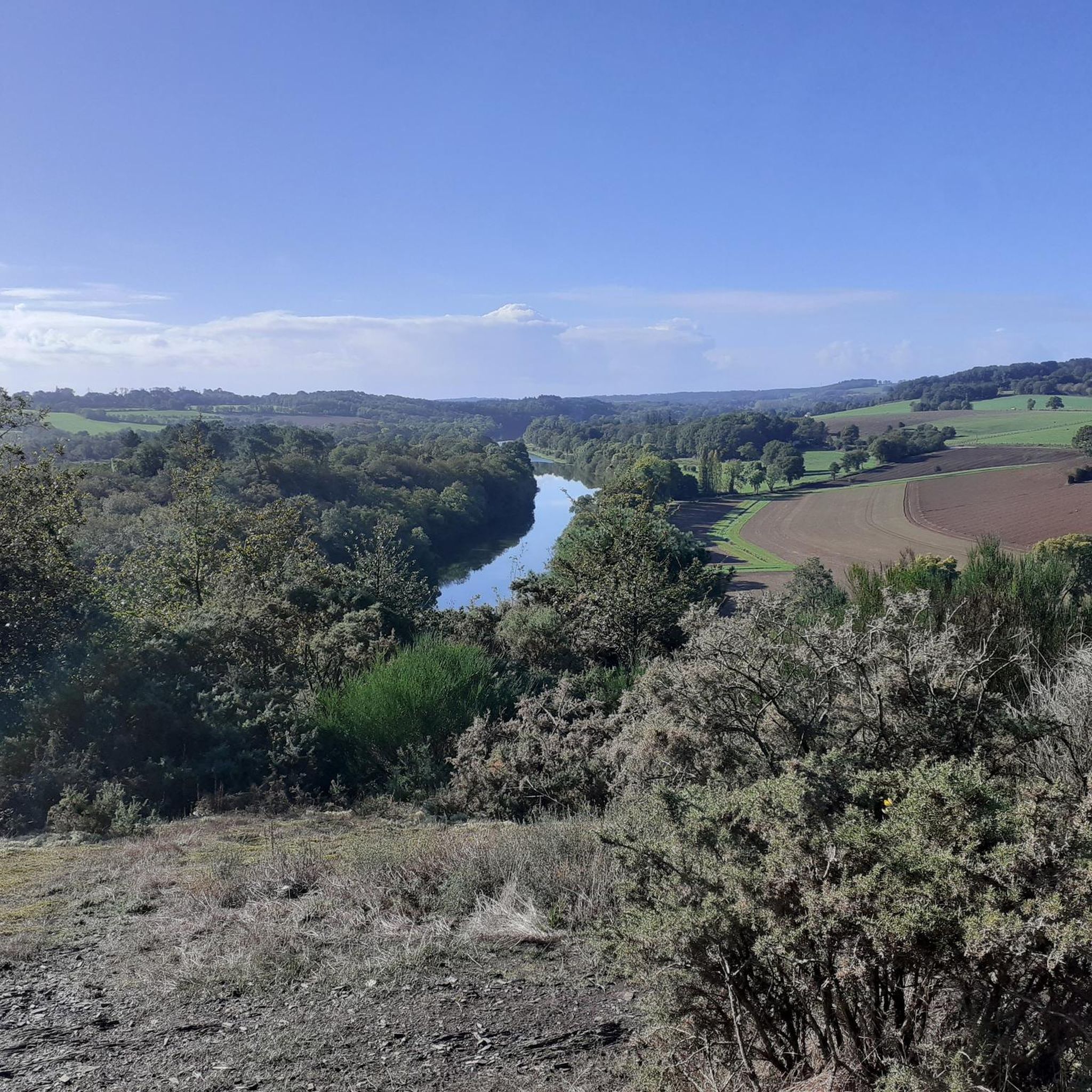
Small road with little traffic offering a clear view of the valley
0
0

The church, which consists of a large nave and two six-bay aisles, a transept, and a three-bay choir without an ambulatory, is 65 meters long. The transept is 26.50 m long, and the naves are 17.5 m wide. The bell tower is 65 meters high without the cross. It has a set of five bells made in 1895 by the Bollée foundry in Le Mans: Saint-Nicolas (the bourdon), weighing 4027 kg, playing the A of octave 2 Anne, weighing 1552 kg, playing the D of octave 3 Marie, weighing 1067 kg, playing the M of octave 3 Joséphine-Jeanne, weighing 726 kg, playing the F sharp of octave 3 Henriette-Victorienne, weighing 450 kg, playing the A of octave 3
0
0
The original chapel, initially dedicated to Notre-Dame, was built by Geoffroy IV, Baron of Châteaubriant, on the site where the cattle market was held from May to October until 1763. A text attests to its existence in 1263. [Threatening to fall into ruin, it was demolished in 1518, leaving only the choir of the old chapel standing. The place of worship was immediately rebuilt in a more spacious form using Châteaubriant schist (Nozay stone), based on the plans of Jean Delorme, brother of Philibert Delorme, thanks to the demolition of a neighboring house and the financial support of Jean de Laval. However, the latter's poor financial situation meant that by 1530, only the nave of the building had been built. At the death of Françoise de Foix in 1537 and Jean de Laval in 1543, the Notre-Dame chapel still lacked a framework. It was not until 1551 that the final work was undertaken by Baron Anne de Montmorency. The dedication of the new place of worship took place ten years later, on November 5, 1561, in the presence of the coadjutor of the Bishop of Nantes, and the name of Notre-Dame was changed to Saint-Nicolas, for an unknown reason. On the same day, the body of Jean de Laval, then encased in a lead reliquary, was transported from the castle chapel to the new building. Jean de Laval had wished to see the chapel erected as a collegiate church, but this wish was not granted. However, the building, as vast as a church, shared the honors of worship with the Church of Saint-Jean de Béré, which was then the parish church of the town, until the Revolution. Indeed, the Saint-Nicolas chapel, although of undeniable architectural value, was not suitable for worship in a parish as large as that of Châteaubriant. Nevertheless, in the 15th and 16th centuries, masses, vespers, and many ceremonies were held in the chapel for reasons of convenience, as it was closer to the town of Châteaubriant, while baptisms were all celebrated at Saint-Jean de Béré. At the end of the 19th century, the church, which became the parish seat in 1801, was completely rebuilt. The architect Eugène Boismen drew up the plans, inspired by those of the Saint-Nicolas basilica in Nantes, one of the first neo-Gothic projects in France, which was beginning to inspire architects throughout the west of the country. The foundation stone was blessed on April 25, 1875, by Bishop Fournier of Nantes. The choir, sacristies, transept, and five bays were only completed at the time of the consecration, which was performed by his successor, Bishop Le Coq, on February 1, 1881. The foundations of the bell tower and the remaining bay began in June 1892, based on plans by architect François Bougoüin. The tower and spire were completed in August 1894.
0
0
nighttime. A medieval fortress and Renaissance building, Châteaubriant Castle recounts ten centuries of history. In the Middle Ages, Châteaubriant Castle was at the heart of the Marches of Brittany. It served as a stronghold defending the duchy against the Kingdom of France. The keep, ramparts, seigneurial chapel, and the medieval courtyard lodgings still bear witness to the power of this fortress. In the 16th century, the bailey became a residence opening onto the gardens. The castle gardens are open to the public from February to December. Visit maps are available at the reception-shop for a better understanding of the site. A 3D space allows you to discover, with free access, the architectural evolution of the castle, from the 11th century to the present day. From February to December, heritage mediators will accompany you on an in-depth tour of the castle, its keep, and its gardens. During school holidays, family workshops allow parents and children to develop their creativity or spark their curiosity! Opening days: Gardens are open to the public, Wednesday to Sunday: 9am-6pm (February-March and October-December) or 9am-7:30pm (April-September). Prices: - Free entry for those over €0.00 (Free access to the château gardens) - Individual adult rate from €3.00 to €6.00 (Guided tours, free for those on minimum income and special cards) - Individual child rate from €0.00 (Guided tours free for those under 26) - Individual child rate from €0.00 (Guided tours free for those under 26) Child from €4.00 to €8.00 (Family activity) - Adult group rate from €5.00 (From 15 people) Payment methods: Credit cards - Bank and postal checks - Cash Tours Self-guided tours (individual): Yes Guided tours (individual): Yes Average visit duration (individual): 1 hour Self-guided tours (groups): Yes Guided tours on request (groups): Yes Guided tours (groups): Yes Average visit duration (groups): 1 hour Languages: Tour: French, English - Signs: French, English Services: Interactive kiosk - Shop - WiFi Additional information: Groups of 15 people or more are welcome - Pets allowed (Dogs on leashes are allowed in the park.) - Points of interest visible without a tour Access Location: SNCF train station: 0.5 km
0
0

This recently built church (end of the 19th century) is visible from afar with its 65 meters in height.
0
0
The castle is a self-guided tour. A little tip: there are bike racks inside the castle, just beyond the entrance.
1
0
Frequently Asked Questions
How many road cycling routes are available around Grand-Fougeray?
There are over 100 road cycling routes available around Grand-Fougeray, catering to various preferences and skill levels. These include 15 easy routes, 84 moderate routes, and 16 more challenging options.
What kind of terrain can I expect on road cycling routes in Grand-Fougeray?
Road cycling routes in Grand-Fougeray feature diverse topography, with elevations ranging from 3 to 92 meters. You'll find a mix of flatter sections and gentle ascents and descents, making for engaging rides. Many paths are well-paved, including greenways, ensuring a comfortable experience through charming countryside and lush flora.
Are there easy road cycling routes suitable for beginners or families in Grand-Fougeray?
Yes, Grand-Fougeray offers 15 easy road cycling routes, ideal for beginners or families. The region's greenways, often built on old railway lines, provide smooth, car-free paths with minimal altitude changes, perfect for relaxed cycling. An example of an easier route is the Duguesclin Tower loop from La Dominelais, which is 19.2 miles (30.9 km) long.
What historical landmarks or points of interest can I see while road cycling near Grand-Fougeray?
Many routes pass by significant landmarks. The most prominent is the Duguesclin Tower, a 13th-century castle fort. Routes like the Duguesclin Tower loop from Le Bas Luat specifically highlight this historic monument. You might also encounter traditional Breton architecture and other historical elements in the surrounding villages.
Are there any circular road cycling routes in the area?
Yes, many road cycling routes around Grand-Fougeray are designed as loops, allowing you to start and end at the same point. Examples include the Château de Châteaubriant – Châteaubriant Castle loop from Mouais and the Valley Pond – Duguesclin Tower loop from Grand-Fougeray.
Where can I find parking for road cycling routes in Grand-Fougeray?
As a 'village d'etape,' Grand-Fougeray is equipped to welcome travelers, including cyclists. You can typically find parking in the town center or near the starting points of popular routes. Specific parking information for individual routes is often available on their respective komoot tour pages.
What is the best time of year for road cycling in Grand-Fougeray?
The spring and autumn months generally offer the most pleasant conditions for road cycling in Grand-Fougeray, with milder temperatures and beautiful natural scenery. Summer can also be enjoyable, though it may be warmer. Always check the local weather forecast before heading out.
What do other cyclists say about road cycling in Grand-Fougeray?
The road cycling routes in Grand-Fougeray are highly rated by the komoot community, with an average score of 4.2 stars from over 20 reviews. Cyclists often praise the varied terrain, the well-maintained paths, and the charming countryside views.
Are there challenging road cycling routes for experienced cyclists?
Yes, for experienced cyclists seeking more of a challenge, there are 16 difficult road cycling routes around Grand-Fougeray. These routes typically feature more significant elevation gains and longer distances, providing a robust workout amidst the scenic landscape.
What are some scenic routes that offer good viewpoints or natural features?
Many routes wind through the lush countryside, offering picturesque views. The River Chère forms part of the commune's southern border, suggesting scenic routes along its banks. You can also explore routes that pass by natural attractions like the Vilaine Loop or the View of the Messac mill from the footbridge, providing beautiful natural vistas.
Are there options for longer road cycling tours around Grand-Fougeray?
Yes, Grand-Fougeray is well-connected to regional cycling networks, offering options for longer tours. Routes like the Abbaretz mine spoil tip – Mine Lake loop from Mouais, at 51.9 km, provide a substantial ride. The broader Brittany region also features extensive routes, including those connecting the Channel to the Atlantic Ocean, which can be accessed for multi-day trips.
Can I find places to eat or stay along the road cycling routes?
Grand-Fougeray holds the 'village d'etape' label, indicating it's a welcoming stopover point with amenities for travelers. You'll find options for cafes, pubs, and accommodation within the commune. Some routes may also pass by specific highlights like the Guipry-Messac Mill, which can offer dining opportunities.
Most popular routes around Grand-Fougeray
Most popular attractions around Grand-Fougeray

Get inspired with the komoot mobile app


Explore more
Browse the best Road cycling routes in other regions.
