The best road cycling routes around Saint-Varent
4.5
(17)
1,240
riders
393
rides
Road cycling routes around Saint-Varent traverse a landscape characterized by gently rolling hills and open rural areas, offering varied terrain for cyclists. The region features a network of quiet country roads that connect small villages and historical sites. Elevation gains are moderate, providing a good balance of challenge and scenic cruising. The area's topography is suitable for both endurance rides and more relaxed outings through the French countryside.
Best road cycling routes around Saint-Varent
- The most popular road cycling route…
Last updated: July 7, 2026
28
riders
49.2km
02:56
390m
390m
Moderate road ride. Good fitness required. Some segments of this route may be unpaved and difficult to ride.
9
riders
Moderate road ride. Good fitness required. Mostly well-paved surfaces and easy to ride.

Sign up for free
9
riders
29.0km
01:17
250m
250m
Easy road ride. Great for any fitness level. Mostly well-paved surfaces and easy to ride.
5.0
(1)
5
riders
Easy road ride. Great for any fitness level. Mostly well-paved surfaces and easy to ride.
5
riders
69.1km
02:57
450m
450m
Moderate road ride. Good fitness required. Some segments of this route may be unpaved and difficult to ride.
Get access to more routes and recommendations from other explorers.
Sign up for free
Already have an account?
Our route recommendations are based on thousands of hikes, rides, and runs completed by other people on komoot.
Start today with a free account
Your next adventure awaits.
Login or Signup



Tips from the Community

The Church of Notre-Dame de La Peyratte was built in the early 12th century by the monks of the Abbey of Sainte-Croix de Talmont in the Diocese of Luçon. Its austerity, simplicity, and choice of building materials make it a fine example of the churches of Gâtine. The work involves the general restoration of the church in five phases, beginning with the exterior and then the interior. The project management was entrusted to the Marie-Pierre Nigués agency, a heritage architect. A diagnostic study conducted in 2016 by the Niguès firm estimated the total cost of the work at €1,619,783 excluding tax. Prior to the start of work, the church underwent an archaeological assessment in 2018 and a study of the painted decorations in September 2019. The Nouvelle-Aquitaine Regional Directorate of Cultural Affairs is subsidizing the first phase of exterior work, 45% in 2017, 50% in 2021, and 40% in 2022. The municipality is benefiting from an exceptional Local Investment Support Grant of €120,000 for the entire exterior work. The Nouvelle-Aquitaine Region and the Deux-Sèvres Departmental Council are financial partners in the project. A subscription is also open on the Heritage Foundation's website. The Regional Conservation of Historic Monuments – Poitiers site and the Deux-Sèvres Departmental Architecture and Heritage Unit of the DRAC are providing scientific and technical oversight for this restoration.
0
0
A church dedicated to Saint Peter is documented in the 9th century in the village. A Romanesque church was then built in the 11th century on the site of the current Saint-Honoré church, but with a different orientation. Initially dedicated to Saint Mathias, it was renamed Saint Honoré in the 15th century, a martyr from the Thénezay area, and houses the relic of his skull. The church was remodeled several times, notably in 1685, 1753, and 1784. The church was closed from 1791 to 1802. Its poor condition forced its complete demolition at the end of the 19th century. It was rebuilt between 1901 and 1903 in the neo-Romanesque style with a tall bell tower, according to plans by the architect Girard de Niort. It was consecrated on October 17, 1903, by Bishop Pelgé. It has three naves lit by richly colored stained-glass windows. The choir stalls, dating from the 18th century, were purchased in 1825 by Abbot de la Roche, parish priest; they came from the deconsecrated Cistercian abbey of Pin de Béruges. They were replaced in the current church in 1903. Two years later, the church was confiscated by law from the diocese and became the property of the municipality, which is now responsible for its maintenance. The white marble high altar with columns, donated in 1903 by the Countess of Talhouët-Roy, was sold in the 1970s and replaced with a wooden table facing the people. The stained-glass windows in the choir come from the Touan house in Paris and depict medallions depicting the life of Jesus. In 2003, the main bell collapsed; A new bell was recast from the old one by the Bollée d'Orléans firm and financed by subscription. The Bishop of Poitiers blessed it on October 11, 2003. Today, the parish of Thénezay no longer exists, and its former territory is part of the parish group of Saint-Jacques-en-Gâtine (comprising about sixty bell towers). Sunday Mass is now celebrated only occasionally in this village of nearly 1,400 inhabitants. The church is open for weddings and funerals.
0
0
The contemporary art center of national interest, La Chapelle Jeanne d’Arc de Thouars, is today a leading venue for contemporary art in the western region. Along with the Château d’Oiron and the Syndicat Mixte de la Vallée du Thouet, which runs a program of public commissions for contemporary works, the art center's work is carried out in partnership across the entire territory of the Pays Thouarsais community of communes and, more broadly, in the northern part of the Nouvelle-Aquitaine region. Within the region, the art center is a recognized player in the Astre plastic and visual arts network. Developing an artistic project that takes into account its geographical location and its architectural envelope, a neo-Gothic chapel, the art center maintains a privileged relationship with the heritage of Thouars. Guest artists, hosted for residencies or exhibitions, appropriate the chapel space by creating an original work designed for the venue. They also bring their perspective to the city, urban planning, landscape, and rural areas of the Thouars region and the Thouet Valley. Since 1993, nearly a hundred artists have been invited for residencies or exhibition projects. In recent years, the art center has paid particular attention to emerging artists from art schools, particularly those from the regional Le Grand Huit network. In addition to its programming, the art center also engages in outreach activities in the form of off-site exhibitions, workshops, and events (meetings, lectures, and workshops). A mobile device, La Mar(g)elle, was created in 2015 by the artist Marie-Ange Guilleminot to offer interventions in partner locations, particularly within schools and structures in the social and medical sectors. For its educational action, the art center benefits from the action of the municipal art school of Thouars, to which it is connected within the visual arts department of the City of Thouars.
0
0

Dating from the 13th century, at the foot of the city ramparts, this bridge ultimately offers the best view of the Château de Thouars.
0
0

This bridge allows you to cross the Thouet and reach Saint Jacques De Thouars. The view there is magnificent! There is a good hill to climb after the bridge, be careful when choosing the pinion!
1
0

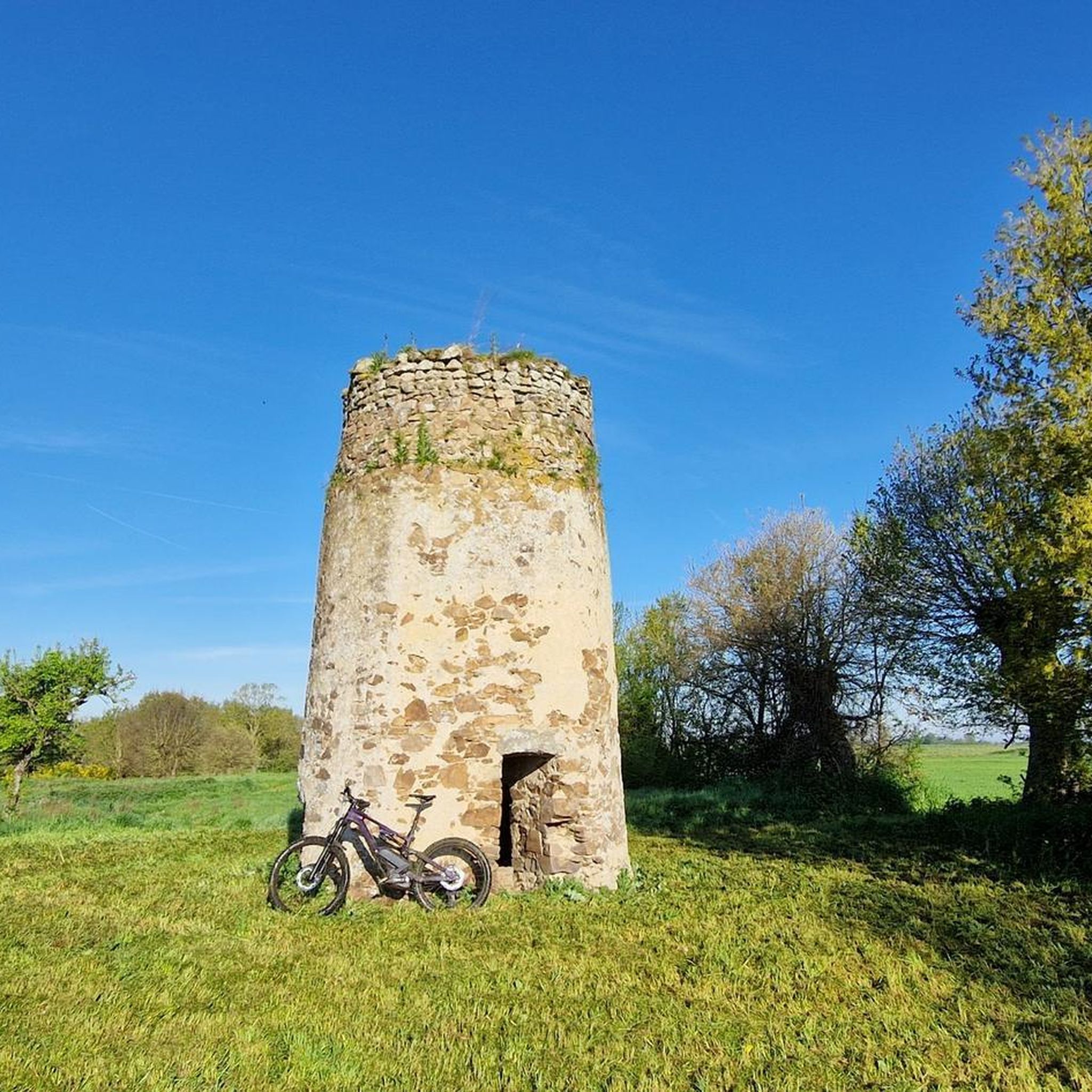
Without the characteristic wings - which used to capture the power of the wind to set the heavy millstones in motion - the once proud windmill, which was certainly impressive at the time, is missing an essential architectural element. From a distance, the observer can see its modern successors: within sight of the former windmill, the slender towers and turbine blades of a modern wind farm, which is used to generate electricity, rise into the sky.
2
0
In the proverbial "good old days" of centuries past, this (former) windmill, standing in a very prominent position in the vast landscape, must have made a deep impression on the viewer. However, this changed a long time ago: the no longer intact tower stump is missing the wings, precisely those elements that were once so fundamental to the appearance of those four-armed giants (at least that is what the character "Don Quixote" invented by Miguel Cervantes thinks in one of the famous Spanish author's bizarre stories).
3
0

The Chouans bridge on the Thouet is a medieval bridge which crosses the Thouet river between Thouars and Saint-Jean-de-Thouars. The bridge was fortified in the 15th century and witnessed the passage of the Vendée army during the French Revolution. You can admire the architecture of the bridge which has two arches and triangular spouts on the piers. You can also enjoy the view of the river and the castle of the Dukes of La Trémoille on the hill. The bridge is classified as a historic monument and has been restored several times.
3
0
Frequently Asked Questions
How many road cycling routes can I find around Saint-Varent?
There are nearly 400 road cycling routes available around Saint-Varent, offering a wide variety of options for different skill levels and preferences.
What kind of terrain can I expect on road cycling routes in Saint-Varent?
The region around Saint-Varent is characterized by gently rolling hills and open rural areas. You'll find a network of quiet country roads connecting small villages and historical sites, with moderate elevation gains that offer a good balance of challenge and scenic cruising through the French countryside.
Are there easy road cycling routes suitable for beginners in Saint-Varent?
Yes, Saint-Varent offers a good selection of easy road cycling routes. For example, the Airvault loop from Repéroux is an easy 18.2-mile (29.3 km) path with moderate elevation, perfect for a relaxed ride.
Are there any longer or more challenging road cycling routes for experienced cyclists?
Absolutely. For those seeking a longer ride, the Saint-Médard Church of Thouars – Thouars loop from Saint-Varent covers 58.7 miles (94.5 km) with over 600 meters of elevation gain, providing a more demanding experience through varied landscapes.
What are some popular circular road cycling routes in the area?
Many routes around Saint-Varent are circular, allowing you to start and end in the same location. Popular options include the Saint-Médard Church of Thouars – Airvault loop from Luzay, a 30.6-mile (49.2 km) route, or the longer Thouars – Saint-Médard Church of Thouars loop from Luzay at 48.4 miles (77.9 km).
What can I see along the road cycling routes around Saint-Varent?
The routes often pass by charming historical sites and natural beauty. You might encounter landmarks such as the Small Church of Saint-Généroux (10th century), the historic town of Thouars, or the picturesque Montguimier Mill. Many routes also offer views of the Pont des Chouans on the Thouet.
Are there any castles or historic buildings to see while cycling?
Yes, the region is rich in history. You can cycle past impressive structures like the Château de La Coindrie or the Château de Saint-Loup. The Saint-Loup-Lamairé – La Roche-Faton Castle loop from Repéroux specifically features a historic castle along its path.
What is the best time of year for road biking in Saint-Varent?
The spring and autumn months generally offer the most pleasant conditions for road cycling in Saint-Varent, with mild temperatures and beautiful scenery. Summer can also be enjoyable, though it's advisable to start earlier in the day to avoid the midday heat.
What do other road cyclists say about the routes in Saint-Varent?
The road cycling routes in Saint-Varent are highly rated by the komoot community, with an average score of 4.5 stars. Cyclists often praise the quiet country roads, the varied terrain with rolling hills, and the charming French countryside views.
Are there options for family-friendly road cycling routes?
While specific 'family-friendly' designations aren't always explicit for road cycling, the region's numerous easy and moderate routes on quiet country roads, such as the Airvault loop from Repéroux, can be suitable for families with older children who are comfortable with road cycling.
Where can I typically find parking for road cycling routes in Saint-Varent?
Many routes start from or pass through small villages and towns like Luzay, Repéroux, or Saint-Varent itself. You can often find public parking available in these areas, particularly near village centers or local amenities, which serve as convenient starting points for your ride.
Most popular routes around Saint-Varent
Most popular attractions around Saint-Varent

Get inspired with the komoot mobile app


Explore more
Browse the best Road cycling routes in other regions.
