Attractions and Places To See around Germignac - Top 8
Best attractions and places to see around Germignac include a variety of historical sites and natural monuments. This region offers opportunities for exploring ancient structures and enjoying scenic viewpoints. Germignac features 8 notable locations, suitable for those interested in cultural heritage and outdoor exploration. The area provides diverse options for visitors to discover.
Best attractions and places to see around Germignac
- The most popular attractions is A bell tower with a stone spire covered in scales, a historical church feature that dates back to the 12th century. This Romanesque bell tower, part of the Saint-Pierre church, was completed in the 19th century with surrounding pinnacles and is listed as a Historic Monument.
- Another must-see spot is Moulin de Cognac (Verrières), an old windmill located amidst vineyards. This site offers a rest stop in the Grande Champagne region, known for its grapes.
- Visitors also love Dolmen of Saint-Fort, a historical and natural monument. This dolmen is notable for its unusual height of more than 2 meters and a crowning table weighing approximately 40 tons.
- Germignac is known for historical sites, ancient windmills, and natural monuments. The region offers a variety of attractions to see and explore, catering to different interests.
- The attractions around Germignac are appreciated by the komoot community, with 8 upvotes and 16 photos shared by visitors.
Last updated: June 24, 2026
A bell tower with a stone spire covered in scales
Highlight • Other
and has only retained its old choir, its facade bell tower and its south aisle.
A major restoration campaign was carried out in the years 1865-1868. It was at this time that the nave and the side aisles were rebuilt.
The choir with a flat apse pierced by a large bay window in the Flamboyant Gothic style, is covered with a vault of warheads with liernes. It was built in the middle of the 15th century by the Valois of Orléans, whose arms appear in the keystone. A bay with four mullions and a flamboyant network to the east, and a simple lancet bay on the other sides illuminate it.
On the facade, established in projection and the width of the porch, opens the door with three rollers, formed of sausages and cavets, on columns, with capitals with foliage and foliage, surrounded by a cord loaded with festoons. Above is the square bell tower, presenting to the west a foliated frieze, a cornice and a blind arcade, received by seven columns with capitals. Set back, there are two floors adorned with five columns on the corners and two intermediate ones, rising to the top. The first is pierced on each side by two semicircular arches. The second floor is open with two third-point bays, on columns. A conical spire completes the bell tower.
The beautiful bell tower with a stone spire covered with scales belongs to the original Romanesque church. It was completed in the 19th century by four small pinnacles surrounding the spire. Placed to the west of the building, it now serves as a bell tower. The floor covered with a stone barrel vault opening onto the nave has two capitals from the first half of the 12th century; one of them represents two men leaning against each other whose hands are eaten by monsters. A 12th century gallery exists above the porch, the width of the nave; Originally this platform extended over the aisles which extended along the alignment of the porch.
The Romanesque facade and bell tower, as well as the Gothic choir, have been listed as Historic Monuments since 1932.
Translated by Google •
Tip by

Dolmen of Saint-Fort
Highlight • Historical Site
Translated by Google •
Tip by

Sign up now to discover places like this
Get recommendations on the best single tracks, peaks, & plenty of other exciting outdoor places.
Sign up for free
Saint-Martin Church of Chadenac
Highlight • Religious Site
The church is built according to an elongated plan, with a single nave and a flat chevet. The cupolas and portals are among the remarkable elements of this church.
The gable facade and three levels of arcades is richly decorated. The arched and coved central portal is flanked by two equally arched niches, each surmounted by a group sculpted in bas-relief. Above is a level of five blind arcades, of which the central one is openworked with a semicircular bay, then still above a level of six blind arcades. The gable is flanked by two openwork stone pinnacles. The square bell tower is located on the last Romanesque span to the east of the nave. The spire that crowns its bell tower pierced with bays on two levels is a work of the architect Paul Abadie (1812 - 1884).
The Saint-Martin church belongs to the series of domed churches in the Charente valley: four domes on pendentives of the nave overhang the four bays. The elevation is on two levels with a level of large blind arches set against the gutter walls, and a level of large windows. The Gothic chevet is rectangular. Two ribbed vaults from the 13th century cover its two bays.
A major restoration campaign was carried out in the 19th century
Paul Abadie (Jr.) was born on November 9, 1812 in Paris. He entered the École des Beaux-Arts in 1835 under the direction of Monsieur Achille Leclère. Participating in the architectural rediscovery of the Middle Ages, Abadie was known to be interested in the restoration of medieval monuments and buildings.
In 1845, he became second inspector of the restoration of Notre-Dame de Paris, under the direction of the architects Violet le Duc and Lassus. In 1862, he was appointed diocesan architect of the Saint-André cathedral in Bordeaux. In 1872, he became general inspector of diocesan buildings, then in 1874 diocesan architect of Paris, replacing Eugène Viollet-le-Duc. In 1874 he also replaced him as architect of Notre-Dame de Paris and in 1875 he was elected a member of the Académie des Beaux Arts.
Abadie began the Basilica of the Sacred Heart, but he died during its construction, on August 3, 1884, in Chatou (Yvelines). Apart from ecclesiastical and state commissions, Abadie is known to have accepted only one commission private, the Chateau de Mailleberchie, in 1875, which he designed in great detail, as a complete neo-medieval work of art, including stone carvings, gargoyles, stained glass. , metalwork, wood carvings, furniture, upholstery, wall fabrics and wallpapers.
Translated by Google •
Tip by
Moulin d'Arthus and panoramic view
Highlight • Monument
Translated by Google •
Tip by
Moulin de Cognac (Verrières)
Highlight • Other
Translated by Google •
Tip by
Sign up for free to discover even more attractions around Germignac.
Sign up for free
Already have an account?
Start today with a free account
Your next adventure awaits.
Login or Signup



Tips from the Community

These ancient windmills are the best evidence that people were clever enough to harness the power of the wind centuries ago - long before the discovery of electricity and the resulting inventions. So what is celebrated today as modern (so-called green or renewable) energy is essentially “old hat” in a new guise.
1
0

The hunebed stands on a ledge halfway up the hill. The tumulus which covered it has disappeared. This dolmen is of an imposing and unusual height in the region. The deck table rests alone on three perfectly square pillars 2.20 m high. Several orthostats show traces of wear or write-off attempts by stonemasons [ 2 ] . All orthostats are of shell limestone [ 3 ] . The table, in sandstone , measures 5.40 meters long and 4.40 meters wide for a maximum thickness of 0.90 m, it weighs about 40 tons. The room opens to the southeast, the presumed entrance corridor that originally existed has completely disappeared [ 2 ] . The plan of the burial chamber seems to have been dictated by the shape of the deck table, making it a totally atypical dolmen [ 4 ] . The dolmen has been emptied a long time ago as it has been listed as such since 1826
2
0

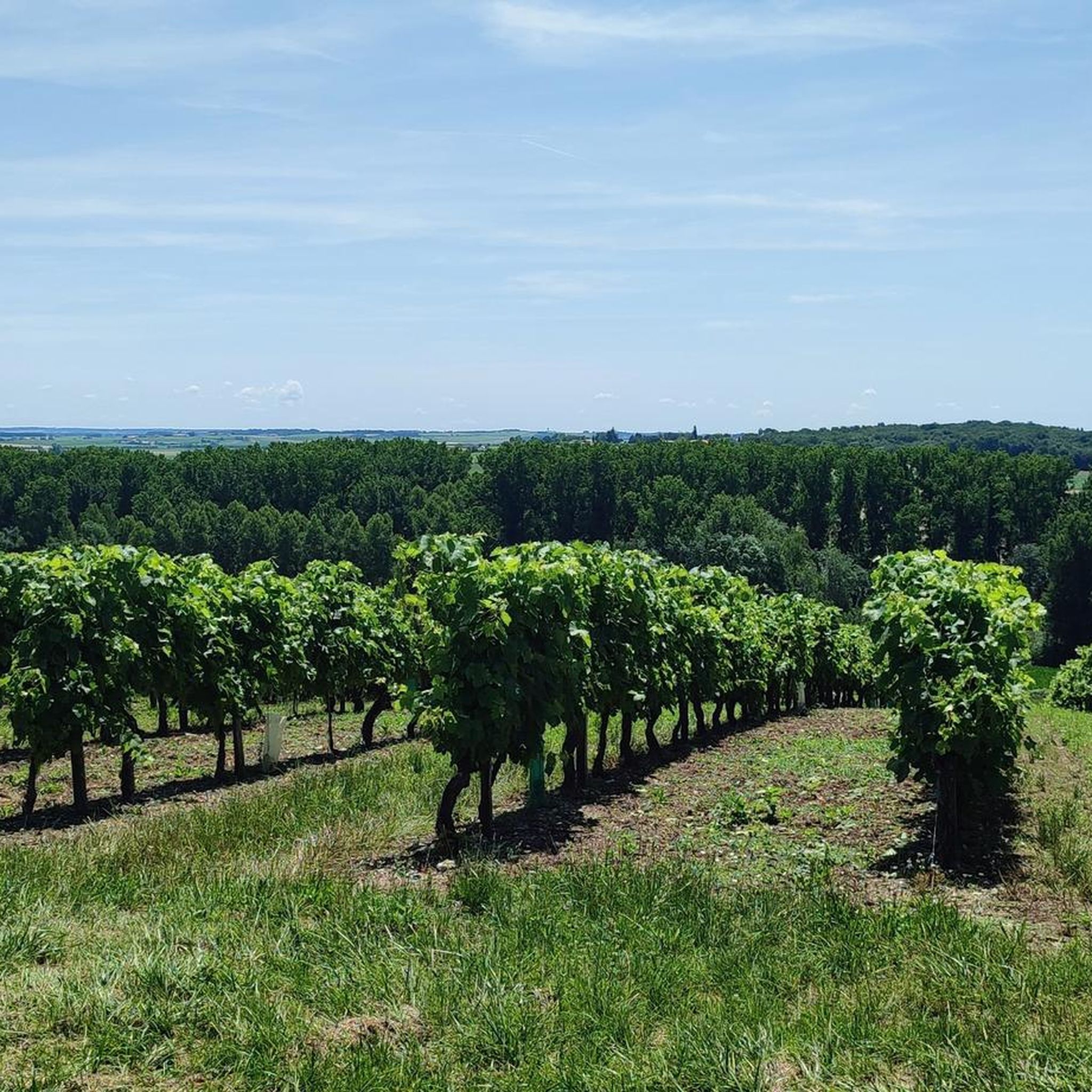
An old windmill with breathtaking panoramic views.
2
0
This dolmen has an unusual and imposing height of more than 2m high. The crowning table at the top would weigh 40 tons.
3
1
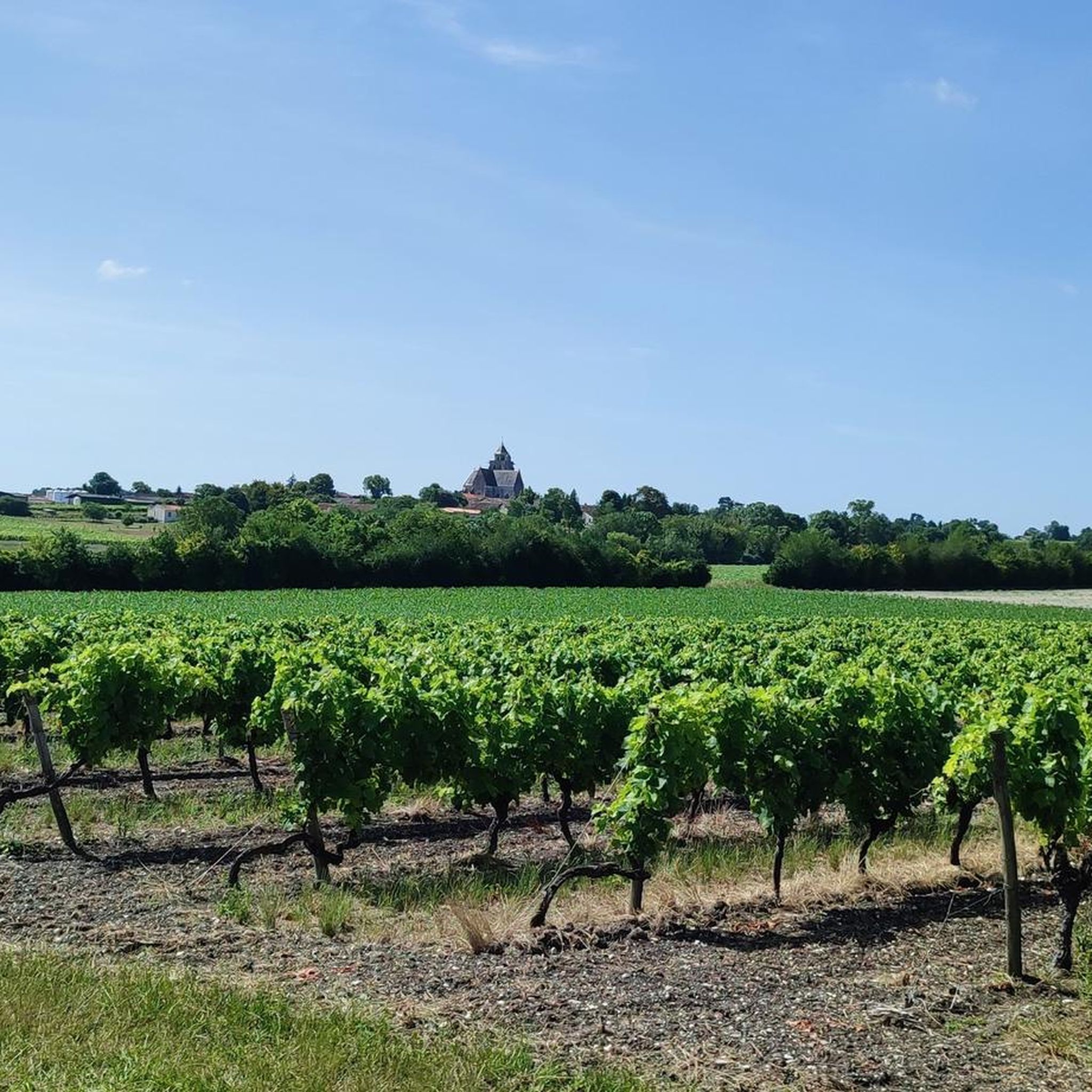
An old windmill in the middle of the vineyards. Without her sails, it's a lovely place to stop and admire her.
3
0
An old windmill with breathtaking panoramic views.
3
0

Church was built in the 12th century but its apse was rebuilt in the 13th century. Damaged during the 100 years war, it was restored for the first time in the 18th century, then a second time in the 19th century, but maintenance is still necessary today. The church is built according to an elongated plan, with a single nave and a flat chevet. The cupolas and portals are among the remarkable elements of this church. The gable facade and three levels of arcades is richly decorated. The arched and coved central portal is flanked by two equally arched niches, each surmounted by a group sculpted in bas-relief. Above is a level of five blind arcades, of which the central one is openworked with a semicircular bay, then still above a level of six blind arcades. The gable is flanked by two openwork stone pinnacles. The square bell tower is located on the last Romanesque span to the east of the nave. The spire that crowns its bell tower pierced with bays on two levels is a work of the architect Paul Abadie (1812 - 1884). The Saint-Martin church belongs to the series of domed churches in the Charente valley: four domes on pendentives of the nave overhang the four bays. The elevation is on two levels with a level of large blind arches set against the gutter walls, and a level of large windows. The Gothic chevet is rectangular. Two ribbed vaults from the 13th century cover its two bays. A major restoration campaign was carried out in the 19th century Paul Abadie (Jr.) was born on November 9, 1812 in Paris. He entered the École des Beaux-Arts in 1835 under the direction of Monsieur Achille Leclère. Participating in the architectural rediscovery of the Middle Ages, Abadie was known to be interested in the restoration of medieval monuments and buildings. In 1845, he became second inspector of the restoration of Notre-Dame de Paris, under the direction of the architects Violet le Duc and Lassus. In 1862, he was appointed diocesan architect of the Saint-André cathedral in Bordeaux. In 1872, he became general inspector of diocesan buildings, then in 1874 diocesan architect of Paris, replacing Eugène Viollet-le-Duc. In 1874 he also replaced him as architect of Notre-Dame de Paris and in 1875 he was elected a member of the Académie des Beaux Arts. Abadie began the Basilica of the Sacred Heart, but he died during its construction, on August 3, 1884, in Chatou (Yvelines). Apart from ecclesiastical and state commissions, Abadie is known to have accepted only one commission private, the Chateau de Mailleberchie, in 1875, which he designed in great detail, as a complete neo-medieval work of art, including stone carvings, gargoyles, stained glass. , metalwork, wood carvings, furniture, upholstery, wall fabrics and wallpapers.
0
0
From the 12th to the 15th century, the parish church of Saint-Pierre was part of the former diocese of Saintes. The Romanesque church underwent major renovations in the Gothic period (nave, chancel). It was largely destroyed in 1562, during the Wars of Religion and has only retained its old choir, its facade bell tower and its south aisle. A major restoration campaign was carried out in the years 1865-1868. It was at this time that the nave and the side aisles were rebuilt. The choir with a flat apse pierced by a large bay window in the Flamboyant Gothic style, is covered with a vault of warheads with liernes. It was built in the middle of the 15th century by the Valois of Orléans, whose arms appear in the keystone. A bay with four mullions and a flamboyant network to the east, and a simple lancet bay on the other sides illuminate it. On the facade, established in projection and the width of the porch, opens the door with three rollers, formed of sausages and cavets, on columns, with capitals with foliage and foliage, surrounded by a cord loaded with festoons. Above is the square bell tower, presenting to the west a foliated frieze, a cornice and a blind arcade, received by seven columns with capitals. Set back, there are two floors adorned with five columns on the corners and two intermediate ones, rising to the top. The first is pierced on each side by two semicircular arches. The second floor is open with two third-point bays, on columns. A conical spire completes the bell tower. The beautiful bell tower with a stone spire covered with scales belongs to the original Romanesque church. It was completed in the 19th century by four small pinnacles surrounding the spire. Placed to the west of the building, it now serves as a bell tower. The floor covered with a stone barrel vault opening onto the nave has two capitals from the first half of the 12th century; one of them represents two men leaning against each other whose hands are eaten by monsters. A 12th century gallery exists above the porch, the width of the nave; Originally this platform extended over the aisles which extended along the alignment of the porch. The Romanesque facade and bell tower, as well as the Gothic choir, have been listed as Historic Monuments since 1932.
0
0
Frequently Asked Questions
What historical sites can I visit around Germignac?
Germignac is rich in history. You can explore the ancient A bell tower with a stone spire covered in scales, part of the 12th-century Saint-Pierre church, which is a listed Historic Monument. Another significant historical monument is the Dolmen of Saint-Fort, notable for its imposing height and 40-ton crowning table. The Saint-Martin Church of Chadenac, a 12th-century domed church, also offers a glimpse into the region's past.
Are there any natural monuments or unique geological features to see?
Yes, the Dolmen of Saint-Fort is both a historical and natural monument. Its unusual height of over 2 meters and massive 40-ton crowning table make it a remarkable sight in the landscape.
What kind of outdoor activities can I do near Germignac's attractions?
The area around Germignac offers various outdoor activities, particularly cycling. You can find numerous routes for MTB Trails, Road Cycling, and Gravel biking, allowing you to explore the vineyards and countryside.
Are there family-friendly attractions in the Germignac area?
Yes, several attractions are suitable for families. The Dolmen of Saint-Fort is an intriguing historical and natural monument that can spark children's curiosity. The Saint-Martin Church of Chadenac and the Moulin d'Arthus and panoramic view, an old windmill with scenic vistas, are also considered family-friendly.
Where can I find scenic viewpoints or panoramic views?
For breathtaking panoramic views, visit the Moulin d'Arthus and panoramic view. This old windmill offers expansive vistas of the surrounding landscape.
Are there any old windmills to visit in the region?
Yes, Germignac is home to several historic windmills. You can visit the Moulin de Cognac (Verrières), an old windmill nestled amidst vineyards, which serves as a lovely rest stop. Another is the Moulin d'Arthus and panoramic view, which also provides stunning views.
What is the best time of year to visit Germignac for outdoor activities?
The region's climate is generally mild, making spring and autumn ideal for outdoor activities like cycling and exploring historical sites. The vineyards are particularly beautiful during these seasons. Summer is also pleasant, though it can be warmer.
What do visitors enjoy most about the attractions around Germignac?
Visitors appreciate the blend of historical significance and natural beauty. The ancient structures like the 12th-century bell tower and the imposing dolmen offer a deep dive into the past, while the old windmills provide charming rest stops and panoramic views amidst the famous Grande Champagne vineyards.
Are there any easy walking trails around Germignac's attractions?
While specific easy walking trails directly linked to attractions aren't detailed, the area's numerous cycling routes often follow quiet country roads and paths through vineyards, which can be suitable for leisurely walks. The surroundings of the windmills, such as Moulin de Cognac (Verrières), offer pleasant, flat terrain for short strolls.
Can I find cafes or places to eat near the hiking or cycling routes?
The region is known for its vineyards and local produce. While specific cafes directly on trails are not listed, you'll find charming villages and towns along the cycling routes where you can stop for refreshments and local cuisine. The Moulin de Cognac (Verrières) is noted as a nice rest stop, suggesting amenities might be nearby or in the village of Verrières.
What is the significance of the 'Grande Champagne' region mentioned with Moulin de Cognac?
The 'Grande Champagne' refers to the premier cru (growth area) within the Cognac region, renowned for producing the finest quality grapes for Cognac production. Visiting the Moulin de Cognac (Verrières) places you right in the heart of this prestigious vineyard landscape.
Is there parking available at the main attractions?
While specific parking details for each attraction are not provided, historical sites and natural monuments in rural areas like Germignac typically have designated parking areas or roadside parking available nearby. It's advisable to check local signage upon arrival.
Most popular routes around Germignac

Get inspired with the komoot mobile app


Explore more
Still not found the Highlight you’re looking for? See guides of the top attractions in other regions:
