The best road cycling routes around Laval-En-Laonnois
4.4
(46)
2,369
riders
223
rides
Road cycling routes around Laval-En-Laonnois traverse a landscape characterized by undulating hills, dense forests, and tranquil lake views within the Aisne department. This region offers a diverse terrain for road cyclists, ranging from generally well-paved surfaces to some unpaved segments. Cyclists can expect a mix of physical challenges and scenic backdrops, including historical sites and picturesque villages. The area's topography provides engaging climbs and descents, with routes often incorporating views of the French countryside.
Best road cycling routes around Laval-En-Laonnois
…Last updated: October 22, 2026
5.0
(1)
31
riders
46.2km
02:09
480m
480m
Moderate road ride. Good fitness required. Some segments of this route may be unpaved and difficult to ride.
22
riders
32.0km
01:25
290m
290m
Easy road ride. Great for any fitness level. Mostly well-paved surfaces and easy to ride.

17
riders
26.4km
01:11
280m
280m
Easy road ride. Great for any fitness level. Mostly well-paved surfaces and easy to ride.
15
riders
90.7km
03:58
690m
690m
Moderate road ride. Good fitness required. Mostly well-paved surfaces and easy to ride.
12
riders
52.0km
02:14
390m
390m
Moderate road ride. Good fitness required. Mostly well-paved surfaces and easy to ride.
Get access to more routes and recommendations from other explorers.
Already have an account?
Our route recommendations are based on thousands of hikes, rides, and runs completed by other people on komoot.
Start today with a free account
Your next adventure awaits.
Tips from the Community

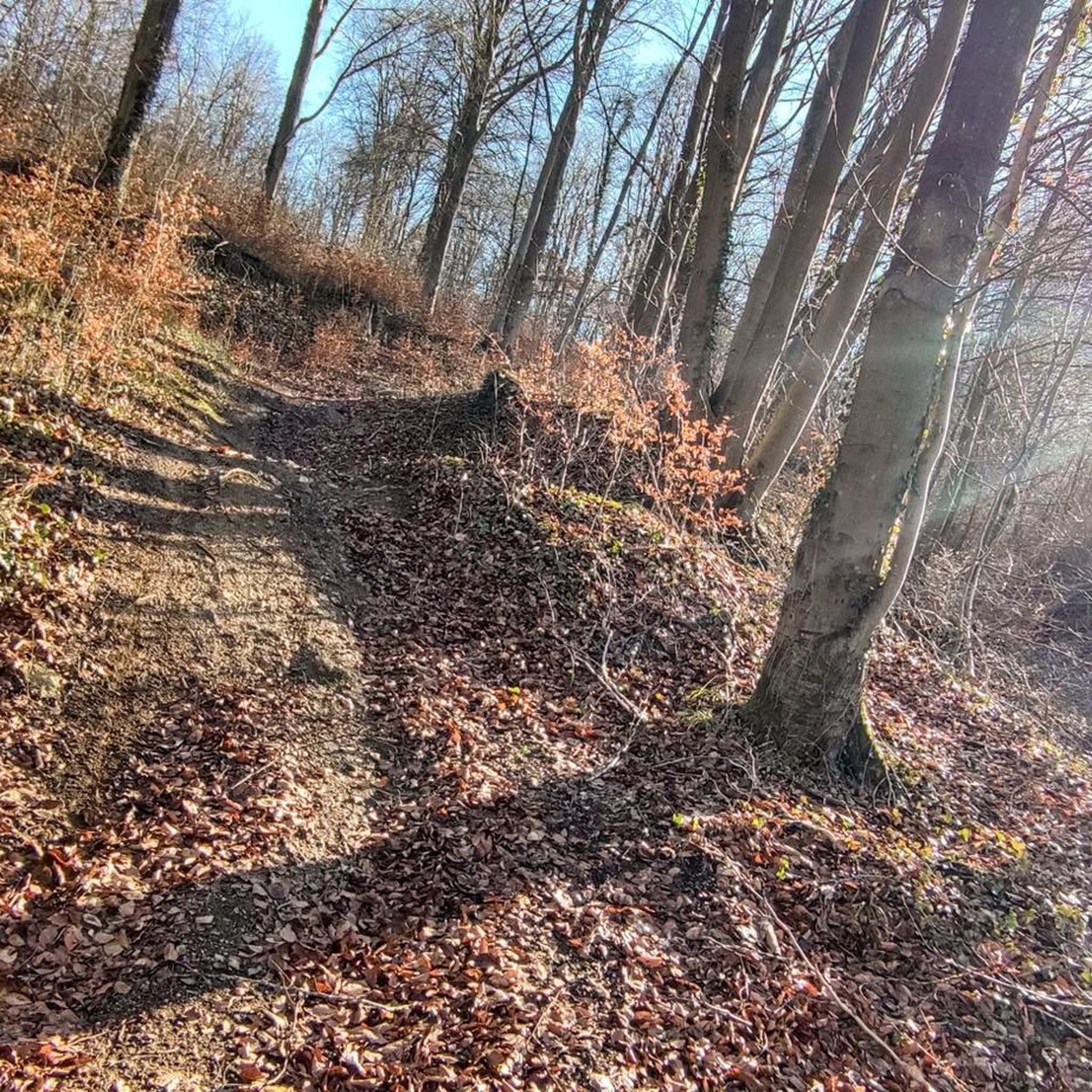
The Vauclair Abbey near Bouconville-Vauclair in the Aisne department was founded in 1134 by Bernard of Clairvaux as a Cistercian monastery. In the Middle Ages, it developed into an important monastic complex; it was significantly expanded, particularly in the 13th century. During the First World War, Vauclair was located directly in the combat zone of the Chemin des Dames and was almost completely destroyed by artillery fire in 1917. The ruins visible today have been archaeologically investigated, excavated, and partially secured since the 1960s. Directly next to the ruins, there is now a medicinal herb garden with around 400 species and a conservation orchard. This verger conservatoire preserves old regional apple and pear varieties; according to the French Garden Association, there are about 84 different varieties represented there. Together with the monastery ruins, the site thus commemorates not only the history of the Cistercians but also their close connection to agriculture, horticulture, and botany.
1
0

Hidden in the middle of the forest, this Cistercian abbey, founded in 1134 by Bernard of Clairvaux, appears like a mirage. Its majestic ruins bear witness to a turbulent past. From the Hundred Years' War and the French Revolution to the First World War, the abbey suffered considerable destruction. In the 1960s, the site was overgrown with brambles and forgotten. Thanks to the archaeological excavation group "Sources" led by Father Courtois, it experienced a rebirth.
2
0

Beautiful quiet place for a walk
0
0

After the Blessed Virgin Mary, "Saint MARIE MADELEINE" is the woman most frequently mentioned in the writings of the New Testament. Originally called "Mary of Magdala" after her place of origin on the Sea of Galilee, the now common name "Mary Magdalene" has evolved over time. According to the biblical accounts, she is one of the women and men who followed Jesus of Nazareth. According to the testimony of the Evangelists, Mary Magdalene is also one of the three women who, after the Sabbath rest, anointed the body of Jesus Christ on Easter morning after the crucifixion and burial, and the very first person to ever meet the Risen Christ. In theology, she is therefore also known as the "Apostle of the Apostles." The feast day of Saint Marie-Madeleine in the calendar of saints is July 22nd.
0
0

This memorial stone, located on the Plateau de Californie above the old Craonne, commemorates the fierce fighting of April-May 1917 during the Nivelle Offensive. It stands on the spot where the French army suffered heavy losses in the battle against the German defenses. The stone also pays tribute to the destroyed village of Craonne, which was not rebuilt after the war. The site is closely linked to the famous “Chanson de Craonne”, the pacifist song of the French soldiers
6
0
Marcel Duquenoy; Small memorial stone along the D18 between the Ferme de la Royère and the Ferme de Malval. It commemorates Marcel Duquenoy, a 20-year-old aspiring officer from Calais in the 350th Infantry Regiment, who was killed in the wood opposite the monument on 6 May 1917 during the Battle of La Malmaison. The inscription is from his parents: “En souvenir de notre fils disparu dans le bois en face” – a personal tribute in a landscape marked by collective loss.
6
0
Jean Dauly Memorial; This sober monument commemorates Jean Dauly, a soldier in the 350th Infantry Regiment, who was killed on 6 May 1917 at the age of 20 during heavy fighting in the forest opposite the current location. It stands along the D18 between the Ferme de La Royère and the Ferme de Malval. The inscription bears witness to the personal loss: “Regretté de sa mère, de toute sa famille et de ses comarades. Priez pour lui”.
7
0
This large German war cemetery is located near Fort de La Malmaison, along the Chemin des Dames. It was established in 1941 by the Wehrmacht to centralize scattered graves from the Aisne region. After the war, the site was officially recognized by a Franco-German convention in 1954 and solemnly inaugurated in 1965. Nearly 11,850 German soldiers rest here, primarily fallen during the 1940 campaign and the fighting after the Allied landings in Normandy in 1944. Between 1960 and 1961, over 6,800 bodies were reburied from six surrounding departments. The cemetery is sober and serene, with rows of dark crosses and a memorial stone. It serves as a silent reminder of the fierce fighting in this region and is an important stop on remembrance routes along the Chemin des Dames.
6
0
Frequently Asked Questions
How many road cycling routes are available around Laval-en-Laonnois?
There are over 225 road cycling routes around Laval-en-Laonnois, offering a wide variety of options for different skill levels and preferences. These routes are highly rated by the komoot community, with an average score of 4.5 stars.
What kind of terrain can I expect when road cycling in the Laval-en-Laonnois region?
The region around Laval-en-Laonnois is characterized by undulating hills, dense forests, and tranquil lake views. Cyclists can expect a mix of terrain, from generally well-paved surfaces to some segments that might be unpaved, providing engaging climbs and descents across the French countryside.
Are there routes suitable for beginners or those looking for an easy ride?
Yes, the area offers a good selection of easier routes. There are 40 routes classified as easy, perfect for beginners or those seeking a more relaxed cycling experience. For example, the Clacy-et-Thierret Station – Mons-en-Laonnois church loop from Pargny-Filain is a moderate route that offers scenic views without extreme difficulty.
What are some challenging road cycling routes near Laval-en-Laonnois?
For more experienced cyclists seeking a challenge, there are 12 difficult routes available. Many moderate routes also feature significant elevation gains. For instance, the Ailette Greenway – Bridge over the Ailette loop from Pargny-et-Filain covers nearly 80 km with over 600 meters of elevation gain, providing a substantial workout.
What natural features can I explore on a road bike around Laval-en-Laonnois?
Road cycling routes in this region often feature extensive forests like Mormal and Saint-Gobain, offering shaded paths and tranquil environments. You can also enjoy tranquil lake views, particularly around Lake Ailette, which is incorporated into several popular routes.
Are there any historical landmarks or points of interest along the cycling routes?
Absolutely. The nearby city of Laon, with its medieval architecture and impressive Notre-Dame Cathedral, is a major highlight. Routes like the Laon station – Climb to Laon Cathedral loop from Aisne specifically incorporate this historical backdrop. Other notable sites include the abbey of Prémontré and the walled town of Coucy-le-Château-Auffrique.
What is the best time of year for road cycling in Laval-en-Laonnois?
The region is generally pleasant for cycling from spring through autumn. The varied landscape ensures enjoyable rides, but checking local weather forecasts is always recommended for optimal conditions.
Are there any family-friendly road cycling routes?
While specific 'family-friendly' classifications for road cycling aren't always distinct, many of the easier and moderate routes with well-paved surfaces and less traffic can be suitable for families with older children or those comfortable with road cycling. Consider routes that avoid significant elevation or busy roads.
Can I find parking easily for my road bike trips in Laval-en-Laonnois?
Many routes start from villages or towns where public parking is available. When planning your route on komoot, you can often find information about starting points and potential parking options near the beginning of the tour.
Is public transport accessible for cyclists in the Laval-en-Laonnois area?
The region has train stations, such as Laon station, which can serve as starting points for routes. It's advisable to check with local public transport providers regarding their policies for transporting bicycles, especially during peak times.
What do other road cyclists enjoy most about the routes in Laval-en-Laonnois?
The area is highly rated by the komoot community, with an average score of 4.5 stars from over 40 reviews. Cyclists often praise the diverse terrain, from undulating hills to tranquil lake views, and the opportunity to combine sporty rides with visits to historical sites like Laon Cathedral.
Are there any circular road cycling routes available?
Yes, many of the road cycling routes around Laval-en-Laonnois are designed as loops, allowing you to start and end at the same point. For example, the Military cemetery – Vauclair Abbey loop from Aisne is a popular circular option.
Most popular routes around Laval-En-Laonnois
Most popular attractions around Laval-En-Laonnois

Get inspired with the komoot mobile app


Explore more
Browse the best Road cycling routes in other regions.
