Attractions and Places To See around Saint-Bonnet-Sur-Gironde - Top 20
Best attractions and places to see around Saint-Bonnet-Sur-Gironde, a rural commune in Charente-Maritime, France, offer a focus on natural surroundings and local heritage. Situated on the right bank of the Gironde estuary, the area is characterized by extensive marshlands, sometimes referred to as the "Petite Camargue saintongeaise." The commune is nestled within a rural setting of fields, vineyards, and woodlands, providing opportunities to observe local wildlife. Visitors can explore various landmarks and natural features that define this tranquil region.
Best…
Last updated: July 6, 2026
Market and Saint-Saturnin Church of Braud-et-Saint-Louis
Highlight • Religious Site
Translated by Google •
Tip by

Saint-Séverin Church, Nieul-lès-Saintes
Highlight • Religious Site
Translated by Google •
Tip by

Sign up now to discover places like this
Get recommendations on the best single tracks, peaks, & plenty of other exciting outdoor places.
Sign up for free
Church of the Abbey of Sainte-Marie-Madeleine of Pleine-Selve
Highlight • Religious Site
Translated by Google •
Tip by
A surprising church name
Highlight • Other
Translated by Google •
Tip by
The Belt – canals and wet meadows
Highlight • Natural
Tip by

Sign up for free to discover even more attractions around Saint-Bonnet-Sur-Gironde.
Sign up for free
Already have an account?
Start today with a free account
Your next adventure awaits.
Login or Signup

Tips from the Community

Opposite the church, you'll find a small supermarket, public restrooms, and drinking water. Always interesting.
0
0

The Saint-Saturnin Church was built in 1898 after the previous church was destroyed during the French Revolution. Near the church stands the Column of the Shipwrecked, an ex-voto erected by Nordic sailors who survived a shipwreck in the early 17th century. Located on the right bank of the Gironde River, Europe's largest estuary, the town owes its wealth of infrastructure and sports facilities to the presence of the Blayais National Park. In the heart of the marshland, its territory boasts typical wetland landscapes, home to exceptional flora and fauna. Discover it on bike rides or by visiting the "Terres d'oiseaux" bird park, next to the port of Callonges. A major producer of asparagus from Blayais, but also a wine-growing commune located in one of the largest vineyards in the world, Bordeaux, Braud-et-Saint-Louis also borders the appellations of cognac and pineau des Charentes.
0
0

This church is quite recent (19th century) because it was built following the destruction of the village parish during the Revolution. However, its architecture is worthy of interest when passing through the charming town of Braud-et-Saint-Louis.
1
0

Sanctus Saturninus de Brau is the name found in the 14th century. Braud would be an abbreviation of Beraud, Saintonge form of the Germanic name Beroald, which means Old Lord. Based on the form "Embrand" which formerly would have designated this locality. Several possible etymologies of Braud The name Braud could also come from the Gascon Braou which means Bull, a sign that this form of cattle was raised in the swamps. Commune formed from the union of two former parishes: Braud, from old French "Brai", mud, marshy place and St Louis, parish founded by the Duke of St Simon in 1656 and included in the commune of Braud in 1802. Origin of the name of the municipality of Braud and Saint Louis Braud would come from beraud, Saintonge form of the Germanic name berard, old lord" or from the Gascon braou, "bull", a sign that these cattle were raised in the swamps or even from the old French brai, "mud", "swampy place". The parish of Braud is cited under the name of Sanctus Saturninus (Saint Saturnin) of Braud. The drying out of the marshes, in the 17th century, on the initiative of the Duke Claude de Saint Simon, governor of Blaye, was to make it possible to transform the marshes into "good nature of arable land" and create villages. The draining finished, the plots are allocated, the smallholdings appear. The number of inhabitants encouraged the Duke of Saint Simon to found two parishes: the parish of Saint Louis (all the part of the large marsh located between the Gironde and the ring canal, between the Clonges canal and that of Fréneau), in l honor of the King of France and that of Saint Simon. The church, the presbytery and the cemetery built between 1665 and 1667 were destroyed during the Revolution of 1789. Rebuilt in 1895 in a neo-Gothic style and on a new north-south orientation, it is located north of the town of Braud -and-Saint-Louis. The spire of the bell tower culminates at 37 meters in height. After the Revolution, the parish of Saint Saturnin de Braud and the parish of Saint Louis des Marais were united to form the municipality of Braud and Saint Louis. THE CROSS OF SAINT LOUIS A cross found in the attic of the presbytery of Braud was erected at a place called "La Chapelle", near Fréneau, during a procession in June 1915, thus indicating the location of the disappeared church. This cross is visible from the road leading to the nuclear power plant, on the left, 4 km from the Paillerie roundabout.
1
0
The Abbey of Sainte-Marie-Madeleine goes down in history for having been founded by Geoffroi du Loroux, Archbishop of Bordeaux, around 1145-1150. The only vestige of the imposing Premonstratensian monastery, the church of the Abbey of Sainte-Marie-Madeleine, founded in the 12th century, is the jewel of the village of Pleine-Selve. 12th century church, made up at the time of a single nave, a transept and a flat apse. In the 13th century, addition of chapels to the arms of the transept. The convent buildings were completely destroyed by French troops in 1407 during the Hundred Years War and then during the Wars of Religion. The church itself had its nave amputated. Of the 13th century building, the crossing, the north arm of the transept, the north chapel, the flat apse remain. During the 19th century, construction of a sacristy on the south facade of the chevet. The Romanesque church is only the choir of the old church, only the apse presents the architecture of the 12th century. Today it has the status of a parish church. The building was classified as a historical monument in 1908.
0
0
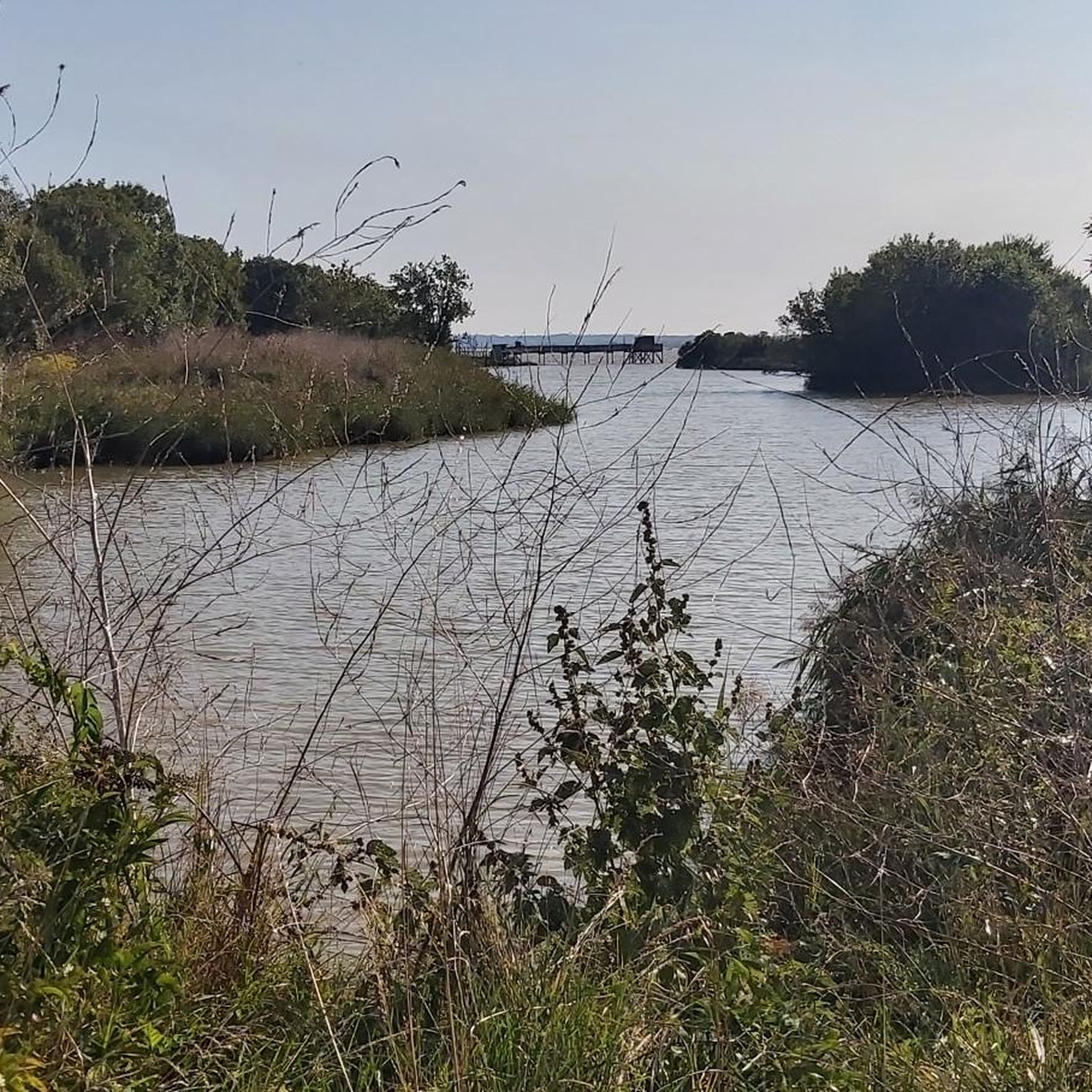
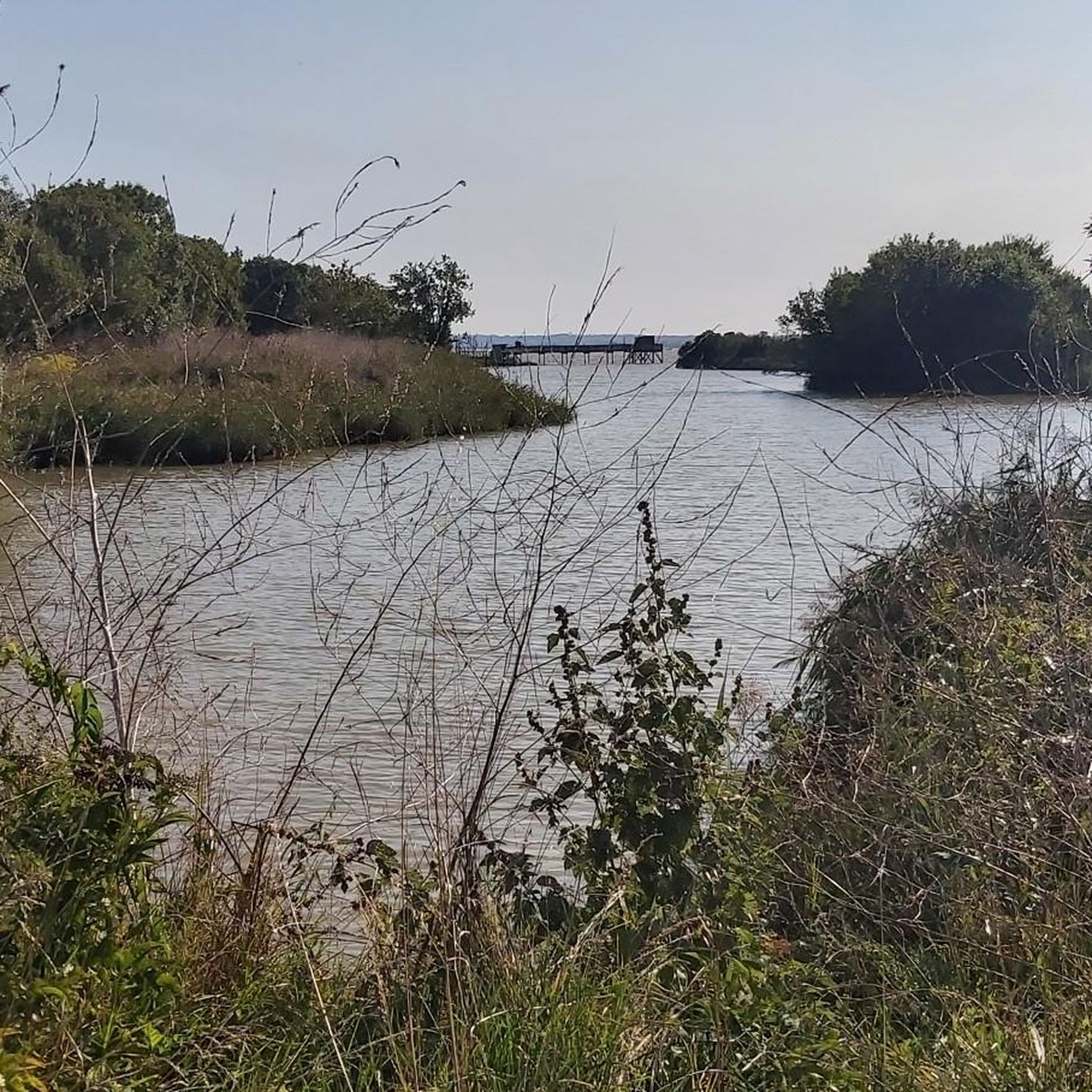
Established on a migration route and in the heart of the wet meadows as well as the drainage canals that run along the Gironde estuary, these areas are frequented by multiple varieties of birds: little egret, crested merganser, purple heron, black kite , kingfisher, shelduck, black scoter, marsh harrier and others come to nest, winter or reproduce there.
1
0
The church, built in the shape of a Latin cross, the first construction elements of which date from the 11th and 12th centuries, with later additions and alterations (15th and 19th centuries to the beginning of the 13th century then modified in the 15th and 16th centuries, is dedicated to Saint Séverin, alias Seurin, bishop of Bordeaux in the 5th century, and whose feast day takes place on October 21. However, the solemn patronal feast is that of Saint Blaise, martyr bishop of the 4th century, fixed on February 3, and for which there is great veneration in the country. The main portal of the church, as well as the two false doors, are crowned by ogival arcades with a few rare ornaments borrowed from the Romanesque period, such as saw teeth, diamond points, etc. These gantries have been the subject of a subconstruction. The nave is made up of three recently vaulted bays in brick and plaster, without ribs; each span is separated by groups of four small columns, only two meters and fifty high, and appearing to date from the 14th century. The apse has two bays in the 15th century ogival style. The Saint-Joseph chapel, to the north, has kept its original Romanesque style; it is dominated by a semi-circular vault, and offers the example of an apsidion of which no advantage is currently being taken. It is adorned with a small apse which housed the baptismal font. The chapel of the Virgin, to the south, was remodeled in the 17th century; it has the character of a 15th century restorer; it was then lengthened, and consists of three spans. There is, it is said, an ossuary under the choir. The bell tower with a cone or "pine cone" spire, placed above the transept, and about 24 meters high (54 steps lead to its summit), is worthy of attention. This is the oldest part of the church. It is covered with a stone dome carved in tortoiseshell called the pine cone bell tower, similar examples of which can be found in Saintonge (Abbaye aux Dames de Saintes, Notre-Dame-de-l'Assomption church in Fenioux)3 but which recalls above all the domes of Byzantine inspiration observed in Poitou, Angoumois and Périgord (church of N.-D.-la-Grande in Poitiers, cathedral of Saint-Pierre in Angoulême, cathedral of Saint-Front in Périgueux). The foreground includes five Romanesque windows on each side, oriented as usual, on the upper level there are only two; the tower ends in a cut of stone, formed of small somewhat deformed cubes and forming a slightly rounded cone, but deformed by time. Inside, this bell tower offers a quadrangular vault, with cut sides, of very good taste. The bell, weighing 430 kilograms, was cast by Guillaume Besson, from Angers, and blessed in 1859, under the name of Marie. The godfather was Mr. Blanc Fontenille, former lawyer and notary, mayor of Nieul, and the godmother Mrs. Marie Belloteau, born Babin; parish priest M.Antoine Lanson.
1
0
"Agout" is an old Saintonge word meaning "sewer" which is here applied to the flow of water from the region to the marshes of the Gironde. The location of the church, on sloping ground on the edge of the road, may explain the addition of this word to its name, which gave St Georges d'Agout. 12th century church, enlarged in the 15th and 16th centuries. Dependent on the priory of St-Thomas-de-Conac in the 12th century, it retains a Romanesque structure and a western portal with arches and sculpted capitals. The right apse choir was covered with ribbed vaults in the 13th century. Existence of a solid square bell tower. New enlargement in the 19th century, with the construction of two chapels adjoining the collateral. Building built in the 12th century. At the end of the 15th-beginning of the 16th century, the western bays of the nave are doubled by a second vessel to the south, and a square bell tower is high. To face the Wars of Religion, an upper chamber was built; presence of an underground refuge. In the 19th century, the late collateral was divided by a longitudinal shear wall, and received a slight vault; the apse is pierced with a twin neo-Romanesque window. A sign at the entrance (and pictured in the must-see) explains the church's noteworthy features.
0
0
Frequently Asked Questions
What natural landscapes can I explore around Saint-Bonnet-Sur-Gironde?
The region is characterized by extensive marshlands, often called the "Petite Camargue saintongeaise," and the vast Gironde estuary. You can experience these unique natural features by exploring areas like The Belt – canals and wet meadows, which is a habitat for diverse birdlife, or take a stroll along the Gironde estuary itself. The local countryside also features fields, vineyards, and woodlands, offering chances to observe wildlife.
Are there any historical churches or religious sites to visit?
Yes, the area features several notable religious buildings. You can visit the Saint-Séverin Church, Nieul-lès-Saintes, which has construction elements dating from the 11th and 12th centuries and a distinctive "pine cone" spire. Another interesting site is the Market and Saint-Saturnin Church of Braud-et-Saint-Louis, a 19th-century church built after the French Revolution. There's also A surprising church name, an intriguing 12th-century church with Romanesque structures and a unique local etymology.
What kind of outdoor activities can I do near Saint-Bonnet-Sur-Gironde?
The region is ideal for various outdoor activities, especially cycling. You can find numerous routes for road cycling, mountain biking, and touring. For example, explore the "Gironde Shores – Citadel of Blaye loop" for road cycling, or the "Nice track on the dikes – Port Maubert loop" for touring. You can find more detailed routes and guides for Road Cycling, MTB Trails, and General Cycling around Saint-Bonnet-Sur-Gironde.
Are there any scenic walking or cycling paths with good views?
Absolutely. The Nice track on the dikes is a popular elevated trail that offers excellent views across the coastal scenery and along the river. It's a beautiful path suitable for both walking and cycling, providing scenic vistas of the surrounding coastline.
What historical sites are within a short drive from Saint-Bonnet-Sur-Gironde?
Within approximately 50km, you can visit significant historical sites such as the UNESCO World Heritage site of Blaye Citadel (about 25km away), the historic town of Pons with its pilgrim routes and castle tower (around 25km), and Jonzac, a spa town featuring a small castle (approximately 20km). The charming village of Talmont-sur-Gironde, recognized as one of France's "Most Beautiful Villages," is also nearby (about 28km) and known for its impressive Church Sainte-Radegonde.
What is the best time of year to visit Saint-Bonnet-Sur-Gironde for outdoor activities?
The region's mild climate makes it pleasant for outdoor activities for much of the year. Spring and autumn generally offer comfortable temperatures for cycling and exploring the marshlands and countryside. Summer can be warm, but the proximity to the Gironde estuary often provides a refreshing breeze, making it suitable for enjoying the scenic dikes and outdoor routes.
Are there family-friendly attractions or activities in the area?
Yes, several attractions are suitable for families. The natural areas like The Belt – canals and wet meadows offer opportunities for wildlife observation, which can be engaging for children. The village itself provides basic amenities including a children's play area. Exploring the scenic dikes and easy cycling routes can also be a fun family activity.
What kind of local wildlife can I expect to see?
The extensive marshlands and rural countryside around Saint-Bonnet-Sur-Gironde are home to diverse wildlife. You might spot various bird species such as little egrets, crested mergansers, purple herons, black kites, kingfishers, and shelducks, especially in wetland areas like The Belt – canals and wet meadows. The woodlands and fields also host hawks, pheasants, and deer.
Can I find local markets or places to experience local commerce?
While Saint-Bonnet-sur-Gironde is a quiet village, several nearby towns host markets. You can find local markets in Jonzac, Montendre, Blaye, Pons, and Meschers-sur-Gironde. These markets offer a great opportunity to experience local commerce and discover regional produce.
What do visitors enjoy most about the attractions around Saint-Bonnet-Sur-Gironde?
Visitors particularly appreciate the tranquil natural beauty and the opportunities for scenic outdoor activities. The elevated trails like Nice track on the dikes are highly rated for their views across the coastal scenery. The unique wetlands and the historical charm of the churches also receive positive feedback, highlighting the region's blend of nature and heritage.
Are there opportunities for wine tasting or vineyard tours nearby?
Yes, the region is close to some of France's most renowned wine areas. The prestigious wine estates near Pauillac (19km) and Margaux (35km) are within reach, offering excellent opportunities for wine tasting and vineyard tours for those interested in exploring the local viticulture.
What amenities are available in Saint-Bonnet-Sur-Gironde itself?
Saint-Bonnet-sur-Gironde, though a small village, provides basic amenities for visitors. These include a convenience store, a post office, a chemist, and a restaurant. For recreation, there's a children's play area, facilities for French bowls, and a tennis court.
Most popular routes around Saint-Bonnet-Sur-Gironde

Get inspired with the komoot mobile app


Explore more
Still not found the Highlight you’re looking for? See guides of the top attractions in other regions:
