Attractions and Places To See around Allas-Champagne - Top 16
Best attractions and places to see around Allas-Champagne include a variety of historical sites, natural landscapes, and cultural experiences in the Charente-Maritime department of Nouvelle-Aquitaine, France. The region is characterized by a tranquil, rural setting, surrounded by vineyards and the Seugne River. Visitors can explore nearby towns like Jonzac and Pons, which offer historical landmarks and local markets.
Best attractions and places to see around Allas-Champagne
- The most popular attractions is Old Town Gate of Jonzac, a historical site…
Last updated: July 7, 2026
Jonzac Castle
Highlight • Castle
Translated by Google •
Tip by

Saint Martin Church of Fontaine-d'Ozillac
Highlight • Religious Site
Translated by Google •
Tip by
Sign up now to discover places like this
Get recommendations on the best single tracks, peaks, & plenty of other exciting outdoor places.
Sign up for free
Old Town Gate of Jonzac
Highlight • Historical Site
Translated by Google •
Tip by
Saint-Christophe Church of Léoville
Highlight • Religious Site
Translated by Google •
Tip by

View of the Seugne River from the Stone Bridge
Highlight • Viewpoint
The Seugne has its source in the canton of Montlieu-la-Garde, then crosses …
Translated by Google •
Tip by
Sign up for free to discover even more attractions around Allas-Champagne.
Sign up for free
Already have an account?
Start today with a free account
Your next adventure awaits.
Login or Signup



Tips from the Community

In the second half of the 12th century, a long nave (32 x 8 m) was built, with a west facade with blind arcades and a flat chevet. In the 13th century, the west portal was rebuilt up to date and the nave received perhaps its first ribbed vaults. A Gothic bell tower-porch was built in front of the nave in the 15th century, which lengthened the church by some five metres. The floor surmounted by a spire is pierced with twin bays, underlined by a cord. Its base forms a marthex. On each side of this closed porch are two small chapels with vaults decorated with coats of arms and reproducing corner consoles sculpted with grotesque characters. The 12th century facade is pierced by an ogival portal. The arches fall on the 3 capitals of the torus columns. The door is flanked by 2 blind arched bays with a zigzag band and diamond points. Around the portal, an inscription: “The French recognize the existence of the supreme being and the immortality of the soul”. In the 15th century, the nave was doubled to the north. This vaulting was destroyed during the wars of religion and the ribbed vaults were redone in 1872. The large broken arches which separate the 2 vessels from the nave fall into penetration on large cylindrical piles. On the south wall, a group of 3 columns decorated with large foliage receives the ribs of the vaults. The south side wall from the nave to the chevet was rebuilt with old materials, some of which are carved stones. The large tracery canopy is followed by 3 Romanesque windows decorated with billets and diamond points. The choir with a flat apse is lit by a Romanesque triplet with small columns and polylobed arches. It is a provision that we find rather outside the churches. Outside, these 3 windows have no columns and are surmounted by a cornice shaped like a whistle on brackets and a large half-moon opening. In 1996-1998, a restoration campaign brought to light mural paintings and a funerary liter, a striking portrait of death. Special features to see also: a very beautiful stone pulpit and wrought iron railing from the 19th century as well as an oil on canvas, "Crucifixion", from the beginning of the 19th century.
0
0
The city gate, called 'Porte de ville vieille', which gives access to the old town was built between the 13th and 15th centuries and allows you to reach the very typical houses of the town center of Jonzac. It was classified as a historical monument in 1926.
1
0
In 1073, the castle already exists; the first known lord was Guillaume de la Rochandry at the beginning of the 12th century. The 1449 inscription on the castle attests to its reconstruction following the destruction caused by the Hundred Years War. In 1505, Jean de Sainte-Maure, lord of Jonzac, founded the Carmelite monastery on the remains of an old chapel dedicated to Saint Nicolas. The cloister was built in 1657. The young Louis XIV, the Queen Mother and Mazarin stayed at the castle in 1659. The castle remained at Sainte-Maure until the end of the 17th century, then passed through marriage to Espardes de Lussan, which transformed the fortress in beautiful stately home with neat ornamentation and guard until the Revolution. Currently the north wing of the castle houses the buildings of the Town Hall (restored in the 19th century), and the south wing, those of the sub-prefecture. The cloister was restored between 1976 and 1978, and now houses a cultural center, with exhibition halls and an archaeological museum. The towers, postern and fountain in the basement date from the 12th century. Of the old feudal castle, only the postern and an isolated tower remain, connected to the main body by a large hall. The moat in front of the drawbridge was filled was filled in the 19th century. It was reopened at the beginning of the 21st century. The imposing gatehouse is marked 1549 and therefore dates from the 16th century, a period of work including the north-west tower, while the south-west tower, of a smaller diameter, is from the 17th century. The towers flanking the postern have retained their defenses. At each, the loopholes have been retained or enlarged. Stone stairs serve each floor and access the walkway. This passage seems to have been discovered, as evidenced by the gargoyles. The crenellation includes machicolations with archers in the middle of the merlons. The slate roofs are high pepperboxes on the towers, and a curious set with two sides connecting two pepperboxes for the gatehouse The fountain located in the basement of the sub-prefecture, has a niche and a niche frame decorated with sculptures imitating stalactites. Carved mask. The fountain was probably built by Léon de Sainte-Maure, Count of Jonzac, who enlarged and embellished the castle in the middle of the 12th century. In a former courtyard of the castle, a theater was built in the 19th century. It is a round building with approximately 300 seats.
0
0
The Seugne crosses a single department, in this case that of Charente-Maritime, watering thirty-six communes and seven cantons. The Seugne has its source in the canton of Montlieu-la-Garde, then crosses the cantons of Montendre, Jonzac, Saint-Genis-de-Saintonge, Pons, Gémozac and, finally, confluences in the canton of Saintes-Est. The Seugne has eighteen tributaries or referenced arms. The old forms of the name Seugne are flumen Soenna around 1100, Sonye in 1280, la Soyngna in 1322, la Soyngnhe in 1354, aqua Soynnie in 1363, Souaigne in 1494. The current pronunciations, Seugne and Souègne, are based on a medieval form Soïgne, which the scribes of the 13th and 14th centuries had difficulty transcribing. According to Duguet, a more recent spelling, Seuigne was misread and interpreted Sévigne in the 19th century.
0
0
Around a small church from the end of the 12th century, a larger construction was arranged in the 16th century and the curious facade (classified MH in 1911) presents today, under a single gable, a beautiful composition of Romanesque flowers and on the left, attached to it, an elegant Renaissance ensemble. On the north side, a simple bell tower of the original church at its base, rebuilt in the last century in its upper parts, balances the whole. It is square, without style, covered with a slate pyramid, and has retained a few loophole openings. 3 of its arched windows each house a bell. A semi-circular arched gate with three covings and 2 blind bays with only one, furnish the ground floor. Above, without separation, runs a gallery of 5 arches supported on double columns. Bulky capitals, cords, bands very worked and in strong relief, indicate a novel of the end of time. On the large coving develops a representation, with 6 "knights", of the fight of the Virtues and the Vices. On the intermediate arch, birds, monsters and human beings are tangled in vegetal arabesques. The sculptures of the capitals, abacus included, extend over the eardrums of the false doors and form a wide band. In the Renaissance part on the right, the artist has arranged above a low door and around a large scallop shell, a very beautiful crowning with scrolls, garlands and fleurons. Next to it a corner buttress shows another shell in a pediment. The North wall, which has been modified many times, has however retained a large pointed arch towards its middle and a second one a little more towards the East. Old buildings, Benedictine ones say, existed there. Remains of arches and Romanesque openings stand side by side with ogival windows. The eastern wall of the chevet, largely rebuilt, still shows 2 semicircular arches with ringed columns, nail-head cords and remains of an arcade similar to that which once adorned the north side of this same chevet. Although Romanesque, it therefore seems to have been rectangular from its origin. To the left opens a large window whose central arch is polylobed. This provision is quite rare in Saintonge. The south wall, supported by numerous buttresses, one of which, the first to the west, is decorated with an escutcheon carried by two angels, is pierced with large third-point windows. The square bell tower, without style, covered with a slate pyramid, has retained a few loopholes. 3 of its arched windows each house a bell. The interior, refurbished two centuries ago, comprises 2 naves separated by square pillars. The one on the left, the old one, which has 5 bays, has its ogival vaulted apse on multiple ribs which are lost on the columns after having drawn diamonds adorned with hanging keys. In these lozenges, letters forming a difficult to read inscription, a real rebus with a grid, indicate that this work was made in 1538. Despite its name based on the idea of "fountain" this town which was formerly called Saint-Martin-de-Fontaine, has no fountains, but wells. The shallow one, very close to the church, was perhaps even less deep in the past and was undoubtedly the fountain which gave its name to the parish. The church of Fontaine-d'Ozillac is patronized by Saint Martin.
0
0

In the second half of the 12th century, a long nave was built, with a west facade with blind arcades and a flat chevet. In the 13th century, the west portal was rebuilt to modern taste and the nave received its first ribbed vaults. In the 15th century, a bell tower-porch flanked by two small chapels was erected in front of the Romanesque facade; the three bays of the nave are widened by the construction of a north aisle; the two vessels are vaulted with warheads. In 1872, after the destruction of the Wars of Religion and the replacement by a tilis ceiling, the ribbed vaults were restored in plaster on laths. A restoration campaign took place in the years 1996-1998.
1
0

Part of the original town walls I guess. Nice resto jut on the right as you pass through.
0
1
Frequently Asked Questions
What historical sites can I visit near Allas-Champagne?
The region around Allas-Champagne is rich in history. You can explore the impressive Jonzac Castle, which dates back to at least 1073 and now houses the town hall and a cultural center. Another significant historical landmark is the Old Town Gate of Jonzac, built between the 13th and 15th centuries. Further afield, you can visit the historic Castle Barbezieux in Barbezieux-Saint-Hilaire.
Are there any notable religious buildings or churches to see?
Yes, several historic churches are within a reasonable driving distance. These include the Saint Martin Church of Fontaine-d'Ozillac, known for its curious facade and Romanesque elements, and the Saint-Christophe Church of Léoville, which features a Gothic bell tower-porch and mural paintings. Other examples include Église de Saint-Germain (Gimeux) and Église de Saint Martin (Gensac-la-Pallue).
Where can I enjoy nature and scenic views around Allas-Champagne?
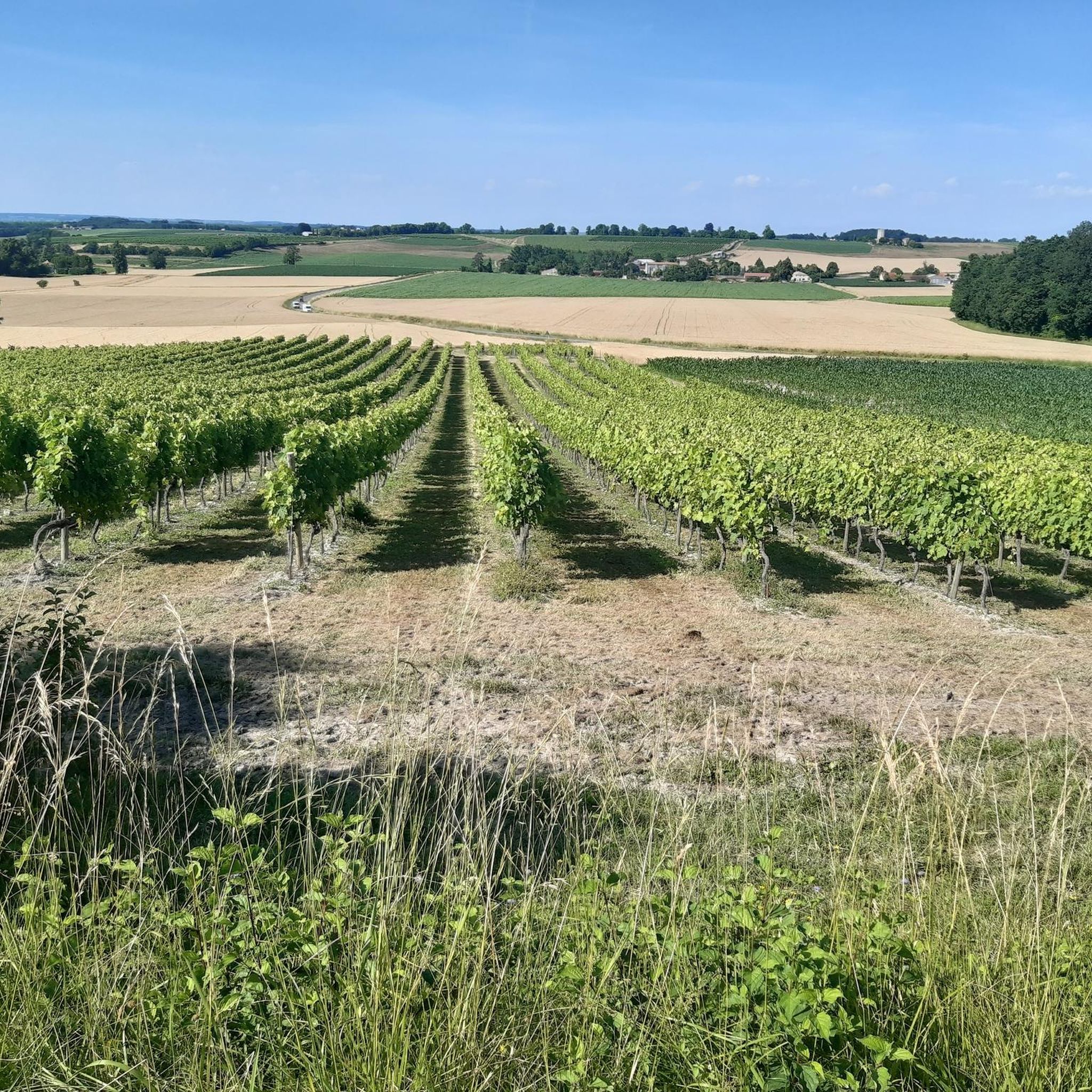
For natural beauty, you can visit the View of the Seugne River from the Stone Bridge, offering picturesque perspectives of the Seugne River which flows through the region. The area is also surrounded by vineyards, particularly those producing Cognac, providing scenic agricultural landscapes. Nearby forests like Forêt de Pons and Forêt de la Lande offer natural escapes.
Are there family-friendly attractions near Allas-Champagne?
Yes, the region offers options for families. The Old Town Gate of Jonzac and the View of the Seugne River from the Stone Bridge are considered family-friendly. In Jonzac, Les Antilles de Jonzac is a popular aquatic center that is a significant draw for visitors of all ages. The town of Pons also features Le Chateau des Enigmes, a castle offering an enigma-solving experience.
What outdoor activities can I do near these attractions?
The area around Allas-Champagne is excellent for various outdoor activities. You can find numerous routes for cycling, running, and road cycling. For example, there are several cycling loops like the 'Jonzac and Archiac Loop' and 'Bike loop from Jonzac' which you can explore on the Cycling around Allas-Champagne guide. Running enthusiasts can check out trails such as 'Les Deux Moulins Trail' or 'Wooden Boardwalks – Jonzac Castle loop' on the Running Trails around Allas-Champagne guide.
Are there opportunities for cycling around Allas-Champagne?
Absolutely. The region offers a variety of cycling routes suitable for touring bicycles and road bikes. You can find routes like the 'Jonzac and Archiac Loop' or the 'Roadbike loop from Allas-Champagne'. For more details and route options, refer to the Cycling around Allas-Champagne guide and the Road Cycling Routes around Allas-Champagne guide.
What towns are worth visiting close to Allas-Champagne?
Nearby towns offer a range of experiences. Jonzac is a popular destination known for its spa facilities (Thermes de Jonzac), aquatic center (Les Antilles de Jonzac), and historical sites like Jonzac Castle. Pons, about 21 km away, is home to Le Chateau des Enigmes. For those interested in local produce and culture, towns like Jonzac, Barbezieux-Saint-Hilaire, and Pons host vibrant markets.
Can I explore the local vineyards and learn about Cognac production?
Yes, Allas-Champagne is situated in a region renowned for its vineyards, particularly those producing Cognac. The surrounding countryside offers picturesque views of these agricultural landscapes. The town of Cognac itself, about 25 km away, is famous for its namesake brandy and provides opportunities for tours and tastings at various Cognac houses.
What do visitors particularly enjoy about the attractions near Allas-Champagne?
Visitors appreciate the blend of historical sites, religious buildings, and natural viewpoints. The Old Town Gate of Jonzac is noted for its historical significance and access to the town's typical houses. The View of the Seugne River from the Stone Bridge is loved for its scenic perspectives. The komoot community has shared over 20 photos and given 26 upvotes to the attractions in the area, highlighting their appeal.
When is the best time to visit Allas-Champagne for outdoor activities?
The region of Nouvelle-Aquitaine generally enjoys a mild climate. Spring and early autumn are often ideal for outdoor activities, offering pleasant temperatures for cycling, running, and exploring historical sites without the intense heat of summer or the chill of winter. This allows for comfortable enjoyment of the vineyards, forests, and river views.
Are there any spa or wellness facilities nearby?
Yes, the nearby town of Jonzac is well-known as a spa town. The Thermes de Jonzac offer a place for relaxation and wellness, utilizing the town's thermal waters. This makes it a great option for those looking to combine outdoor exploration with some therapeutic relaxation.
Most popular routes around Allas-Champagne

Get inspired with the komoot mobile app


Explore more
Still not found the Highlight you’re looking for? See guides of the top attractions in other regions:
