Attractions and Places To See around Bougy-Lez-Neuville - Top 10
Best attractions and places to see around Bougy-Lez-Neuville include a blend of historical sites and natural landscapes. Situated on the edge of the Orléans Forest and traversed by the Nan stream, the commune offers opportunities for outdoor exploration. Visitors can discover local landmarks, extensive forest areas, and various nearby points of interest. The region provides a mix of cultural and natural attractions for those exploring the Loiret department.
Best attractions and places to see around Bougy-Lez-Neuville
- The most popular attractions…
Last updated: July 14, 2026
Chamerolles Castle
Highlight • Castle
It is surrounded by …
Translated by Google •
Tip by

Charbonnière Castle
Highlight • Forest
Translated by Google •
Tip by

Sign up now to discover places like this
Get recommendations on the best single tracks, peaks, & plenty of other exciting outdoor places.
Sign up for free
Charbonnière Woods Pond
Highlight • Lake
Since the Middle Ages, monks and …
Translated by Google •
Tip by
Joli sentier forestier
Highlight (Segment) • Other
Translated by Google •
Tip by
Route des Ver
Highlight • Other
Translated by Google •
Tip by

Sign up for free to discover even more attractions around Bougy-Lez-Neuville.
Sign up for free
Already have an account?
Start today with a free account
Your next adventure awaits.
Login or Signup




Tips from the Community

Still as majestic, a beautiful castle.
1
0

Nestled on the edge of the Orléans forest, the Château de Chamerolles is a magnificent Renaissance castle which retains its medieval heritage. It was built between 1500 and 1530 on the site of an old medieval fortress by Lancelot du Lac, chamberlain of King Louis XII and Governor of Orléans. He wanted to make the old medieval building into a real pleasure castle responding to the architectural fashion of the time. With its polychrome brick decor and its open gallery, the Château de Chamerolles is inspired by the Louis XII wing of the royal Château de Blois. It retains its moat and its layout of corner towers from the medieval period. During the wars of religion, Lancelot's grandson, Lancelot II, transformed the castle of Chamerolles into a center of Protestantism. From this period remains the chapel whose painted tables of laws are the oldest in France. Chamerolles remained in the du Lac family until the end of the 17th century. In 1672, the castle belonged to Jacques Saumery, brother-in-law of Colbert. A century later, the castle passed into the hands of the Lambert family and in 1924, into those of Gaston Jessé-Curély. Occupied, ransacked, stripped during the Second World War, the Château de Chamerolles was put up for sale in 1970. In 1976, the city of Paris found itself in charge of Chamerolles. Abandoned, the Château de Chamerolles fell into ruins. In 1987, it became the property of the Loiret Departmental Council which then undertook an ambitious restoration program. The five years of work allow us to discover a transitional architecture, between the medieval heritage and the innovations of the Renaissance. Today, the Château de Chamerolles is dedicated to the history of perfumery and offers a historical and heritage showcase to the Cosmetic Valley, located in the Centre-Val de Loire region. Chamerolles offers a visual and olfactory journey, in pieces reconstructed from the 16th century to the 18th century, allowing you to discover the history of toiletry and perfume. The castle is surrounded by a large park and a charming Renaissance garden, created by Lancelot II du Lac, after a trip to Italy. A garden where it is beautiful to stroll in the summer.
0
0

The castle was built between 1500 and 1530 on the site of an old medieval fortress by Lancelot I du Lac, chamberlain of King Louis XII. It is surrounded by a large park and a charming Renaissance garden, created by Lancelot II du Lac.
2
0

In the heart of the Orléans forest is the Château de Charbonnière. This castle belongs to the city of Orléans and dates from the 16th century. You can admire its imposing facade and one of its four elegant turrets, as well as a bread oven in front of the building. The castle can be rented for various events, but you can also enjoy its vast 150-hectare park, where you can run, walk, cycle or picnic. The castle is open every day from 7:00 a.m. to 8:00 p.m.
4
1
The setting for this part of the trail is beautiful. The canopies form tunnels of trees to create a real fairy tale ambiance.
0
1
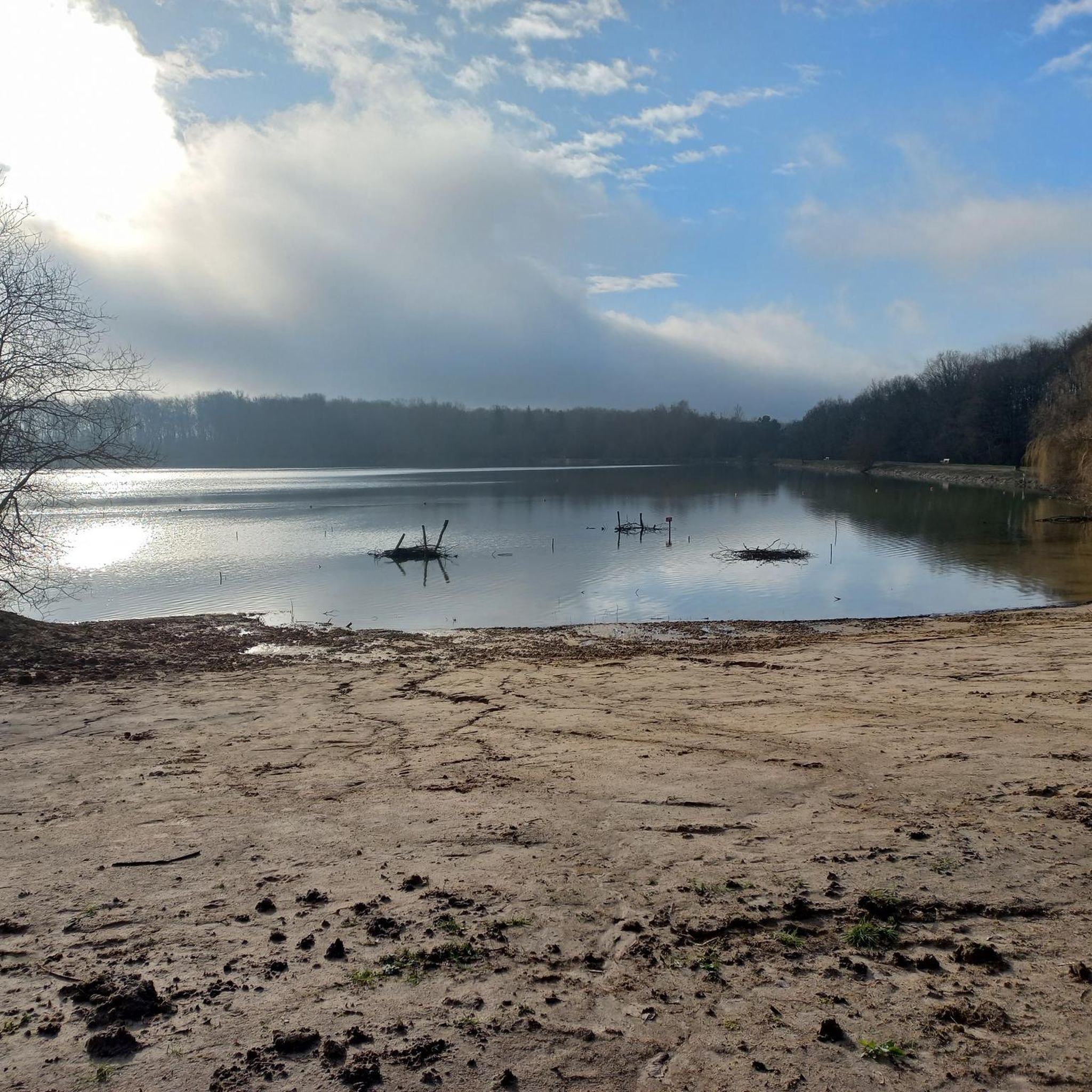
The pond is located in the park of the Château de Charbonnière. It is fed by the Ruet stream, a tributary of the Bionne. Since the Middle Ages, monks and successive owners have dug numerous bodies of water to drain the area.
0
0
The Château de Charbonnière was built between 1895 and 1900 and is located in a vast park of 180 hectares. You can sit down to take a break on the lawn and admire its beautiful facades and turrets.
0
0

On the edge of the forest of Orléans, the Château de Chamerolles is a magnificent building, the first constructions of which date back to the 16th century. It has been on the list of historical monuments since 1927. Accessible to the public, the castle also has a pretty body of water and a large garden where 75 varieties of roses grow harmoniously. History and nature lovers, a walk around the castle grounds will delight you! The castle is open all year except January.
0
0
Frequently Asked Questions
What kind of historical sites can I visit in and around Bougy-lez-Neuville?
Bougy-lez-Neuville offers several historical points of interest. You can explore the Église Saint-Sulpice, which dates back to the 11th century and features unique stained-glass windows. The kiln of the Four de la tuilerie Pointeau in Maugras is a visible remnant of the region's historical tile industry. Additionally, the Monument ossuaire commémoratif du conflit de 1870 commemorates the 1870 conflict. A short drive away, you'll find the impressive Chamerolles Castle, built between 1500 and 1530, known for its Renaissance garden.
Are there family-friendly activities or attractions near Bougy-lez-Neuville?
Yes, there are several family-friendly options. The Chamerolles Castle with its large park and gardens is suitable for families. For aquatic fun, the Centre aquatique Aquanova in Neuville-aux-Bois is just 3.5 km away. Another entertaining option is the Pop Corn Labyrinthe in Vennecy, located about 8.5 km from Bougy-lez-Neuville. The Orléans Forest itself offers many opportunities for family walks and exploration.
What natural features or outdoor spaces can I explore in the area?
Bougy-lez-Neuville is situated on the edge of the vast Orléans Forest, providing extensive opportunities for walking and cycling. The Ruisseau du Nan flows through the commune, adding to its natural charm. You can also visit the Charbonnière Woods Pond, a serene lake located in the park of Château de Charbonnière. Nearby, the Arboretum des Grandes Bruyères and Jardin des 4 Saisons offer beautiful garden experiences.
What hiking opportunities are available directly from Bougy-lez-Neuville?
Bougy-lez-Neuville offers several local hiking trails starting from the Place des Marronniers. These include the 'PR des Etangs' (2.5 km, 30 minutes), the 'PR du Tumulus' (16.5 km, 4 hours), and the 'PR du Puits de l'Enfer' (9 km, 2 hours 15 minutes). Maps for these trails are available at the Mairie. For more hiking options in the wider area, you can explore routes like the 'Chamerolles Castle loop from Chilleurs-aux-Bois' or the 'Charbonnière Woods Pond loop from Marigny-les-Usages' on the Hiking around Bougy-Lez-Neuville guide.
Are there cycling routes suitable for different skill levels near Bougy-lez-Neuville?
Yes, the area around Bougy-lez-Neuville and the Orléans Forest is well-suited for cycling. You can find various road cycling routes, including easy options like the 'Château du Bourg – Château de la Chesnaye loop' or the 'Orleans Canal Greenway loop' starting from Neuville-aux-Bois. For mountain biking enthusiasts, there are moderate trails such as the 'Château de la Ferté-Vidame – Étang de la Charbonnière loop'. Discover more routes on the Road Cycling Routes around Bougy-Lez-Neuville guide and the MTB Trails around Bougy-Lez-Neuville guide.
What do visitors enjoy most about the attractions near Bougy-lez-Neuville?
Visitors particularly appreciate the blend of historical charm and natural beauty. The Chamerolles Castle is often highlighted for its historical significance and beautiful Renaissance garden. The forest trails, such as the Joli sentier forestier, are praised for their scenic tree canopies creating a 'fairy tale ambiance'. The tranquility of natural spots like the Charbonnière Woods Pond also receives positive feedback.
Are there any unique or unusual points of interest in the vicinity?
Yes, a particularly unique site is the Aerotrain test track. This 18 km long track, built in 1968, was used for experiments on monorail transport and even saw a world speed record set in 1974. Although decommissioned, its impressive structure remains in the Beauceron countryside. Another interesting visit is the Chocolaterie Alex Olivier in nearby Neuville-aux-Bois, where you can discover local chocolate production.
What is the best time of year to visit Bougy-lez-Neuville and the Orléans Forest?
The best time to visit Bougy-lez-Neuville and the Orléans Forest is generally during the spring, summer, and early autumn months. Spring (April-May) offers blooming gardens and comfortable temperatures for outdoor activities. Summer (June-August) is ideal for enjoying the forest and aquatic centers, though it can be warmer. Early autumn (September-October) provides beautiful foliage in the forest and pleasant weather for hiking and cycling.
Are there any gardens or arboretums worth visiting nearby?
Absolutely. The Jardin des 4 Saisons is a recommended nearby attraction, offering a delightful garden experience. Additionally, the Arboretum des Grandes Bruyères, located near Orléans, is described as a fabulous arboretum and garden, showcasing a wide variety of trees and plants.
Can I find information about the relationship between humans and the Orléans Forest?
Yes, you can visit La Maison de l'Homme et de la Forêt d'Orléans in Loury, which is approximately 6.5 km from Bougy-lez-Neuville. This site focuses specifically on the historical and ongoing relationship between people and the Orléans Forest, offering insights into its ecology and human impact.
What are some other towns or cities worth visiting near Bougy-lez-Neuville?
The city of Orléans is about 18 km away and offers numerous attractions, including the stunning Cathedral of Sainte-Croix, the Parc Floral de la Source, and the historic Hotel Groslot. Other suggested nearby places include the village of Aschères-le-Marché and the Château d'Amoy.
Where can I find more information about Bougy-lez-Neuville and its attractions?
For additional information about Bougy-lez-Neuville and its local attractions, you can visit the official tourism website for the Loiret department. Specifically, you can find details on the commune at tourismeloiret.com.
Most popular routes around Bougy-Lez-Neuville

Get inspired with the komoot mobile app


Explore more
Still not found the Highlight you’re looking for? See guides of the top attractions in other regions:
