The best walks and hikes around La Bernardière
4.5
(1028)
4,864
hikers
294
hikes
Hiking around La Bernardière offers a network of trails through varied terrain, characterized by river valleys, historical mills, and rural landscapes. The region features gentle ascents and descents, with the highest elevation gain on a single route being under 200 meters. Footbridges and historical structures are common along many paths, providing points of interest.
Best hiking trails around La Bernardière
- The most popular hiking route is Hucheloup Footbridge – The Rousselin mill loop from Cugand, a 12.7 miles (20.5…
Last updated: August 29, 2026
4.5
(24)
96
hikers
20.4km
05:24
190m
190m
Hard hike. Very good fitness required. Easily-accessible paths. Suitable for all skill levels.
3.7
(3)
44
hikers
20.0km
05:13
140m
140m
Hard hike. Very good fitness required. Easily-accessible paths. Suitable for all skill levels.

Sign up for free
4.9
(7)
33
hikers
15.1km
03:58
110m
110m
Moderate hike. Good fitness required. Easily-accessible paths. Suitable for all skill levels.
4.5
(2)
9
hikers
Moderate hike. Good fitness required. Easily-accessible paths. Suitable for all skill levels.
5.0
(1)
5
hikers
Moderate hike. Good fitness required. Easily-accessible paths. Suitable for all skill levels.
Get access to more routes and recommendations from other explorers.
Sign up for free
Already have an account?
Our route recommendations are based on thousands of hikes, rides, and runs completed by other people on komoot.
Start today with a free account
Your next adventure awaits.
Login or Signup



Tips from the Community

This temple, built on the Saint-Gilles hillside, has been listed as a Historic Monument since March 14, 1988. It owes its name to the friendship between the Cacault brothers and the sculptor François-Frédéric Lemot, initiators and creators of Clisson's Italianate architecture in the early 19th century. Pierre Cacault wanted to build a mausoleum in memory of his brother François, who died in Clisson on October 10, 1805, but he lacked sufficient financial means. ➢ It was François-Frédéric Lemot who helped his friend carry out his project. He purchased the former Saint-Gilles-et-Saint-Brice chapel and its outbuildings at the end of 1808. The buildings are part of the cemetery, which has long been used for the burial of parishioners from all over Clisson, except for La Trinité. ➢ Paul de Berthou states in his work "Clisson and its Monuments" that "...the church of St. Gilles and St. Brice had been large and beautiful, but a lord of Clisson had its proportions reduced because it overlooked the castle too closely and posed a danger to him in the event of a siege." ➢ The remodeled church includes two chapels forming arms of the cross, one dedicated to the Blessed Virgin and the other to St. John the Evangelist, whose brotherhood once sat on this site. A small bell tower, containing two bells, stands at the crossing of the transept. ➢ Pierre Cacault died on January 29, 1810. François-Frédéric Lemot took over the project and decided that the monument would be dedicated to the memory of the two brothers. In 1811, he acquired land on the Saint-Gilles hillside and commissioned the architect Mathurin Crucy to draw up the plans. ➢ The first project was inspired by Greek temples. Mr. Crucy proposed a plan representing a peripteral temple of the Doric order, without a base, with six columns on the façade, surmounted by a pediment. F.F. Lemot simplified the plan, retaining a "cella" and four Doric columns surmounted by a triangular pediment on the façade. This choice recalls the Temple of the Sybil in Tivoli and is found in other contemporary monuments (the Temple of Friendship in Belz, the memorial monument to the victims of Quiberon in Auray). ➢ The Temple of Friendship was built between 1812 and 1824 on the former foundations of the parish church of Saint Gilles. The side chapels were razed, their foundations later serving to build a small, asymmetrical transept. The old nave was demolished and the walls rebuilt in line with those of the choir, with the entrance door on the side of the current cemetery. ➢ It took several years before the roof was laid and the plastering completed (1824). ➢ This temple was to house the tombs of the Cacaults. Antoine Peccot (1766-1814), a friend of Mr. Crucy, the Cacaults, and F.F. Lemot, had proposed, before 1814, that a dedication be inscribed to the Cacault brothers. The poem invited passersby to remember the talents, virtues, and prodigal benefits of these two brothers. The inscription was never engraved. The tombs were never built because the heirs of the Cacault brothers did not authorize the transfer of the ashes of Pierre and François (buried in Nantes). .➢ On May 6, 1827, François-Frédéric Lemot died in Paris. His body, repatriated to Clisson on May 18, was buried in the Temple of Friendship. ➢ On September 17, 1829, this tomb was blessed by the vicar of Notre-Dame. From then on, the site was designated: "Lemot Chapel" or "Chapel of the Blessed Virgin." Permission was granted to sing the station mass there on St. Mark's Day, as well as on Rogation Day, and to say devotional low masses. ➢ The monument underwent restoration in 1995.
0
0

Beautiful pond surrounded by magnificent trees. Plenty of benches that encourage rest or contemplation. A welcome little patch of greenery after crossing the vineyard in the full sun. A trail allows you to go around the natural site, but I didn't have time to try it. Note that the path that connects La Fauvette to La Pontereau is very smooth and magnificent.
0
0

It spans the Sèvre Nantaise at a height of almost 30 metres, ensuring the passage of the Clisson Cholet railway line. The two roadways supported a wheat mill and a fulling mill, replaced by an electric plant in 1915.
1
0
Typical village with its old stone mill and its footbridge. Rousselin takes its name from the fact that flax was retted here.
3
0
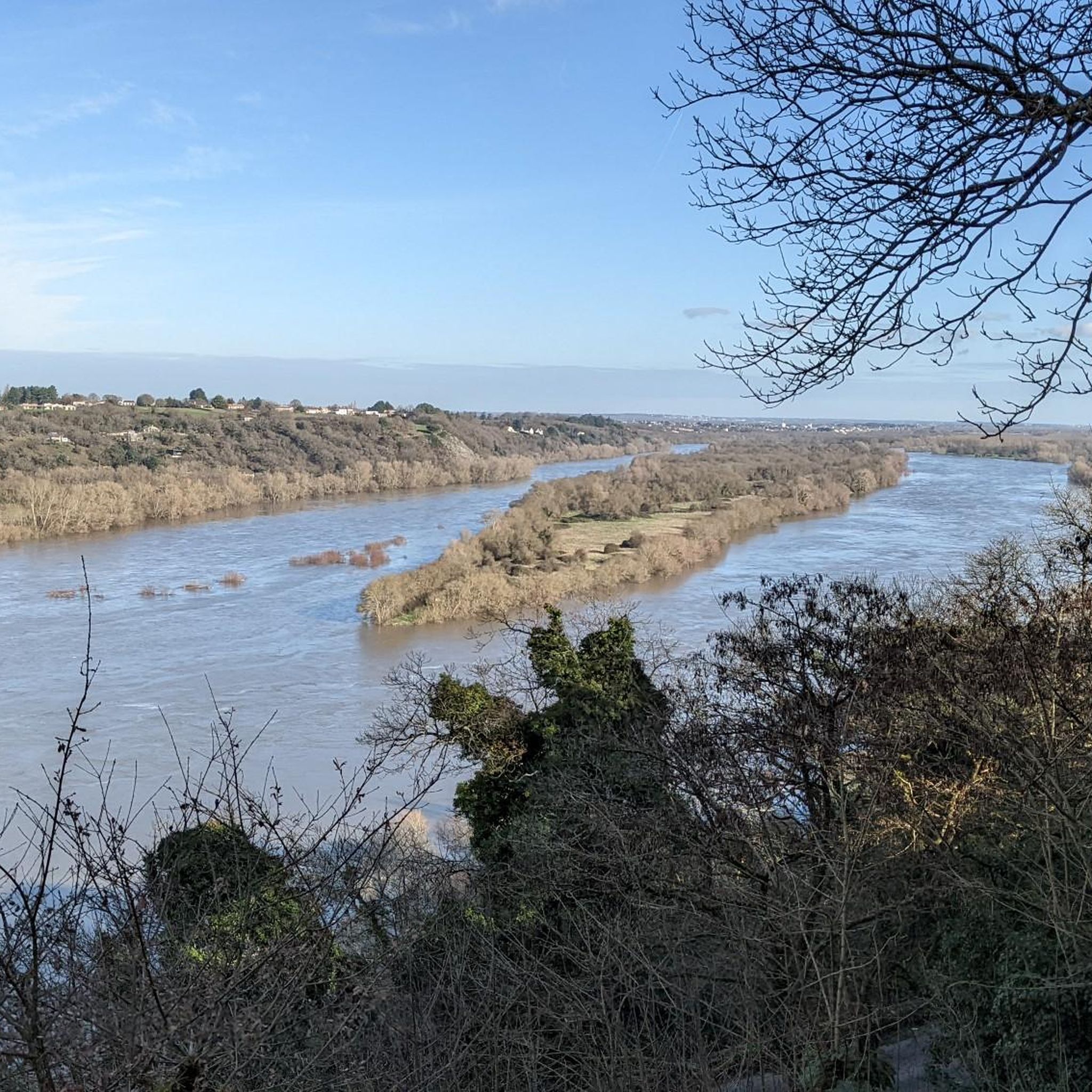
Viewpoint over the Sèvre Nantaise and the village of Chevalier.
1
0
It spans the Sèvre to connect the communes of Gétigné (Loire Atlantique) and Cugand (Vendée) and provides a lovely view of the valley.
0
0

A historic monument, the Temple of Friendship was built on the St Gilles hillside between 1812 and 1824. It owes its name to the friendship between François and Pierre Cacault and the sculptor François-Frédéric Lemot, initiators and creators of the Italianate architecture of Clisson at the beginning of the 19th century. Pierre Cacault wanted to build a mausoleum in memory of his brother François who died in Clisson on 10 October 1805, but, not having sufficient financial means, it was Lemot who financed the project. Pierre died in 1810. Ultimately, the tombs of the two brothers were not built, because the Cacault heirs did not authorise the transfer of their ashes to the mausoleum. François-Frédéric Lemot was buried in this tomb on 18 May 1827. File produced in partnership with the association "Clisson Histoire et Patrimoine"
0
0

Former Feuillée Spinning Mill
0
0
Frequently Asked Questions
How many hiking trails are available around La Bernardière?
There are over 260 hiking routes in the La Bernardière area, offering a wide range of options for different skill levels and preferences. You'll find everything from easy strolls to more challenging, longer hikes.
Are there easy hiking trails suitable for beginners or families in La Bernardière?
Yes, La Bernardière offers over 100 easy hiking trails, perfect for beginners or families looking for a relaxed outing. These routes typically feature gentle terrain and shorter distances, allowing everyone to enjoy the rural landscapes and river valleys.
What kind of natural and historical attractions can I expect to see on hikes around La Bernardière?
Hiking around La Bernardière often leads you past a variety of interesting sights. You might encounter historical mills, charming footbridges, and rural landscapes. Notable attractions in the wider area include the impressive Château de Clisson, the unique Valley of the Three Provinces, and the historic The Arsenal bridge. For natural wonders, look out for the Leaning Stone Pine of Rue de la Collégiale or the The bowl stone.
Are there any circular walks in the La Bernardière region?
Many of the trails around La Bernardière are designed as circular routes, allowing you to start and end at the same point. An example is The Arsenal – Fulling Mill of Cugand loop from Cugand-la-Bernardière, which takes you through scenic areas and past historical points of interest.
What is the typical duration for hikes in La Bernardière?
Hike durations vary significantly. Shorter, easy routes might take an hour or two, while longer, more challenging trails can extend to several hours. For instance, Hucheloup Footbridge – Chevalier Footbridge loop from Cugand is a moderate 9.7-mile (15.6 km) trail that typically takes around 4 hours to complete.
What do other hikers enjoy most about the trails in La Bernardière?
The trails in La Bernardière are highly rated by the komoot community, with an average score of 4.6 stars from over 800 reviews. Hikers often praise the diverse terrain, the presence of historical mills and footbridges, and the peaceful river valleys that define the region's character.
Are there any viewpoints or scenic spots along the hiking trails?
Yes, the region's varied terrain, including river valleys and rural landscapes, offers several scenic spots. The Reuzard mill and footbridge is noted as a viewpoint, providing picturesque views of the surrounding area and waterways.
Can I bring my dog on the hiking trails in La Bernardière?
Many trails in rural areas like La Bernardière are generally dog-friendly, but it's always advisable to check specific route details or local signage for any restrictions, especially near protected areas or private land. Always keep your dog under control and clean up after them.
What is the best time of year to go hiking in La Bernardière?
The spring and autumn months are generally ideal for hiking in La Bernardière, offering pleasant temperatures and beautiful scenery as the foliage changes or blooms. Summer can also be enjoyable, but it's best to start early to avoid the midday heat. Winter hiking is possible, but trails might be muddy, and daylight hours are shorter.
Are there any moderate difficulty hikes for those looking for a bit more challenge?
Absolutely. La Bernardière features over 140 moderate trails. These routes offer a good balance of distance and elevation gain without being overly strenuous. An example is The Rousselin mill loop from La Libaudière, which is an 8.5 km (5.3 miles) route with moderate elevation changes.
Are there any trails that pass by historical castles or significant landmarks?
Yes, some routes offer glimpses of historical landmarks. For instance, the Clisson Castle – Valley Bridge loop from Cugand is a challenging route that provides views of historical landmarks and river valleys, including the impressive Château de Clisson in the vicinity.
Most popular routes around La Bernardière
Most popular attractions around La Bernardière

Get inspired with the komoot mobile app


Explore more
Browse the best Hikes in other regions.
