Attractions and Places To See around La Boissière-De-Montaigu - Top 20
Best attractions and places to see around La Boissière-De-Montaigu, a commune in the Vendée department of France, include a blend of natural beauty and historical landmarks. The area features a significant artificial lake, extensive walking trails, and various green spaces. Visitors can explore sites that highlight the region's natural heritage and historical significance. The landscape is shaped by rivers and is known for its diverse outdoor opportunities.
Best attractions and places to see around La Boissière-De-Montaigu
- The most popular attraction…
Last updated: July 2, 2026
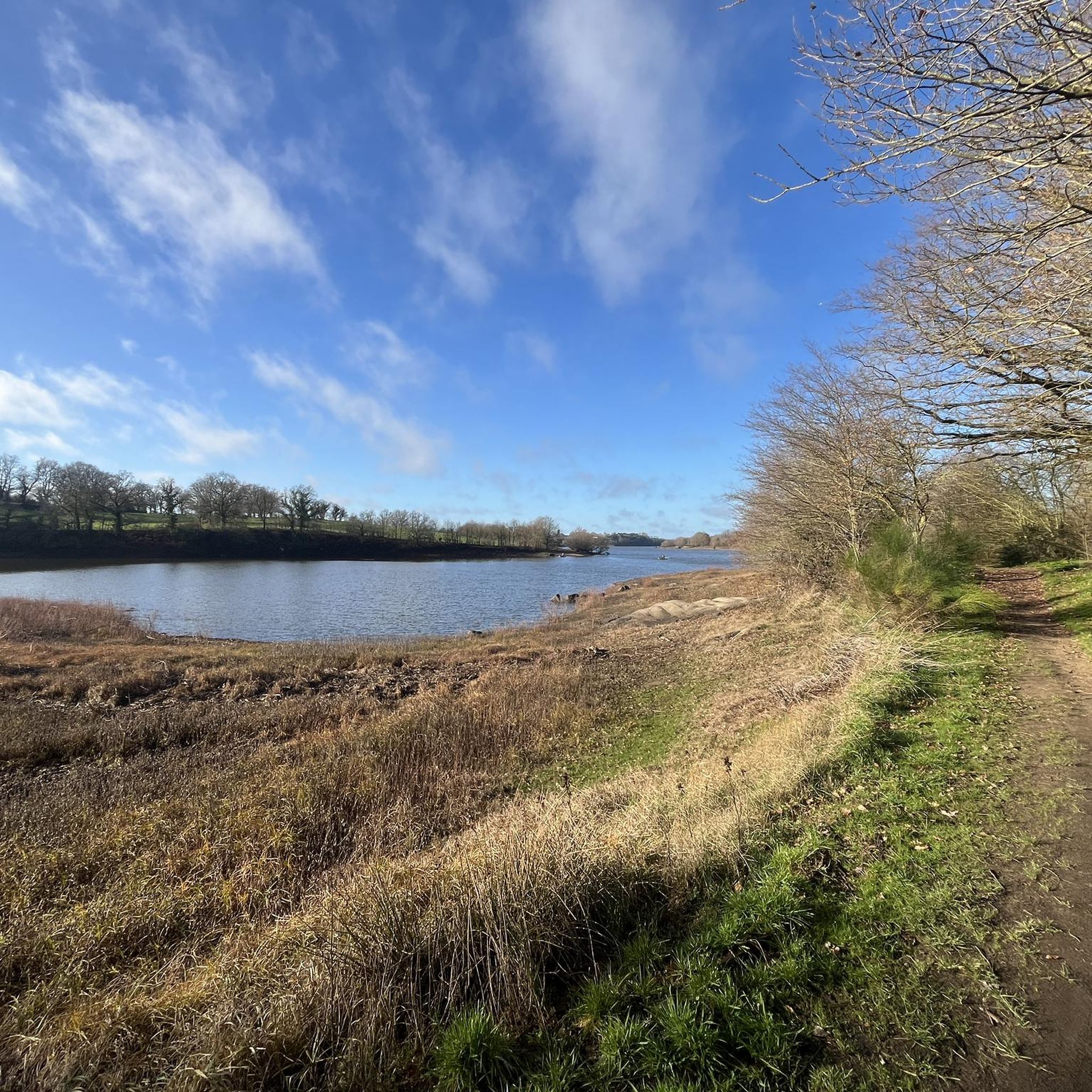
Lac de la Bultière
Highlight • Lake
Translated by Google •
Tip by

Valley of the Three Provinces
Highlight • Monument
Translated by Google •
Tip by

Sign up now to discover places like this
Get recommendations on the best single tracks, peaks, & plenty of other exciting outdoor places.
Sign up for free
Sanctuary of La Salette of La Rabatelière
Highlight • Religious Site
Translated by Google •
Tip by

Montaigu Castle
Highlight • Viewpoint
Translated by Google •
Tip by

Tiffauges Castle
Highlight • Castle
Translated by Google •
Tip by
Sign up for free to discover even more attractions around La Boissière-De-Montaigu.
Sign up for free
Already have an account?
Start today with a free account
Your next adventure awaits.
Login or Signup
Popular around La Boissière-De-Montaigu

Tips from the Community

A truly unusual place, worth the detour.
0
0

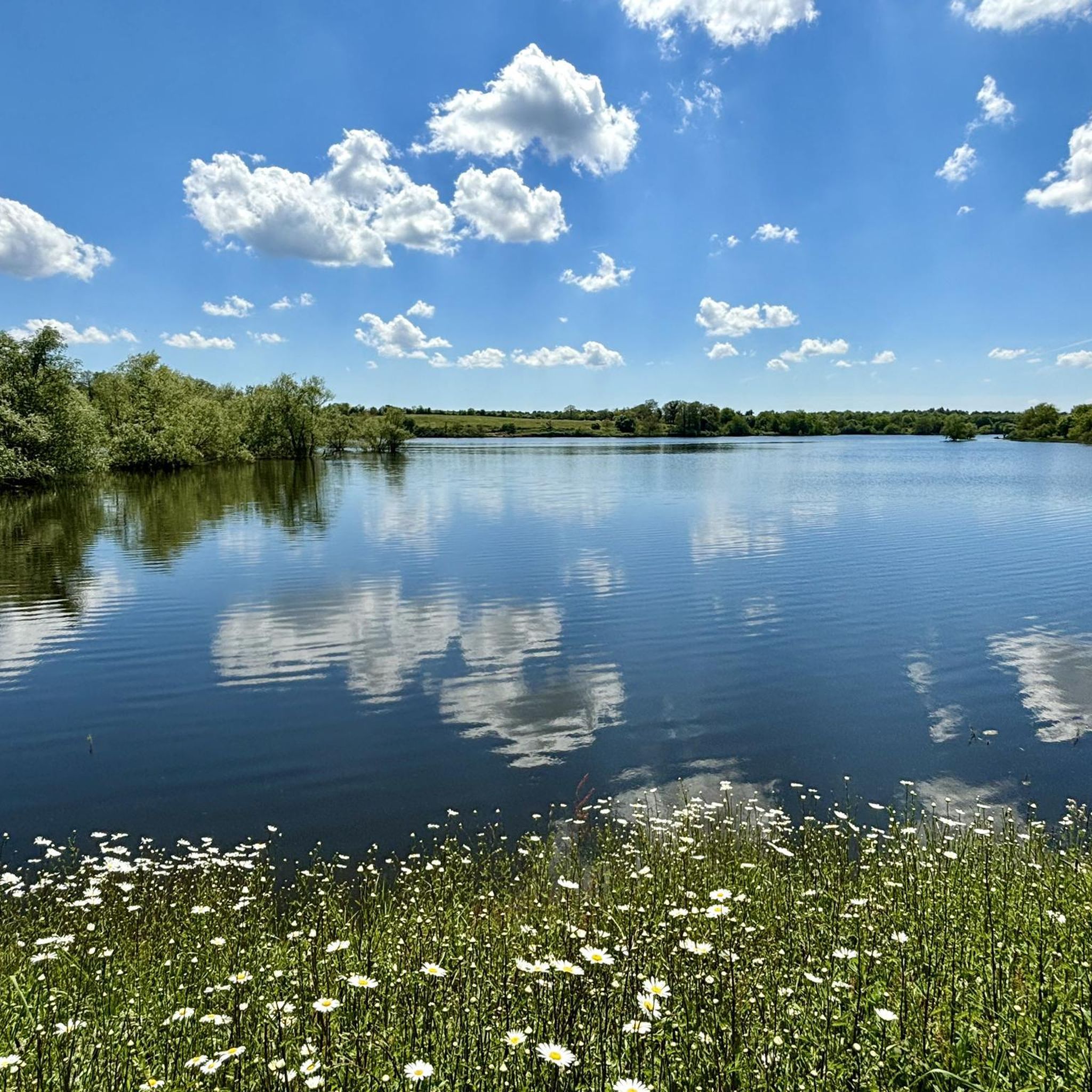
Bultière Lake is an artificial reservoir. The Bultière Dam was built in 1994. It is located in the commune of Chavagne en paillers. It supplies the drinking water network. Its surface area is 72 hectares and contains 5.2 million cubic meters of water. It is possible to walk around the lake via a 15-km trail. This lake, with its exceptionally rich fish population, awaits you with almost every type of fish (perch, pike, zander, catfish, carp, roach, bream, tench, etc.). You can go predator fishing from the shore or from a boat to catch zander, pike, and catfish. It is, of course, possible to still fish for roach, bleak, or bream. Carp are also present in this lake. A night carp fishing route located on the right bank in the Maurosière sector will delight those who love a good catch.
0
0
. Originally, there was an ovoid-shaped enclosure flanked by about ten towers and a gatehouse, located to the northeast. The fortified town was located to the north of the fortress and extended a little to the east. A dry moat separated the fortified town from the fortress. A barbican protected the gatehouse. A Romanesque keep of the Niort type, with its courtyard and small enclosure, was located in the castle courtyard, roughly in the middle in the north-south direction and located to the west. The fortified city extended from the rue de Gaulle, a gate was located at the level of the Carré de l'Europe (the porte de Nantes), then the ramparts continued along the rue de la Place du Champ de Foire, then went back down the Esplanade des Olivettes, where a gate was located towards the roundabout of the rue des Jardins (porte de Tiffauges) then the ramparts ran along the Asson to go up the rue du Pont Jarlet and around the barbican not far from the Presbytery The dry moats surrounding the city were 16 meters deep in the 15th century, today they are flowered and are the subject of different colored squares decorating this part of the ramparts.
0
0
In the 9th century, a castrum, a wooden castle built on a mound of earth, was built to counter the Viking raids that had previously sacked the city of Durivum (Saint-Georges-de-Montaigu). For strategic reasons, this fortress was built on a rocky spur at the junction between the Maine and Asson rivers. Maurice I of Montaigu, the first known lord, witnessed the consecration of the church of Saint-Nicolas de la Chaize-le-Vicomte in 1099. His successor until 1174 was Brient I of Commequiers, married to his daughter, Agathe de Montaigu. Later, his grandchildren, Brient II, Maurice II "the Younger," and Marguerite, succeeded him. It was perhaps this Brient II who had the Romanesque keep built in 1218, a large square tower with flat corner towers. He also removed the wooden palisade, replacing it with a wide moat extending to the Saint-Georges Gate. The Montagues (also known as Belleville by marriage around 1180) pledged allegiance to the Plantagenets, Henry II, Richard the Lionheart, and John Lackland. Margaret of Belleville-Montaigu, daughter of Brient de Montaigu and Agnes de Belleville, granddaughter of Maurice I de Montaigu, sister of Maurice II de Belleville-Montaigu, married Hugh of Thouars in 1203. In 1227, the couple submitted to Philip Augustus through the ceremony of homage. Hugh of Thouars died in 1229, and Margaret remarried in 1235 to the Duke of Brittany, Mauclerc, whose real name was Pierre de Dreux. Marguerite de Montaigu died in 1241, childless. The lordship of Montaigu fell to her nephew, Maurice III de Belleville-Montaigu (d. c. 1297; son of Maurice II). He became lord of Montaigu upon the death of Mauclerc in 1250[2], and his son Maurice IV (d. c. 1292) ensured the succession through his children Jeanne (d. 1284 Geoffroy II David de La Flocellière) and Maurice V de Belleville-Montaigu (he married 1° Sibylle, daughter of Geoffroy VI de Châteaubriant, then 2° Isabelle/Létice de Parthenay, daughter of Guillaume V Larchevêque de Parthenay). Jeanne de Belleville (c. 1300-c. 1359), daughter of Maurice V of Montaigu and Létice of Parthenay, married Olivier IV of Clisson for the second time in 1328. Olivier IV was executed by beheading after being suspected of "felony" against the English, during the Hundred Years' War. Jeanne became a privateer with her children Olivier V and Jeanne de Clisson, in revenge, and was banished from the kingdom of France. While she attacked French ships, the fortress of Montaigu was held by the English, according to the Treaty of Brétigny-Calais, a garrison of which engaged in pillaging the surrounding area. Jeanne lost her ship and withdrew with her children to England. Olivier V, having grown up, rallied to the king of France, recovered his property in 1362 and fought the English with Bertrand du Guesclin. In 1373, Olivier and Bertrand succeeded in driving the English out of Montaigu, and Olivier ceded the lordship to his sister Jeanne, who had married an English captain, Jean Harpedenne. The latter sided with the King of France in 1373 and became Jean de Belleville. His grandson, Jean III, married Charles VII's half-sister, Marguerite de Valois, in 1433. Louis I de Belleville succeeded Jean III. King Louis XI advised him to fortify the town between 1464 and 1468 to protect it from the Bretons.
0
0
A large medieval castle. It features themed shows, including siege engine demonstrations.
2
0
Another beautiful site on the Sèvre Nantaise, with the unusual feature this time: it's not only at the crossroads of three departments (LA, Vendée, and M&L), a rather common occurrence, but also of three former provinces: Brittany, Poitou, and Anjou. The crossroads is formed by the Sèvre on one side and its tributary, the Bon Débit, on the other. The inn of the same name looks very nice; in any case, the setting is splendid.
0
0

Very beautiful building
0
0

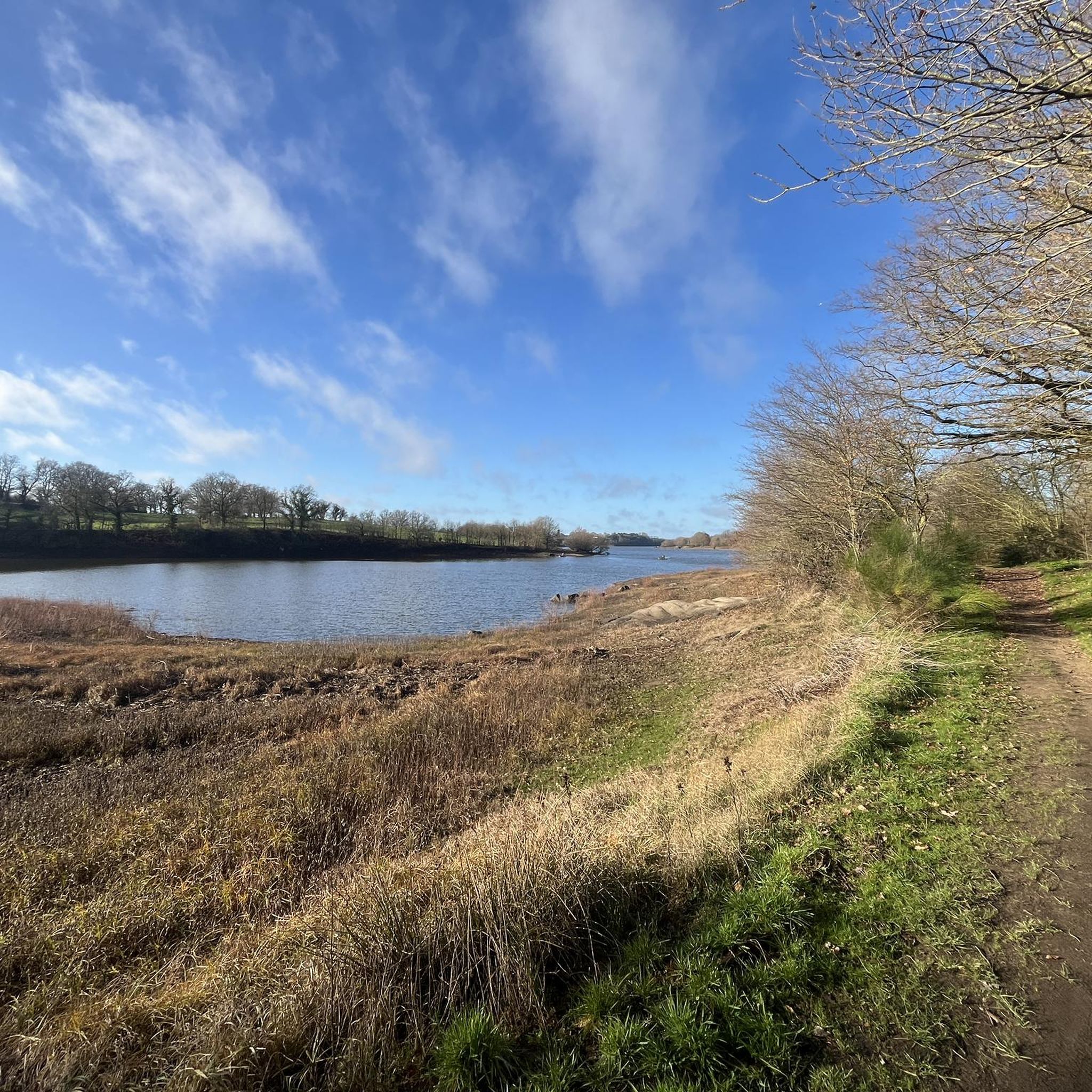
This vast body of water, popular for fishing and nature walks, offers an ideal setting for a bike ride along its banks. The trails surrounding the lake reveal superb views of the calm water and the surrounding hills.
0
0
Frequently Asked Questions
What natural attractions can I explore around La Boissière-De-Montaigu?
The most prominent natural attraction is Lac de la Bultière, a 72-hectare artificial lake with approximately 12 kilometers of trails for hiking, running, and mountain biking. You can also enjoy canoeing, kayaking, and stand-up paddleboarding at its nautical base. Additionally, the Valley of the Three Provinces offers a unique landscape shaped by the Sèvre Nantaise river and its tributary, Le Bon Débit, at the crossroads of three historical regions.
Are there historical sites to visit in the area?
Yes, the region is rich in history. While the 15th-century Château d'Asson is private, you can explore the remnants of Montaigu Castle, a fortified site dating back to the 9th century. Slightly further afield, Tiffauges Castle, known for its connection to Gilles de Rais, is a significant historical site and one of the most visited in Vendée, featuring siege engine demonstrations.
What kind of outdoor activities can I do near La Boissière-De-Montaigu?
The area is excellent for outdoor enthusiasts. You can hike around Lac de la Bultière on its 12-kilometer path. For more extensive options, explore various hiking trails, including the Sentier des Logis (10.8 km) or the well-shaded La Bultière trail (12.9 km). Cycling is also popular, with routes like the 'Lac de la Bultière loop' available. You can find more details on routes in the Hiking around La Boissière-De-Montaigu and Cycling around La Boissière-De-Montaigu guides.
Are there family-friendly attractions or activities?
Absolutely. Lac de la Bultière is family-friendly, offering trails suitable for walks and cycling, and water activities like canoeing. The Valley of the Three Provinces and Montaigu Castle also welcome families. Additionally, the town center features parks and gardens, including the Jardin des Grouries, which have playgrounds for children. Tiffauges Castle often hosts themed shows and siege engine demonstrations that are engaging for all ages.
Where can I find walking trails in La Boissière-De-Montaigu?
La Boissière-De-Montaigu offers several walking trails. The path around Lac de la Bultière is a popular 12-kilometer option. Other notable trails include the Sentier des Logis (10.8 km) for exploring historical logis, and the well-shaded La Bultière trail (12.9 km). You can find detailed routes and maps in the Hiking around La Boissière-De-Montaigu guide.
What is the Sanctuary of La Salette of La Rabatelière?
The Sanctuary of La Salette of La Rabatelière is a religious building constructed in 1875 by local villagers. It was built to reproduce the pilgrimage to the original Marian shrine of La Salette in the French Alps, reflecting the deep devotion of the Vendée peasants.
Are there any unique natural areas or viewpoints?
Beyond Lac de la Bultière, the Valley of the Three Provinces offers a unique geographical and historical viewpoint where three departments and three historical provinces converge, shaped by the Sèvre Nantaise river. The Bois des Brosses also provides a pleasant natural setting with picnic tables.
Can I go cycling or mountain biking in the area?
Yes, the trails around Lac de la Bultière are suitable for cycling and mountain biking. The region offers various cycling routes, including moderate and difficult options. For detailed routes, refer to the Cycling around La Boissière-De-Montaigu and Gravel biking around La Boissière-De-Montaigu guides.
What are some lesser-known or 'hidden gem' attractions?
While not exactly hidden, the numerous ancient logis scattered throughout the commune offer a glimpse into its historical heritage beyond the main castles. The Maison de la Rivière (House of the River) in nearby Montaigu-Vendée provides a unique experience to discover a river and its watermill, with autonomous boat trips on the Grande Maine river, surrounded by 10 hectares of nature.
What do visitors enjoy most about the attractions around La Boissière-De-Montaigu?
Visitors particularly appreciate the blend of natural beauty and historical significance. The serene environment of Lac de la Bultière is highly rated for its walking and cycling opportunities and rich fish population. The historical depth of sites like Montaigu Castle and Tiffauges Castle, combined with the unique geographical feature of the Valley of the Three Provinces, offers a diverse and engaging experience for those exploring the region.
Are there any specific cultural sites or monuments?
Beyond the castles, the Église Notre-Dame-de-l'Assomption, built in 1875, is a key monument in La Boissière-De-Montaigu. The Sanctuary of La Salette of La Rabatelière also stands as a testament to local religious history and devotion.
Most popular routes around La Boissière-De-Montaigu
Most popular attractions around La Boissière-De-Montaigu

Get inspired with the komoot mobile app


Explore more
Still not found the Highlight you’re looking for? See guides of the top attractions in other regions:
