The best road cycling routes around Huillé
4.3
(33)
773
riders
106
rides
Road cycling routes around Huillé traverse the green and bucolic landscapes of the Loir Valley in the Maine-et-Loire department. The region features a blend of verdant river valleys, gentle hills, and a limestone plateau, offering diverse terrain for cyclists. To the south, the Chambiers Forest provides additional routes and shaded sections. This varied topography ensures options for different cycling preferences, from riverside paths to routes with slight elevation changes.
Best road cycling routes around Huillé
- The most popular road cycling…
Last updated: July 7, 2026
11
riders
6.18km
00:20
40m
40m
Easy road ride. Great for any fitness level. Mostly well-paved surfaces and easy to ride.
6
riders
43.3km
01:45
210m
210m
Easy road ride. Great for any fitness level. Mostly well-paved surfaces and easy to ride.

Sign up for free
5
riders
29.0km
01:15
210m
210m
Easy road ride. Great for any fitness level. Mostly well-paved surfaces and easy to ride.
4.0
(1)
4
riders
47.1km
02:00
260m
260m
Moderate road ride. Good fitness required. Mostly well-paved surfaces and easy to ride.
5
riders
20.3km
00:54
70m
70m
Easy road ride. Great for any fitness level. Mostly well-paved surfaces and easy to ride.
Get access to more routes and recommendations from other explorers.
Sign up for free
Already have an account?
Our route recommendations are based on thousands of hikes, rides, and runs completed by other people on komoot.
Start today with a free account
Your next adventure awaits.
Login or Signup


Tips from the Community

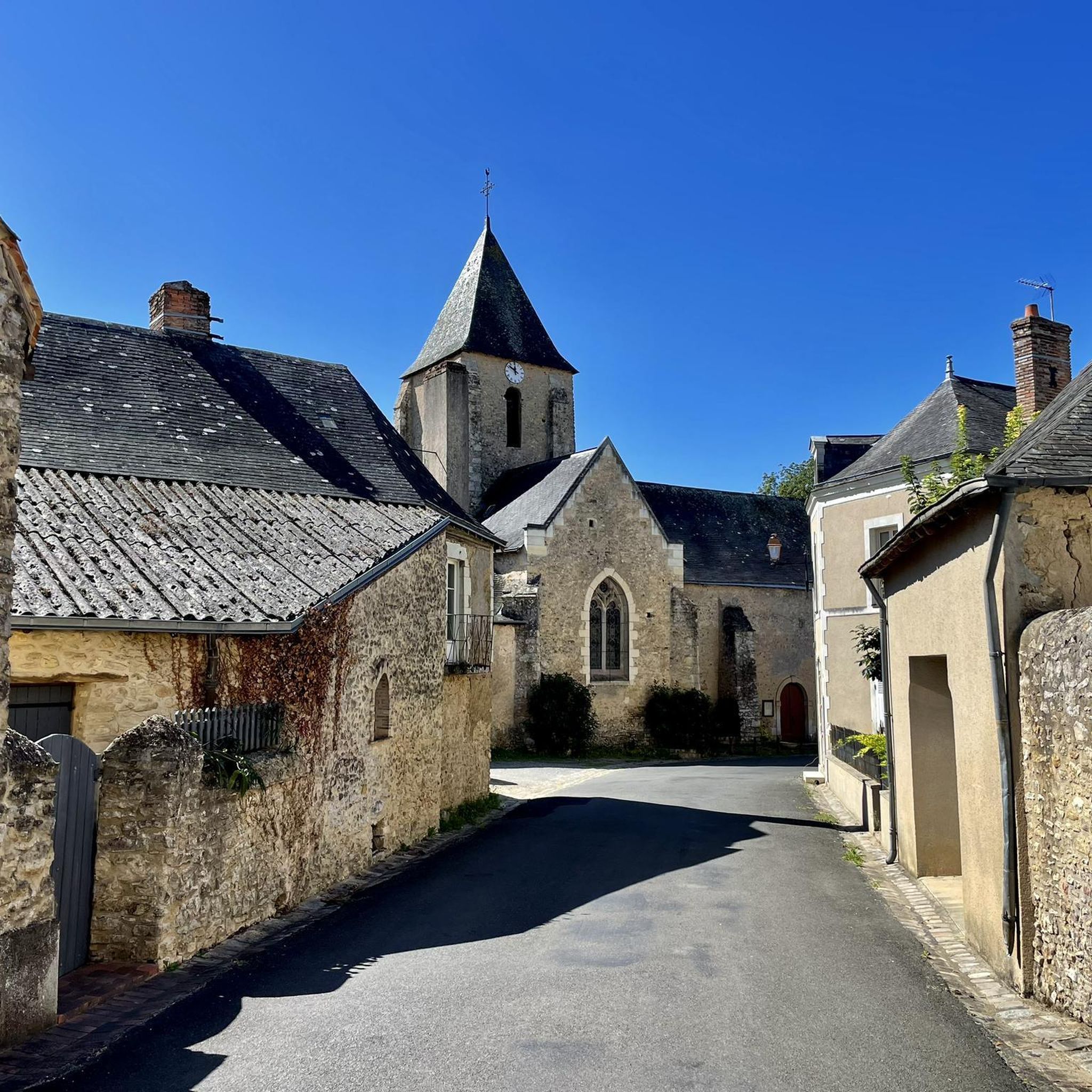
This large church for a small village was built in 1880 according to the plans of the architect Beignet, then famous in Anjou. Constructed in the Neo-Gothic style characteristic of the period, it replaced the village's old Romanesque church. Dating from the 10th century, it was among the oldest in the department! In any case, Beignet had this large church built using tufa stone (a local and therefore economical material), quite typical of the 19th century, and partly constructed with materials from the old Romanesque church. The style of this period, long criticized, is becoming increasingly rare today as many examples are gradually being demolished. The church's bell tower is interesting with its four statues, which you can have fun identifying by their attributes.
0
0

The nave and bell tower were built in the 12th century. The choir and its ribbed vault decorated with painted sculptures were built in the following century, while the south chapel dates from the 16th century. The church underwent extensive renovations in the 19th century, when the nave and transept were rebuilt. A fire struck the church in 1900, leading to a further reconstruction of the nave, transept, sacristy, and the upper part of the bell tower. The choir of the building has been listed as a historic monument since December 9, 1926.
0
0
Notre-Dame-du-Pé shared its history with Anjou. Today, it is part of the Angevin Maine. In the Middle Ages, the parish was part of the Angevin seneschalship of La Flèche. Under the Ancien Régime, the commune was attached to the elected territory of La Flèche. During the French Revolution, the commune, like all those in the seneschalship of La Flèche, was attached to the new department of Sarthe. In 1801, during the Concordat, the parish was separated from the Diocese of Angers and transferred to that of Le Mans.
0
0

SCHEDULES From May 1 to October 31, 2023 Details on openings: Call before coming to be sure of openings for visits. PRICES Individual price child Child rate 7-15 years old: €4.50. Payment by cash or checks, no credit card. Individual price adult €7.50 adult. Payment by cash or checks, no credit card. Adult group rate Group rate (>10 people): €6.50 adult and €3.50 child
0
0
VISITS Individual guided tours Average duration of individual visit: 1 hour Groups welcome from 10 people Guided group tours Guided group tours on request Average duration of the group visit: 1 hour Point of interest visible without visit accepted animals Languages available Spoken: French, English
0
0
Located in Anjou, Durtal Castle is a remarkable architectural synthesis of monumental constructions in the Loire Valley. This former royal estate was built on a rocky peak overlooking the Loir valley. Its current location was strategically chosen in the 11th century by Foulques Nerra and Geoffroy de Martel, Lords of Anjou, with the aim of protecting the city of Angers. This imposing stately residence from the Middle Ages will expand over the centuries and become this sumptuous castle where the kings of France loved to stay. The property is, in fact, close to the Chambiers forest, an ideal place for hunting. Durtal Castle has hosted illustrious occupants such as Henri II, Charles IX, Catherine de Medici and Louis XIII. History also tells that in these places the massacre of Saint-Barthélémy was instigated. This historic Angevin building today constitutes the result of a beautiful architectural harmony between the medieval and Renaissance styles. The guided tour allows the public to discover the splendor of Durtal Castle, as well as its historical, architectural and artistic wealth. A dedicated route leads to the exploration of its painting gallery, its walkway, its “nightjar” room, its 15th century framework, and even one of the largest fireplaces in France. To go further in the experience of “castle life”, the owners of Durtal Castle offer stays in comfortable guest rooms and gîtes. Guided tours: Tour departure: 10:30 a.m. – 11:30 a.m. – 2:30 p.m. – 3:30 p.m. – 4:30 p.m. – 5:30 p.m. From Easter to All Saints' Day: weekends and public holidays From June 1st to the 3rd weekend of September: every Monday and Tuesday By appointment for groups, all year round.
0
1

Now merged with Lézigné, this small town was formerly the seat of small lordships until the Revolution. Its location between the foothills of the Armorican Massif and the Parisian basin gives it a particular character.
1
0
Frequently Asked Questions
How many road cycling routes are available around Huillé?
There are over 100 road cycling routes around Huillé, offering a wide variety of options for different preferences and skill levels. You'll find everything from short, easy loops to longer, more challenging rides.
What kind of terrain can I expect on road cycling routes around Huillé?
The region around Huillé offers diverse terrain. You can expect green and bucolic landscapes along the Loir Valley, gentle hills, and sections traversing a limestone plateau. To the south, routes border the Chambiers Forest, providing shaded sections and a change of scenery.
Are there options for different skill levels, including beginners?
Yes, Huillé caters to various skill levels. You'll find many easy routes, such as the Huillé hilltop village loop from Huillé, which is a short, scenic ride. There are also moderate routes for those seeking a bit more challenge, like the Château de Durtal – Durtal loop from Durtal.
What landmarks or points of interest can I see while cycling around Huillé?
While cycling around Huillé, you can explore several interesting landmarks. The historic Château de Durtal is a notable attraction. You might also pass through charming settlements like Huillé itself, or see the Mils of La Motte.
Is parking available for cyclists in Huillé?
While specific dedicated cyclist parking areas are not detailed, Huillé is a small village, and general parking should be available. It's advisable to check local signage upon arrival for the most convenient spots.
Are there places to eat or stay for cyclists in Huillé?
Huillé and its surrounding villages offer options for refreshments and accommodation. For example, the Huillé – Guinguette Chez Nini loop from Lézigné suggests a destination for a break. You'll find local cafes, pubs, and accommodation in the area suitable for cyclists.
Does Huillé connect to larger cycling networks?
Yes, Huillé's location provides excellent connectivity to renowned regional and national cycling routes. It offers access to segments of 'La Loire à Vélo,' the 'Vélo Francette,' and 'Loir Valley by bike.' These networks often feature dedicated, car-free paths, enhancing safety and enjoyment. For more information on the Loire à Vélo, you can visit francevelotourisme.com.
What do other road cyclists say about the routes in Huillé?
The road cycling routes around Huillé are highly regarded by the komoot community, with an average score of 4.3 stars from over 20 reviews. Cyclists often praise the green landscapes, varied terrain, and the peaceful environment for relaxed and scenic rides.
Are there any circular road cycling routes in Huillé?
Many of the routes around Huillé are designed as loops, making them convenient for circular rides. Examples include the Huillé hilltop village – Huillé loop from Lézigné, which offers a pleasant circular journey through the local countryside.
What is the best time of year for road cycling in Huillé?
The region's green and bucolic nature suggests that spring and autumn would be ideal for road cycling, offering pleasant temperatures and vibrant scenery. Summer can also be enjoyable, especially on routes that pass through shaded areas like the Chambiers Forest.
Are there longer road cycling routes for more experienced riders?
Absolutely. For more experienced riders looking for a longer challenge, routes like the Château de Durtal – Bazouges loop from Lézigné cover a significant distance of over 90 km with moderate elevation changes, providing a rewarding ride.
Most popular attractions around Huillé

Get inspired with the komoot mobile app


Explore more
Browse the best Road cycling routes in other regions.
