The best road cycling routes around Roujan
4.5
(143)
3,624
riders
244
rides
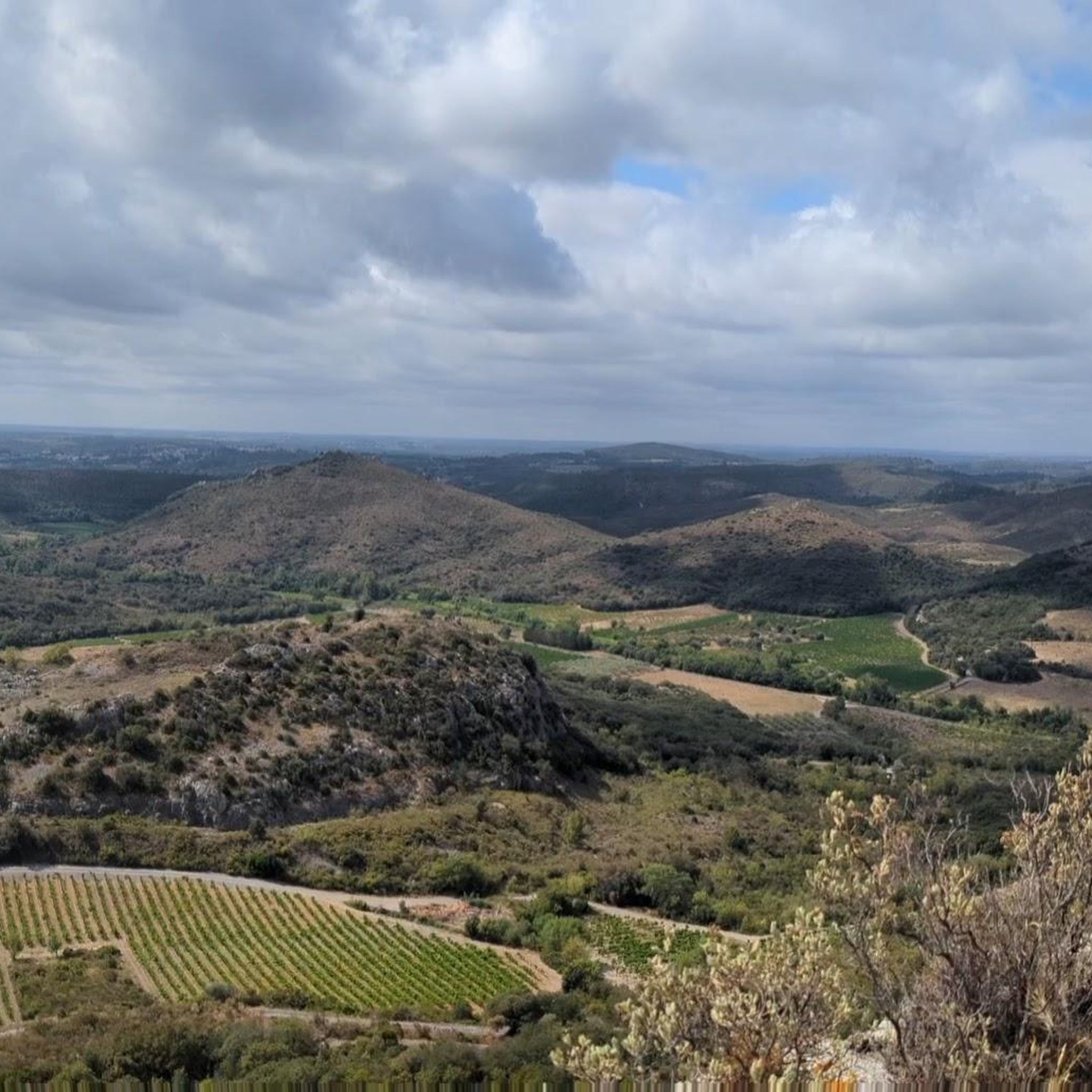
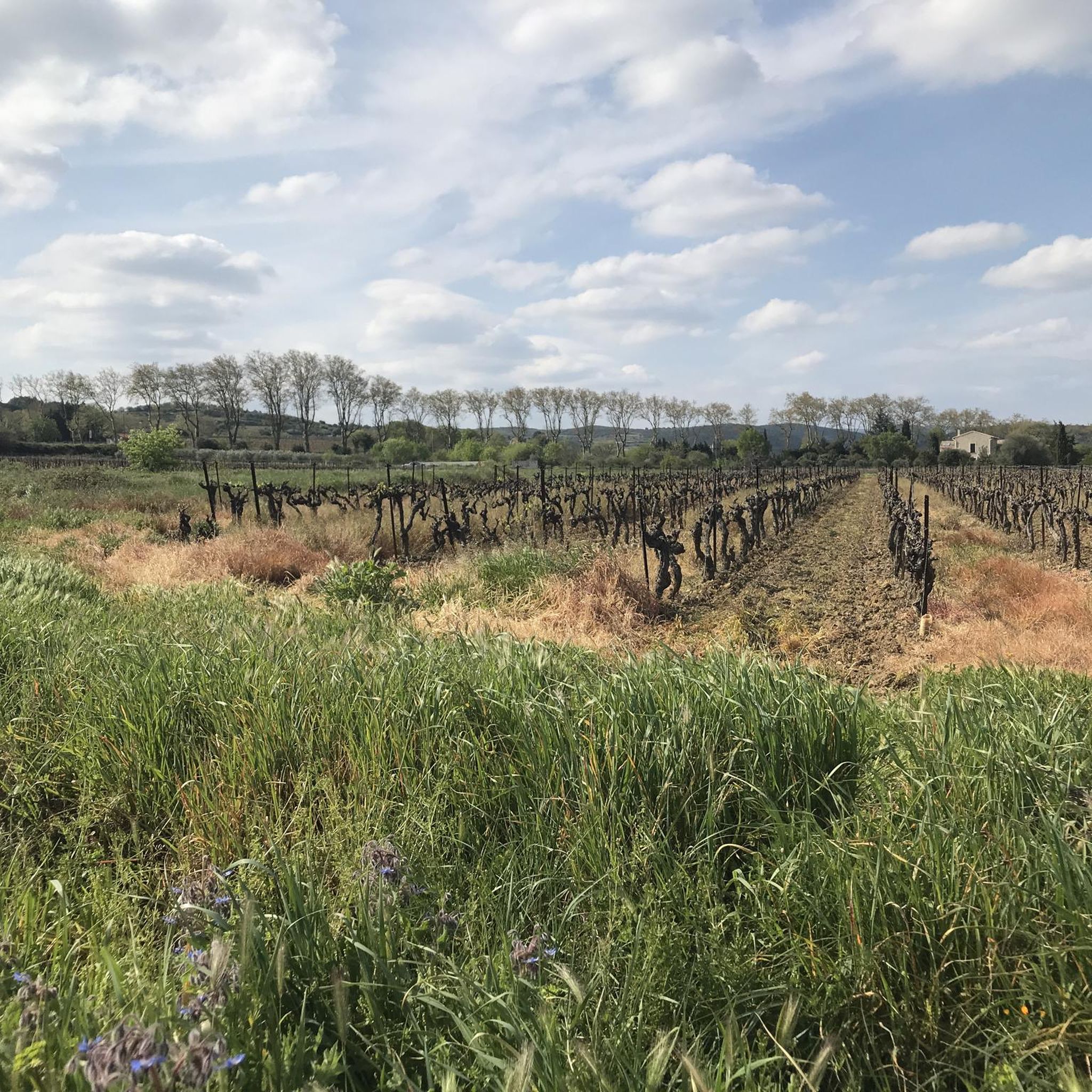
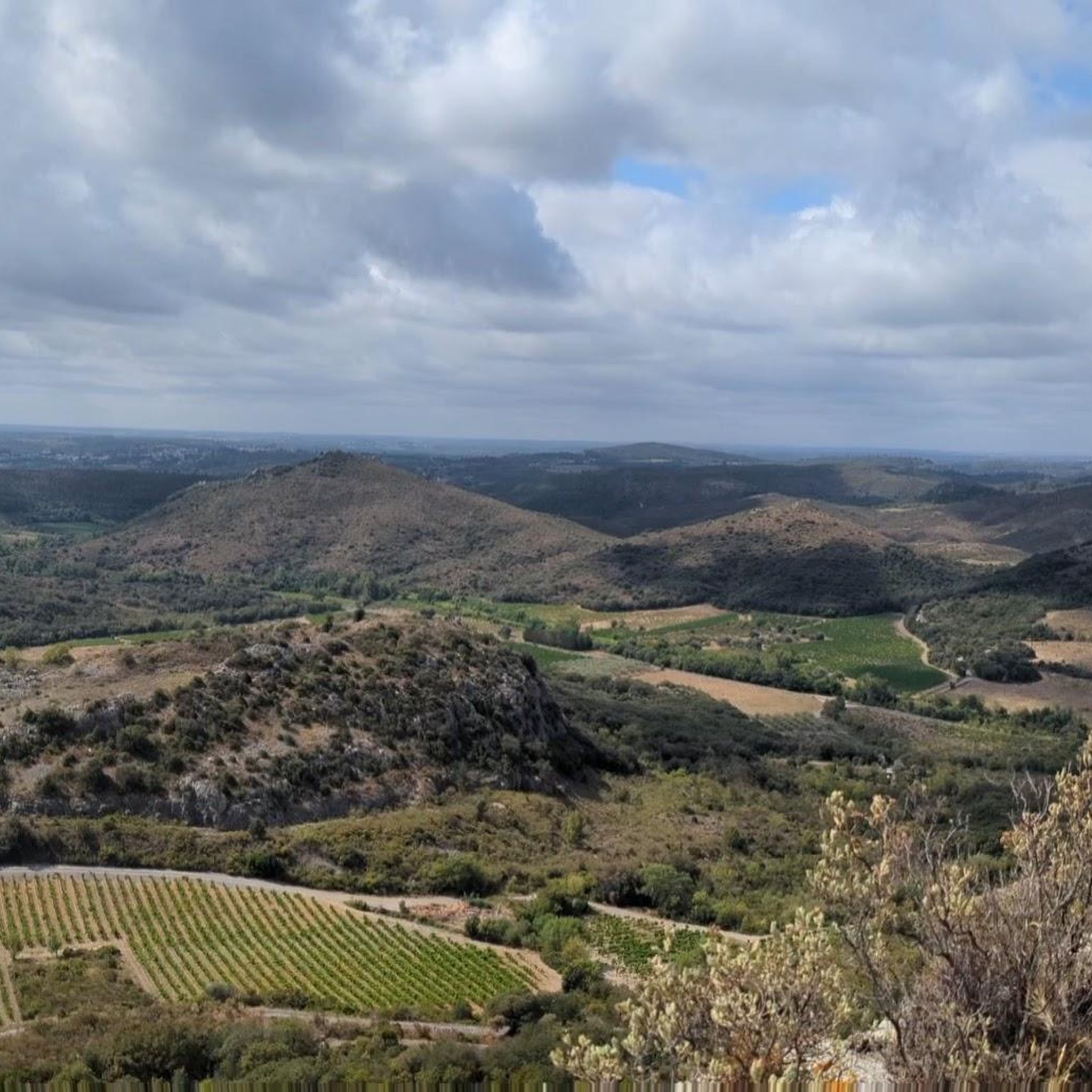
Road cycling around Roujan offers diverse landscapes characterized by extensive vineyards and undulating hills. The region features well-paved roads that traverse a rolling countryside, providing varied terrain for cyclists. Natural features such as the distinctive red earth around Lac du Salagou and the dramatic rock formations of Cirque de Mourèze contribute to the scenic routes. The area's elevation changes range from gentle slopes to significant climbs, catering to different fitness levels.
Best road cycling routes around Roujan
- The most popular…
Last updated: September 2, 2026
31
riders
37.4km
01:39
350m
350m
Moderate road ride. Good fitness required. Mostly well-paved surfaces and easy to ride.
5.0
(2)
24
riders
30.7km
01:26
360m
370m
Moderate road ride. Good fitness required. Mostly well-paved surfaces and easy to ride.

Sign up for free
5.0
(1)
22
riders
44.0km
02:08
670m
670m
Moderate road ride. Good fitness required. Mostly well-paved surfaces and easy to ride.
4.0
(3)
20
riders
54.0km
02:32
510m
510m
Moderate road ride. Good fitness required. Mostly well-paved surfaces and easy to ride.
5.0
(1)
16
riders
42.8km
02:12
680m
680m
Moderate road ride. Good fitness required. Mostly well-paved surfaces and easy to ride.
Get access to more routes and recommendations from other explorers.
Sign up for free
Already have an account?
Our route recommendations are based on thousands of hikes, rides, and runs completed by other people on komoot.
Start today with a free account
Your next adventure awaits.
Login or Signup
Tips from the Community

The Saint-Étienne church is one of the major witnesses to the history of Boujan-sur-Libron. Built in the 11th century on the site of an old chapel attributed to the Visigothic era, it was destroyed and rebuilt several times before taking its Gothic form in the 14th century. Its history can still be read in its different layers: nave dated 1536, bell tower completed in 1666, and choir remodeled in 1890. It notably preserves a Romanesque capital, a painting of the Rosary from 1670, a high altar from the 18th century, and a bell from 1686. The current square was once occupied by the village cemetery, which was moved in 1836. An interesting stop before continuing through the narrow streets of the old Boujan circular settlement.
2
0
The castle overlooks Pézènes-les-Mines from the upper part of the village. This castle is private, but its facades, roofs, and enclosure have been protected as historical monuments since 1981. Its history is ancient, but the ensemble we see today is the result of several construction and transformation campaigns. The Romanesque chapel, integrated into the castle, dates back to the 12th century. Its apse was later raised in the 14th century to take on a defensive function. The castle itself underwent significant alterations in the 14th, 16th, and 17th centuries. Two gates were notably built into the enclosure in the 17th century. The defensive elements are still very legible: two gates with arrow slits controlled access to the courtyard and were once protected by a drawbridge. Two towers flank the ensemble, while the enclosure follows the natural irregularities of the terrain. The chapel also retains a rather remarkable detail: its door and some of its bays are decorated with basalt inlays, giving the building a discreet but original polychromy. Pézènes-les-Mines was not always the small village one might imagine today. Pézènes was the capital of a marquisate that grouped the communities of Pézènes, Montesquieu, and Valmascle. The castle was therefore at the heart of a larger seigneurial territory. Little-known information: A plan from 1800 shows that behind the castle stretched a long terrace of about 270 meters, arranged as a garden, promenade, and belvedere overlooking the Peyne valley.
1
0
It is difficult to imagine that the heart of the village was here nearly a thousand years ago. From the 11th century onwards, the Castellas formed the nucleus of the Abeilhan castrum, around which the fortified village developed. The church of Notre-Dame-de-Pitié is part of this history: it gradually replaced the old parish church of Saint-Pierre, located outside the ramparts, as the inhabitants grouped together under the protection of the fortifications. The latter still exists: transformed into a chapel, it can be discovered about 700 meters north-east of the old centre, amidst the vineyards. The Castellas has, however, almost entirely disappeared. At the end of the 19th century, its last vestiges were demolished to make way for the impressive construction you see today... a drinking water reservoir. Few visitors imagine that this imposing building actually hides a hydraulic infrastructure. In 1923, the war memorial was added to it in an elegant architectural composition with a double staircase, giving the ensemble its current appearance. A final curiosity: despite its name, Abeilhan has no connection with bees. The toponym most likely derives from the Gallo-Roman estate of a landowner named Apilius (Apilianum), recalling that this promontory was already occupied several centuries before the birth of the medieval village.
2
0
In the heart of the village of Laurens, the former seigneurial castle recalls the medieval origins of this commune in the Hérault Avant-Monts region. Built in the 12th century by the lords of Fouzilhons, it was once the center of local power and the point around which the village developed. Together with the church, it formed the heart of the medieval community: one represented seigneurial authority, the other the spiritual life of the inhabitants. Over the centuries, the castle lost its original defensive and administrative function to become a place closer to the people. Today it houses the town hall, offering a surprising change of destiny: a former symbol of feudal power has become the village's common house. Nearby, the clock tower alone tells several centuries of Laurens' history. The first bell tower that occupied this site had a dual function: it served as a watchtower for the lord of the castle and as a belfry for the village community. From this high point, it participated in the surveillance of the territory while allowing the inhabitants to be alerted and gathered to the rhythm of the bell. In 1730, this first structure was replaced by the current bell tower. It retains its strategic position above the old access to the castle and the former church, which later became the Maison du peuple.
2
0
Built at the end of the 12th century and integrated into the ramparts of Gabian, the church of Saint-Julien-et-Sainte-Basilisse forms the historic heart of the village. It still retains its original Romanesque nave and apse, while the side chapels and bell tower, added in the 15th century, bear witness to its evolution over time. The site is however much older: Gabian owes its name to a Gallo-Roman estate belonging to Gavius. The Romans diverted the spring of La Resclauze to supply Béziers via an aqueduct nearly twenty kilometers long, proof of the site's importance since Antiquity. This spring is also the origin of an exceptional geological curiosity: the presence of natural petroleum, exploited since Roman times for medicinal purposes and for caulking, and then from 1924 by the Société des Pétroles de Gabian. Industrial activity ceased when the small deposit could no longer compete with the large oil fields discovered in the mid-20th century.
2
0
Le Prieuré Saint-Martial is a discreet but history-rich stop amidst the wine landscapes of Alignan-du-Vent. Behind its walls lies a site occupied since antiquity: the priory is said to have been built on the site of an ancient Roman villa, before evolving over the centuries under the religious and agricultural influence of the communities that occupied it. Associated with a Benedictine monastic presence, Saint-Martial bears witness to a time when priories were not only places of prayer but also centers for land exploitation. Around the religious building, a vibrant estate was organized, linked to cultivation, livestock farming, and probably viticulture, which profoundly shaped the landscape of Languedoc. The site subsequently experienced a new life: the former Le Prieuré Saint-Martial complex has been restored and transformed into a charming place to stay, with accommodations set up in the historic buildings, a tree-lined park, and relaxation areas. It indeed features about a dozen accommodations (apartments, lofts, cottages, and villas), blending the charm of the old (stone walls, exposed beams, vaulted volumes) with contemporary amenities. Guests have access to two swimming pools, one of which is heated in mid-season. This redevelopment now makes it possible to preserve a rural heritage that could have disappeared, by giving a new function to these centuries-old stones.
2
0
A few steps from the Saint-Saturnin church, this small sector between the place du Quai and the rue Venel reveals a more intimate face of Tourbes! Narrow alleys, old facades, exposed stones bear witness to a habitat built over the centuries.
1
0
The cooperative winery of Alignan-du-Vent bears witness to wine history. Created in 1936 under the name "Les Vignerons d'Alignan-du-Vent", it was born in a difficult context for small producers, facing the wine market crisis and the need to unite to better promote their harvest.
2
0
Frequently Asked Questions
How many road cycling routes are available around Roujan?
There are over 270 road cycling routes around Roujan, offering a wide variety of options for different skill levels. This includes approximately 50 easy routes, nearly 150 moderate routes, and around 70 difficult routes for more experienced cyclists.
What kind of terrain can I expect on road cycling routes near Roujan?
The region around Roujan is characterized by extensive vineyards and undulating hills, providing a rolling countryside experience. Routes feature well-paved roads, with elevation changes ranging from gentle slopes to significant climbs, such as those found on the Col de la Lie – Town of Mourèze loop from Roujan.
Are there any family-friendly road cycling routes in Roujan?
While many routes involve some elevation, options like the Neffiès loop from Roujan offer a shorter distance (24.8 km) and moderate elevation gain (325 m), which could be suitable for families with older children or those looking for a less strenuous ride. It's always best to check the route details for specific suitability.
What are some scenic viewpoints or natural features to look out for on road cycling routes?
Cyclists can enjoy views of natural wonders like the distinctive red earth around Lac du Salagou and the dramatic rock formations of Cirque de Mourèze. The View of Roquebrun – Cessenon-sur-Orb loop from Gabian offers scenic views of the Orb valley. For panoramic vistas, consider routes that pass near Vissou Peak.
What is the best time of year for road cycling in Roujan?
The region generally enjoys a pleasant climate, making spring and autumn ideal for road cycling. These seasons offer comfortable temperatures and less intense sun compared to summer, which can be quite hot. Always check local weather conditions before heading out.
Are there any circular road cycling routes available?
Yes, many routes around Roujan are designed as loops, allowing you to start and finish in the same location. Examples include the challenging Col de la Lie – Town of Mourèze loop from Roujan and the shorter Caux loop from Roujan.
What historical or cultural attractions can I explore near the cycling routes?
The area is rich in history. Just 2 km west of Roujan, you can visit the historic Abbey of Cassan. The charming town of Pézenas, known for its medieval center and artisan shops, is about 10 km away. Routes like the Picturesque town – Col de la Lie loop from Neffiès lead through rolling vineyards and past historic towns.
What do other road cyclists say about the routes in Roujan?
The road cycling routes in Roujan are highly rated by the komoot community, with an average score of 4.3 stars from over 140 reviews. Cyclists often praise the varied terrain, the picturesque vineyards, and the well-maintained roads that make for an enjoyable experience.
Are there options for beginner road cyclists in Roujan?
Yes, Roujan offers routes suitable for beginners. While many routes have undulating hills, there are easier options with less significant elevation gain. It's recommended to start with shorter, moderate routes to gauge your comfort level, such as the Neffiès loop from Roujan.
Can I find cafes or places to stop for refreshments along the road cycling routes?
The routes often pass through charming villages and towns where you can find local cafes and shops for refreshments. Pézenas, for example, is a great spot for a break with its artisan shops and eateries. Planning your route with potential stops in mind is always a good idea.
Are there any challenging routes for advanced road cyclists?
Absolutely. For advanced cyclists seeking a challenge, routes with significant elevation gains are available. The Col de la Lie – Town of Mourèze loop from Roujan, for instance, features a challenging climb to Col de la Lie with 780 meters of elevation gain over 65.2 km.
Is public transport available to access road cycling routes in Roujan?
While Roujan is a village, public transport options might be limited directly to trailheads. It's generally advisable to plan your journey by car, especially if you're bringing your own bike. Some larger nearby towns may offer better public transport connections.
Most popular attractions around Roujan

Get inspired with the komoot mobile app


Explore more
Browse the best Road cycling routes in other regions.
