The best walks and hikes around Weyer
4.4
(693)
2,961
hikers
89
hikes
Hiking around Weyer offers a diverse landscape characterized by rolling hills and wooded areas, with elevations ranging from gentle slopes to more significant climbs. The region features a mix of natural terrain and historical points of interest, including ancient sites and viewpoints. These trails provide opportunities to explore the local environment and its cultural heritage.
Best hiking trails around Weyer
- The most popular hiking route is White Rock – Rocher du Corbeau loop from Petersbach, a 9.6 miles (15.5…
Last updated: June 22, 2026
4.5
(2)
15
hikers
Hard hike. Very good fitness required. Easily-accessible paths. Suitable for all skill levels.
12
hikers
8.31km
02:13
90m
90m
Moderate hike. Good fitness required. Easily-accessible paths. Suitable for all skill levels.

Sign up for free
5.0
(1)
7
hikers
4.90km
01:19
60m
60m
Easy hike. Great for any fitness level. Easily-accessible paths. Suitable for all skill levels.
7
hikers
18.3km
04:59
260m
260m
Moderate hike. Good fitness required. Easily-accessible paths. Suitable for all skill levels.
5
hikers
15.9km
04:16
180m
180m
Moderate hike. Good fitness required. Easily-accessible paths. Suitable for all skill levels.
Get access to more routes and recommendations from other explorers.
Sign up for free
Already have an account?
Our route recommendations are based on thousands of hikes, rides, and runs completed by other people on komoot.
Start today with a free account
Your next adventure awaits.
Login or Signup



Tips from the Community

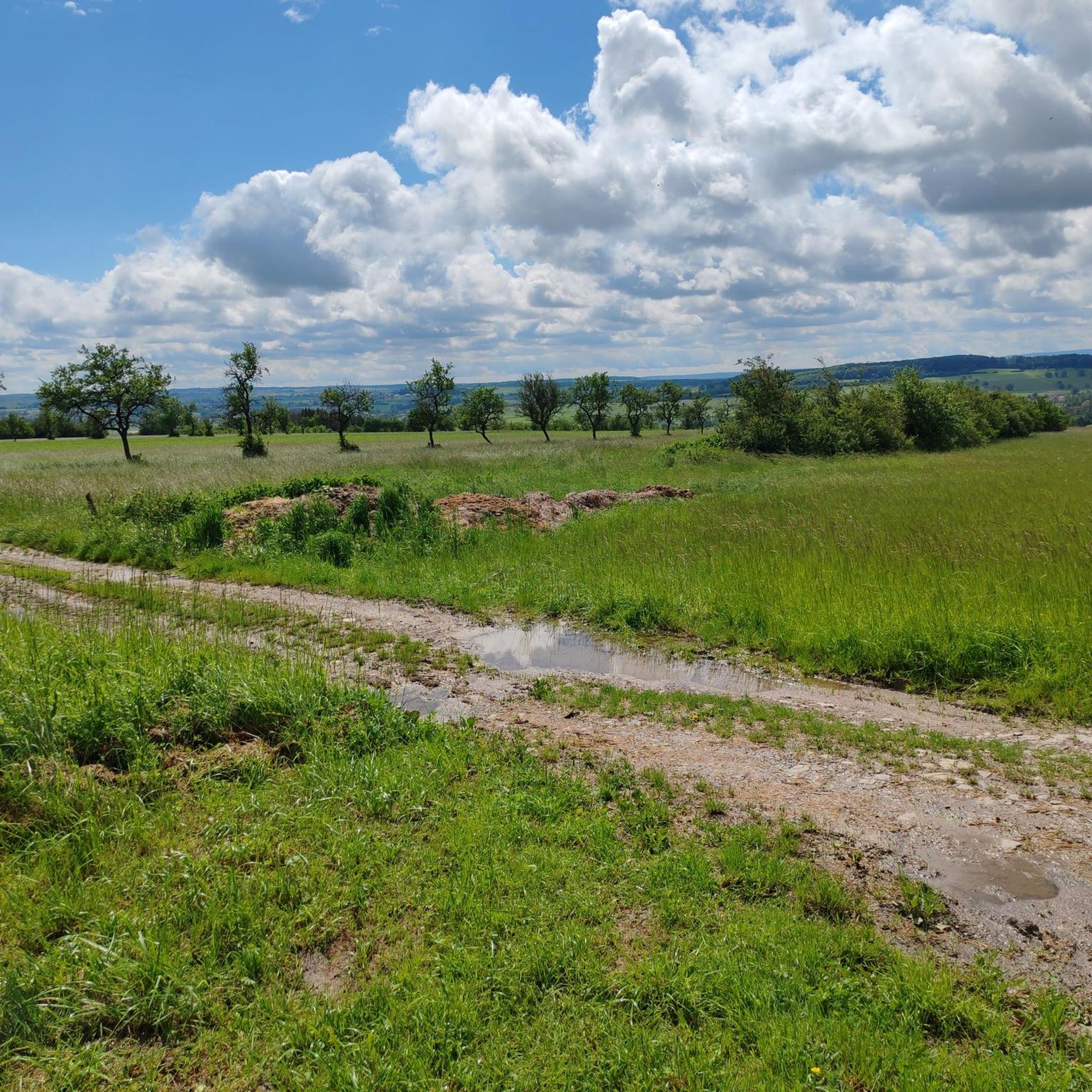
An Alsatian resting bench is a type of public bench built in Alsace during the 19th century. On market or fair days, farmers, and especially peasant women, would travel to the towns or large villages where a market was held. Heavily laden, they brought their farm produce. The peasant women carried a basket on their heads, protected by a cushion (der Wisch), filled with bran and wheat chaff. The peasant men, for their part, carried their produce in a basket slung over their backs by two leather straps. During stops, the peasant women could place their loads on the lintel and then rest on the bench on the lower slab, usually in the shade of four linden trees. On either side stood two posts where men could place their baskets or where riders could remount their horses. In Alsace, there are two types of resting benches: those of the King of Rome (also known as Marie-Louise benches[1]) dating from 1811; those of Empress Eugénie dating from 1854.
0
0

The church of St. Gallen was first mentioned in Mackwiller in the 15th century. From 1697 to 1897, the church was mixed, until the construction of the current parish church of St. Gallen. It was built on the site of an ancient Roman building from the 3rd century. The choir is surmounted by a bell tower built in the 15th century from ancient materials. After a fire during the Second World War, the church was rebuilt in 1842 and then in 1958.
0
0
The municipality of Mackwiller contains numerous Gallo-Roman remains: large thermal baths, apparently connected to a complex (19th century), a sanctuary dedicated to the cult of Mithras, in which fragments of a large relief were discovered (1955), a mausoleum near the baths (1966). Stone blocks from an ancient monumental building were also used in the construction of the Protestant church.
1
0

There is not much to see except a restored foundation. Four goats were already waiting across the street.
0
0
Frequently Asked Questions
How many hiking trails are available around Weyer?
There are over 80 hiking trails around Weyer, offering a wide range of options for different skill levels and preferences.
Are there easy or family-friendly hiking trails in Weyer?
Yes, Weyer offers over 25 easy hiking routes. These trails are generally shorter and have less elevation gain, making them suitable for families or those looking for a relaxed walk. Many routes traverse wooded areas and gentle hills, providing a pleasant outdoor experience.
Are there challenging hikes for experienced hikers in Weyer?
For experienced hikers seeking a challenge, Weyer does offer some more demanding routes. One such trail is the Mackwiller Excavations – Remains of a Roman mausoleum loop from Mackwiller, which covers nearly 12 miles (19 km) with significant elevation changes, exploring historical sites along the way.
Are there circular hiking routes in Weyer?
Yes, many of the hiking trails around Weyer are circular, allowing you to start and end at the same point. A popular option is the Hiking loop from Petersbach, which is about 5.4 miles (8.7 km) long and takes you through varied terrain.
What kind of scenery and natural features can I expect on Weyer's trails?
Hiking in Weyer is characterized by rolling hills, dense wooded areas, and open landscapes. You'll encounter a mix of natural terrain and historical points of interest. Some trails, like the White Rock – Rocher du Corbeau loop from Petersbach, lead to potential viewpoints offering expansive vistas over the region.
Can I bring my dog on the hiking trails in Weyer?
Generally, dogs are welcome on most hiking trails in Weyer. It's always a good idea to keep your dog on a leash, especially in nature reserves or areas with livestock, and to carry waste bags. Always check local signage for specific restrictions.
What historical sites or landmarks can I see along the hiking trails?
Weyer's trails often pass by interesting historical sites. You can explore places like the Château de Lorentzen, which is part of the Château de Lorentzen – Mackwiller Church loop from Mackwiller. Other notable sites include the Graufthal Troglodyte Houses and various castles in the wider region, such as Fénétrange Castle.
Are there good viewpoints on the hikes around Weyer?
Yes, several trails offer rewarding viewpoints. The region's rolling hills provide natural elevations that allow for scenic overlooks. For example, the View Over Alsace – Banc reposoir napoléonien loop from Mackwiller is specifically named for its panoramic views.
What do other hikers say about the trails in Weyer?
The hiking trails in Weyer are highly rated by the komoot community, with an average score of 4.4 stars from over 600 reviews. Hikers often praise the well-maintained paths, the peaceful wooded sections, and the blend of natural beauty with historical interest.
Is Weyer suitable for winter hiking?
While Weyer's trails are primarily enjoyed in warmer months, some routes can be suitable for winter hiking, especially on clear, crisp days. Be aware that conditions can vary, with potential for snow or ice, so proper winter gear and checking local weather forecasts are recommended.
Are there places to eat or drink near the hiking trails in Weyer?
Weyer and its surrounding villages offer local establishments where you can find refreshments or a meal after your hike. While specific cafes or restaurants directly on every trailhead might be limited, you'll find options in the nearby towns like Petersbach or Mackwiller.
How can I get to the trailheads in Weyer?
Most trailheads in Weyer are accessible by car, with parking often available in or near the starting villages such as Petersbach or Mackwiller. Public transport options may be more limited, so checking local bus schedules in advance is advisable if you plan to rely on it.
What is the best time of year to hike in Weyer?
The best time to hike in Weyer is typically from spring through autumn (April to October). During these months, the weather is generally mild, and the natural scenery, from blooming wildflowers to vibrant autumn foliage, is at its most beautiful. Summer offers longer daylight hours, while spring and autumn provide cooler temperatures ideal for longer treks.
Most popular attractions around Weyer

Get inspired with the komoot mobile app


Explore more
Browse the best Hikes in other regions.
