The best road cycling routes around Saint-Aubin-Des-Bois
4.5
(210)
4,788
riders
43
rides
Road cycling routes around Saint-Aubin-Des-Bois traverse a landscape characterized by varied topography, including plateaus and gentle hills. The region features extensive woodlands and open countryside, with elevations ranging from approximately 159 meters to 241 meters. This provides a mix of flatter sections and moderate climbs suitable for road cyclists.
Best road cycling routes around Saint-Aubin-Des-Bois
- The most popular road cycling route is Levesville – Church of Saint Stephen loop from Saint-Aubin - Saint-Luperce, a 19.8 miles (31.9 km) trail…
Last updated: July 9, 2026
5.0
(3)
18
riders
Easy road ride. Great for any fitness level. Mostly well-paved surfaces and easy to ride.
9
riders
59.7km
02:22
270m
270m
Moderate road ride. Good fitness required. Mostly well-paved surfaces and easy to ride.

Sign up for free
13
riders
222km
09:15
1,300m
1,300m
Hard road ride. Very good fitness required. Some segments of this route may be unpaved and difficult to ride.
3.7
(3)
8
riders
Easy road ride. Great for any fitness level. Mostly well-paved surfaces and easy to ride.
5
riders
Moderate road ride. Good fitness required. Mostly well-paved surfaces and easy to ride.
Get access to more routes and recommendations from other explorers.
Sign up for free
Already have an account?
Our route recommendations are based on thousands of hikes, rides, and runs completed by other people on komoot.
Start today with a free account
Your next adventure awaits.
Login or Signup




Tips from the Community

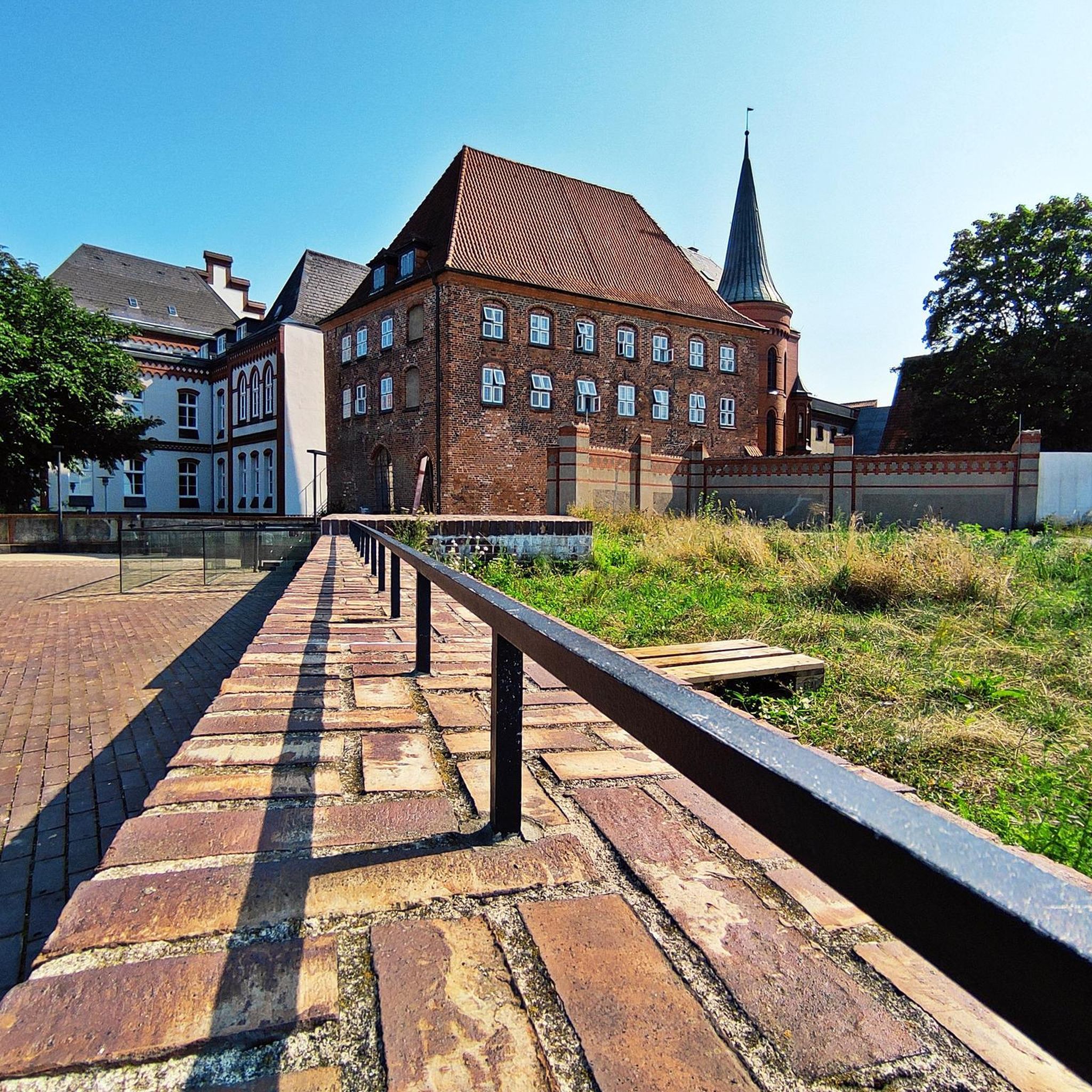
The Saint-Just-et-Sainte-Anne church of Fresnay-le-Gilmert is a religious monument located in the town of the same name, in the Centre-Val de Loire region. The available data does not specify its period of construction or its architectural evolution, but its existence testifies to a local heritage rooted in the rural landscape. Churches of this type, often at the heart of villages, played a central role in community life. They served as a place of worship, gathering, and identity marker for the inhabitants. In Centre-Val de Loire, as elsewhere in France, these buildings also reflected the religious and social practices of successive eras, although the specific details for Fresnay-le-Gilmert are not documented here.
0
0
According to tradition, the church choir covers the remains of an older building, possibly dating back to the 6th century, which was built to house the saint's body. According to current knowledge, the commune of Saint-Piat (Sanctus Piatus in Latin) officially appeared in 1087, mentioned in a charter of the Nottonville Priory (Eure-et-Loir), on which it depended. The current building was rebuilt during the time of Francis I, as suggested by the date 1535 engraved on two buttresses of the apse and the date 1542 engraved on a piece of wood from the vault. This is according to a study by the SAEL (Eure-et-Loir Archaeological Society). The three-sided apses, the dripstone towers (horizontal members projecting from a wall), and the sculpted roof structures are a testament to the importance of the reconstructions carried out in the department during the 16th century. The church of Saint-Piat is one of them. While the church has not been officially recognized, it nevertheless contains objects that have attracted attention both for their antiquity and quality, but not always for good reason. Their artistic value, far from attracting only religious or aesthetic interest, has also aroused a covetousness that, unfortunately, remains for some of them. Fortunately, those still in place are carefully cared for and offer the curious a story to discover, a beauty to slowly ponder as they progress toward the choir.
0
0

Many centuries ago, our ancestors discovered the possibility of harnessing the power of the elements—which, while helpful and useful on the one hand, could also be a threat as untamed forces of nature—for various purposes, thus eliminating the need for human or animal muscle power. Mills like these are a good example of the human engineering skills of earlier generations: The heavy millstones used to grind grain or press oil, for example, could be powered by wind or—as in this case—water.
0
0


Rambouillet Castle A former medieval fortress, Rambouillet Castle was gradually transformed into a pleasure residence by its illustrious owners and adorned with elegant decorations.
0
0

An excellent place to take a break and admire the magnificent castle and its park. Whether you are roaming along the Véloscénie or simply strolling through the forest of the estate, you will be seduced by this idyllic view.
1
0

Very nice and ideal for a picnic.
1
0

Of course there is the castle but the rest of the village is really worth a stop (church, wash house, half-timbered house, etc.)
0
0
Frequently Asked Questions
How many road cycling routes are available in Saint-Aubin-Des-Bois?
There are over 45 road cycling routes around Saint-Aubin-Des-Bois, offering a wide range of options for different skill levels and preferences.
What kind of terrain can I expect on road cycling routes around Saint-Aubin-Des-Bois?
The region features varied topography, including plateaus and gentle hills, with elevations ranging from approximately 159 meters to 241 meters. You'll find a mix of flatter sections and moderate climbs, often traversing extensive woodlands and open countryside.
Are there easy road cycling routes suitable for beginners in Saint-Aubin-Des-Bois?
Yes, Saint-Aubin-Des-Bois offers 16 easy road cycling routes. An excellent option for beginners is the Levesville – Church of Saint Stephen loop from Saint-Aubin - Saint-Luperce, which is 19.8 miles (31.9 km) long with an elevation gain of 431 feet (131 meters).
Are there challenging road cycling routes for experienced cyclists?
For experienced cyclists seeking a challenge, there are 3 difficult routes available. One notable option is the Rambouillet Castle – Eure Riverside Walk loop from Saint-Aubin - Saint-Luperce, a substantial 137.9 miles (221.9 km) trail with over 1300 feet of elevation gain.
Can I find circular road cycling routes in Saint-Aubin-Des-Bois?
Yes, many of the routes in Saint-Aubin-Des-Bois are designed as loops, allowing you to start and finish at the same point. Examples include the Moulin de Jouy – Saint-Piat Mill loop from Saint-Aubin - Saint-Luperce and the Levesville – Château de Fontaine-la-Guyon loop from Saint-Aubin - Saint-Luperce.
What are some scenic viewpoints or landmarks I can see while cycling?
The region offers picturesque views, especially from higher points like the Bois Bailleau forest, which provides panoramic views over the Eure valley and the iconic Notre-Dame de Chartres Cathedral. You might also encounter historical elements like ancient Roman aqueducts, though many are underground.
What do other cyclists say about road cycling in Saint-Aubin-Des-Bois?
The road cycling routes in Saint-Aubin-Des-Bois are highly rated by the komoot community, with an average score of 4.3 stars from over 9 reviews. Cyclists often praise the varied terrain, from rolling landscapes to extensive forests and open fields.
Are there longer road cycling routes for extended rides?
Yes, for those looking for longer rides, routes like the Rambouillet Castle – Eure Riverside Walk loop from Saint-Aubin - Saint-Luperce offer a substantial distance of 137.9 miles (221.9 km), typically taking over 9 hours to complete.
What is the best time of year for road cycling in Saint-Aubin-Des-Bois?
The varied topography and natural features make Saint-Aubin-Des-Bois enjoyable for road cycling across multiple seasons. Spring and autumn generally offer pleasant temperatures and beautiful scenery, while summer provides longer daylight hours. Always check local weather conditions before heading out.
Are there family-friendly road cycling options in the area?
While specific 'family-friendly' routes are not explicitly detailed, the presence of 16 easy routes suggests options suitable for families or those preferring a more relaxed pace. These routes often feature mostly paved surfaces and gentler gradients.
Are there road cycling routes that pass by historical sites or cultural attractions?
Yes, the region's proximity to significant cultural and historical attractions means you can integrate stops into your cycling tours. The Chartres Cathedral is a prominent landmark, and the area also has historical elements like the Guillaume Gate and the city of Chartres itself, which can be explored.
Are there any routes that explore the nearby forests?
Yes, the region is characterized by extensive woodlands. Routes often pass through or near forests such as the Forêt de Saint-Sever and Forêt de Cerisy, offering tranquil and scenic rides amidst nature.
What is the average duration of a road cycling route in Saint-Aubin-Des-Bois?
Route durations vary significantly based on difficulty and distance. Easy routes like the Levesville – Church of Saint Stephen loop can be completed in about 1 hour 15 minutes, while longer, more challenging routes can take 9 hours or more.
Most popular routes around Saint-Aubin-Des-Bois
Most popular attractions around Saint-Aubin-Des-Bois

Get inspired with the komoot mobile app


Explore more
Browse the best Road cycling routes in other regions.
