Attractions and Places To See around Saint-Georges-Sur-Baulche - Top 20
Best attractions and places to see around Saint-Georges-Sur-Baulche include a mix of historical sites and natural landscapes. This commune in the Yonne department of France is characterized by wooded paths and open areas, offering opportunities for nature walks. Its proximity to Auxerre provides easy access to a wider array of cultural and historical attractions, including significant religious buildings and urban squares. The area combines local charm with broader regional points of interest.
Best attractions and places to see around Saint-Georges-Sur-Baulche
…Last updated: July 2, 2026
Place Surugue and Cadet Roussel Fountain
Highlight • Monument
There is a fountain in the square that is reminiscent of the famous French folk …
Translated by Google •
Tip by

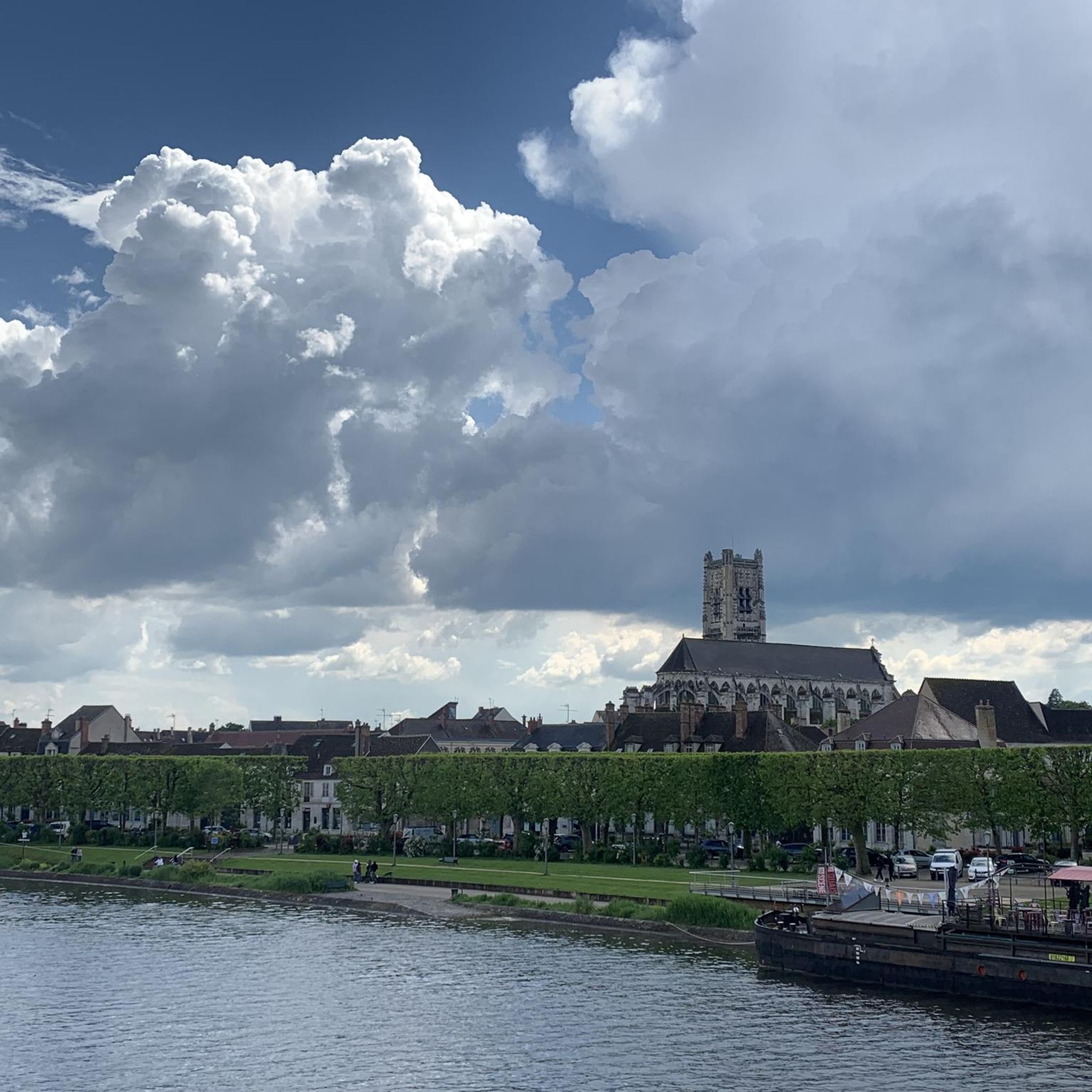
Saint-Étienne Cathedral of Auxerre
Highlight • Religious Site
You can visit the cathedral for free, which you should definitely do. The sight of these incredibly …
Translated by Google •
Tip by
Sign up now to discover places like this
Get recommendations on the best single tracks, peaks, & plenty of other exciting outdoor places.
Sign up for free
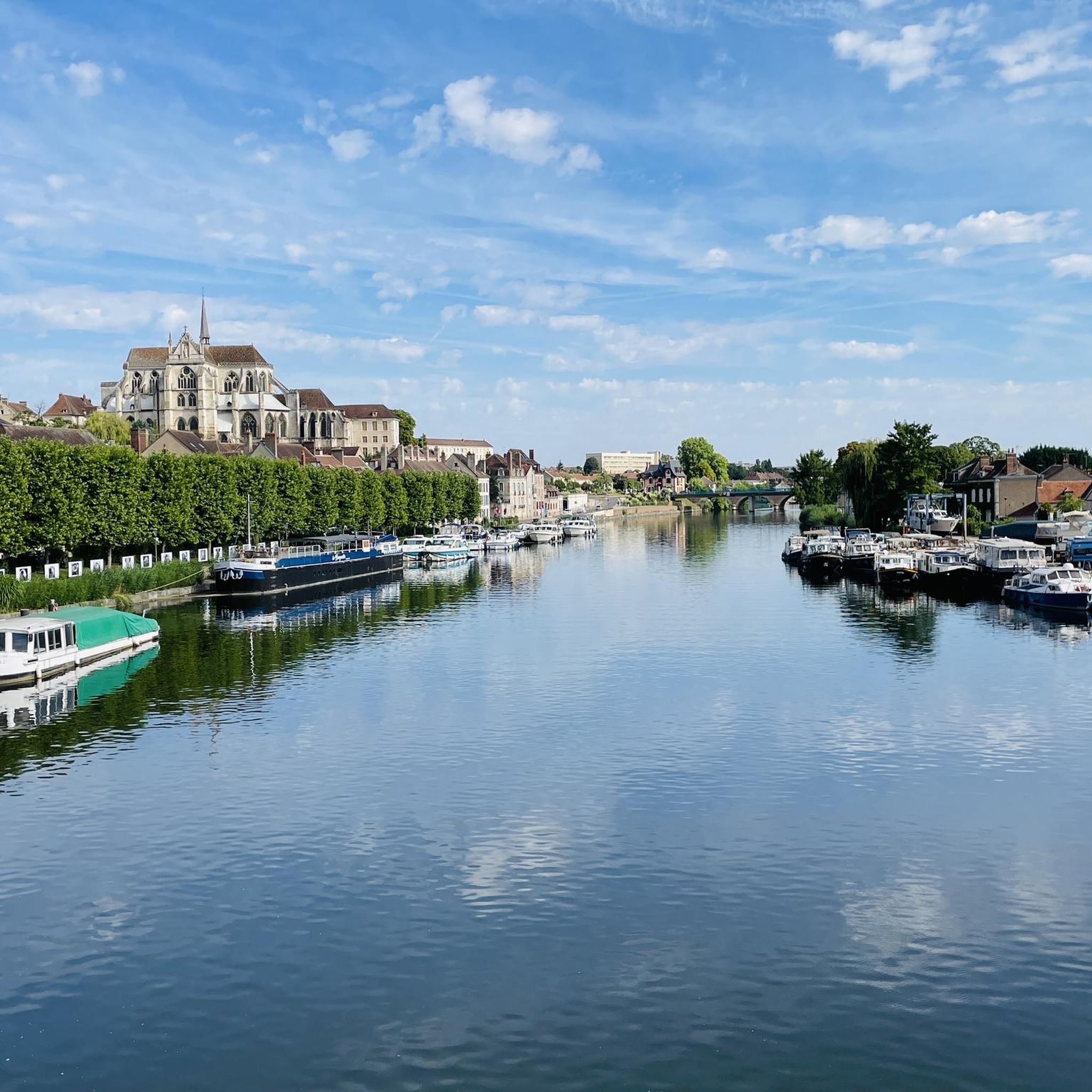
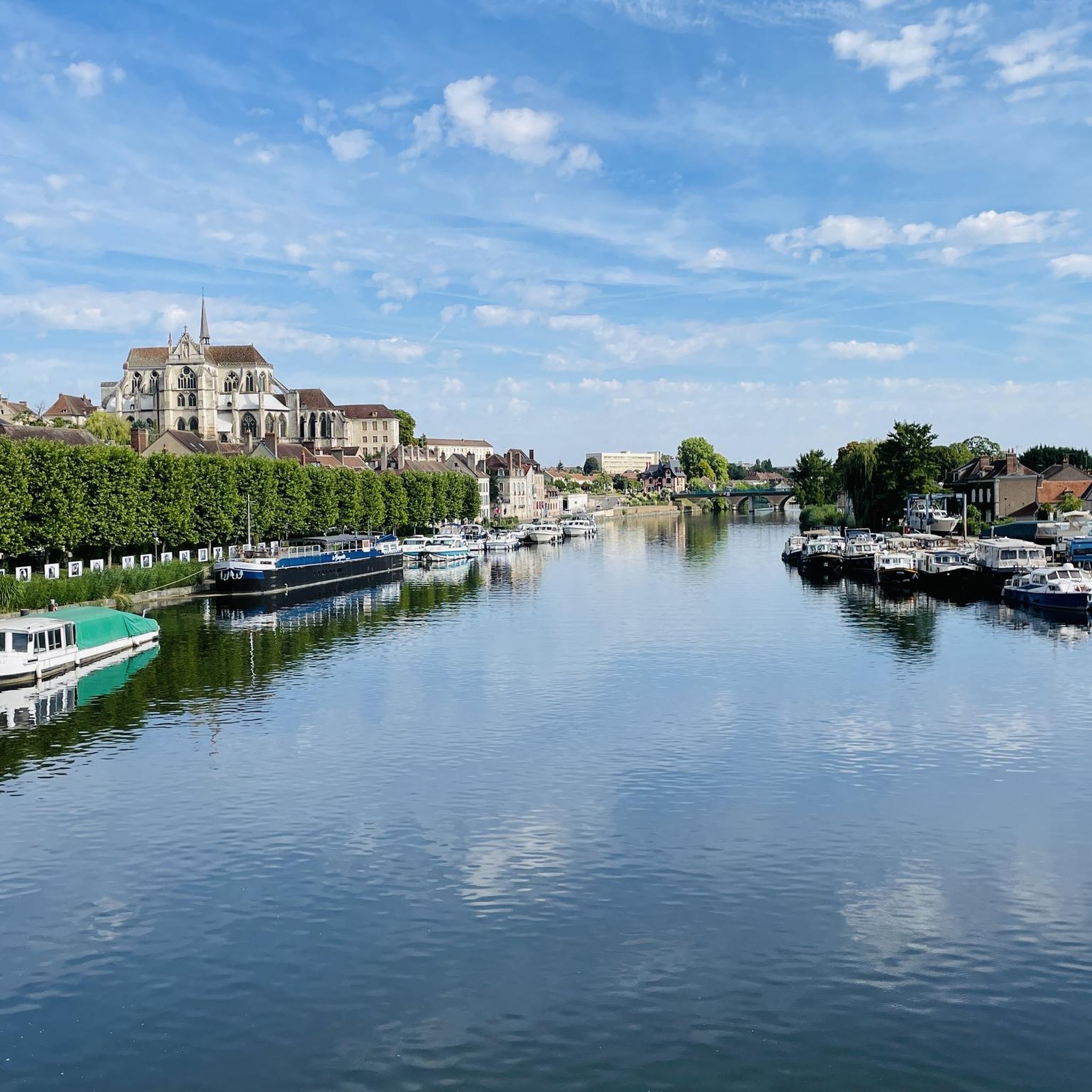
Abbaye Saint-Germain
Highlight • Other
Translated by Google •
Tip by

Saint Nicholas Square
Highlight • Other
Translated by Google •
Tip by
Belombre Castle
Highlight • Other
Translated by Google •
Tip by

Sign up for free to discover even more attractions around Saint-Georges-Sur-Baulche.
Sign up for free
Already have an account?
Start today with a free account
Your next adventure awaits.
Login or Signup
Popular around Saint-Georges-Sur-Baulche


Tips from the Community

The site is open from 10 a.m. and can be visited free of charge. There are deckchairs in the cloister for a shady and quiet break. The museums are worth a visit. You learn a lot about the history of the city, which dates back to at least the 5th century. You can see from the church that it has been rebuilt several times. The archaeological crypt, which is located under the forecourt of today's church, is very impressive. You should plan enough time for a visit. It took me almost two hours to get an initial overview. "The former abbey of Saint-Germain d'Auxerre is located north of the city center of Auxerre. Bishop Germanus of Auxerre founded it and provided his family's land outside the former city walls as well as land to ensure its existence. The first building of the monastery was a simple chapel. At the beginning of the 6th century, the Merovingian Queen Chrodechild, the wife of King Clovis I, had the chapel expanded into a basilica. Fires in the 11th and 12th centuries required extensive renovation work on the nave in the second half of the 12th century; Of the Romanesque double tower facade that was built, only the southern tower has been preserved. The monastery was partially destroyed by Huguenots in 1567, secularized in 1810 and partially demolished the following year. The nave was reduced to its Gothic parts, which were given a neo-Gothic façade in 1817: As a result of this measure, the remaining south tower now has no connection to the basilica. Today the Musée-Abbaye Saint-Germain is located on the site of the abbey. Musée d'Art et d'Histoire d'Auxerre." More about the history here: https://de.wikipedia.org/wiki/Saint-Germain_d%E2%80%99Auxerre
0
0

The stronghold of Belombre was the seat of part of the lordship of Escolives held, in 1507, by the lieutenant general of Auxerre, Blanchet David. Marie David brought it to Jacques de Meung dit de La Ferté, who died on June 4, 1589, massacred by the Leaguers of Auxerre. Madeleine de La Ferté Meung, her granddaughter, transmitted Bellombre to the La Bussière family and Catherine de La Bussière brought it to the Girard d'Azy family. The children of Paul de Girard sold it, around 1656, to François de Chastellux, who ceded this first half of Escolives in 1670, to Robert Chaponnel, Receiver General of Finances. He died on October 28, 1678 without issue, while he was undertaking the reconstruction of the castle. Anne Robineau, receiver general of Finances in Provence, who carried out the project developed by Chaponnel and built a new castle on the land surrounded by a moat on the site of the medieval manor. In 1709, Louis Gayot, buyer, united the two shares of the land of Escolives before selling the Château de Bélombre in November 1726, to Joseph Le Muet, King's attorney in the bailiwick of Auxerre. Rosalie Le Muet married in 1804, Jean Jacques Claude Baudenet d'Annoux. Their son, Louis-Hugues, who feared the dangerous invasions of the waters of the Yonne, decided to demolish the castle which he rebuilt on vast basements around 1870. The estate is located on the left bank of the canal. It is a large single-story building. Corner chains and harped stone legs support the entablature and an attic floor in the overhang of the broken roof. The moat and the stone bridge decorated with elegant 18th century ironwork have been preserved. (1) MH protected elements: facades and roofs; water pit ; the pillars of the entrance gate; the vestibule and the interior staircase with its wrought iron banister: registration by decree of December 6, 1977. The facades and roofs of the outbuildings; the terrace located to the southwest of the castle and the sleeping bridge; the bridge thrown over the moat, in front of the northeast facade of the castle; the gardens surrounding the castle; the perspective alley and the double water alley: registration by decree of June 7, 1993 The Chateau de Belombre 89290 Escolives-Sainte-Camille, private property, cannot be visited.
0
0
The site is open from 10 a.m. and can be visited free of charge. Deckchairs are available in the cloister for a shady and quiet break. The museums are worth a visit. You learn a lot about the history of the city, which dates back to at least the 5th century. The church shows that it has been rebuilt several times. The archaeological crypt located under the forecourt of today's church is very impressive. You should plan enough time for a visit. It took me almost two hours to get a first overview. "The former Abbey of Saint-Germain d'Auxerre is located north of the city center of Auxerre. Bishop Germanus of Auxerre founded it and provided his family with land outside the then city walls and lands to ensure its existence. The first building of the monastery was a simple chapel. At the beginning of the 6th century, the Merovingian Queen Chrodechild, the wife of King Clovis I, had the chapel converted into a basilica. Fires in the 11th and 12th centuries necessitated extensive renovations to the nave in the second half of the 12th century; Only the southern tower of the Romanesque double-tower facade that was erected at the time has survived. The monastery was partially destroyed by Huguenots in 1567, secularized in 1810 and partially demolished the following year. The nave was reduced to its Gothic parts, which were given a neo-Gothic facade in 1817: the preserved south tower is now not connected to the basilica as a result of this measure. The Musée-Abbaye Saint-Germain is now on the site of the abbey. Musée d'Art et d'Histoire d'Auxerre." More about the story here: https://de.wikipedia.org/wiki/Saint-Germain_d%E2%80%99Auxerre
1
0
The cathedral is open for tours during the day and this is not to be missed! It is a major work of French Gothic architecture and impresses with its high, light-flooded vaults and colorful windows. "The cathedral is located in the center of the old town on a hill above the Yonne. Saint-Étienne was begun in 1215. Today's Gothic cathedral is the fifth building on this site. In 1567 the Huguenots sacked the city and the cathedral, which necessitated repairs, particularly to the choir glazing. The French Revolution caused countless damage to the building and its furnishings. The goldsmith's work was melted down, the church was transformed into a temple of reason, and the important statue of the suffering Stephen on the high altar only escaped destruction because it was turned into a suffering Marat in the bath. In 1840 Prosper Mérimée placed the cathedral under monument protection. Extensive restoration work took place throughout the 19th century." Much more about the history here: https://de.wikipedia.org/wiki/Kathedrale_von_Auxerre
2
0
View of the 18th century castle from the cycle path.
2
1
Rue du Temple also begins here heading south. The Templars had a headquarters on this street. There are a lot of small shops there and of course many beautiful houses. What you can't see at first glance is the entrance to a relatively large supermarket. The Monoprix food department is hidden behind the clothing department, which can be seen from the square.
2
0
The skipper's patron had his natural place on the banks of the Yonne river, on the very spot where the port has existed since time immemorial. The oldest charters mention the Port Saint-Nicolas. The fountain of the same name, formerly the Saint-Germain fountain, sprang up in the middle of the square, at the time when the enclosure of the city walls existed, and in the middle of this same square stood a stone cross. We can still see, at the corner of the old house n° 2, the statue of the great bishop of Myre, raised by the brotherhood of Saint-Nicolas and having at his feet a tank filled with small children who serve as his attributes. In 1339, the Book of the Hôtel-Dieu tells us that there was a Maison des Estuves or public baths in front of the Saint-Germain fountain. In 1626, the port of Saint-Nicolas was the scene of a violent tumult caused by the high cost of grain. A lady Noubert, from Dijon, who was driving two boats laden with wheat to Paris, was arrested at Auxerre on July 26 by the populace, who loudly demanded the sale of wheat at the market price. The provost, not knowing how to stop the riot, sanctioned the demands of the inhabitants and had the wheat sold. But Dame Noubert assigned the aldermen of Auxerre to the Parliament of Paris. We do not know the outcome of this case. The fountain supplied the district with drinking water until 1783. In 1909, the stone basin which adorned the square of the large fountains (Charles Surugue square) was installed in this square where it can still be seen. http://auxerre.histoire.free.fr/Ville/quartier_saint_germain/place_saint_nicolas.htm
2
0

Saint Stephen (Saint Etienne), to whom Auxerre Cathedral is dedicated, is one of the seven first deacons of the early Jerusalem community and is also the first martyr (martyr) of early Christianity. The church remembers him on Boxing Day, December 26th. When Stephen uttered his vision of the open heaven, "And being filled with the Holy Spirit, he looked up into heaven and saw the glory of God, and Jesus standing at the right hand of God" (Acts chapter 7 verse 55), the people were so indignant that that they drove him out of the city and stoned him.
5
0
Frequently Asked Questions
What historical sites can I explore in Saint-Georges-Sur-Baulche and its immediate vicinity?
Saint-Georges-sur-Baulche itself features the historic Église Saint-Georges, known for its 17th-century statue, and Le Prieuré, which now boasts a formal French garden. You can also find the Château de Billy and the ancient Tour de Celle, a former windmill. For a broader historical experience, the nearby city of Auxerre offers significant sites like the Saint-Étienne Cathedral of Auxerre and the Abbaye Saint-Germain.
Are there any natural attractions or outdoor spaces to enjoy near Saint-Georges-Sur-Baulche?
The area around Saint-Georges-sur-Baulche is characterized by wooded paths and open landscapes, perfect for tranquil nature walks. Its proximity to the Yonne River, especially around Auxerre, offers scenic views and opportunities for outdoor activities. You can find various hiking, running, and mountain biking routes nearby. For example, explore routes like the "Saint Nicholas Square – Statue of Paul Bert loop" for hiking or the "Paul Bert Bridge loop" for running, which you can find details about in the hiking guide and running guide for the region.
What are some family-friendly attractions in the area?
Many attractions in the region are suitable for families. The Paul Bert Bridge offers fantastic views of Auxerre's old town and the Yonne River, which can be enjoyed by all ages. The impressive Saint-Étienne Cathedral of Auxerre is also considered family-friendly, allowing visitors to marvel at its Gothic architecture and historical significance.
Where can I find picturesque views of Auxerre and the Yonne River?
For breathtaking views of Auxerre's old town and the Yonne River, the Paul Bert Bridge is an excellent spot. There's even a small balcony at the statue of Paul Bert where you can enjoy the scenery peacefully. The Saint-Étienne Cathedral of Auxerre also offers stunning photographic opportunities from the bridges over the L'Yonne, as it dominates the cityscape.
Are there any accessible attractions for visitors with mobility needs?
Yes, Place Surugue and Cadet Roussel Fountain in Auxerre is noted as wheelchair accessible. This charming square, with its old half-timbered houses, cafes, and the fountain commemorating the French folk song, is a popular and welcoming spot for all visitors.
What kind of cultural experiences can I find in the region?
Beyond the historical buildings, the region offers a rich cultural experience. Auxerre, being an immediate neighbor, hosts various exhibitions and artistic events in its galleries and cultural spaces. The Abbaye Saint-Germain in Auxerre, for instance, houses a museum where you can learn about the city's history, and often features temporary exhibitions.
What are some popular outdoor activities near Saint-Georges-Sur-Baulche?
The area is ideal for various outdoor activities. You can enjoy hiking on trails like the "Château loop from Saint-Georges-sur-Baulche" or "Hiking loop from Saint-Georges-sur-Baulche." Running enthusiasts can explore routes such as the "Bridge to the Île aux Plaisirs loop." For mountain biking, options include the "Statue of Paul Bert – Paul Bert Bridge loop" or the "St Georges - Charbuy loop." More details and routes can be found in the respective hiking, running, and MTB guides.
Are there any charming squares or local gathering spots to visit?
Yes, Place Surugue and Cadet Roussel Fountain in Auxerre is a very popular spot, known for its beautiful old half-timbered houses, cafes, and shops. Another charming area is Saint Nicholas Square, located right next to the Yonne River, also featuring many half-timbered houses and a historical connection to the river's skippers.
What do visitors enjoy most about the attractions around Saint-Georges-Sur-Baulche?
Visitors frequently appreciate the blend of historical charm and scenic beauty. The impressive Gothic architecture of the Saint-Étienne Cathedral of Auxerre and the historical depth of the Abbaye Saint-Germain are often highlighted. The picturesque views from the Paul Bert Bridge and the lively atmosphere of Place Surugue, with its cafes and historic buildings, also receive high praise from the komoot community.
Can I find places to eat or shop near the main attractions?
Yes, particularly in Auxerre. Place Surugue and Cadet Roussel Fountain is a hub with cafes and restaurants, and Rue du Temple, which starts from the square, is lined with small shops. You can even find a supermarket (Monoprix) hidden behind a clothing department near Place Surugue for convenience.
Are there any lesser-known historical landmarks in Saint-Georges-Sur-Baulche itself?
Beyond the more prominent sites, Saint-Georges-sur-Baulche holds its own local landmarks. The Église Saint-Georges, with its unique 17th-century statue of Saint George, is a significant local landmark. The renovated Le Prieuré, with its French garden, and the historic Château de Billy, though its history is traced back to the 18th century, offer a glimpse into the town's past.
Most popular routes around Saint-Georges-Sur-Baulche

Get inspired with the komoot mobile app


Explore more
Still not found the Highlight you’re looking for? See guides of the top attractions in other regions:
