The best walks and hikes around Cormeray
4.3
(130)
802
hikers
161
hikes
Hiking around Cormeray provides access to the tranquil rural landscapes of the Loir-et-Cher department in France's Centre-Loire Valley region. The area is characterized by gently rolling countryside, interspersed with fields, woods, and proximity to the Loir Valley. This setting offers accessible pathways for exploring the pastoral environment.
Best hiking trails around Cormeray
- The most popular hiking route is Cheverny Castle – Vineyard Path loop from Petit Beaumont, a 5.9 miles (9.5 km) trail that takes 2 hours 27 minutes…
Last updated: July 2, 2026
4.0
(2)
5
hikers
9.85km
02:32
40m
40m
Moderate hike. Good fitness required. Easily-accessible paths. Suitable for all skill levels.
4
hikers
12.5km
03:12
50m
50m
Moderate hike. Good fitness required. Easily-accessible paths. Suitable for all skill levels.

Sign up for free
4
hikers
7.96km
02:04
50m
50m
Moderate hike. Good fitness required. Easily-accessible paths. Suitable for all skill levels.
2.0
(2)
3
hikers
4.43km
01:08
10m
10m
Easy hike. Great for any fitness level. Easily-accessible paths. Suitable for all skill levels.
5.0
(1)
3
hikers
10.7km
02:44
40m
40m
Moderate hike. Good fitness required. Easily-accessible paths. Suitable for all skill levels.
Get access to more routes and recommendations from other explorers.
Sign up for free
Already have an account?
Our route recommendations are based on thousands of hikes, rides, and runs completed by other people on komoot.
Start today with a free account
Your next adventure awaits.
Login or Signup

Tips from the Community

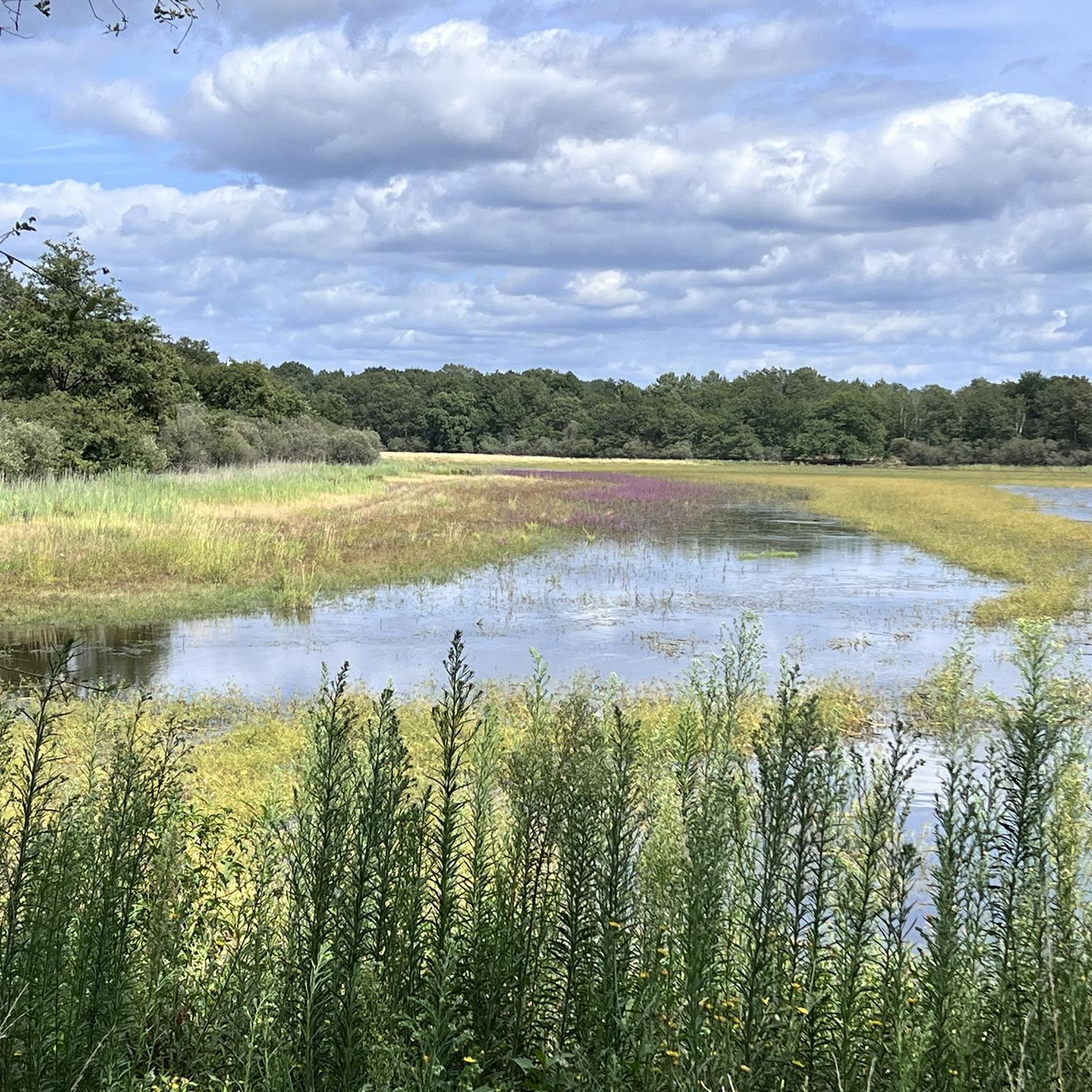
Perfect for a picnic break. Equipped with tables, toilets and a trash can.
0
0

A magnificent castle, it served as inspiration for the Moulinsart castle in the adventures of Tintin
0
0


The castle kitchen is in good condition and was used until 1968. One of the two large fireplaces in this room has a rotisserie for large roasts, which is still functional.
1
0

Built in a Classical style, the Cherveny castle has belonged to the same family for more than six centuries, the Huraults, financiers and officers in the service of several kings of France. The current castle was built around 1625 by Henri, son of Philippe Hurault, and his wife Marguerite Gaillard de la Morinière. They launched the construction of the current castle and entrusted the execution of the work to the architect Jacques Bougier. He uses “Bourré stone”, a stone from the Cher valley which has the particularity of whitening and hardening as it ages. Sobriety and symmetry characterize the Château de Cheverny, a precursor of the French style which established itself under the reign of Louis XIV. The work is of such magnitude that it will not see the end of the project. Their daughter Elisabeth, Marquise de Montglas, completed the interior decoration which was entrusted to Jean Monier. During the following hundred and fifty years, the Château de Cheverny changed owners several times. In 1825, Anne Denis Hurault, Marquis de Vibraye, bought the property from her ancestors. The Château de Cheverny, which has always been inhabited, presents remarkably well-preserved pieces of furniture and interior fittings. The first floor apartments bear witness to the French art of living. An English-style park and gardens surround the Château de Cheverny. Visitors can discover the Jardin des Apprentis, a contemporary designed garden created in 2006 which was inspired by the found plans of an old French garden and the vegetable garden, designed by the Marquise de Vibraye, it combines the use original of different colored materials, vegetables and flowers. The Garden of Love, created in 2019, presents six monumental statues by Gudmar Olovson which reflect Love in all its forms. Cheverny constitutes a heritage of stones, land but also of tradition with venery or hunting with hounds. The Cheverny crew was founded in 1850 by the Marquis de Vibraye. Nowadays, in the Cheverny forest and neighboring forests, the crew harvests exclusively deer. Every day, from April to September 14, subject to reservations, at 11:30 a.m., visitors can attend the dog meal. The Château de Cheverny inspired the Château de Moulinsart to the Belgian comic book author, Hergé. The Domaine de Cheverny and the Hergé Foundation have joined forces to create and set up a permanent exhibition on the theme: the secrets of Moulinsart.
1
0
This former hunting lodge of François I is an essential stopover for history lovers. It houses the famous “Portrait Gallery” and its 327 illustrious people, the largest collection of historical portraits in Europe. Inhabited by the same family since 1926, Beauregard has continued to improve and develop since its inception. At the end of the 15th century, the manor of François Doulcet was confiscated by King Louis XII. Beauregard then joined the properties of the King of France and became a hunting destination for François I, which he gave in 1520 to his uncle René of Savoy. In 1545, Jean du Thier, secretary of state for finance to King Henry II, acquired the estate. He undertook major work: a gallery and a wing were added to the original building. The Château de Beauregard then presents a harmonious, strongly Italianized architecture. The roofs still have tall white chimneys called “à la Chambord”. Of the interior decoration commissioned by Jean du Thier, his study nicknamed “the cabinet of the Grelots” remains on the first floor of the castle. It has preserved its delicate carved oak woodwork and coffered ceiling over the centuries. Paul Ardier, minister of King Louis XIII, retired from political life and bought the estate to end his life there. His major work was the decoration of the great Gallery of the castle. Between 1620 and 1638, 327 portraits were placed on the walls of the room, constituting the largest collection of historical portraits known in Europe. His son and granddaughter complete the decor with Delft paving, lapis lazuli ceiling paintings and wall woodwork. The Ardier family left the estate in 1816. In the 19th and 20th centuries, modifications were made to the Château de Beauregard. The Tillier family modernized it by installing running water and central heating then undertook a first restoration campaign, both of the buildings and the park. Since 1925, the castle has belonged to the Du Pavillon family. A visit to the Château de Beauregard is also an opportunity to discover the park and its Jardin des Portraits, a contemporary garden designed by Gilles Clément. It cleverly combines 400 species of perennials and shrubs.
1
0

Largest portrait collection in Europe
0
0
You can cycle through the castle park
0
0
Frequently Asked Questions
What kind of landscape can I expect to see while hiking around Cormeray?
Hiking around Cormeray offers a tranquil rural experience within the Loir-et-Cher department. You'll encounter gently rolling countryside, a mix of open fields, peaceful woodlands, and a pastoral environment characteristic of the Centre-Loire Valley region. The focus is on serene exploration rather than strenuous climbs.
How many hiking trails are available in the Cormeray area?
There are over 140 hiking routes available around Cormeray, catering to various preferences. This includes a good mix of easy, moderate, and a few more challenging options.
Are there many easy hiking trails suitable for beginners or casual walkers?
Yes, Cormeray offers a good selection of easy trails. Approximately 42 routes are classified as easy, perfect for beginners or those looking for a relaxed stroll through the countryside. An example is the Troussay Castle loop from Cormeray, an easy 4.4 km path.
Can I find circular hiking routes in Cormeray?
Many of the trails around Cormeray are designed as loops, allowing you to start and finish at the same point. For instance, the Beauregard Castle – Beauregard Castle loop from Cellettes is a moderate 7.9 km circular route.
What are some notable landmarks or attractions I can see near the hiking trails?
The region around Cormeray is rich in historical sites. You can explore several castles, such as Cheverny Castle or Beauregard Castle. Other points of interest include the Saint-Louis Cathedral in Blois and the charming village of Candé-sur-Beuvron.
What do other hikers say about the trails in Cormeray?
The hiking routes in Cormeray are highly regarded by the komoot community, holding an average rating of 4.3 out of 5 stars from over 100 reviews. Hikers often praise the peaceful rural scenery and the well-maintained pathways that offer a pleasant outdoor experience.
Are there any family-friendly hiking options in the area?
Given the generally gentle terrain and numerous easy routes, many trails around Cormeray are suitable for families. The shorter, easy loops through woodlands and fields provide a great way for all ages to enjoy the outdoors. Consider routes like the Troussay Castle loop from Cormeray for a manageable family outing.
Is it possible to hike with dogs on the trails around Cormeray?
While specific regulations can vary, the rural and open nature of many trails in the Loir-et-Cher department generally makes them suitable for dog walking. It's always recommended to keep dogs on a leash, especially when passing through agricultural areas or near livestock, and to respect local signage.
What is the best time of year to go hiking in Cormeray?
The Loir Valley region, including Cormeray, is pleasant for hiking during spring, summer, and early autumn. Spring brings blooming wildflowers, while autumn offers beautiful foliage. Summers are generally warm, making early mornings or late afternoons ideal for walks. Winters can be chilly but still offer opportunities for peaceful hikes, especially on clear days.
Are there any trails that offer expansive views?
Many routes traverse open fields and gently rolling countryside, providing wide-open vistas of the pastoral landscape. The Gravel in the middle of the fields loop from Cellettes is a good example, offering expansive views across agricultural fields and rural scenery.
Where can I park when accessing hiking trails near Cormeray?
Parking is generally available in or near the villages that serve as starting points for many trails, such as Cormeray itself, Cellettes, or Petit Beaumont. Look for designated parking areas in village centers or near trailheads. Specific parking information is often detailed on individual route pages.
Are there any trails that pass through vineyards?
Yes, the region is known for its vineyards. The Cheverny Castle – Vineyard Path loop from Petit Beaumont is a popular moderate route that specifically passes through vineyards near the famous Cheverny Castle, offering a unique scenic experience.
Most popular attractions around Cormeray

Get inspired with the komoot mobile app


Explore more
Browse the best Hikes in other regions.
