The best road cycling routes around Longèves
4.2
(37)
1,064
riders
280
rides
Road cycling routes around Longèves traverse a varied landscape, encompassing coastal areas, extensive forests, and unique marshlands. The region features dedicated cycling infrastructure, including sections of major routes like the Vélodyssée and Vélo Francette. Terrain ranges from flat, open fields to routes through maritime pine forests and alongside waterways in the Marais Neuf and Jard-sur-Mer Marshes.
Best road cycling routes around Longèves
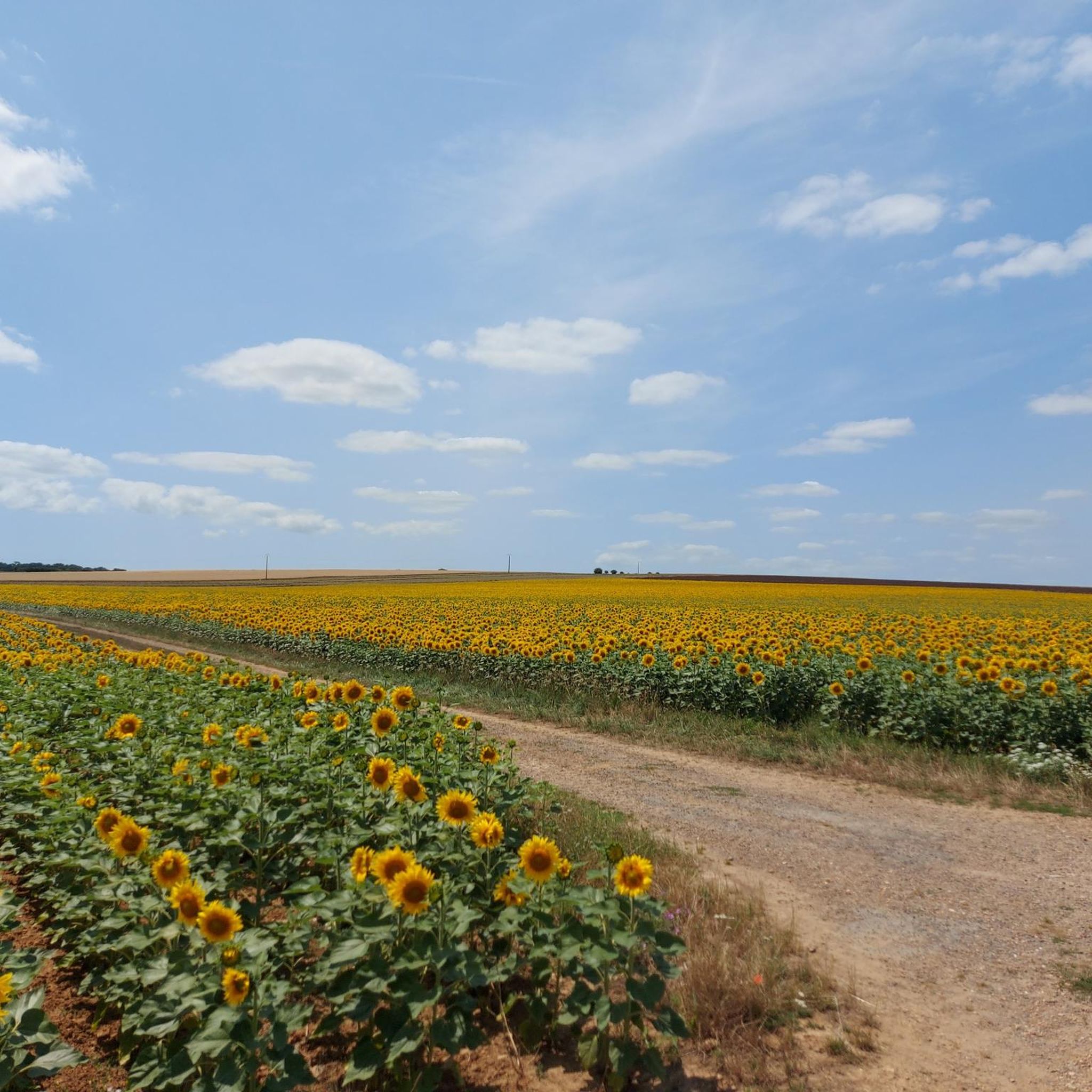
- The most popular road cycling route is Lost in the middle of the fields loop from Fontenay-le-Comte,…
Last updated: May 15, 2026
4.8
(4)
39
riders
48.9km
01:58
220m
220m
Easy road ride. Great for any fitness level. Mostly well-paved surfaces and easy to ride.
22
riders
46.0km
02:24
680m
680m
Moderate road ride. Good fitness required. Mostly well-paved surfaces and easy to ride.

Sign up for free
23
riders
35.4km
01:26
150m
150m
Easy road ride. Great for any fitness level. Mostly well-paved surfaces and easy to ride.
14
riders
87.9km
03:34
350m
350m
Moderate road ride. Good fitness required. Mostly well-paved surfaces and easy to ride.
4.0
(1)
14
riders
61.6km
02:32
270m
260m
Moderate road ride. Good fitness required. Mostly well-paved surfaces and easy to ride.
Get access to more routes and recommendations from other explorers.
Sign up for free
Already have an account?
Our route recommendations are based on thousands of hikes, rides, and runs completed by other people on komoot.
Start today with a free account
Your next adventure awaits.
Login or Signup



Tips from the Community

The Church of the Immaculate Conception was built at the end of the 19th century. In 1889, the village of Mazeau separated from the commune of St Sigismond. The construction of a church completed the emancipation of the community. Three difficult financing plans followed, in April 1890, June 1892 and February 1893. Restrictions on the initial project of the Fontenay architect Filuzeau were imposed. The plan no longer provided for a possible contribution from the state. The church was therefore financed solely by the Mazéens through a loan and the sale of wood. From 1890, the financing plan ruled out the project of building a presbytery. Work did not begin until the spring of 1897. On January 26, 1898, the archbishop signed the certificate of authenticity of the relic of the Cross kept in the church of Mazeau. On December 8, 1898, for the Feast of the Immaculate Conception, the parish church was blessed by Father Ménard, superior of Saint Joseph of Fontenay-le-Comte, assisted by five other priests.
0
0

Long before the discovery of electricity and the associated inventions, our ancestors discovered the possibility of harnessing the power of the elements—which, while useful on the one hand, could also be a threat as a force of nature—for various purposes. A fitting example of the human inventiveness of earlier generations is such a mill: The heavy millstones used to grind grain or press oil, for example, could be powered by water or—as in this case—the wind. Hardly any of them still fulfill their original functions today, but fortunately, some have at least survived as testimonies to ancient times.
0
0

Here, the remains of the ramparts of the Lusignan castle, a medieval fortress, built at the end of the 12th century and the beginning of the 13th century. All that remains is the ramparts on the hillsides which offer a magnificent panorama of the meanders of the Mother. To fully enjoy it you have to enter the park and go behind the town hall. A perfect place for a break, the park is generally quite quiet.
0
0
When the 1st Cavalry Dragon arrived in the town of Luçon ordered by Georges Clemenceau in 1910, the army required a supply of 70 liters of water per day, per man, and per horse, i.e. for 630 men and 750 horses a daily need of nearly 100 m3 of water. Thus, in 1912, at the height of the boom in reinforced concrete construction, a water tower was erected near the barracks. Originally composed of a parallelepiped tank of 110 m3, the work took on a monumental form when an agreement was made between the city and the war administration in order to allow the people of Luçon to also benefit from a distribution of potable water. The capacity of the tank then increases to 500 m3. The water tower measures 25 meters high on a base of 220 m² and even had official accommodation. The water tower with the adjoining electrical factory which made it possible to operate it (factory powered by coal from Faymoreau) made Luçon a city at the cutting edge of modernity with running water and electricity. . However, in 1961 the water tower was decommissioned, and it gradually deteriorated due to lack of maintenance. In 1991, the reinforced concrete monument was threatened with demolition, but by a decree of February 10, 1992 it was automatically classified as a historic monument, in order to allow its preservation. It now stands as a witness to early 20th century architecture consecrated by the appearance of reinforced concrete, and offers a light and astonishing silhouette for a water tower with its late art deco style and ceramic flourishes. . On the main facade, two cast iron lion faces had an orange lamp. This monument was to be supplemented by a lighthouse which was never completed.
0
0
The origins of the city of Luçon are linked to port activity dating back to the early Middle Ages, when the city was located on the edge of the Gulf of Pictons before the drying up of the Marais Poitevin. Luzon was then a fortified town, whose ramparts, protected by water moats, can be seen in the layout of the streets surrounding the town centre. Throughout the 19th century, the commercial activity of the port of Luçon with northern Europe in particular, which for a time even made it the third largest grain port in France, contributed to the enrichment of the city. This activity stopped in the 20th century with the silting of the canal which connected the city to the coast. But Luzon is best known for its religious status. From the 7th century, the foundation of a monastery which was destroyed by the Viking invasions made it the spiritual center of Bas-Poitou and the town became the seat of the bishopric in the 14th century. In 1608, a certain Armand Jean du Plessis was appointed Bishop of Luçon. Noting the sad state of the city ravaged during the Wars of Religion, he described the region as "the ugliest bishopric in France, the dirtiest and most disagreeable" (especially in order to justify his request for subsidies from the ecclesiastical authorities). endeavored from then on to reorganize the diocese which he left in 1623 to put himself at the service of the king, after a long ascent to the throne.This bishop of Luçon, with remarkable intellectual qualities, ended up becoming the principal Minister of Louis XIII, and remains known under the name of “Cardinal of Richelieu.” The history of the city remains intrinsically linked to the figure of Richelieu who officiated in this cathedral. Begun in 1091, the cathedral was initially in the Romanesque style. The portal of the north transept remains from this period. But for the most part, the building (the nave, the choir, the cloister) that we see now was rebuilt several times in the Gothic style. During the wars of religion, the church was repeatedly ransacked. The high openwork neo-Gothic spire is a splendid romantic fantasy according to 19th century taste. It peaks at 85 m and gives the cathedral the silhouette we know today. The city center of Luçon also offers other historical and religious monuments.
0
0

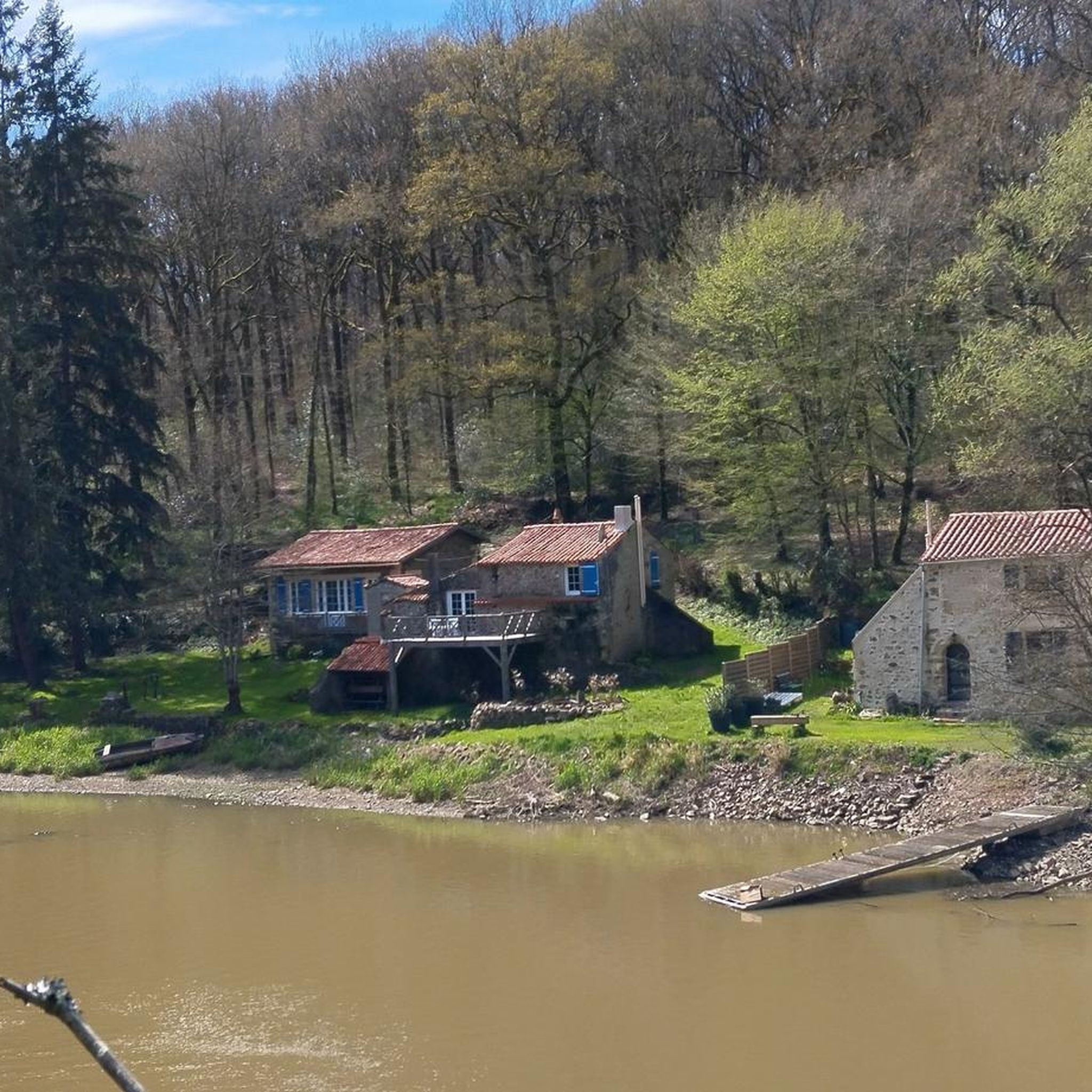
Among the trees and by the river you will find this magical bridge that makes you feel like you are in another world.
2
0

I don't know if we really have 21% but it's a good alternative to the classic climb of Mervent from the Mangoustan restaurant. An unmissable climb 👍
0
0

An emblematic bridge over the river "la Mère".
1
0
Frequently Asked Questions
How many road cycling routes are available around Longèves?
There are over 270 road cycling routes around Longèves, offering a wide variety of options for different skill levels and preferences. The komoot community has explored these routes over 1,000 times, providing valuable insights and ratings.
What kind of terrain can I expect on road cycling routes in Longèves?
Road cycling in Longèves offers a diverse landscape. You'll find routes traversing flat, open agricultural fields, paths through extensive maritime pine forests like the Longeville State Forest, and scenic stretches alongside waterways in the unique marshlands, such as the Marais Neuf and Jard-sur-Mer Marshes. Coastal routes also provide stunning sea views.
Are there road cycling routes suitable for beginners or families in Longèves?
Yes, Longèves offers numerous easy road cycling routes perfect for beginners or families. For example, the Lost in the middle of the fields loop from Fontenay-le-Comte is an easy 48.9 km trail with expansive views. Another great option is the Abbaye de Maillezais loop from Fontenay-le-Comte, an easy 35.5 km path through tranquil marshlands.
What is the best time of year for road cycling in Longèves?
The region around Longèves is generally pleasant for cycling for much of the year. Spring and autumn offer mild temperatures and beautiful scenery, ideal for longer rides. Summer can be warm, but routes through shaded forests like the Longeville State Forest provide a cooler experience. Coastal routes are enjoyable in warmer months.
Are there options for more experienced road cyclists seeking a challenge?
Absolutely. While many routes are easy to moderate, there are also more challenging options. For instance, the Déluge Bridge – Mervent Hill loop from Fontenay-le-Comte is a moderate 44.6 km route with over 500 meters of elevation gain, providing a more demanding ride. Overall, 24 routes are classified as difficult.
What natural features can I explore while road cycling in Longèves?
You can explore diverse natural features, including the extensive Longeville State Forest with its maritime pines, the picturesque Marais Neuf and Jard-sur-Mer Marshes with their unique ecosystems, and the stunning Vendée coastline. Major cycling routes like the Vélodyssée offer breathtaking sea views and access to natural spaces along canals and lakes.
Are there any historical or cultural points of interest along the cycling routes?
Yes, several routes pass by interesting landmarks. You can cycle past the medieval castle in Talmont Saint Hilaire, visit the house of Georges Clemenceau in Saint Vincent sur Jard, or explore the oyster port of La Guittière. The Abbaye de Maillezais loop from Fontenay-le-Comte specifically guides cyclists past historical sites within the marshlands.
Can I find scenic viewpoints on the road cycling routes?
Many routes offer scenic viewpoints, especially those along the coast or through the marshlands. The Vélodyssée, for example, provides stunning sea views on its section from Les Sables d'Olonne to La Tranche-sur-Mer. Routes through the Marais Neuf also offer picturesque vistas of the well-landscaped marsh with its waterways and diverse animal life.
Are there circular road cycling routes available in Longèves?
Yes, many road cycling routes around Longèves are designed as loops, allowing you to start and end at the same point. Examples include the Le Mazeau – Pichonnière Mill loop from Longèves, a 65.1 km route through rural areas, and the Lost in the middle of the fields loop from Fontenay-le-Comte.
What do other road cyclists enjoy about the routes around Longèves?
The road cycling routes in Longèves are highly rated by the komoot community, with an average score of 4.1 stars from over 30 reviews. Cyclists often praise the varied terrain, from coastal paths to tranquil marshlands and shaded forest routes, as well as the dedicated cycling infrastructure that provides a safe and enjoyable experience.
Are there any routes that take me through the marshlands?
Yes, the marshlands are a prominent feature of the region's cycling landscape. The Le Mazeau – Pichonnière Mill loop from Longèves is a great option that leads through marshlands and rural areas. The Abbaye de Maillezais loop from Fontenay-le-Comte also guides cyclists through these tranquil environments.
Where can I find parking for road cycling routes in Longèves?
While specific parking locations vary by route, many starting points for popular cycling routes, especially those originating from towns like Fontenay-le-Comte or Longèves itself, offer designated parking areas. It's advisable to check the route details on komoot for specific parking recommendations near your chosen starting point.
Are there cafes or places to stop for refreshments along the routes?
Yes, many road cycling routes in Longèves pass through or near charming villages and towns where you can find cafes, pubs, and restaurants. Coastal routes and those traversing larger towns like Fontenay-le-Comte or near the oyster port of La Guittière offer ample opportunities for refreshment stops.
Most popular attractions around Longèves

Get inspired with the komoot mobile app


Explore more
Browse the best Road cycling routes in other regions.
