The best cycling routes around Torsac
4.4
(229)
1,599
riders
201
rides
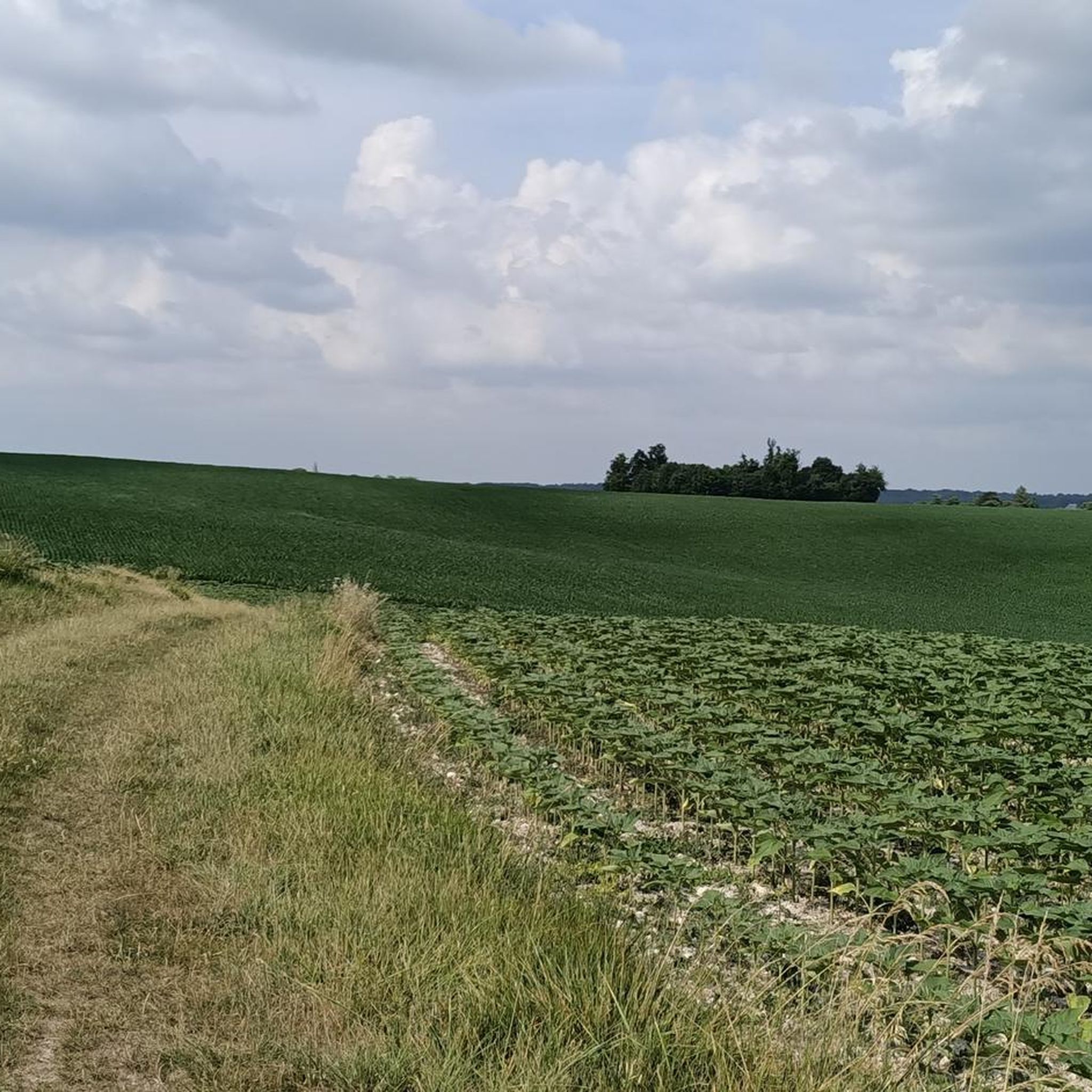
Touring cycling routes around Torsac traverse a tranquil and verdant countryside in the Charente department of Nouvelle-Aquitaine, France. The region features rolling hills, patchwork fields, and scenic riverbanks, particularly along the Charreau and Eaux Claires valleys. Limestone cliffs are present in the Vallée des Eaux Claires, which is a notable natural feature. This landscape provides varied terrain suitable for touring cyclists.
Best touring cycling routes around Torsac
- The most popular touring cycling route is Foulpougne Viaduct – Comic Book Museum…
Last updated: June 29, 2026
12
riders
44.0km
03:33
610m
610m
Hard bike ride. Very good fitness required. Mostly paved surfaces. Suitable for all skill levels.
4.0
(1)
9
riders
134km
08:24
1,160m
1,160m
Hard bike ride. Very good fitness required. Mostly paved surfaces. Suitable for all skill levels.

Sign up for free
5.0
(1)
11
riders
33.8km
02:53
390m
390m
Hard bike ride. Good fitness required. You may need to push your bike for some segments of this route.
6
riders
38.1km
02:28
310m
310m
Moderate bike ride. Good fitness required. Mostly paved surfaces. Suitable for all skill levels.
7
riders
28.5km
02:30
370m
370m
Hard bike ride. Good fitness required. You may need to push your bike for some segments of this route.
Get access to more routes and recommendations from other explorers.
Sign up for free
Already have an account?
Our route recommendations are based on thousands of hikes, rides, and runs completed by other people on komoot.
Start today with a free account
Your next adventure awaits.
Login or Signup



Tips from the Community

Its location, near the city walls and an old city gate, corresponds to that of a primitive sanctuary, predating Christianity, probably a temple dedicated to Jupiter. A first cathedral was built during the 4th century, dedicated to Saint Saturninus. The building disappeared when Clovis captured Angoulême in 508, after he drove out the Visigoths following the victory at Vouillé in 507. Clovis and then King Charibert ordered the cathedral's reconstruction in honor of Saint Peter.[2] This second cathedral was consecrated in 566 by Saint Germain, Bishop of Paris, and Saint Euphronius, Bishop of Tours, and is mentioned in Gregory of Tours' History of the Franks.[Note 1] It was burned down, probably by the Normans. The third cathedral was the work of Grimoard of Mussidan, Bishop of Angoulême (991-1018). He was also Abbot of Brantôme in Périgord and used the abbey's revenues to finance its construction. Begun around 991 and consecrated in 1015, it lasted only a century, its dimensions being too small. Only the north wall remains in the second and third bays of the nave, beneath the windows.
0
0


The biblical accounts of the New Testament, which describe the events in the life of Jesus and his disciples, paint a very nuanced picture of the Apostle Peter (Saint-Pierre), to whom the church of Angoulême is dedicated: On the one hand, he is a convinced and determined disciple of Jesus, but also not free from human weakness and fear. In the Garden of Gethsemane, he falls asleep (like the other disciples) when Jesus turns to God the Father after the Last Supper and asks the disciples to pray as well; and after Jesus' arrest, Peter denies three times that he even knows him. But he also weeps over his weakness and, upon encountering the risen Christ, professes his love and loyalty to him. His real name is Simon, but Jesus gives him the name Peter (which means rock), upon which the church is to be built, and he gives him—according to the account of the Evangelist Matthew—the "keys to the kingdom of heaven."
0
0

The building, constructed in the 12th century, was enlarged in the 15th century by the north and south aisles dedicated to the Virgin and Saint John the Baptist. It was restored in 1875-1876. It has a basilica plan with a single nave, on which is grafted to the east a false square surmounted by a dome on pendentives and which ends in a vaulted apse. Side chapels with flat chevet were added, to the north and south, in the 15th century. The facade is pierced by a door with a triple projection and an open window. The building was fortified at the time of the Hundred Years' War. The whole is surmounted, to the east, at the level of the dome, by a square bell tower on two levels. The base is decorated with three blind arcades; The upper floor is decorated, on each side, with three semicircular arches mounted on small columns, highlighted by a circular stringcourse and enclosing twin bay windows. https://www.dignac.fr/histoire-et-patrimoine/ https://monumentum.fr/monument-historique/pa00104355/dignac-eglise-saint-cybard
0
0
The architecture of this church is modeled on the Greek temples popular in the early 19th century. This neoclassical architecture is the work of Paul Abadie Père. https://www.angouleme-tourisme.com/patrimoine-culturel/eglise-saint-jacques-de-lhoumeau/
1
0
Beautiful little town center
0
0

Very narrow passage to drive through. You always have to be a little careful.
1
0

Frequently Asked Questions
How many touring cycling routes are available around Torsac?
There are over 200 touring cycling routes around Torsac, catering to various skill levels. You'll find a good mix, with 30 easy routes, 89 moderate routes, and 84 difficult routes to explore.
What kind of landscapes can I expect on touring cycling routes in Torsac?
The region around Torsac offers a tranquil and verdant countryside, characterized by rolling hills, patchwork fields, and scenic riverbanks. You'll encounter woods and river valleys like the Charreau and Eaux Claires, which feature numerous bridges, artistic structures, fountains, wash houses, and mills. The Vallée des Eaux Claires is particularly notable for its limestone cliffs and diverse Mediterranean vegetation.
Are there any family-friendly touring cycling routes in the Torsac area?
Yes, the Charente department, where Torsac is located, offers dedicated 'family circuits' that are easy routes, typically spanning 4 km to 10 km. These are clearly marked with signs featuring small black bicycles, making them ideal for a relaxed ride with children. An example of an easy route is the Bike loop from Vœuil-et-Giget, which is 8.5 km long.
What are some notable landmarks or attractions I can see while cycling near Torsac?
While cycling near Torsac, you can discover several interesting landmarks. The village itself has the 12th-century Church of Saint-Aignant and the Château de Torsac. Further afield, you might pass by the impressive Château de la Mercerie, or the Chateau du diable. The regional town of Angoulême, within cycling distance, also offers historical monuments like the Saint-Pierre d'Angoulême Cathedral.
Are there any circular touring cycling routes around Torsac?
Yes, many of the touring cycling routes around Torsac are designed as loops, allowing you to start and end in the same location. For example, the Foulpougne Viaduct – Comic Book Museum loop from Dirac is a popular moderate route, and the more challenging Anguienne Valley loop from Puymoyen also offers a circular experience.
What is the best time of year to go touring cycling in Torsac?
The Charente is known as one of the sunniest regions in France, making for favorable cycling conditions for much of the year. Spring and autumn generally offer pleasant temperatures and beautiful scenery, with fewer crowds than the peak summer months. The patchwork fields of sunflowers are particularly vibrant in late summer.
What do other touring cyclists enjoy most about cycling in Torsac?
The area is highly rated by the komoot community, with an average score of 4.6 stars from over 300 reviews. Reviewers often praise the tranquil rural environments, the scenic river valleys, and the well-established network of routes that cater to different abilities. Many appreciate the opportunity to explore quiet back roads and green lanes.
Are there any touring cycling routes that pass by lakes or water features?
Yes, several routes incorporate water features. The region is characterized by its riverbanks, particularly along the Charreau and Eaux Claires valleys. You can also find routes that pass by lakes, such as the Lake Saint-Yrieix – Eastern rampart loop from Puymoyen, offering pleasant views of the water.
What are the options for more challenging touring cycling routes in Torsac?
For those seeking a more challenging ride, the region offers 'exploration circuits' ranging from 40 km to 70 km. These routes often feature more significant elevation changes. An example of a difficult route is the Anguienne Valley loop from Puymoyen, which covers 28.5 km with notable elevation gain.
Are there any routes that combine historical sites with natural beauty?
Absolutely. Many routes in the Torsac area weave through both historical points of interest and natural landscapes. For instance, the Chateau du diable – Hollow rocks loop from Puymoyen combines a visit to a castle highlight with exploration of the region's unique geological features.
Is it possible to access the touring cycling routes using public transport?
While Torsac itself is a rural village, the larger town of Angoulême, approximately 13 km north, serves as a regional hub with public transport connections. From Angoulême, you can cycle to Torsac or access various regional cycling networks, including major routes like La Scandibérique and The Flow Vélo, which pass through the Charente valley.
Are there specific parking areas for cyclists near the touring routes?
Given the rural nature of Torsac and the surrounding villages, parking is generally available in village centers or near trailheads. Many routes start from towns like Puymoyen or Dirac, where you can typically find suitable parking for your vehicle before beginning your ride.
Most popular attractions around Torsac

Get inspired with the komoot mobile app


Explore more
Browse the best Cycling routes in other regions.
