Attractions and Places To See around Locarn - Top 20
Attractions and places to see around Locarn offer a range of historical and cultural sites in Brittany, France. This region is characterized by its significant man-made monuments and historical locations. Visitors can explore sites related to the Nantes-Brest Canal and unique cultural projects. Locarn provides opportunities to discover the area's heritage and natural landscapes.
Best attractions and places to see around Locarn
- The most popular attractions is The Glomel Cut, a man-made monument that represents the highest point of…
Last updated: October 18, 2026
The Glomel Cut
Highlight (Segment) • Monument
Translated by Google •
Tip by

Valley of the Saints
Highlight • Monument
Very impressive. Wonderful photo opportunities.
Translated by Google •
Tip by

Sign up now to discover places like this
Get recommendations on the best single tracks, peaks, & plenty of other exciting outdoor places.
The Valley of the Saints
Highlight • Other
Translated by Google •
Tip by

Great Trench of the Nantes to Brest Canal
Highlight • Monument
Translated by Google •
Tip by

Saint-Gildas Chapel
Highlight • Religious Site
Translated by Google •
Tip by

Sign up for free to discover even more attractions around Locarn.
Already have an account?
Start today with a free account
Your next adventure awaits.


Tips from the Community

There are only seven photos posted here, but they show more clearly than words can, a selection of the stone-carved diversity of the Breton heavenly host of saints – in this very special case a hill called „Vallée des Saints“.
0
0

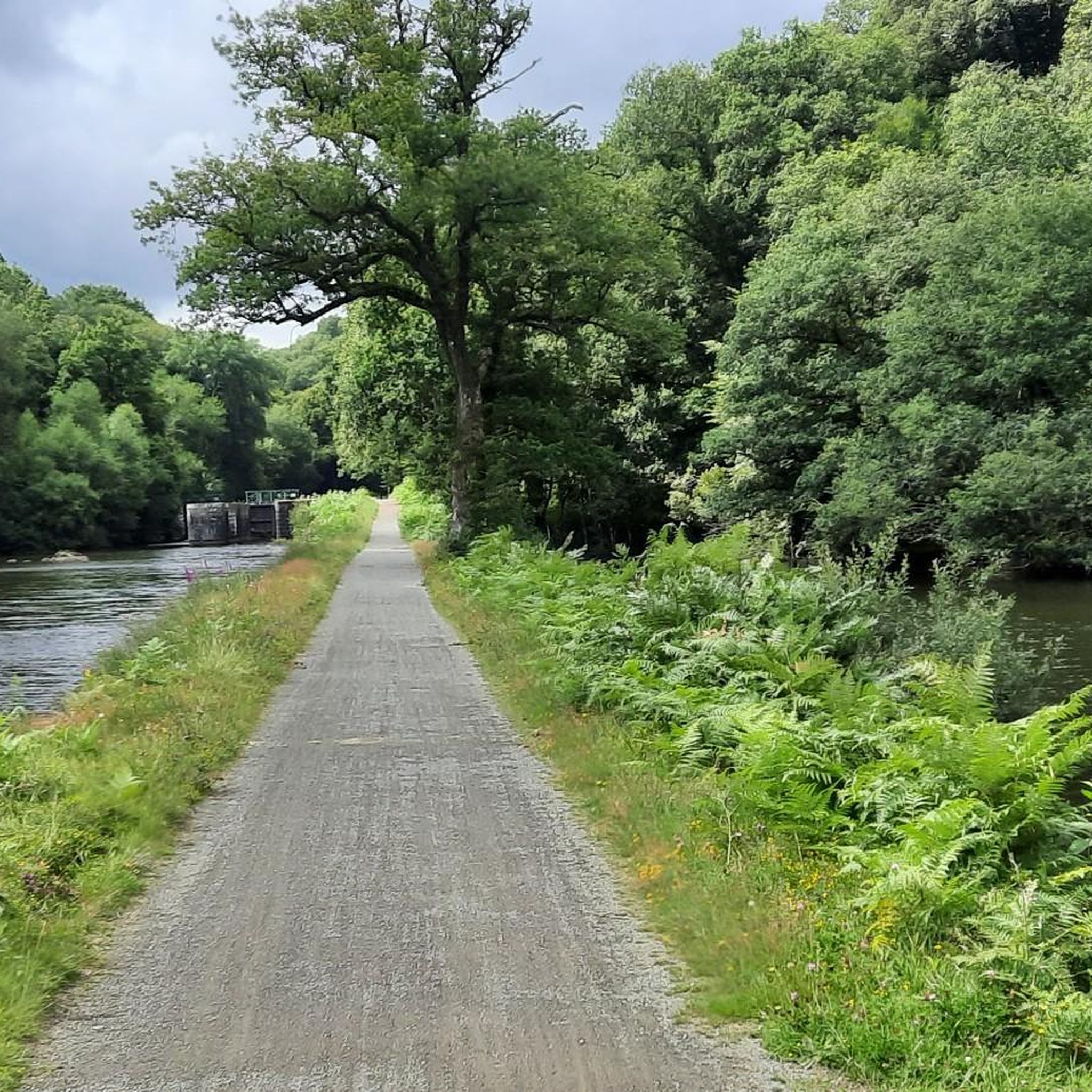
A pretty iron bridge, built for farmers at the time. Here the path along the water was in a bad state in April 2026 (a warning was installed on one side of the section, but a detour through the forest is possible).
0
0

This is one of the very few straight sections of the canal.
0
0
Here the canal meanders through the landscape.
0
0
The collection of more than 200 photos for this highlight shows more clearly than words can the diversity of the Breton saints' heaven carved in stone - in this very special case a hill called "Vallée des Saints".
1
0

The chapel may have been a lordly foundation from the early years of the 16th century. Its proximity to the Tossen Sant-Veltas fortress suggests that it may have been the private chapel of this castle. This building is said to have been completely finished around 1500 and is a creation of the workshop of Philippe de Beaumanoir, a very active master builder in Trégor. Source: Wikipedia
1
0
Located in the heart of Brittany in Carnoët, the Vallée des Saints is a contemporary cultural and artistic site which will host, in 2024, nearly 200 monumental works in Breton granite bearing the effigy of the saints who have left their mark on Brittany. According to legend, Brittany venerates more than 1,000 Breton saints, but only 700 are listed because not all of them are "homologated", that is to say officially recognized by the Roman Catholic Church. It is estimated that there are about 800 saints in Brittany according to the most reserved historians, up to 1,500 for the most optimistic. So there is still a lot to do in the Vallée des Saints. Source: Wikipedia
2
0

A welcome breath of fresh air
0
0
Frequently Asked Questions
What are the main historical attractions to visit around Locarn?
Locarn is rich in historical sites. A prominent one is The Glomel Cut, a significant man-made monument representing the highest point of the Nantes-Brest Canal. This passage required extensive excavation in the 19th century, carried out under challenging conditions. You can also explore the Saint-Gildas Chapel, a historical religious building possibly linked to the Tossen Sant-Veltas fortress.
Are there any unique cultural or artistic sites near Locarn?
Yes, the Valley of the Saints is a unique cultural and artistic site near Locarn. It features monumental granite statues representing the founding saints of Brittany, with many already erected and more planned. It's a fascinating project that aims to become a major tourist hub and showcase Breton granite.
What kind of outdoor activities can I do near the attractions in Locarn?
The area around Locarn offers various outdoor activities. You can find numerous hiking trails, including easy and moderate options like the "Menhir de Gouellec – Gorong-Schlucht loop." For cycling enthusiasts, there are gravel biking routes such as the "Lock No. 138 of Bon Repos – Bon Repos Abbey loop." Running trails are also available, like the "Wildlife Observatory – Lac de Kerné-Uhel - East bank loop." You can find more details on these activities in the hiking, gravel biking, and running guides for Locarn.
Are there family-friendly attractions in the Locarn area?
Yes, several attractions are suitable for families. The Valley of the Saints is considered family-friendly, offering impressive stone figures that can be enjoyed by all ages. The Saint-Gildas Chapel also provides a pleasant historical stop for families.
What is the significance of The Glomel Cut?
The Glomel Cut is historically significant as the highest point of the Nantes-Brest Canal. It required the excavation of millions of cubic meters of earth and rock in the 19th century, largely by forced labor. It represents a monumental engineering feat and a poignant piece of local history, highlighting the immense human effort involved in its construction.
What can I expect to see at the Valley of the Saints?
At the Valley of the Saints, you will find a growing collection of monumental granite statues, each representing a founding saint of Brittany. These impressive sculptures are set on a hill, offering unique photo opportunities and a chance to learn about Breton heritage. Entry to the site is free, though parking may be paid.
Can I visit the Saint-Gildas Chapel?
Yes, the Saint-Gildas Chapel is open to visitors. It's a charming small chapel with a clay floor and wooden structure, offering a glimpse into local religious architecture and history. It's also noted as a nice spot for a picnic nearby.
Are there any easy hiking trails around Locarn?
Yes, there are several easy hiking trails around Locarn. For example, the "Menhir de Gouellec – Gorong-Schlucht loop from Parking du Quélennec" is an easy 5.2 km route. Another easy option is the "The Valley of the Saints – Saint-Gildas Chapel loop from Carnoët," which is about 5.7 km. You can find more easy routes in the hiking guide for Locarn.
What do visitors enjoy most about the attractions in Locarn?
Visitors particularly appreciate the historical depth of sites like The Glomel Cut, recognizing the immense effort behind its creation. The Valley of the Saints is highly praised for its impressive stone figures and unique cultural experience, with many finding it a magnificent site for photography and reflection.
Is there a specific time of year when the attractions are best visited?
While the guide doesn't specify a 'best time,' the outdoor nature of many attractions like the Valley of the Saints and the canal paths suggests that spring, summer, and early autumn would offer the most pleasant weather for exploration and outdoor activities.
Where can I find information about the construction of the Nantes-Brest Canal in the Locarn area?
Information about the construction of the Nantes-Brest Canal, particularly the challenging section known as The Glomel Cut, can be found at the site itself. Historical accounts detail the use of thousands of forced and prisoner laborers in the 19th century, who undertook the monumental task of digging through rock and earth to connect the waterways. Local resources or museums might offer deeper insights into this significant historical project.

Get inspired with the komoot mobile app


Explore more
Still not found the Highlight you’re looking for? See guides of the top attractions in other regions:
