Attractions and Places To See around Saint-Caprais-De-Blaye - Top 18
Best attractions and places to see around Saint-Caprais-De-Blaye include a mix of natural landscapes and historical sites within the Gironde department of Nouvelle-Aquitaine. This rural commune is situated near the Gironde Estuary, Europe's largest, and is part of a significant wine-producing area with 150 hectares of vineyards. The region offers access to diverse points of interest, from wetlands and historical churches to UNESCO World Heritage sites like the Blaye Citadel.
Best attractions and places to see around Saint-Caprais-De-Blaye
- The most popular attractions is The Belt – canals and wet meadows, a natural area featuring wetlands and drainage canals. These areas provide a habitat for a diversity of birds and other wildlife, including multiple varieties of migratory and sedentary birds.
- Another must-see spot is Saint-Sébastien Church of Mirambeau, a religious building with origins dating back to the 11th century. The current structure, completed in 1856, features a nave 33 m long and 9 m wide, with a semi-circular apse and side chapels.
- Visitors also love Market and Saint-Saturnin Church of Braud-et-Saint-Louis, a 19th-century neo-Gothic church. Its architecture is notable, and it stands near the Colonne des Naufragés, a monument commemorating Nordic sailors from the 17th century.
- Saint-Caprais-De-Blaye is known for its historical religious buildings, natural wetlands, and proximity to significant historical fortifications. The area provides a variety of attractions to explore, from local churches to broader regional highlights.
- The attractions around Saint-Caprais-De-Blaye are appreciated by the komoot community, with 27 upvotes and 9 photos shared by visitors.
Last updated: May 9, 2026
Market and Saint-Saturnin Church of Braud-et-Saint-Louis
Highlight • Religious Site
Translated by Google •
Tip by

Blaye-Etauliers - Cycle path 🚴
Highlight (Segment) • Other
Tip by

Sign up now to discover places like this
Get recommendations on the best single tracks, peaks, & plenty of other exciting outdoor places.
Sign up for free
The Belt – canals and wet meadows
Highlight • Natural
Tip by
Church of the Abbey of Sainte-Marie-Madeleine of Pleine-Selve
Highlight • Religious Site
12th century church, made up at the time of a single nave, a transept and a flat apse. In the 13th century, addition of chapels to the arms of the transept. The convent buildings were completely destroyed by French troops in 1407 during the Hundred Years War and then during the Wars of Religion. The church itself had its nave amputated. Of the 13th century building, the crossing, the north arm of the transept, the north chapel, the flat apse remain. During the 19th century, construction of a sacristy on the south facade of the chevet.
The Romanesque church is only the choir of the old church, only the apse presents the architecture of the 12th century. Today it has the status of a parish church. The building was classified as a historical monument in 1908.
Translated by Google •
Tip by

Saint-Sébastien Church of Mirambeau
Highlight • Religious Site
From the 11th century, Mirambeau had a church dedicated to St Sebastian, from Narbonne, martyred in Rome, under Diocletian, in the year 288 of the Christian era, as mentioned in the charter of the abbey of St Savinien, near Lyon, dated from the year 1062. In the 11th, 15th, 16th and 17th centuries, the priory of St-Sébastien de Mirambeau was still at the presentation of the abbot of St-Savinien de Lyon. One sees opposite the gate of the castle, while going up to the district called the City, a stone cross which indicates, one says, the site or was the church of St-Sebastien. In addition, there is between Civrac and the town, on the edge of the chemin d'Allas, the site of a chapel which formerly belonged to a commandery (this is still the name of the neighboring hamlet). - to be the so-called chapel of the Way, in the parish of St-Sébastien, according to the pouillé of 1746, and which was at the presentation of the diocesan bishop.
Assisted by the generosity of the Countess Duchâtel, Mirambeau undertook the construction of a chapel, which was completed at the end of 1856. This building, too cramped, with modern forms, and without religious character, consists of a nave of 33 m long, 9 wide, with semi-circular apse and side chapels. They are dedicated to the Blessed Virgin and to the Sacred Heart.
The chapel on the left was later rebuilt, with painting in the Byzantine style and ossuary, by the Duchâtel family, whose particular burial place it is.
A basket-handle ceiling conceals an elegant framework in the nave. A porch of six steps leads to the main door of the chapel, which is surmounted by a slender quadrangular bell tower, and whose spire is covered with slates. This chapel occupies the very site of the former house of the Récollets de Mirambeau,
We see in the church of Mirambeau, a crucifixion of Our Lady, a recent gift from the government, and an Immaculate Conception of Our Lady, a copy, it is said, of a painting by the famous Spanish painter Murillo. Plus a stone baptismal font, sculpted with art, and coming from the old chapel of the Récollets.
While the title of canton cure was conferred on Mirambeau, Petit-Niort became a desserte, or third class cure, although this small population group does not even today have the title of commune.
Translated by Google •
Tip by
Sign up for free to discover even more attractions around Saint-Caprais-De-Blaye.
Sign up for free
Already have an account?
Start today with a free account
Your next adventure awaits.
Login or Signup


Tips from the Community

Opposite the church, you'll find a small supermarket, public restrooms, and drinking water. Always interesting.
0
0

The Saint-Saturnin Church was built in 1898 after the previous church was destroyed during the French Revolution. Near the church stands the Column of the Shipwrecked, an ex-voto erected by Nordic sailors who survived a shipwreck in the early 17th century. Located on the right bank of the Gironde River, Europe's largest estuary, the town owes its wealth of infrastructure and sports facilities to the presence of the Blayais National Park. In the heart of the marshland, its territory boasts typical wetland landscapes, home to exceptional flora and fauna. Discover it on bike rides or by visiting the "Terres d'oiseaux" bird park, next to the port of Callonges. A major producer of asparagus from Blayais, but also a wine-growing commune located in one of the largest vineyards in the world, Bordeaux, Braud-et-Saint-Louis also borders the appellations of cognac and pineau des Charentes.
0
0

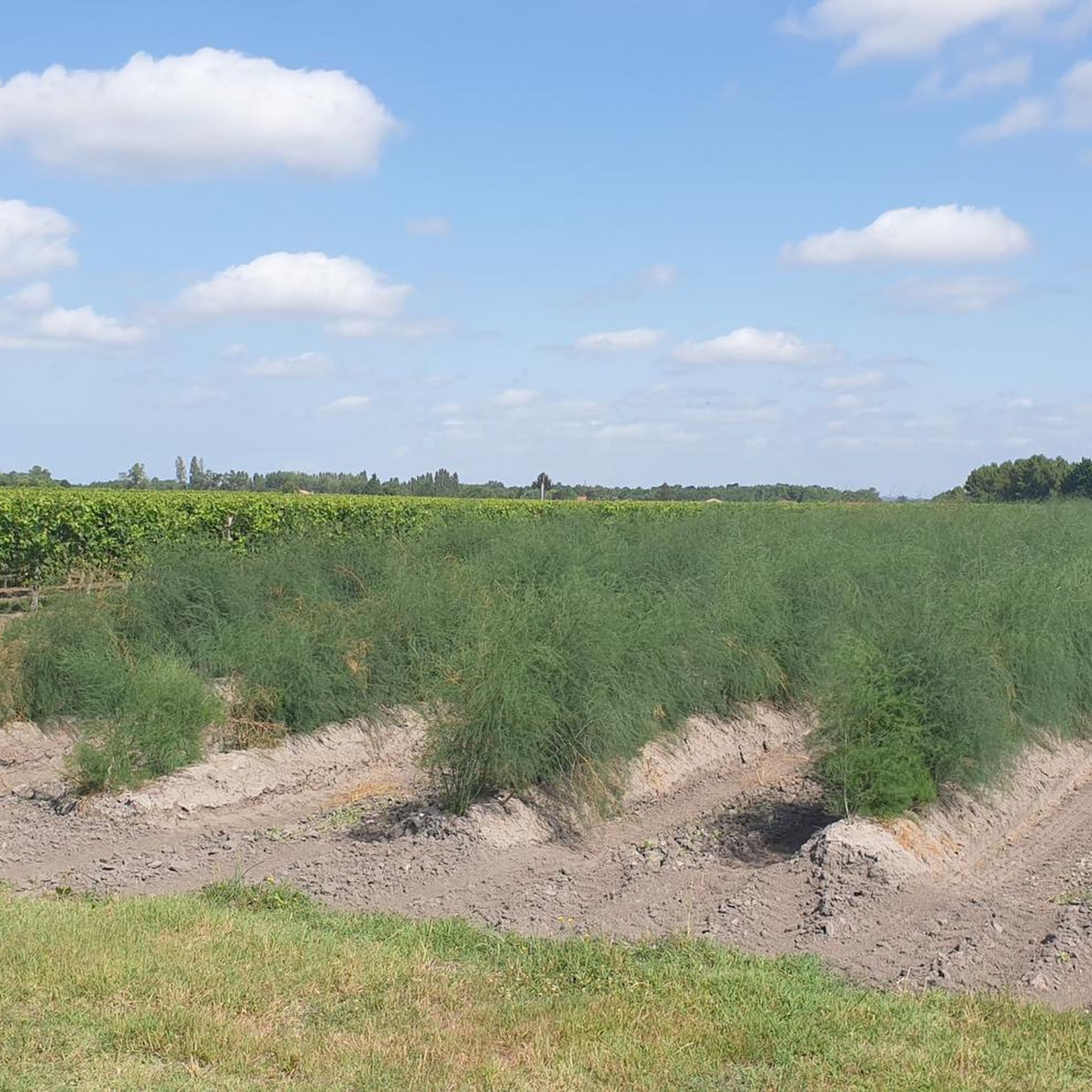
Beautiful railway track cycle path between Blaye and Etauliers.
2
1

This church is quite recent (19th century) because it was built following the destruction of the village parish during the Revolution. However, its architecture is worthy of interest when passing through the charming town of Braud-et-Saint-Louis.
1
0

This cycle path was completely renovated in 2019. The old railway line leads to the entrance to the citadel of Blaye.
1
1

The only downside not a single bench or picnic table
1
0

Sanctus Saturninus de Brau is the name found in the 14th century. Braud would be an abbreviation of Beraud, Saintonge form of the Germanic name Beroald, which means Old Lord. Based on the form "Embrand" which formerly would have designated this locality. Several possible etymologies of Braud The name Braud could also come from the Gascon Braou which means Bull, a sign that this form of cattle was raised in the swamps. Commune formed from the union of two former parishes: Braud, from old French "Brai", mud, marshy place and St Louis, parish founded by the Duke of St Simon in 1656 and included in the commune of Braud in 1802. Origin of the name of the municipality of Braud and Saint Louis Braud would come from beraud, Saintonge form of the Germanic name berard, old lord" or from the Gascon braou, "bull", a sign that these cattle were raised in the swamps or even from the old French brai, "mud", "swampy place". The parish of Braud is cited under the name of Sanctus Saturninus (Saint Saturnin) of Braud. The drying out of the marshes, in the 17th century, on the initiative of the Duke Claude de Saint Simon, governor of Blaye, was to make it possible to transform the marshes into "good nature of arable land" and create villages. The draining finished, the plots are allocated, the smallholdings appear. The number of inhabitants encouraged the Duke of Saint Simon to found two parishes: the parish of Saint Louis (all the part of the large marsh located between the Gironde and the ring canal, between the Clonges canal and that of Fréneau), in l honor of the King of France and that of Saint Simon. The church, the presbytery and the cemetery built between 1665 and 1667 were destroyed during the Revolution of 1789. Rebuilt in 1895 in a neo-Gothic style and on a new north-south orientation, it is located north of the town of Braud -and-Saint-Louis. The spire of the bell tower culminates at 37 meters in height. After the Revolution, the parish of Saint Saturnin de Braud and the parish of Saint Louis des Marais were united to form the municipality of Braud and Saint Louis. THE CROSS OF SAINT LOUIS A cross found in the attic of the presbytery of Braud was erected at a place called "La Chapelle", near Fréneau, during a procession in June 1915, thus indicating the location of the disappeared church. This cross is visible from the road leading to the nuclear power plant, on the left, 4 km from the Paillerie roundabout.
1
0
The Abbey of Sainte-Marie-Madeleine goes down in history for having been founded by Geoffroi du Loroux, Archbishop of Bordeaux, around 1145-1150. The only vestige of the imposing Premonstratensian monastery, the church of the Abbey of Sainte-Marie-Madeleine, founded in the 12th century, is the jewel of the village of Pleine-Selve. 12th century church, made up at the time of a single nave, a transept and a flat apse. In the 13th century, addition of chapels to the arms of the transept. The convent buildings were completely destroyed by French troops in 1407 during the Hundred Years War and then during the Wars of Religion. The church itself had its nave amputated. Of the 13th century building, the crossing, the north arm of the transept, the north chapel, the flat apse remain. During the 19th century, construction of a sacristy on the south facade of the chevet. The Romanesque church is only the choir of the old church, only the apse presents the architecture of the 12th century. Today it has the status of a parish church. The building was classified as a historical monument in 1908.
0
0
Frequently Asked Questions
What natural attractions can I explore around Saint-Caprais-de-Blaye?
The region offers a variety of natural landscapes. You can visit The Belt – canals and wet meadows, a significant natural area with wetlands and drainage canals that provide a habitat for diverse bird species. The wider area is also known for the vast Gironde Estuary, Europe's largest, and the Terres d'Oiseaux Nature Reserve, an ornithological sanctuary perfect for birdwatching. Additionally, the commune is surrounded by 150 hectares of vineyards, contributing to the local wine production.
Are there historical or cultural sites to visit near Saint-Caprais-de-Blaye?
Yes, the area is rich in history and culture. Within the commune, you'll find the neo-Romanesque Saint-Clair Church. Nearby, you can explore religious buildings like Saint-Sébastien Church of Mirambeau, with origins dating back to the 11th century, and Market and Saint-Saturnin Church of Braud-et-Saint-Louis, a 19th-century neo-Gothic church near the Colonne des Naufragés. A major highlight is the UNESCO World Heritage Blaye Citadel, a 17th-century Vauban fortress offering tours and panoramic views, located about 19 km away.
What are some family-friendly activities in the Saint-Caprais-de-Blaye area?
Families can enjoy exploring natural areas like The Belt – canals and wet meadows, which is suitable for observing wildlife and birds. The Blaye Citadel, a UNESCO site, also offers an engaging historical experience for all ages. Additionally, the Terres d'Oiseaux Nature Reserve provides trails for bird observation that can be a fun and educational outing for families.
What kind of outdoor activities and routes are available around Saint-Caprais-de-Blaye?
The region is excellent for various outdoor activities. You can find numerous routes for running, hiking, and cycling. For instance, there are easy running loops from Braud-et-Saint-Louis and moderate ones from Saint-Aubin-de-Blaye. Hiking options include easy trails like the Panorama de l'Estuaire loop from Saint-Bonnet-sur-Gironde. Cyclists can enjoy routes such as the Vitrezay Nature Centre loop from Saint-Palais. You can find more details and specific routes on the Running Trails, Hiking, and Cycling guide pages.
Are there any UNESCO World Heritage sites close to Saint-Caprais-de-Blaye?
Yes, the renowned Blaye Citadel is a UNESCO World Heritage site, located approximately 19 km from Saint-Caprais-de-Blaye. It forms part of the 'Verrou Vauban' (Vauban Lock) along with Fort Médoc and Fort Paté, which are also UNESCO sites situated across the Gironde Estuary.
What are some charming villages or towns worth visiting in the vicinity?
Beyond Saint-Caprais-de-Blaye, you can explore several picturesque locations. Bourg-sur-Gironde is a charming village known for its cobbled streets and troglodyte dwellings. Talmont-sur-Gironde is recognized as one of France's 'Most Beautiful Villages,' featuring the 12th-century Romanesque Church Sainte-Radegonde. Further afield, the famous UNESCO World Heritage wine village of Saint-Émilion is also accessible.
What is the best time of year to visit Saint-Caprais-de-Blaye and its attractions?
The region generally enjoys a mild climate, making spring (April to June) and early autumn (September to October) ideal for visiting. During these periods, the weather is pleasant for exploring historical sites, enjoying outdoor activities like hiking and cycling, and experiencing the vineyards without the peak summer heat or larger crowds.
Can I find good cycling paths near Saint-Caprais-de-Blaye?
Absolutely. A notable cycling path is the Blaye-Etauliers - Cycle path 🚴, which was completely renovated in 2019. This dedicated rail-to-trail section follows an old railway line and leads directly to the entrance of the Blaye Citadel. The continuation on rural roads is also very scenic and largely car-free. More cycling routes can be found on the Cycling around Saint-Caprais-De-Blaye guide.
Are there any ancient Roman sites in the area?
Yes, you can visit the Gallo-Roman Villa of Plassac, an ancient villa that offers insights into Roman history in the region and overlooks the Gironde Estuary.
What are the main historical religious buildings in the immediate vicinity?
In addition to the local Saint-Clair Church, you can visit Saint-Sébastien Church of Mirambeau, which dates back to the 11th century, and Market and Saint-Saturnin Church of Braud-et-Saint-Louis, a 19th-century neo-Gothic structure. Another interesting site is the church with A bell tower rebuilt for the 3rd time, showcasing Romanesque origins and multiple restorations.
What are the options for hiking around Saint-Caprais-de-Blaye?
There are various hiking opportunities, ranging from easy to more challenging. An easy option is the Panorama de l'Estuaire loop from Saint-Bonnet-sur-Gironde. For moderate hikes, consider the Saint-Palais Church loop from Saint-Ciers-sur-Gironde. More extensive routes, like the Our Lady of the Assumption – Sainte-Madeleine Church loop from Saint-Palais, offer a difficult grade for experienced hikers. Detailed routes are available on the Hiking around Saint-Caprais-De-Blaye guide page.
Most popular routes around Saint-Caprais-De-Blaye

Get inspired with the komoot mobile app


Explore more
Still not found the Highlight you’re looking for? See guides of the top attractions in other regions:
