The best cycling routes around Ligueil
4.0
(35)
137
riders
21
rides
Touring cycling around Ligueil features routes through the rolling countryside of the Indre-et-Loire department, characterized by a mix of agricultural land, woodlands, and historical sites. The region's terrain includes gentle ascents and descents, with overall elevation gains that provide a moderate challenge for cyclists. Water features such as ponds and rivers are often encountered along the trails, adding to the scenic variety.
Best touring cycling routes around Ligueil
- The most popular touring cycling route is Châtelier Castle – Schönstes Städchen…
Last updated: July 2, 2026
4.3
(4)
10
riders
44.5km
02:45
400m
400m
Moderate bike ride. Good fitness required. Mostly paved surfaces. Suitable for all skill levels.
4.4
(5)
10
riders
63.4km
03:49
380m
380m
Moderate bike ride. Good fitness required. Mostly paved surfaces. Suitable for all skill levels.

Sign up for free
4.5
(2)
9
riders
58.3km
03:32
360m
360m
Moderate bike ride. Good fitness required. Mostly paved surfaces. Suitable for all skill levels.
4.7
(3)
5
riders
47.1km
02:51
380m
380m
Moderate bike ride. Good fitness required. Mostly paved surfaces. Suitable for all skill levels.
4.5
(2)
5
riders
78.8km
04:49
490m
490m
Hard bike ride. Very good fitness required. Mostly paved surfaces. Suitable for all skill levels.
Get access to more routes and recommendations from other explorers.
Sign up for free
Already have an account?
Our route recommendations are based on thousands of hikes, rides, and runs completed by other people on komoot.
Start today with a free account
Your next adventure awaits.
Login or Signup



Tips from the Community


Crissay-sur-Manse is one of the most beautiful villages in France. The Manse River, which gives the village its name, flows through the southern part of the municipality. Sights: - Saint-Maurice Church (early 16th century) - Houses from the 15th and 16th centuries - Castle ruins (15th century)
0
0


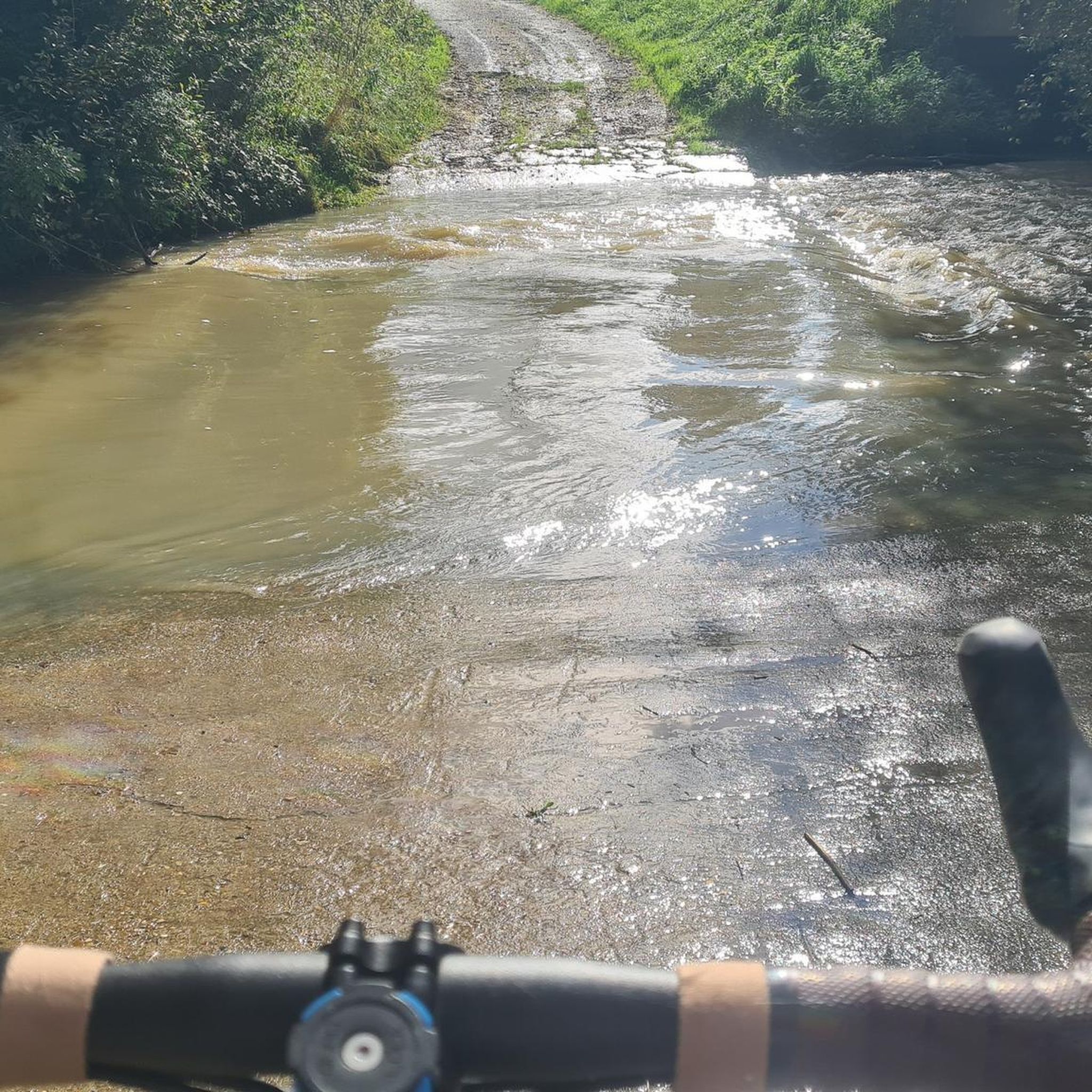
beautiful, fairly rough gravel path crossing a river, crossable in summer for sure but not passable in autumn and winter...
0
0

The Musée de la Préhistoire du Grand-Pressigny is a must-see site for history and prehistory enthusiasts, located in the village of Grand-Pressigny, in Indre-et-Loire, Centre-Val de Loire region. This museum is housed in a remarkable setting, within the Château du Grand-Pressigny, and offers a fascinating dive into the origins of humanity. Points of Interest: Exceptional Collections: European Prehistory: The museum houses one of the richest and most complete collections in France on Prehistory. It exhibits objects dating from the Paleolithic to the Neolithic, with a particular focus on flint tools produced in the region. The Silex du Grand-Pressigny: The museum is renowned for its exceptional flint pieces. Le Grand-Pressigny is famous for its production of large flint blades, which were traded over vast distances across Europe during the Neolithic. Why visit the Musée de la Préhistoire du Grand-Pressigny? A dive into prehistory: The museum offers a fascinating immersion into the early stages of human history, with remarkable artifacts that tell the story of the lives of the region’s first inhabitants. Exceptional historical setting: Housed in a historic castle, the museum combines archaeological discovery with the exploration of a remarkable architectural heritage. Enriching activities: Interactive workshops and temporary exhibitions enrich the experience, making it accessible and captivating for all ages. In short, the Musée de la Préhistoire du Grand-Pressigny is an enriching destination for anyone interested in prehistory, archaeology, or who simply wants to discover a fascinating aspect of the region’s heritage.
1
0

Very beautiful little town with all services and shops.
0
0

This private castle is an ancient fortress of which only: the large medieval moat in its entirety and which forms 2 quadrilaterals and a 3-sided figure 5 cylindrical towers including the South-East tower pierced with circular loopholes called “couuvrine tower”. The current castle was built in several stages. The residential house which dates from the 16th century had its facades completely remodeled in 1856. Part of it disappeared at the beginning of the 20th century. To the South-West a main building covered with a 4-sloped roof and presenting stone casement windows on the ground floor had been joined by another building in 1731; these buildings were demolished in 1979
0
0

Medieval citadel built on a rocky promontory surrounded by a water moat. The site is surrounded by ramparts. The main building dates from the Renaissance and the beginning of the 17th century.
0
0
Frequently Asked Questions
How many touring cycling routes are available around Ligueil?
There are over 15 touring cycling routes around Ligueil, offering a variety of experiences. These include 7 easy routes, 10 moderate routes, and 2 more challenging options, catering to different skill levels.
Are there any family-friendly touring cycling routes in Ligueil?
Yes, Ligueil offers several routes suitable for families. The region's terrain often features gentle ascents and descents, making many of the 7 easy routes a good choice for a family outing. Look for routes that pass through woodlands and agricultural land for a pleasant experience.
What kind of scenery can I expect on a touring cycling route in Ligueil?
Touring cycling routes in Ligueil showcase the rolling countryside of Indre-et-Loire, characterized by a mix of agricultural land, tranquil woodlands, and historical sites. You'll often encounter picturesque ponds and rivers, adding to the scenic variety. Many routes also pass by charming small towns and historical landmarks.
Are there any circular touring cycling routes around Ligueil?
Yes, many of the touring cycling routes in Ligueil are designed as loops. For example, the Châtelier Castle – Étang de Paulmy loop from Ligueil is a popular 29.3-mile (47.1 km) circular route that takes you through varied countryside and past the Étang de Paulmy.
What are some notable historical sites or attractions I can see along the routes?
The region around Ligueil is rich in history. You can cycle past impressive landmarks such as Châtelier Castle. Other points of interest include the Grand-Pressigny Prehistory Museum and the Saint-Sulpice Church. Many routes are designed to incorporate these historical and cultural highlights.
Are there any longer touring cycling routes for experienced cyclists?
For experienced cyclists seeking a longer challenge, the Loches – Loches Castle loop from Sepmes is a difficult 79.4-mile (127.8 km) route with significant elevation gain. Another option is the moderate Our Lady of Loreto – Boisbonnard Castle loop from Sepmes, which covers 39.4 miles (63.4 km) and offers views of rural landscapes and historical landmarks.
What is the best time of year to go touring cycling in Ligueil?
The best time for touring cycling in Ligueil is generally from spring to autumn (April to October). During these months, the weather is typically mild and pleasant, making for comfortable riding conditions. The countryside is vibrant in spring and summer, and the autumn offers beautiful foliage.
What do other touring cyclists enjoy most about cycling in Ligueil?
The area is highly rated by the komoot community, with an average score of 4.1 stars from over 40 reviews. Reviewers often praise the blend of historical castles, tranquil ponds, and scenic rural roads, as well as the variety of routes available for different ability levels.
Are there any routes that feature water bodies like lakes or rivers?
Yes, water features such as ponds and rivers are often encountered along the trails in Ligueil. The Châtelier Castle – Étang de Paulmy loop from Ligueil, for instance, passes by the scenic Étang de Paulmy, offering beautiful waterside views.
Are there any easy touring cycling routes for beginners?
Yes, Ligueil offers 7 easy touring cycling routes perfect for beginners. These routes typically feature less elevation gain and shorter distances, allowing new cyclists to enjoy the region's beautiful countryside without excessive challenge. The terrain is generally gentle, making for a pleasant introduction to touring cycling.
Can I find routes that start directly from Ligueil?
Yes, several routes have starting points directly in Ligueil. For example, the Châtelier Castle – Étang de Paulmy loop from Ligueil begins in the town itself, providing convenient access to the trails.
Are there any routes that offer a mix of historical sites and natural beauty?
Absolutely. Many routes in Ligueil combine both historical interest and natural scenery. The Châtelier Castle – Schönstes Städchen loop from Sepmes is a moderate 27.6-mile (44.5 km) trail that explores historical castles and charming small towns while traversing the region's diverse landscapes.
Most popular attractions around Ligueil

Get inspired with the komoot mobile app


Explore more
Browse the best Cycling routes in other regions.
