Attractions and Places To See around Folligny - Top 19
Best attractions and places to see around Folligny, a commune in Normandy, offers a blend of historical sites, cultural insights, and natural beauty. This region is characterized by its rich heritage and natural surroundings, including diverse landscapes and the tranquil Norman countryside. Visitors can explore ancient churches, delve into World War II history, and enjoy the natural environment.
Best attractions and places to see around Folligny
- The most popular attractions is Abbaye de La Lucerne, a religious building that…
Last updated: July 7, 2026
Abbaye de La Lucerne
Highlight • Religious Site
Translated by Google •
Tip by

Bréville-sur-Mer
Highlight • Settlement
Translated by Google •
Tip by

Sign up now to discover places like this
Get recommendations on the best single tracks, peaks, & plenty of other exciting outdoor places.
Sign up for free
Notre-Dame Church
Highlight • Other
Translated by Google •
Tip by
Saint Clair Church
Highlight • Other
Translated by Google •
Tip by

Saint-Pair Church
Highlight • Other
Translated by Google •
Tip by

Sign up for free to discover even more attractions around Folligny.
Sign up for free
Already have an account?
Start today with a free account
Your next adventure awaits.
Login or Signup

Tips from the Community


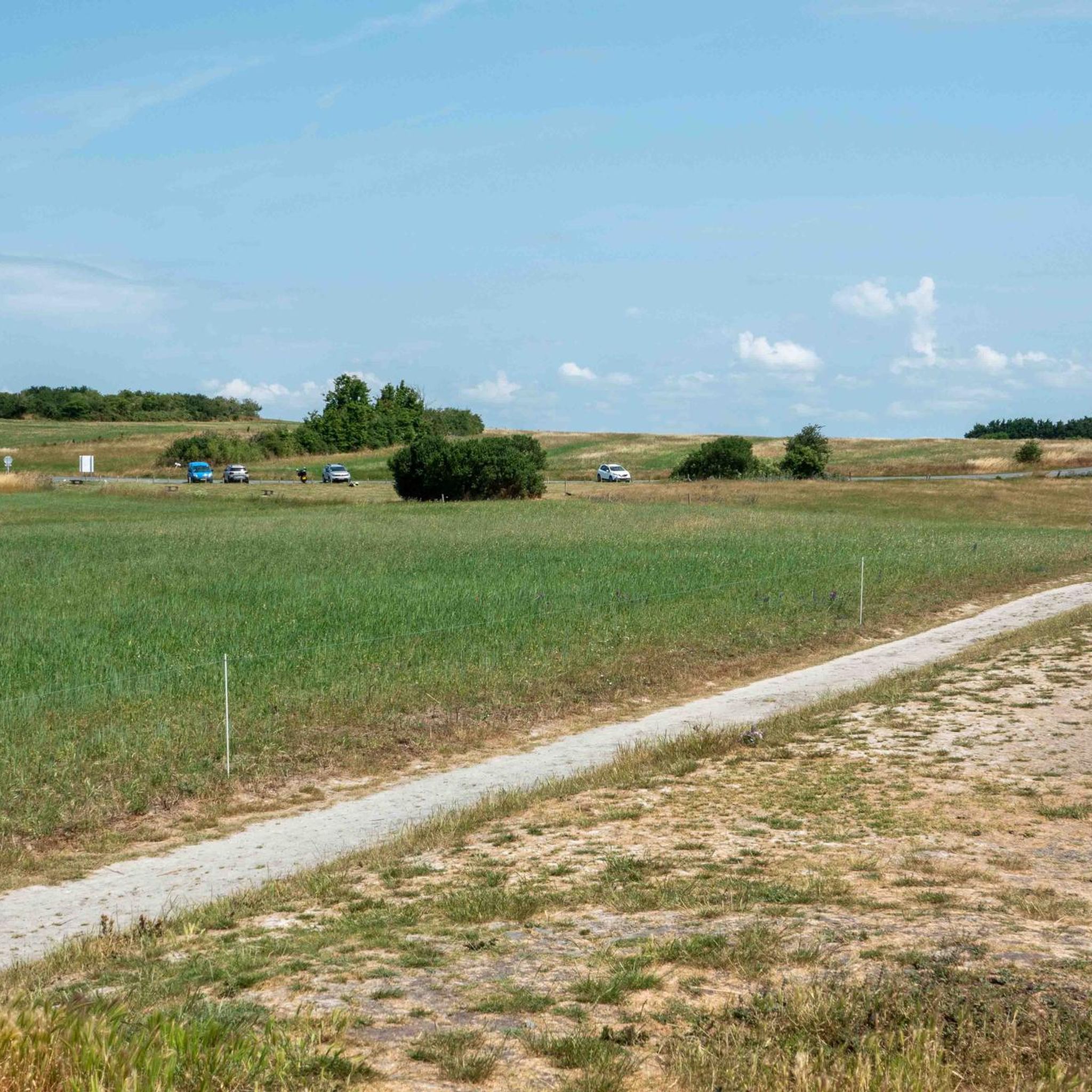
Bréville-sur-Mer is a village known for its fishing and agriculture. It was also in the 1950s a maneuvering area for troops stationed at the tip of the Roc de Granville. The Église Notre-Dame de Bréville-sur-Mer is an edifice catholique, from the 2nd half of the XIIth century. It is of Romanesque style and houses, among other things, a Vierge à l'Enfant from the XIVth century and a statue of Saint Hélier from the XVth century. L'église est inscrite aux monuments historiques. There are plenty of places to visit around Bréville-sur-Mer.
1
0
The Notre-Dame de Bréville-sur-Mer church is a Catholic building, from the second half of the 12th century. It is Romanesque in style and notably houses a 14th century Virgin and Child and a 15th century statue of Saint Helier2. The church is listed as a historical monument.
3
0

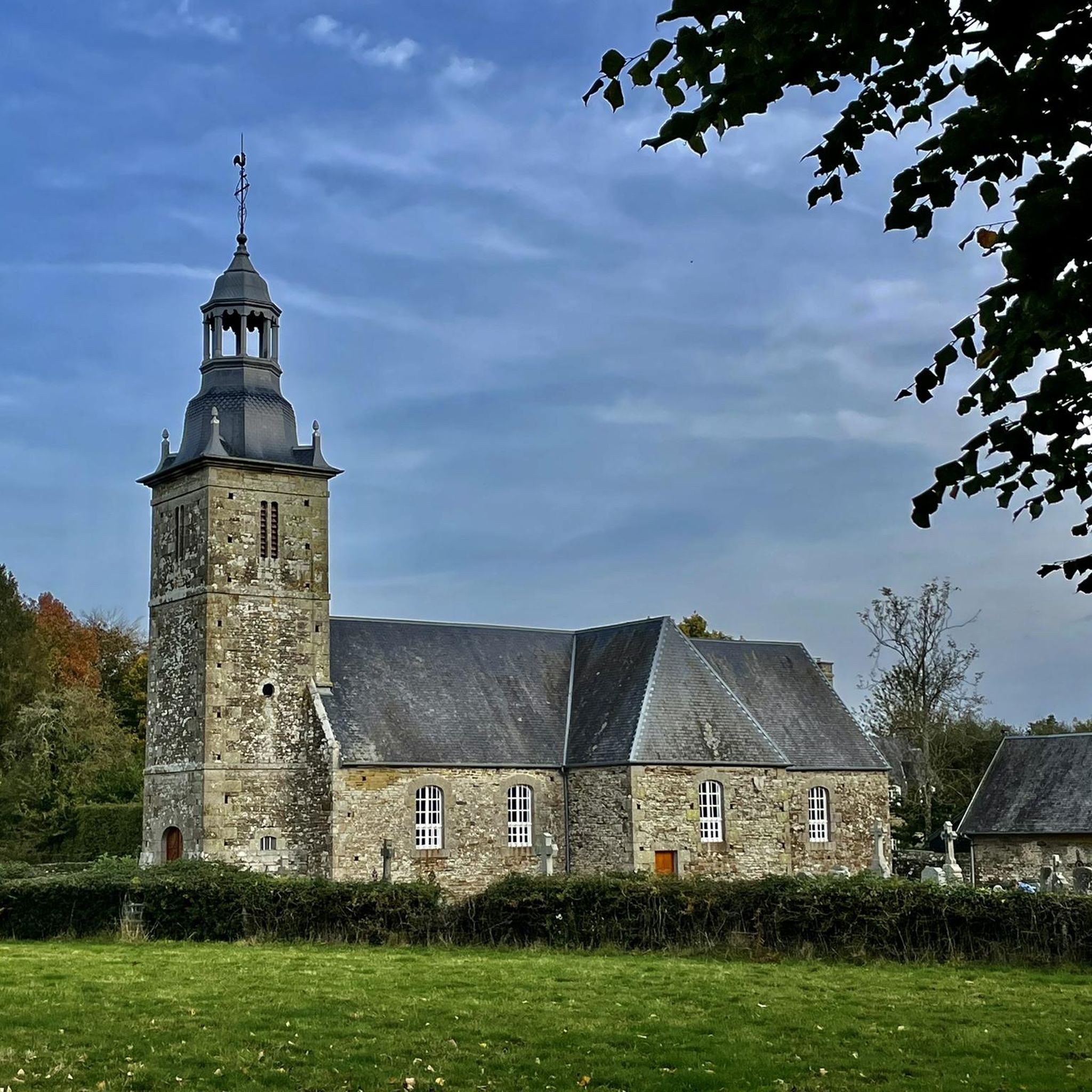
The Notre-Dame church in Bréville-sur-Mer is a medieval Catholic building, from the 2nd half of the 12th century. The nave and the choir were built in the 2nd half of the 12th century. The bedside is rectilinear. The choir was restored in the 15th century. The church has large windows from the 18th and 19th centuries. The southern Romanesque portal dates from the second half of the 12th century and the north portal from the beginning of the 13th century. The tower, restored in the 15th century, which has only one long and simple window ending in a straight lintel on each side, is topped by an octagonal stone spire. The latter has on each side a long and narrow dormer window made up of two columns resting on the base of the spire supporting a small arcade and a triangular eaves. The transition from the square to the octagon is made by a sort of half-pyramid housed in the corners. The church houses a 12th century bas-relief, an 18th century preaching pulpit, statues: Virgin and Child (14th century), Saint Helier (15th century). The Saint-Hélier Fountain is located near the northeast corner of the Notre-Dame Church cemetery. According to legend, the body of Saint Helier, a hermit in the 6th century in Jersey, was washed up in a lead coffin on the shore of Bréville. https://fr.wikipedia.org/wiki/%C3%89glise_Notre-Dame_de_Br%C3%A9ville-sur-Mer
3
0
The church would originally have been a monastery, founded in the 6th century by two missionaries, St. Paternus and St. Scubilianus. All that remains of the original church is a Romanesque bay under the bell tower and the 14th-century choir, which houses the sarcophagi (6th century) and recumbent statues (15th century) of the alleged founders. On the left choir pillar, see the polychrome wooden statue of Christ (14th century). The baptistery behind the altar has a stone baptismal font with a wooden lid. In the chapel, the vaulted tabernacle stands out, flanked by two gilded wooden statues (18th century) of Saints Laudo and Senier. The left side chapel, with a 16th-century statue of the Virgin Mary at the entrance, contains a reliquary of Saint Gaud, a former bishop of Evreux.
6
1
The church was built in the 13th century, or even in the previous century, at the foot of a cliff. It is built on the site of a Gallo-Roman villa built between the 1st and 3rd centuries and of which, in 1972, vestiges (amphorae, brick walls, etc.) were found in the cemetery. Placed under the patronage of Saint Clair, it is built on the foundations of a monastery that he founded in 880. It is oriented southeast-northwest. It was given in 1186 to the White Abbey of Mortain. Under the Revolution, it was stripped bare, its bell tower collapsed, its bells broke. It was enlarged and rebuilt from 1829. A new parish church, dedicated to Notre-Dame-de-Lourdes, was built in 1958 to follow the development of the population. Abandoned without being desecrated, it was restored by the municipality in 1998 to house religious and cultural events. Near the church is the Saint-Clair fountain, where the monk would have come to pray.
2
0

Founded in 1143 in the wooded Thar Valley, the Abbey of La Lucerne is a witness to Anglo-Norman architecture, between Romanesque and Gothic. Since 1959, for the third time in its history, this exceptional ensemble has benefited from remarkable preservation and restoration work to offer one of the most complete examples of medieval Premonstratensian architecture in France. Listed as a Historic Monument in 1928, the abbey strikes with the strength of its history led by passionate men. The emotion is born from the absolute simplicity of the architecture, its great luminosity and the preserved authenticity of its environment. Your entrance fees contribute to the preservation of the abbey by supporting the "Fondation Abbaye de La Lucerne d'Outremer", owner, which is in charge of its restoration, management and maintenance. Visitors can discover a 5-hectare monastic complex, preserved in its green setting on the edge of the forest: the Gatehouse and the courthouse, the church, the refectory, the cellars, the park crossed by an aqueduct, the abbey lodgings with the lake, the guest room and the dovecote. Source: https://www.manchetourisme.com
2
0

The church and its cemetery, an almost sure value for filling cans
2
0
Frequently Asked Questions
What historical sites can I visit in and around Folligny?
Folligny and its surroundings are rich in history. You can explore the Romanesque traces of the Notre-Dame Church of Folligny, the 17th-century Notre-Dame-de-l'Annonciation Church of Le Mesnil-Drey, or the 18th-century Saint-Pierre-Saint-Paul Church of La Beslière, which houses an 8th-century wooden altarpiece. Don't miss the well-preserved Abbaye de La Lucerne, an example of Anglo-Norman architecture, or the medieval Notre-Dame Church in Bréville-sur-Mer.
Where can I learn about Folligny's World War II history?
You can visit the Py Park (Souterrains du Py Park) in Folligny, which holds remnants of World War II. This site features fortified underground shelters built by the Germans after the bombing of Folligny's train station. Two underground rooms are cleared and can be visited freely during the summer, offering a tangible link to the commune's past as a battleground. Guided tours focusing on Folligny during the occupation are also offered by the local tourism office.
Are there any notable churches or religious buildings to see?
Yes, the area features several significant religious buildings. The Abbaye de La Lucerne is a very well-preserved abbey with a beautiful park. The Notre-Dame Church in Bréville-sur-Mer is a medieval Catholic building from the 12th century. Other notable churches include the Notre-Dame Church of Folligny, the Notre-Dame-de-l'Annonciation Church of Le Mesnil-Drey, and the Saint-Pierre-Saint-Paul Church of La Beslière.
What natural features can I explore around Folligny?
Folligny is nestled in a natural setting, perfect for walks. You can find Le Châtaignier Remarquable, a chestnut tree with an impressive trunk and fan-shaped branches. The wider Manche department offers diverse landscapes including coastlines with dunes, beaches, tidal inlets, and cliffs, as well as freshwater rivers, bocage countryside, marshlands, and hills.
Are there family-friendly attractions near Folligny?
The Abbaye de La Lucerne is considered family-friendly, offering a beautiful park to explore. Additionally, the Zoo de Champrepus is a popular zoo located within a reasonable distance from Folligny, providing another option for families.
What outdoor activities can I do near Folligny?
The Folligny area is excellent for outdoor activities, especially cycling and mountain biking. You can find numerous routes, such as the 'Pontaubault Bridge – View of Mont Saint-Michel loop' for cycling or various 'Abbaye de La Lucerne' loops for gravel biking and MTB. Explore more options on the Cycling around Folligny, Gravel biking around Folligny, and MTB Trails around Folligny guide pages.
Are there hiking or walking paths around Folligny?
While specific hiking trails are not detailed in the immediate Folligny data, the surrounding countryside is ideal for walks and enjoying nature. The nearby cycling and MTB routes often follow scenic paths that can also be enjoyed on foot. For more detailed walking paths, consider exploring the diverse landscapes of the wider Manche department.
What is the best time to visit Folligny for outdoor activities?
The region's natural beauty can be enjoyed throughout the warmer months. Summer offers the opportunity to visit the Py Park's underground shelters. For outdoor activities like cycling and walking, spring and early autumn typically provide pleasant weather conditions.
What coastal towns or beaches are accessible from Folligny?
Folligny is conveniently located near several coastal attractions. Bréville-sur-Mer, a Heritage Village, is a coastal commune known for its remarkable residences. Granville, about 14 km away, is a seaside resort with sandy beaches and 19th-century villas. The Ecomusée de la Baie du Mont Saint-Michel is also on the coastline with views of Mont-Saint-Michel.
Can I visit Mont-Saint-Michel from Folligny?
Yes, the iconic Mont-Saint-Michel, a world-renowned heritage site, is approximately 22 km from Folligny, making it an easily accessible day trip.
What do visitors enjoy most about the attractions around Folligny?
Visitors particularly appreciate the historical depth and natural beauty of the area. The Abbaye de La Lucerne is highly praised for its preservation and beautiful park. The medieval architecture of churches like Notre-Dame Church and the charm of coastal villages like Bréville-sur-Mer are also frequently highlighted.
Are there any unique local landmarks in Folligny itself?
Within Folligny, you can find Le Lavoir, an old covered wash house on Rue de la Beslière. It was actively used until the mid-20th century and served as a communal gathering place. It's still utilized for community events today, offering a glimpse into local heritage.

Get inspired with the komoot mobile app


Explore more
Still not found the Highlight you’re looking for? See guides of the top attractions in other regions:
