The best cycling routes around Marcé-Sur-Esves
4.5
(181)
1,043
riders
66
rides
Touring cycling routes around Marcé-sur-Esves are situated within the gentle landscapes of France's Loire Valley, a UNESCO World Heritage Site. The terrain is predominantly flat, characterized by riverine scenery along the Loire and its tributaries, vineyards, and a mix of forests and farmlands. This region offers a well-developed cycling network, including sections of the "Loire à Vélo," making it accessible for various cycling abilities.
Best touring cycling routes around Marcé-Sur-Esves
- The most popular touring cycling route is Le Moulin de…
Last updated: August 29, 2026
4.1
(40)
246
riders
138km
08:07
540m
540m
Hard bike ride. Very good fitness required. Mostly paved surfaces. Suitable for all skill levels.
4.7
(11)
48
riders
Hard bike ride. Very good fitness required. Mostly paved surfaces. Suitable for all skill levels.

Sign up for free
4.2
(5)
12
riders
47.5km
02:55
400m
400m
Moderate bike ride. Good fitness required. Mostly paved surfaces. Suitable for all skill levels.
4.3
(7)
11
riders
63.4km
03:49
380m
380m
Moderate bike ride. Good fitness required. Mostly paved surfaces. Suitable for all skill levels.
12
riders
56.7km
04:09
530m
530m
Hard bike ride. Very good fitness required. Mostly paved surfaces. Suitable for all skill levels.
Get access to more routes and recommendations from other explorers.
Sign up for free
Already have an account?
Our route recommendations are based on thousands of hikes, rides, and runs completed by other people on komoot.
Start today with a free account
Your next adventure awaits.
Login or Signup




Tips from the Community

The "Tours" at the beginning of the Henri IV bridge in Châtellerault are indeed a historic complex linked to the city's old fortifications. However, they must be distinguished from the three brick towers of the former Weapons Factory. The towers are located at the end of the Henri IV bridge, on the town side, and are a remnant of the defensive system that protected the crossing of the Vienne. Two round towers remain, on the Châteauneuf side. They once framed a monumental central pavilion, which may explain the name or the impression of a set of three towers. 🏰 The history of the Henri IV bridge towers 1. Towers already existed before the current bridge The crossing of the Vienne at Châtellerault is very old. In the Middle Ages, the bridge had a major strategic and economic function. At the end of the 15th century, a document already mentions two towers built on the Châteauneuf side and connected by a vault or a central structure. They were preceded by a drawbridge. It was therefore a true monumental gate giving access to the bridge. 🏛️ But there was much more than the two current towers This is probably the point that interests us. Originally, the entrance to the bridge on the Châteauneuf side comprised: - a round tower to the north; - a round tower to the south; between them, a central pavilion with - a monumental gate; - and a drawbridge allowing access to be closed. The central pavilion was demolished in 1824. The two towers, however, were preserved. Recent archaeological research has indeed made it possible to find the foundations of the central pavilion. 🔎 And there were also two other towers! The bridge was designed in a much more monumental way than we see today. At the other end of the bridge, on the town side, there were also two square towers. They disappeared later, notably because they hindered traffic. So originally there were four towers, two at each end, to which the central pavilion on the Châteauneuf side was added. 📷 A particularly interesting old photograph The Ministry of Culture holds an old photograph titled "Tour d’entrée" (Entrance Tower), taken by Georges-Louis Arlaud (1869-1944). It shows the complex at a time when both towers still existed with their ancient appearance. See the old photograph from the Ministry of Culture https://pop.culture.gouv.fr/notice/memoire/APHF002200?utm_source=chatgpt.com And here is an old postcard of the southern entrance tower, which allows us to see the towers at the beginning of the 20th century. https://www.geneanet.org/cartes-postales/view/7912977 📍 What can be seen today The two current towers are impressive: cylindrical stone towers, topped with conical slate roofs. They belong to the City of Châtellerault, while the bridge itself is under the jurisdiction of the Department of Vienne. Interesting point: contrary to what their military appearance might suggest, these towers did not primarily have a military defense function. They were notably used for controlling entrances and, at certain periods, for sanitary control or the collection of passage tolls.
0
0
🏭 1. A museum set up in the former “Manu” Le Grand Atelier - Museum of Art and Industry is located on the site of the former Châtellerault Arms Factory ("Manufacture d’armes"). The Manufacture was created by royal ordinance on July 14, 1819, under Louis XVIII. Construction began in 1820. Its location in Châtellerault was notably due to the presence of the Vienne river, which allowed for the use of hydraulic energy, and the existence of a significant local tradition of cutlery and metallurgy. Initially, it mainly produced edged weapons: sabers, swords, lances, and cuirasses. From the 1830s onwards, production also turned to firearms. The Manufacture gradually became a huge industrial complex, employing several thousand people. It played a considerable role in the economic and social history of Châtellerault. 🔧 2. The museum building The building now occupied by the Grand Atelier is particularly interesting. It is part of the former assembly and finishing workshop, built between 1886 and 1887, notably in the context of the production of the Lebel rifle. It is a characteristic industrial building from the late 19th century, with vast spaces, large glass bays, and saw-tooth roofs allowing for significant natural light. It is now protected as heritage. The Manufacture closed permanently in 1968. 🚗 3. The birth of the automobile museum After the closure of the Manufacture, part of the buildings was reused for cultural purposes. As early as 1969, the site hosted a museum, notably stemming from Bernard de Lassée's vehicle collection. It was first named Musée de la Technique et de l’Automobile, then became Musée Auto-Moto-Vélo. The town of Châtellerault acquired part of Bernard de Lassée's collection and gradually developed the museum. The collections include, in particular, vintage cars, motorcycles, bicycles, engines, posters, and accessories, featuring prestigious brands such as Panhard-Levassor, Delahaye, Talbot, Darracq, or Bugatti. 🏛️ 4. The merger with the former Sully museum This is an important step in understanding why the museum today bears the name “museum of art and industry”. Châtellerault also had another museum, located in the Hôtel Sully, dedicated to the history and heritage of the town: archaeology, fine arts, weapons, cutlery, ethnology, local artists, etc. Gradually, the collections of the two institutions were brought together on the site of the former Manufacture. The Ministry of Culture thus indicates that the collections were regrouped on the Manufacture site, first under the name Musée de la technique et de l’automobile, then Musée Auto-Moto-Vélo, and finally Grand Atelier. 🎭 5. The transformation into “Grand Atelier” After significant renovations, the museum was reorganized and took its current name in 2019: Le Grand Atelier – Musée d’art et d’industrie. It is therefore no longer just a museum dedicated to automobiles. It now offers three main tours: 🚗 Auto-Moto-Vélo: the evolution of transport from the 19th century to the 2000s; 🔫 Manufacture d’armes: the industrial and social history of the “Manu” and its workers; 🎭 Cabaret du Chat Noir: dedicated to Rodolphe Salis, born in Châtellerault and founder of the famous Montmartre cabaret. The museum now covers over 3,000 m² of exhibition space. An important clarification It is therefore necessary to distinguish: - The Arms Factory (“La Manufacture d’armes”) → the large industrial site created in 1819, closed in 1968. - The Grand Atelier building → a former workshop of the Manufacture, built in 1886-1887. - Le Grand Atelier – Museum of Art and Industry → the museum gradually created on this site, whose current name dates from 2019. - And the former Sully museum → a historic museum institution in Châtellerault, part of whose collections have been integrated into the Grand Atelier.
0
0

Forget Chambord allure. This castle was: A. a strategic fortress B. a royal residence C. part of the defenses along the Loire It dates largely from the 11th to the 15th century and has a primarily military appearance. Sturdy, compact, no-frills. It is located: – right on the Loire – next to the Pont Wilson – between Place Anatole France and Vieux Tours
0
0

Built on the remains of the Gallo-Roman city of Caesarodunum, Saint-Gatien Cathedral stands in the heart of the city. This city was once one of the most famous places of pilgrimage in the West and is still one of the capitals of the Pays de Loire. Opening hours: Saint-Gatien Cathedral is open every day of the week from 8:30 am to 8:00 pm. From Easter to 11 November, you can meet the volunteers of the Présence Cathédrale association in the cathedral. You can recognise them by their badges. They can help you with your visit and answer your questions. For guided tours and group visits, which can take place all year round by reservation, please contact 07 66 39 84 11. For more information, visit their website: https://visite-cathedrale-tours.fr/ You can also visit the cloister of La Psalette, which is accessible via the cathedral.
3
0


Frequently Asked Questions
How many touring cycling routes are available around Marcé-sur-Esves?
There are over 60 touring cycling routes around Marcé-sur-Esves, offering a wide variety of options for different skill levels and preferences. These include 17 easy routes, 33 moderate routes, and 10 difficult routes.
What is the terrain like for touring cycling in the Marcé-sur-Esves area?
The terrain around Marcé-sur-Esves, situated in the Loire Valley, is predominantly flat, making it ideal for touring cycling. You'll encounter riverine scenery along the Loire and its tributaries, extensive vineyards, and a mix of tranquil forests and farmlands. The region is known for its gentle topography, with minimal challenging gradients.
What is the best time of year for touring cycling around Marcé-sur-Esves?
The best time for touring cycling in the Loire Valley, including Marcé-sur-Esves, is generally from spring to early autumn (April to October). During these months, the weather is pleasant, the landscapes are vibrant, and the vineyards are in full bloom or harvest. The mostly flat terrain means routes are accessible for much of the year, but summer offers the warmest temperatures.
Are there any easy touring cycling routes suitable for beginners or leisurely rides?
Yes, there are 17 easy touring cycling routes around Marcé-sur-Esves. These routes are perfect for beginners, families, or those looking for a relaxed ride through the gentle Loire Valley landscape. Many routes follow dedicated cycleways or quiet rural lanes, part of the extensive "Loire à Vélo" network.
Are there any challenging long-distance touring routes for experienced cyclists?
For experienced cyclists seeking a challenge, there are 10 difficult touring routes around Marcé-sur-Esves. One such route is Le Moulin de Montbazon – Les Ormes loop from Port-de-Piles, which spans 86.4 miles (139.0 km) and features significant elevation gain, typically taking over 8 hours to complete.
Can I find circular touring cycling routes in this area?
Yes, many of the touring cycling routes around Marcé-sur-Esves are designed as loops, allowing you to start and end at the same point. For example, the Châtelier Castle – Schönstes Städchen loop from Sepmes is a moderate 27.6-mile (44.5 km) circular path that traverses rural lanes and offers views of historic architecture.
What historical sites or landmarks can I see while touring cycling near Marcé-sur-Esves?
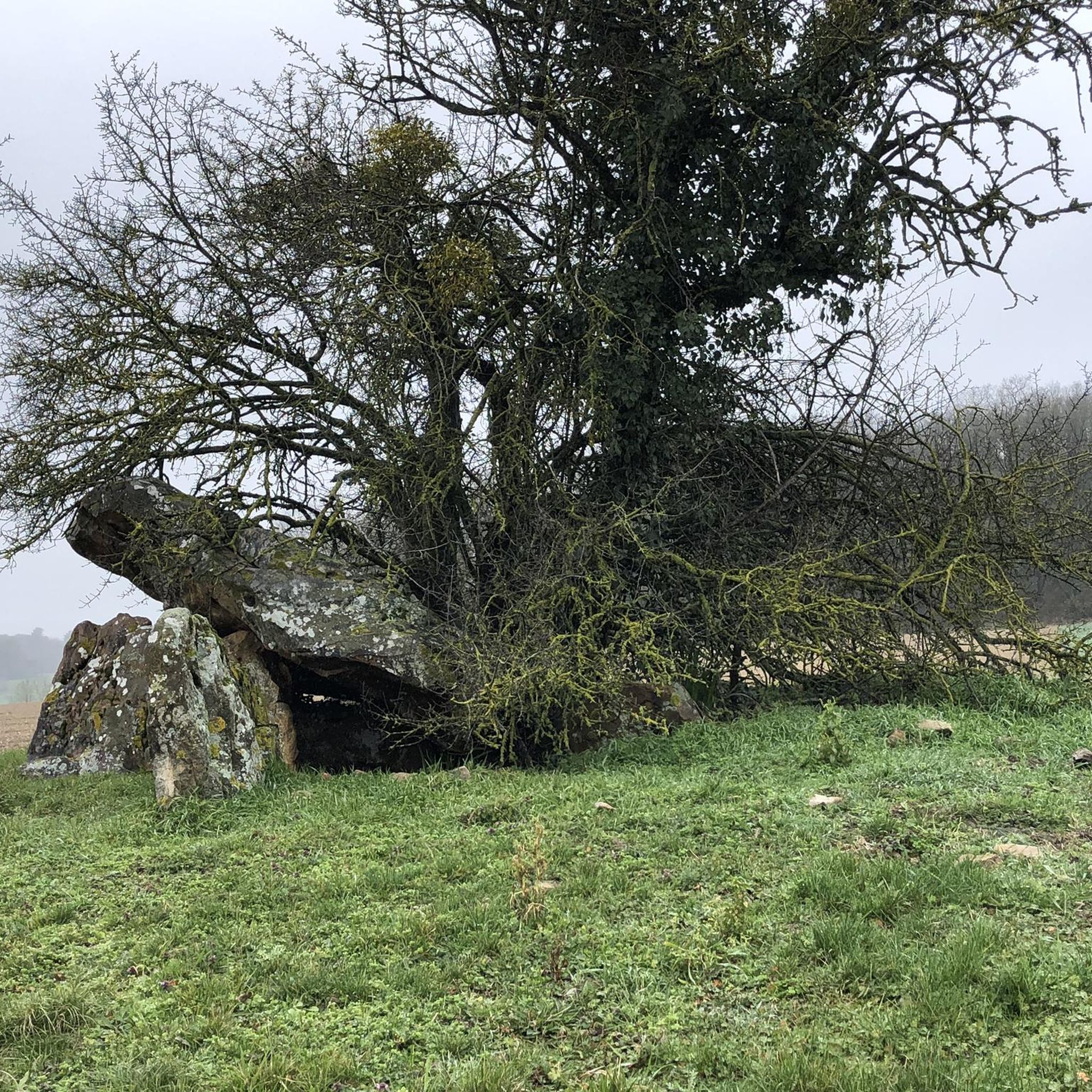
The Loire Valley is rich in history. While cycling, you can explore charming medieval towns and villages. Within Marcé-sur-Esves itself, you can find remnants of the Pierre de Faon (a Gallo-Roman structure), the 15th-century Château de la Louère, and the Saint-Martin church. The region is also famed for its magnificent châteaux, with iconic castles like Château de Chinon and Château de Villandry within reach, often accessible via the wider Loire à Vélo network.
Are there natural features or scenic viewpoints to enjoy on the routes?
Absolutely. The routes offer picturesque views of the region's defining rivers, including the Loire and its tributaries like the Esves, with sandy banks and islands. You'll also cycle through numerous vineyards, especially those known for acclaimed white and red wines, and pass through tranquil forests and open fields. A notable natural area is the Courtineau Valley, offering scenic beauty.
Are the touring cycling routes around Marcé-sur-Esves suitable for families with children?
Yes, the predominantly flat terrain and the presence of dedicated cycleways and quiet rural lanes make many routes around Marcé-sur-Esves very suitable for families. The extensive "Loire à Vélo" network, which is accessible from this area, is particularly known for its family-friendly sections, allowing for relaxed and safe cycling experiences.
Where can I find parking for my bike near the touring cycling routes?
While specific parking facilities for cyclists in Marcé-sur-Esves are not detailed, as a rural commune, parking is generally available in village centers or near popular starting points for routes. For routes originating from nearby towns like Port-de-Piles or Sepmes, you can typically find parking in the town centers. It's always advisable to check local signage upon arrival.
How can I access Marcé-sur-Esves by public transport with my bicycle?
Accessing Marcé-sur-Esves directly by public transport with a bicycle can be challenging due to its rural location. However, the wider Loire Valley region is well-connected by train, and many regional trains (TER) allow bicycles, often for free or a small fee. You might consider taking a train to a larger nearby town like Tours or Chinon, and then cycling to Marcé-sur-Esves. Always check the specific train operator's bicycle policy in advance.
Are there places to eat or stay overnight for cyclists in the area?
Yes, the Loire Valley is a popular tourist destination, and you'll find various options for food and accommodation. While Marcé-sur-Esves is a small village, nearby towns and villages along the cycling routes offer cafes, restaurants, and guesthouses. Many establishments cater to cyclists, especially along the "Loire à Vélo" route, which is well-equipped with services for touring cyclists.
What do other touring cyclists say about the routes around Marcé-sur-Esves?
The touring cycling routes around Marcé-sur-Esves are highly rated by the komoot community, with an average score of 4.6 stars from over 140 reviews. More than 800 touring cyclists have used komoot to explore the varied terrain. Reviewers often praise the tranquil rural lanes, the scenic riverine views, and the charming villages encountered along the way, highlighting the region's suitability for relaxed and enjoyable cycling.
Most popular routes around Marcé-Sur-Esves
Most popular attractions around Marcé-Sur-Esves

Get inspired with the komoot mobile app


Explore more
Browse the best Cycling routes in other regions.
