The best walks and hikes around Oroër
4.5
(48)
430
hikers
36
hikes
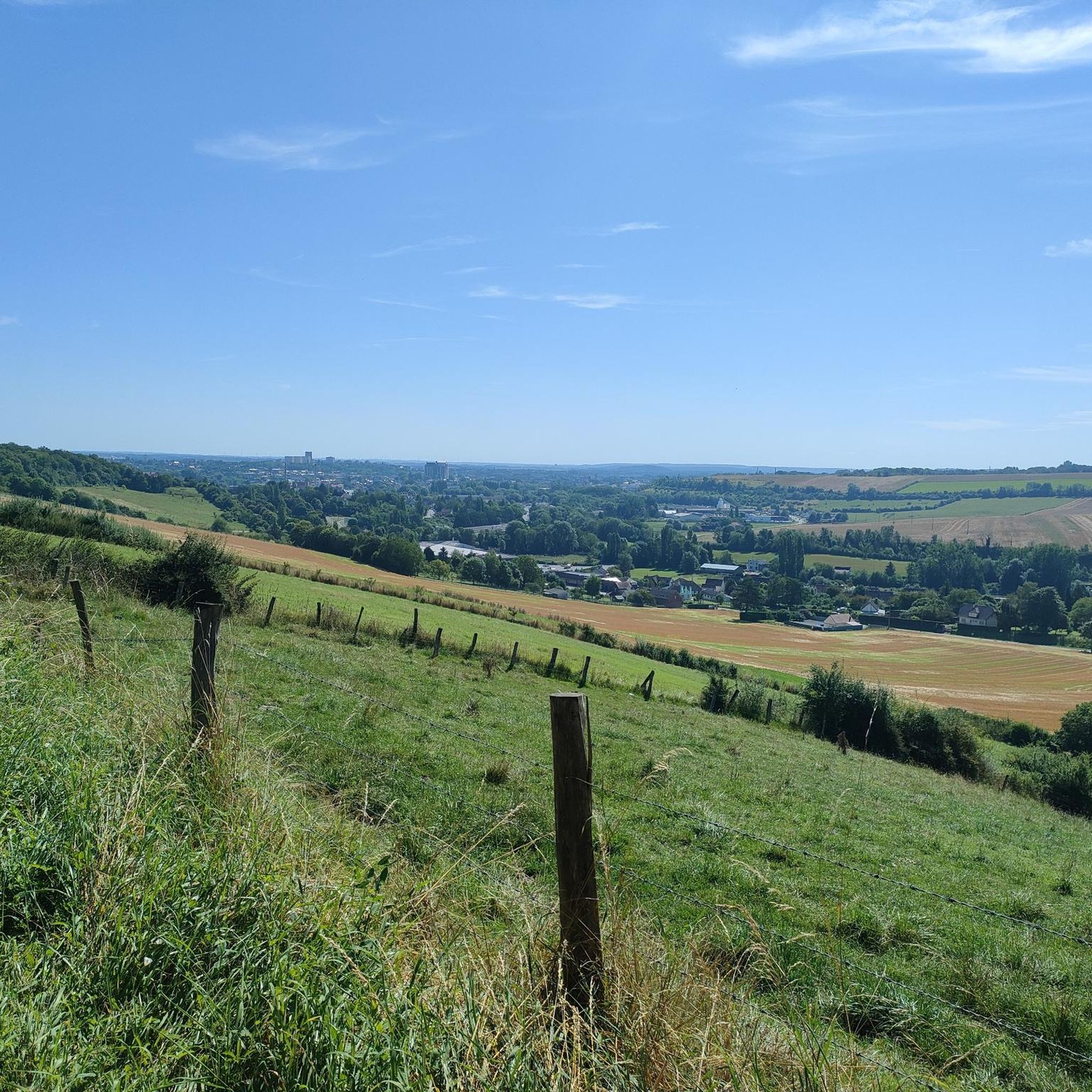
Hiking around Oroër features a generally flat to gently undulating landscape, characterized by accessible paths around local water bodies. The terrain primarily consists of low-elevation routes, making many of the Oroër hiking trails suitable for various fitness levels. The region offers a network of paths that often circle ponds and connect to nearby towns, providing opportunities for circular walks Oroër.
Best hiking trails around Oroër
- The most popular hiking route is Plan d'Eau du Canada loop from Fouquenies, a…
Last updated: June 24, 2026
4.8
(6)
147
hikers
3.22km
00:49
10m
10m
Easy hike. Great for any fitness level. Easily-accessible paths. Suitable for all skill levels.
4.9
(10)
53
hikers
12.2km
03:10
80m
80m
Moderate hike. Good fitness required. Easily-accessible paths. Suitable for all skill levels.

Sign up for free
5.0
(3)
53
hikers
10.2km
02:35
20m
20m
Moderate hike. Good fitness required. Easily-accessible paths. Suitable for all skill levels.
5.0
(1)
33
hikers
3.21km
00:49
10m
10m
Easy hike. Great for any fitness level. Easily-accessible paths. Suitable for all skill levels.
3.5
(4)
9
hikers
6.22km
01:35
20m
20m
Easy hike. Great for any fitness level. Easily-accessible paths. Suitable for all skill levels.
Get access to more routes and recommendations from other explorers.
Sign up for free
Already have an account?
Our route recommendations are based on thousands of hikes, rides, and runs completed by other people on komoot.
Start today with a free account
Your next adventure awaits.
Login or Signup




Tips from the Community

Leaving Beauvais to the northwest, along the road and then the cycle path of the Saint-Quentin marsh, you quickly arrive at the superb lake of Canada. It offers three kilometers of banks and is ideal for swimming in summer.
0
0
Leaving Beauvais to the northwest, the street and then the cycle path of the Saint-Quentin marsh, you quickly arrive at the superb body of water of Canada. It offers three kilometers of banks and a call for swimming in summer.
0
0

The Cathedral of Beauvais is one of the most important Gothic churches in France 🇫🇷!
2
0

The early Romanesque church from the 10th century is one of the few surviving Carolingian chapels in France. It was actually supposed to be replaced by the nave of the cathedral, which was built from 1247 onwards, but after the collapse of the cathedral's record vault and tower, although the small original church surprisingly survived both, money and the Gothic style were at an end. And so, after being temporarily but permanently closed off by a partition wall, the cathedral's gigantic building now has a "mini nave" which is, however, closed off from the inside by a door. Unfortunately, the small original church was inaccessible when we visited. It would certainly be impressive to enter the Gothic giant building through the Romanesque west portal.
1
0
It is always nice to meet old friends again, especially when it happens unexpectedly. When you enter the wonderful but only half-finished cathedral of Beauvais, you are greeted by the famous image of St. Peter from St. Peter's Basilica. This fits with the building's claim: the highest Gothic vault, the highest church tower, the largest church in France. However, it is a Gothic Babel: the vault and tower collapsed, and that was the end of money and Gothic architecture. The cathedral is a huge torso, the nave of which is a comparatively tiny Romanesque building that stands lost in front of the huge, centuries-old temporary dividing wall that the nave was supposed to replace.
1
0
If you walk around the mighty torso of Beauvais Cathedral, you come across the seemingly forgotten north portal. While the bright south portal with its staircase literally draws people into the church, the north portal is blocked off by a construction grille and appears dark. Here you can find a magnificent trellis above the door, probably intended as a depiction of the root of Jesus, but which has been stripped of its figures. Huge carved doors, which are plainer than those of the south portal, secure the entrance. The wear on the doorstep shows that this portal was used a lot in earlier times.
1
0
The bishop's palace, protected by a mighty gate and a mixture of Gothic and Renaissance styles, has a history spanning centuries and has also served as a prefecture building and court palace. Today it houses the Musee de l'Oise, an art museum with a focus on the 19th century. Works by Corot, Sisley, Huet and Inges are represented.
1
0
The cathedral beckons. Curious, you want to rush into the interior, but the entrance is worth slowing down. The huge portal rises high into the sky. There are no religious figurines here: one wonders whether this is a financial consequence of the failed construction of the tower of Beauvais or whether the iconoclastic French Revolution has struck. Instead, the tendrils hide many mythical creatures and monsters worth seeing, waiting to be discovered. A somewhat threatening fairy-tale world. Behind them are the enormous carved doors, which are unparalleled with their sculptural Gothic scenes. And finally, Peter himself welcomes you into the church. You know him: an image of the famous statue in St. Peter's Basilica, which illustrates the claim of the cathedral's builders: Amiens was supposed to have the largest church in France, but unfortunately the over-high vaults and the world's highest over-high tower collapsed and inside, massive wooden struts hold up the fragile statics. A Gothic Babel. But the cathedral also holds the record as a torso: the highest vaults are 48.5 metres high.
1
0
Frequently Asked Questions
How many hiking trails are available around Oroër?
There are 38 hiking trails around Oroër, offering a variety of options for different preferences and fitness levels. These include 19 easy routes and 19 moderate routes, with no difficult trails, making the area very accessible.
What is the general difficulty of hiking trails in Oroër?
Hiking around Oroër is characterized by generally flat to gently undulating terrain, with many accessible paths. The region offers a balanced mix of 19 easy and 19 moderate routes, making it suitable for a wide range of hikers, from beginners to those looking for a slightly longer challenge.
Are there any easy or beginner-friendly hikes in Oroër?
Yes, Oroër is an excellent destination for easy and beginner-friendly hikes. The terrain is largely flat, especially around the local water bodies. You can find 19 easy routes, such as the Plan d'Eau du Canada loop from Fouquenies, which is a short 2.0-mile (3.2 km) trail perfect for a relaxed outing.
Can I find circular walks around Oroër?
Yes, circular walks are a prominent feature of hiking around Oroër. Many paths are designed to loop around local water bodies and connect to nearby towns, providing convenient circular routes. For example, the Plan d'Eau du Canada loop from Beauvais is a popular moderate circular path exploring the area around the pond.
What kind of attractions can I see along the hiking trails in Oroër?
While hiking around Oroër, you can explore several historical and architectural landmarks in the vicinity. Notable attractions include the impressive Beauvais Cathedral, the Collegiate Church of Saint-Barthélemy, and Bresles Castle. Many routes offer views of these points of interest, especially those connecting to nearby towns like Beauvais.
Are the hiking trails in Oroër suitable for families with children?
Given the generally flat and accessible nature of the terrain, many of Oroër's hiking trails are well-suited for families. The 19 easy routes, often circling local ponds, provide safe and enjoyable options for walks with children. The low elevation gain ensures a comfortable experience for all ages.
What do other hikers enjoy most about the trails in Oroër?
The hiking trails in Oroër are highly rated by the komoot community, with an average score of 4.6 stars from over 50 reviews. Hikers often praise the accessible paths, the serene atmosphere around the water features, and the variety of options for both easy strolls and longer, moderate excursions.
Are there any longer or more challenging hikes in Oroër?
While Oroër does not feature 'difficult' graded trails, there are 19 moderate routes that offer a longer and slightly more challenging experience than the easy options. For instance, the Canada Pond loop from Fouquenies is a moderate 6.2-mile (9.9 km) trail that takes about 2 hours 32 minutes to complete, providing a good workout through the local countryside.
Is public transport available to access hiking trails in Oroër?
While specific public transport links directly to every trailhead might vary, the region's network of paths often connects to nearby towns like Beauvais. It's advisable to check local bus schedules or regional train services to Beauvais, and then plan your hike from there, potentially using local connections or a short taxi ride to reach specific starting points.
Where can I find parking for hiking trails in Oroër?
Parking availability can vary by trailhead. For routes starting from towns like Fouquenies or Beauvais, you can typically find public parking areas. For trails around the Plan d'Eau du Canada, there are often designated parking spots near the water body. It's recommended to check specific route details or local signage upon arrival.
What is the best time of year to hike in Oroër?
The generally flat terrain and accessible paths make Oroër suitable for hiking throughout much of the year. Spring and autumn offer pleasant temperatures and beautiful scenery, while summer provides longer daylight hours. Even in winter, many of the low-elevation routes can be enjoyed, though conditions may vary, especially around water bodies.
Are the hiking trails in Oroër dog-friendly?
Many of the trails in Oroër, particularly those around the Plan d'Eau du Canada and through the countryside, are generally dog-friendly. However, it's always best to keep dogs on a leash, especially in areas with wildlife or near agricultural land, and to respect local regulations regarding pets in public spaces. Always carry water for your dog and clean up after them.
Most popular attractions around Oroër

Get inspired with the komoot mobile app


Explore more
Browse the best Hikes in other regions.
